Dog on the Hutch - Reviews

Dog on the Hutch
+Add to Custom List
Sort
Add review
... Read More
Okay so the atmosphere in these chapters is actually insane. Let me just say it — the author knows how to paint a scene. You close your eyes and you're literally there. The refined restaurant, the massive glittering Christmas tree outside, the snow falling through the dark sky. It reads like a film set coming to life. 'The black sky, the crisp chill in the air, and the scent of winter wind seemed to harmonize too well with the Alpha standing behind him.' That line alone is enough to give me chills. It's not just description for description's sake — every sensory detail serves the mood. And the contrast! Heeyeon has never been to a proper restaurant before. He's used to being watched, controlled, kept in a gilded cage. But here he is, sitting across from Director Yeon, trying to cut his steak with these jagged uneven pieces, carefully picking out the saucy ones because he doesn't know wine sauce contains alcohol. The vulnerability in those small moments is devastating. The department store tree earlier was beautiful but nothing compared to this one. The author makes you feel the difference — this outdoor tree, so tall you have to tilt your head all the way back to see the star on top. It mirrors Heeyeon's whole journey: he's been looking up at beauty through windows his entire life, and now he's actually standing in it. But honestly? The best worldbuilding isn't about the fancy restaurant or the Christmas tree. It's about the cold. The snow, the winter wind, the chill on Heeyeon's pale cheeks turning pink. Everything feels frozen except for the warmth between these two characters.
... Read More
"Being trapped in a hutch where his feet couldn't even touch the ground was the one thing he wanted to avoid." This metaphor — the hutch — keeps echoing through the text and it's not accidental. A hutch is something you put animals in. Small, confined, elevated off the ground so they can't escape, can't even stand properly. And Heeyeon has lived in this hutch for fifteen years, since he was thirteen. His entire adolescence, his entire understanding of what it means to be an Omega, has been shaped inside this cage. But here's what makes the symbolism even richer: Heeyeon doesn't even know WHAT the pheromone injections are for. He accepts the label "Omega" the way he accepts everything else — because the Beta told him to. The word "dominant Alpha" makes his lips tremble, not because he understands the biology, but because he understands the power dynamic. He's been taught to fear this word without ever being taught what it actually means. The estate itself is a character. Beautiful gardens surrounding it, walls that define his entire world, an old car that doesn't match the scenery because it doesn't belong to his world at all — everything about this setting reinforces that Heeyeon is something on display, something kept, something owned. And then the Chairman pushing him to "hurry and turn twenty." December. His birthday approaching. The implication is clear: this isn't about love or family or care. This is about an asset reaching its expiration date and being transferred to a new owner. The imagery throughout — the bruises, the white socks, the thick knitwear layered over a T-shirt despite the cold — all of it paints a picture of someone who is maintained but never treated as a person. The novel is asking: what happens when someone who has never known freedom encounters someone who chose to break the system rather than participate in it?
... Read More
I need to discuss Director Yeon as a character because this chapter absolutely solidified him as one of my favorite portrayals of a protective alpha in fiction. There's this fascinating duality at work here. On one hand, you've got the calculated businessman who runs his organization with measured efficiency, who understands that "people couldn't be controlled through violence" because he himself climbed to the top by betraying his former mentor. This is a man who knows exactly how power works because he weaponized it. When he decides Shim Soocheon needs to "work his ass off" instead of being punished directly, that's not mercy—that's smarter cruelty. Let the man chase his own redemption through action. But then you watch him with Heeyeon and everything shifts. The text says he "couldn't even bring himself to touch the skin that was bruised deep purple." This is the same man who gave orders to Chairman Jung without blinking, who's literally dismantling a rival conglomerate while sitting beside a hospital bed, and yet he's terrified of hurting the omega he's holding. The contrast is staggering. And Heeyeon—man, the way this omega operates is also incredible. He's been through trauma, he's concussed, his body is running on stabilizers and pheromone therapy, and yet he still notices "Do you feel uncomfortable, Director?" He's still caring for his caretaker. That's not weakness; that's a different kind of strength. Their dynamic with the supporting cast is also worth noting. The alphas from Jiwoo adoring Heeyeon isn't just about the omega's gentle nature—it's loyalty to Yeon projected onto the person Yeon protects. That's a really nuanced take on pack dynamics. It shows that Heeyeon's value isn't just personal to Yeon; he's become integral to the whole structure. Kang Seoui's call at the end is the perfect character moment too. The way his voice "stiffened instantly" when Yeon growls his name? You can feel the power dynamic shifting in real time. Seoui thought he was calling to negotiate or celebrate, but he walked into a room where Yeon's entire focus is someone else—and that terrifies him.
... Read More
The atmosphere in these chapters is absolutely *rich*. Let me just start with this image: Heeyeon sitting against his headboard at 10 PM, unable to sleep, phone ringing, and the only person on the other end is the man he misses so much it physically hurts. Cut to: snow falling outside his window at 5 AM, and he's still hugging that jacket like a security blanket. The environmental storytelling here is insane. The food Director Yeon already prepared and left in the fridge—that's not just a detail, that's someone who planned to come home and expected Heeyeon to be there waiting. The suit left behind, carefully folded on the bed. These objects carry so much emotional weight because the author never stops reminding us of their physical presence in the space. And the scent. "The familiar scent of pheromones brushed his nose." This world has ABO dynamics built into it, and the author uses the sensory detail of pheromones as a substitute for touch, for intimacy, for presence. When the Director says "when I get back, I'll hold you," the pheromone-scented jacket is the closest thing Heeyeon has to that promise right now. The lighting shifts are also doing heavy lifting. The scene moves from the warm kitchen light (eating together, though separately) to the cold blue of a phone screen at night to the hazy gray dawn light. Each lighting condition mirrors Heeyeon's emotional state—warmth giving way to isolation giving way to exhausted half-sleep. That final image of snow falling outside while Heeyeon opens his eyes to a blank phone screen—there's something so lonely and beautiful about it. The world feels lived-in and real, not like a backdrop but like a character itself.
... Read More
"Shim Soo... is he... alright?" he gasped out, blood on his lips, eyes barely open, body still shaking from the pheromone assault—and Yeon's response was essentially, yes, he's fine, don't worry about it. I need a moment. I genuinely need to step away from this text for five minutes. This is the kind of detail that doesn't just add emotional weight to a scene, it completely recontextualizes everything we thought we knew about this character. Jung Heeyeon has been through literal physical abuse at the hands of his own grandfather. He's been choked. He's been drenched in hostile pheromones that nearly pushed him into pheromone shock. His face is swollen, his lip is split, he's trembling uncontrollably—and his FIRST conscious thought, his FIRST words when he regains enough clarity to speak, are about SOMEONE ELSE'S SAFETY. This isn't just kindness. This isn't just being a good person. This is the fundamental architecture of who Heeyeon is at his core. He has been broken and rebuilt and broken again, and somewhere in all that damage, he never lost the capacity to worry about other people. Yeon notices this too—I can tell from the narrative. "It was just like Jung Heeyeon to ask after Shim Soocheon's wellbeing, even in this condition. But it only made the man's rage boil further." The fact that Heeyeon's selflessness actually ANGRYS Yeon more is such a complex emotional beat. It's not anger in a bad way—it's fury born from helplessness. Yeon wants to protect this person, but Heeyeon's nature won't let him be just a passive recipient of protection. He'll keep reaching outward even while falling apart. And the most heartbreaking layer? Yeon holding him, burying his face in that neck, veins bulging on his hands as he clenches his grip—this man is literally vibrating with restrained violence and grief and love and he can't SAY any of it. He can only hold. The text describes Heeyeon's lashes fluttering, casting soft shadows, eyes slipping shut. There's such tenderness in that image juxtaposed against the brutality of what just happened. Director Yeon had to try hard not to curse through clenched teeth. I swear every sentence about Yeon's restraint in this chapter makes my chest ache. He's holding a broken omega in his arms and he's fighting every instinct to turn that room into ash. That's love. Not the pretty kind. The desperate, furious, all-consuming kind. And I am HERE for it.
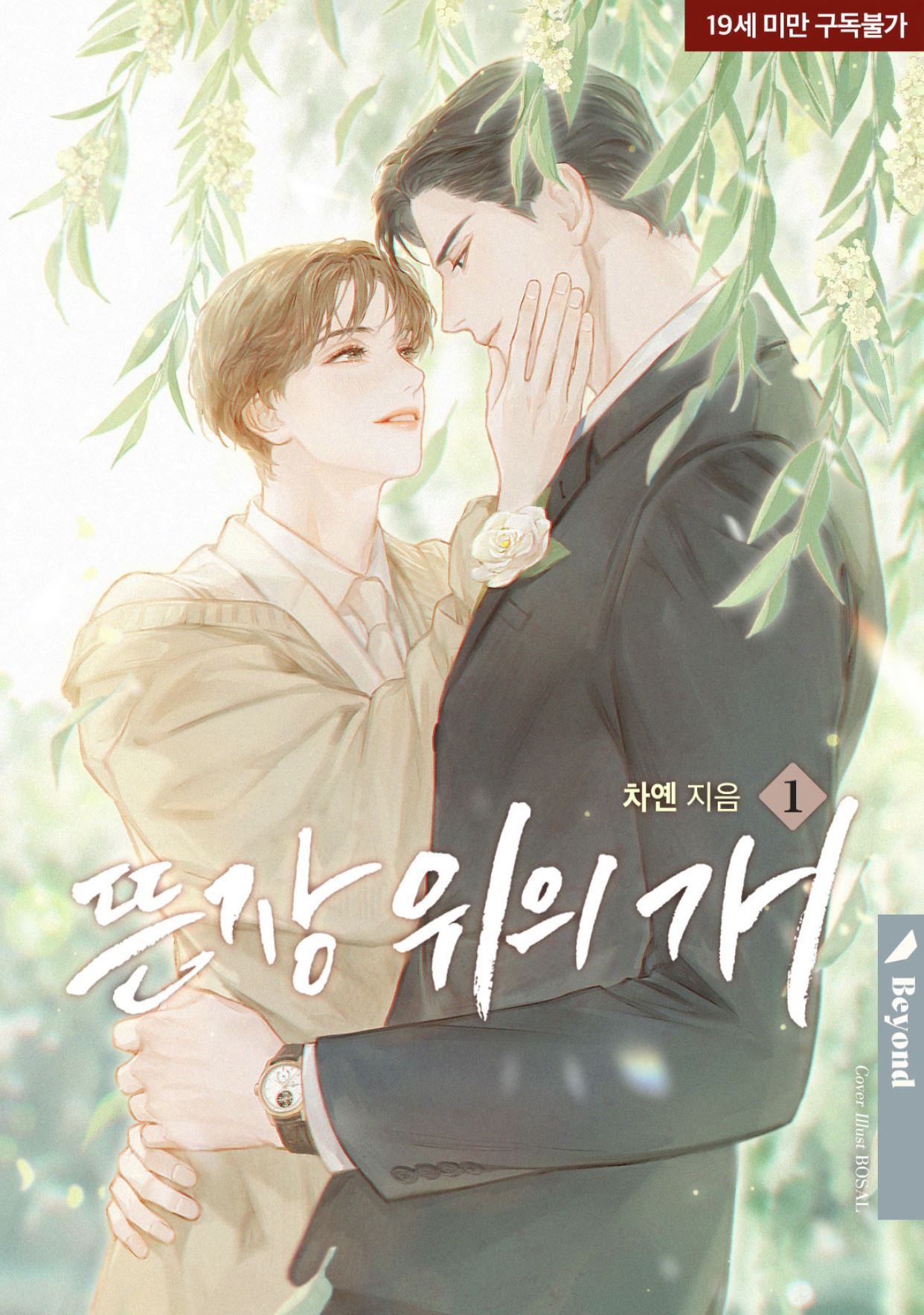
... Read More
Okay so let's talk about Director Yeon because honestly this man is terrifying and I am here for it. The way he sits on that sofa like he owns every inch of air in the room — legs crossed, toe tapping, drinking whiskey like it's absolutely normal to have someone bound to a chair in front of you. And the scar. The scar is everything. It's mentioned casually, almost dismissively, but it's sitting right there next to his hand and it carries such weight. It tells you this isn't just some polished alpha playing games. This is a man who has bled and survived and came back colder. And Lee Yootae — oh god, Lee Yootae. He's a beta who got away with abusing Jung Heeyeon for years, and now he's on his knees dripping whiskey onto the floor, trembling like a leaf. The power dynamic shift is so violent it makes my head spin. This man probably walked around the Jung household acting tough, maybe even arrogant, and now he can barely look Director Yeon in the eye. But here's what really gets me — Director Yeon unties him first. 'Let's not be rude.' That line hit me so hard. It's not mercy. It's cruelty dressed in civility. He's showing Lee Yootae that his life is entirely in his hands and he's choosing, moment by moment, to let him keep breathing. That's more terrifying than any threat. Then he drinks from the glass himself to prove it's not poisoned. Think about that for a second. An alpha making a beta watch him safely consume the drink first, then forcing the beta to drink from the same glass. It's dominance on every level. Physical, psychological, sensory. Lee Yootae's humiliation when he spills whiskey all over himself — that's not just fear, that's the collapse of someone whose entire identity was built on control. And Kim Ji-won walking in saying 'sorry I'm late, traffic was terrible' while someone just had whiskey burned down their throat... the casualness of it all. These people are so normalized to violence and power plays that it barely registers.
... Read More
I have to talk about how this chapter quietly wraps you in a vise. The plot isn't doing anything loud, but oh my god, the tension is thick enough to cut. You've got Managing Director Kang calling at an ungodly hour — not urgent enough for a direct summons, but urgent enough to demand Jung Heeyeon's presence too. That means something. It means someone upstairs is noticing the omega attached to Director Yeon, and that's a threat dressed up as a meeting request. Then there's the balcony scene, which is honestly one of the most unsettling moments this entire arc has given me. Director Yeon watches Jung Heeyeon crouch down, small and light-haired against the night sky swallowing everything, and the narration literally says: the world he belonged to didn't suit this person. Not protective. Not warm. Possessive. The line hits like a brick — "A possessiveness and desire for things that didn't match him, things he couldn't have." And then? He smiles and stubs out the cigarette. That smile is so wrong it's brilliant. The medical checkup subplot is doing double duty here. On the surface it's world-building about pheromone regulation, but underneath it's the author feeding us breadcrumbs about what Jung Heeyeon is missing internally. He can't sense his own pheromones. He sniffs his own sleeve like something is broken. And Kim Jiwon drops the hint about mental state stabilizing levels — which means Director Yeon's presence is already physically altering him without either of them fully acknowledging it yet. The structure is carefully paced, alternating between cold external threats and intimate vulnerability. Kim Jiwon's humor with the tteokbokki scene is a pressure valve after the weight of the earlier moments. But then it pivots again into Jung Heeyeon wondering about the Director's name — and the devastating aside about living inside the walls, about no more beating, about trembling. That pivot from light to dark in three sentences is masterful. Who is this man who saved him, and why doesn't he know his name? I need to know before Chapter 54 ends.
... Read More
"They say when you like someone, that person looks the most beautiful to you." Heeyeon says this. Just casually. Like he's commenting on the weather. And then—oh God—HE REALIZES IT. The narrator tells us his face breaks into this radiant smile because he just accidentally confessed his entire heart in the most Heeyeon way possible. Innocent. Blunt. Devastating. And Yeon? Yeon feels his restraint SNAP. Not dramatic. Not verbal. His hand just moves to the omega's ankle, fingers sliding into the sneaker, and the entire scene shifts from sweet to something feral in one breath. I've been thinking about the sea scenes all day. The first time Heeyeon saw the sea was at night with Yeon—that's the one he remembers as prettier. Not the daytime version they just experienced. Why? Because it was the day they first met. The spark, the uncertainty, the way everything felt new and charged. That's the story's emotional backbone right there: memory makes things beautiful, and love makes memory beautiful. They keep circling back to that first moment, and each time it's slightly different, slightly deeper. The omega pheromones filling the house becoming 'completely familiar' to Yeon without him noticing—that detail alone made my chest hurt. He didn't realize how much he'd let Heeyeon into his space, into his body, into his senses.
... Read More
I keep thinking about this observation Jung Heeyeon makes—both Director Yeon's home and Lee Haejin's home feel exactly the same. Spacious living rooms, large sofas, low tables, nothing personal, nothing warm. And it hit me: these are two men who have been through absolutely harrowing things and built lives that look successful from the outside but are basically hollow shells. Director Yeon, who has been raising Jung Heeyeon, protecting him, keeping him close, whose whole world seems to have narrowed down to this one omega kid—and his house is empty. Lee Haejin, who once was trapped in a cage and was saved by someone, who now sits in his own nearly empty home drinking tea and analyzing pheromone shifts like a forensic scientist—and his house is equally barren. The parallel is too stark to ignore. But then Jung Heeyeon walks into both of these spaces and somehow makes them feel different, even if just for a moment. He brings warmth without even trying to. He's so genuinely himself— polite, affectionate, thoughtful enough to buy a gift, eager but not scared—that his presence acts like a force of nature against the emptiness. The author doesn't spell this out, obviously, but the subtext is screaming. These two dominant figures in his life share an almost identical environment, which suggests they share something fundamental about who they are and what they've survived. And yet Jung Heeyeon is the only one of the three who seems capable of making a space feel like a home. I need to know what happens when that realization lands on Director Yeon.
... Read More
I'm not okay with how Director Yeon treats Jung Heeyeon. Like, I keep catching these tiny details and they're destroying me. The hand-holding thing in the elevator — Yeon asks every single time, four times in one day, and gets politely refused each time. But he doesn't push. He just chuckles. That's not persistence, that's respect wrapped in teasing. Heeyeon doesn't seem irritated at all, which tells me he's already starting to feel safe around him. And then there's the scene with Choi Yoon, the personal shopper. Director Yeon specifically requested clothes for Heeyeon. Not just any clothes — clothes that carry his pheromone signature to help mask Heeyeon's. This man planned ahead, thought through a solution, and didn't even make it a big deal about it. Meanwhile Heeyeon's over here worrying about whether Yeon will feel uncomfortable sharing his clothes. The care imbalance is ridiculous and I love it. But the real moment for me? When Heeyeon grabs Yeon's hand and feeds the macaron to himself, his lips brushing those fingertips, and Yeon's voice comes out "restrained, as if suppressing something." The man is trying so hard to stay composed and it's clearly not working. And Heeyeon — sweet, oblivious, gentle Heeyeon — thinks he's being worried about Yeon not liking sweets. This boy has no idea what he does to people.
... Read More
"Heeyeon." That's all Director Yeon calls him. Just the name. No title. No honorific. No distance. And Jung Heeyeon doesn't even know what the Director's name is. I need to sit with that for a second. It's simultaneously the most intimate and the most one-sided connection I've read in this entire story. Director Yeon knows every detail about Jung Heeyeon — his pheromone readings, his eating habits, his fear of spicy food, the way he bows too deeply. He keeps him close because, and I quote from Kim Jiwon's own observation, "the Director is surprisingly sensible. He may look like he'd be a total player, but he's unexpectedly restrained." Restraint from a man described as dangerous? That restraint is either genuine care or the most calculated form of possession I've ever encountered. Jung Heeyeon's relationship with the world around him is just as fascinating. He bows to doctors. He apologizes for food preferences. He calls his name soft like he's discovering it for the first time: "'Heeyeon.' It was only after meeting the man that Jung Heeyeon realized how soft his own name could sound." This is a person who was treated like an object and has forgotten how to take up space. His gratitude is performative because he was trained to be grateful for crumbs. When Kim Jiwon tells him not to bow, Jung Heeyeon genuinely doesn't understand why — because in his previous life, bowing was survival. The doctor-patient dynamic with Kim Jiwon is also quietly revealing. Kim Jiwon is the only character who sees Jung Heeyeon as a whole person rather than a symbol or a problem. He brings tteokbokki. He jokes about getting scolded. He notices things and then deliberately changes his approach when he realizes he might have hurt someone: "Forget about what I asked earlier!" That pivot is pure empathy. He recognizes innocence and protects it by not pressing further. And Director Yeon? He's watching Jung Heeyeon crouch on that balcony like the man is the only thing keeping him anchored to the earth, and he thinks about how the darkness and cold air felt mismatched with him. Mismatched. Not beautiful. Not fitting. Mismatched. That word choice tells us everything about how Director Yeon sees the world — and how he might already see Jung Heeyeon as something he needs to fix, or claim, or control.
... Read More
There's this recurring motif throughout the text that I can't stop turning over in my head. The language of ownership, of breeding, of control. Chairman Jung raised alphas and omegas like fighting dogs. Sold them. Trained them to obey. And now the next generation is being used as bait, as leverage, as tools in someone else's game. But the most powerful word in this entire passage is "devour." "I'm not going to devour you." In this universe, devour isn't just a figure of speech—it's literally what alphas do to omegas. It's consumption. It's destruction. It's the ultimate act of dominance. And Yeon saying it, then immediately clarifying that he won't do it, is somehow both reassuring and terrifying. Because the fact that Heeyeon even needs to hear that clarification tells you everything about what he's been prepared for his entire life. The grandfather fled to China to escape the very dogs he abused. The dogs he raised to kill have now become the ones hunting him. But Yeon doesn't want him dead too easily—he wants him to suffer, to wonder when the next strike will come. This is a man who understands torture because he lived it. And Heeyeon? He's the opposite of a weapon. Nineteen years old, never left his house, doesn't understand basic social cues, has baby fat on his cheeks. He was being raised to be SOLD, not to be protected. But Yeon sees him differently now. Not as bait first, but as... what exactly? That's the question haunting me. The symbolism is layered so carefully here. The ocean represents freedom both characters are starving for. The locked house represents imprisonment. The leash represents control. And the word devour? That represents everything Yeon is promising NOT to do.

Leave a comment

You must be logged in to leave comments. or
