Dog on the Hutch - Reviews

Dog on the Hutch
+Add to Custom List
Sort
Add review
... Read More
'Would it be okay if they were in a relationship? But to be in a relationship, feelings need to be mutual.' This is the most devastating sentence in the entire chapter, and it's literally Heeyeon thinking about it while eating a pecan pie. The stakes here are microscopic on the surface—someone might teach him pheromone control, he might not see his boss for a few days, there's a business deal with Suryeo—and yet the author makes every single one of them feel enormous. Why? Because the conflict isn't external. It's Heeyeon's internal war with Lee Yootae's teachings living in his brain like a parasite. 'If an omega has to spread their legs whenever an alpha wants, then the idea of harassment wouldn't even apply to omegas.' That thought making him shake his head vigorously—his body rejecting an idea his mind was taught to accept—is conflict rendered in physical form. And the Suryeo meeting? That's external stakes creeping in. Something bigger is coming, and the author lets it breathe in the background without crowding the emotional foreground. The real tension maintenance happens in that space between what Heeyeon says and what he means. 'Oh, but I don't want that…' he says about not seeing Yeon, and it's both a genuine statement and accidentally the truest thing he'll say all chapter. The author doesn't overplay any of this. No melodrama, no forced confrontations. Just a man sitting in an office, eating pie, while his entire emotional world is being renegotiated in real time. That's how you write stakes that actually land.
... Read More
There's something really profound happening underneath this scene that I want to explore, and it all centers around this concept of pheromones as both weapon and comfort. The text opens with a medical explanation that pheromones are "kind of like a mild sedative" for omegas, but throughout the chapter, they're doing so much more thematic work. Pheromones represent the intersection of biology and emotion, instinct and choice. Yeon isn't just releasing scent because it's biologically necessary—he's choosing to be vulnerable, to make himself available, to literally breathe his identity into someone else's healing. The stabilizers represent control—artificial, clinical, external regulation. But the pheromones? Those are natural, internal, deeply personal. The author is drawing a clear line between what can be manufactured and what must be given freely. Heeyeon specifically says "I like your pheromone scent" and that matters because it's voluntary affection, not chemical dependency. Then there's thebruised face imagery. Yeon "couldn't even bring himself to touch the skin that was bruised deep purple." The bruises are evidence of violence, of conflict, of the physical world intruding on their peace. But the pheromones? They're invisible, untouchable, yet more powerful than any physical force. That's the theme right there: the intangible is stronger than the tangible. The gardenia scent recurring throughout is also significant. Flowers are delicate, temporary, easily crushed—but their scent lingers. It's a beautiful metaphor for Heeyeon himself: gentle on the surface, but leaves an impression that won't fade. And Yeon burying his nose in the hair, catching each exhale, is almost reverential. It's not just attraction; it's devotion encoded in biology. Even the business warfare has symbolic weight. Yeon dismantling Sunha Group while physically holding Heeyeon shows how two seemingly opposite worlds—violence and tenderness, strategy and love—can coexist in the same space. They're not contradictions; they're complementary forces.
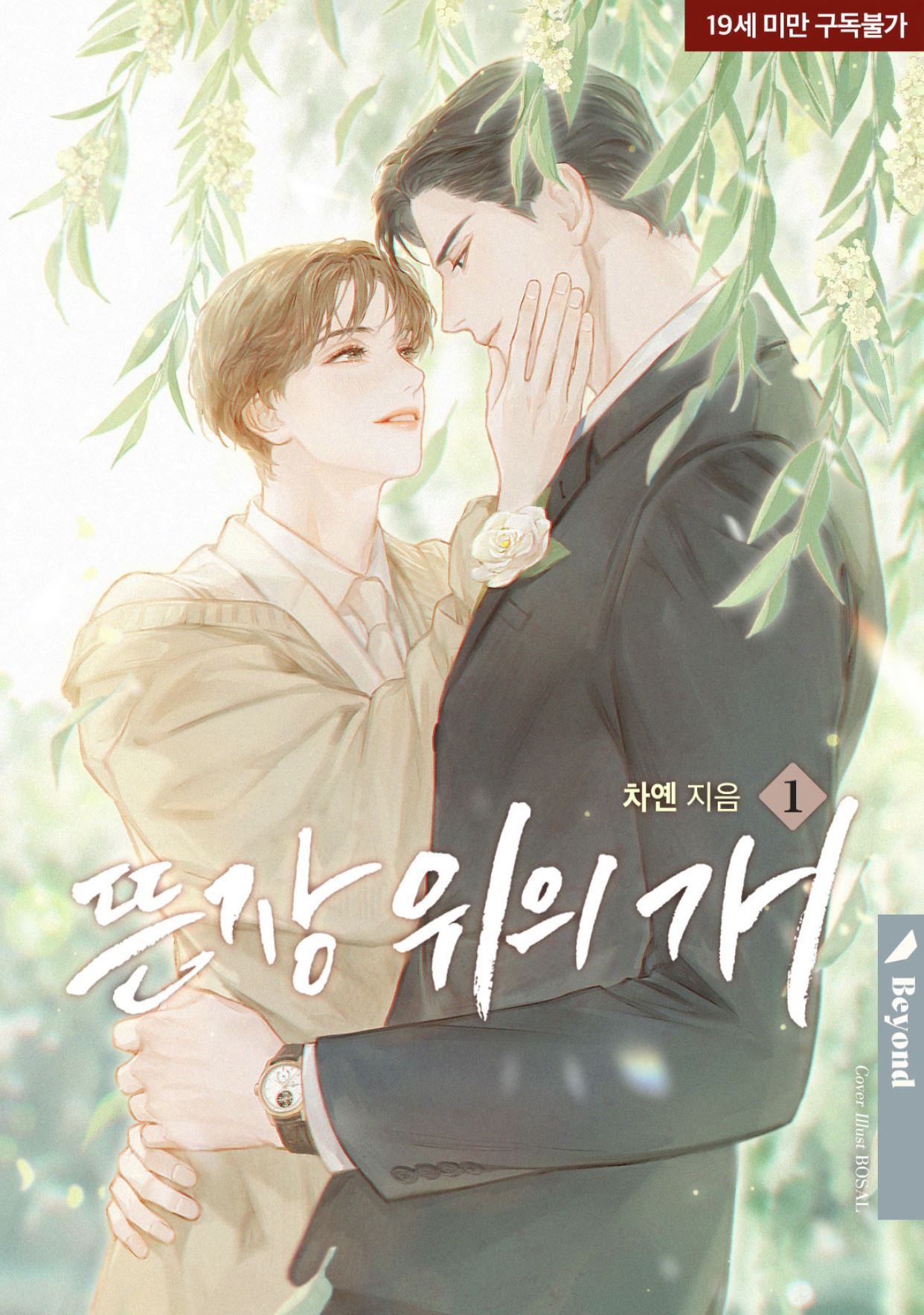
... Read More
Okay, so I need to talk about how this passage handles its flashback structure because honestly it's pretty brilliant and I barely even noticed at first read. We're in the present—Heeyeon is in Yeon's office, eating pie, staring at snow—and then suddenly we're dropped into a completely self-contained anecdote about coffee. It's not just filler; it's the kind of scene that seems like it could be deleted but would actually unravel the whole chapter if you pulled it out. The reason it works is because it does double duty: it explains how Heeyeon went from tea-only to coffee-drinker, and it establishes this domestic rhythm between them that makes everything else hit harder. By the time Soocheon walks in and disrupts the moment, you feel that shift because we just spent time in their quiet bubble. The plot beats here are deceptively simple—Heeyeon ponders harassment, gets distracted by a memory, Yeon watches him, Soocheon interrupts with news about Suryeo, and then there's the meeting announcement that changes the trajectory. But what makes it cohesive is that each beat flows from the last emotionally rather than mechanically. The Harvey incident isn't resolved; it's deferred, which is the right call. Heeyeon doesn't figure himself out in one chapter, and the story knows that. The question hanging at the end—"I won't see you, Director?"—is a classic tension-builder that works because we've already invested in this日常 pattern they've fallen into. And now something threatens to interrupt it. Classic move, executed well.
... Read More
Okay so let's talk about the sheer BRILLIANCE of how Director Yeon handles this whole situation. On the surface, it looks like he's being a responsible guardian — telling Heeyeon to stop suppressants, keep him close, send him to Haejin to train. But read between the lines and it's a masterclass in manipulation. The moment he gets Haejin's message saying "stay at my place" and immediately types back "Decline it" — NO hesitation, NO explanation — that's the first red flag. Big red flag. Then when Heeyeon asks if he wants to go to Haejin, Director Yeon cups his cheek TENDERLY and asks if HE prefers staying with Director Yeon. Meanwhile we just saw him refuse Haejin seconds ago. The contradiction is so blatant yet Heeyeon doesn't even notice. "You're still a baby, so it's fine." Heeyeon is TWENTY. Twenty. And Yeon keeps calling him a baby like it's adorable when it's actually infantilizing in the most convenient way possible. And then the training backstory drops — "Alphas who reacted sensitively to omega pheromones were deemed worthless and sold for low prices." This is the key to understanding WHY Director Yeon is so obsessed with control. His entire worldview was shaped by a system that treated sensitivity as a death sentence. And now he's trapped between hating pheromones (because of trauma) and not wanting to let Heeyeon go (because of attachment). The plot is basically setting him up as someone who's going to hurt the person he claims to protect, and he doesn't even realize he's on that path yet. Also — Lee Haejin is clearly the sane adult in this room and Director Yeon is actively working around him. How long until Haejin figures out what's actually happening here?
... Read More
I keep coming back to the pheromone theme in this section and I think it's deeper than just worldbuilding mechanics. The whole story seems to use pheromone control as a metaphor for emotional regulation and trust. Heeyeon is anxious about his pheromone levels because 'he wanted to be an omega worthy of Director Yeon.' But here's the thing—we know his hormonal glands aren't damaged, he has no major health issues. The problem isn't physical. It's that for five years his body was controlled through abuse, and now even something as biological as pheromone release feels like something he needs permission for. 'Having presented as an alpha or omega and not knowing how to handle pheromones was no different from being immature.' He's internalizing that his body is something he needs to master properly, as if it's a failing rather than just a natural process. And Yeon's response—releasing pheromones constantly, drenching Heeyeon in them—is this weird paradox. On one hand, the doctor says it's excessive, that Heeyeon is fine. But Yeon can't stop. His pheromones are his love language, his way of marking and protecting and claiming. 'For Jung Heeyeon, a dominant omega, this was practically pheromone therapy.' But also for Yeon, it's probably obsession disguised as care. The father-grandfather thread ties into this too. Chairman Jung severed the family bond the moment Heeyeon became an adult and was sold to an alpha. Blood ties reached their end. And now Heeyeon has chosen someone—not arranged, not sold, chosen. His loyalty to Yeon is active, not forced. 'Whatever you do, it will be alright.' That's not submission, that's trust earned. Also the machine dangling from his fingers, twitching when he fidgets—that's such a perfect visual for how Heeyeon's nervous system is still wired from trauma. His body reacts before his mind catches up.
... Read More
Kim Chulwoo: "Didn't he make you angry? I wanted to beat him to death on the spot." Director Yeon: "No one gets angry while stepping on a bug." I HAVE TO STOP HERE AND APPRECIATE THIS DIALOGUE. This is the kind of exchange that separates a good writer from a great one. Kim Chulwoo is the reader's surrogate — he feels the rage the director refuses to feel. And the director's response is not dismissive. It's not cold. It's a philosophical statement wrapped in a metaphor so precise it could be carved in stone. You are not angry at a bug. You are not furious at Chairman Jung. You are calculating the cost of your reaction and finding it not worth the expenditure. That single line tells us everything we need to know about Director Yeon's psychology, his history, and his relationship with power. The rest of the chapter's dialogue operates at the same level of efficiency. Every line does at least two jobs at once. "Should I give you a peck?" — This isn't just Heeyeon being cute. It's characterization. He reads the room, he proposes a solution, he doesn't overcomplicate it. His voice is simple and direct, and that simplicity is a deliberate design choice. He doesn't perform emotion. He expresses it. "Director, you're too big" — This line is funny, yes, but it's also deeply intimate. Heeyeon is comfortable enough with the director to complain about his height in the context of physical affection. The domesticity of the complaint is what makes it land. And then there's the director's dialogue in the hutch scene. The narrator refers to him as "the man without a name" and "the person who'd spouted the bullshit that any alpha who couldn't perfectly control their pheromones was nothing more than a mongrel." This is the author's narrative voice doing the heavy lifting — injecting contempt into description rather than relying on dialogue alone. The author doesn't need the director to shout his resentment. The prose itself is furious. What I find most impressive is how each character's voice is distinct without being caricatured. Kim Chulwoo speaks like a loyal subordinate who is also a human being with feelings. Heeyeon speaks like someone who has never learned to hide his emotions. Director Yeon speaks like someone who has learned to weaponize silence. And the unnamed captives in the hutch speak only in fragments — curses, moans, the occasional muttered observation — because in that environment, language itself is a luxury. The author's narrative voice shifts register between scenes without announcing the shift. The office scenes carry a controlled, almost cinematic tone. The hutch scenes drop into something rawer, closer to stream of consciousness. The voice itself becomes a tool of worldbuilding.
... Read More
'If you don't want it later on… Then you can just throw it away, Heeyeon.' That line about the snow globe completely destroyed me. Think about it—Director Yeon gives him this thing that captures a perfect moment in glass, just like how he's keeping Jung Heeyeon in this apartment, in this life. But he frames it as disposable. 'Throw it away.' Like he's afraid of sounding possessive, so he pretends not to care. And Jung Heeyeon? He taps the cold glass with his finger and thinks, 'There was no way he could ever grow tired of it.' That's not just about the snow globe, is it? That's about Director Yeon himself. The carrying scene afterward is pure character work. 'You can carry a person who's asleep, too.' Director Yeon basically admits his generosity doesn't follow rules—it's selective, intentional. And Jung Heeyeon, fully grown adult, still instinctively tightens his grip and whispers 'Director' like he's seeking permission to stay close. But then—the tears. 'Did you cry?' 'No, I didn't.' The lie is so obvious. He woke up crying but won't admit it. Director Yeon knows it. We know it. And the fact that he brushes beneath Jung Heeyeon's eyes gently, like he's checking for traces, tells us everything about their dynamic. One protects through questions, the other protects through silence. This relationship isn't healthy by conventional standards—there's power imbalance, dependency, fear of abandonment masked as propriety—but god is it compelling.
... Read More
The pacing in these chapters is masterful and I want to break it down because it's not accidental. We go from high intensity — the kissing, the biting, the raw physicality — all the way down to silence. Heeyeon collapse against Yeon's shoulder, breathing ragged. Yeon stroking his hair gently. Then: "The room was filled with the sound of Jung Heeyeon's steady, peaceful breathing." That transition is everything. It's the narrative equivalent of an exhale. After chapters of tension, of buildup, of Heeyeon running and Yeon chasing, the story just... settles. The fire burns down to embers. And those embers are warmer than the flames ever were. Then the morning scene. Slow. Deliberate. Heeyeon waking up, stretching, feeling the sunlight, touching the snow globe. The pacing here is almost meditative — every sentence moves at the speed of someone who has nowhere to be and all the time in the world to think. But the brilliance is how the author uses structure to control emotion. The intimate scene is written in short, breathless sentences — commas piling up, clauses running into each other, mimicking the physical sensations. Then the morning is written in longer, flowing sentences, mirroring Heeyeon's calm state of mind. The chapter ends with Heeyeon murmuring "It's beautiful" and Yeon's voice behind him saying "Beautiful?" And then the text cuts off. Not a cliffhanger, not a resolution, just... a question hanging in the air. Perfect.
... Read More
The symbol that keeps returning in this chapter isn't even announced as a symbol—it just lives there, doing its work. Snow. Rain. Mixed together, neither fully one nor the other. That's literally the first image we get, and it's Heeyeon's entire existence distilled into weather. He exists in this liminal space—between omega and something more, between compliance and desire, between wanting something and believing he shouldn't want it. Then there's the coffee itself. Yeon drinks it. Heeyeon is curious but told it's for adults, that caffeine isn't good for him. Yet somehow, through the backdoor of a baby-friendly syrup coffee, Heeyeon gets to share in Yeon's ritual. It's consumption as intimacy. The pecan pie works the same way—it's gifted by Director Yeon, pre-sliced, and when Heeyeon offers it to Soocheon, there's this tiny rebellion in the gesture. Sharing what was given exclusively. And the pheromones—God, the pheromones. They're the chapter's most explicit symbol of everything that can't be controlled. Heeyeon can't control his dreams. He can't control Lee Yootae's voice in his head. He can't control whether Yeon feels the same. The Suryeo meeting is literally about learning to control something innate, but the subtext is screaming: some things aren't meant to be controlled. The recurring motif of gaze is another one worth noting. Yeon watches Heeyeon. Heeyeon watches the snow. Soocheon watches everything. Eyes are currency here. When Heeyeon finally looks up at Yeon's smile and feels 'almost entranced,' that's the moment the whole symbolic architecture clicks into place—this is a story about being seen and wanting to be seen by the right person.
... Read More
I am NOT okay with how this chapter handles stakes. Like, we go from “the knife could sever an artery” to “your hair is so soft” in the span of twenty minutes and my heart cannot handle this whiplash. The Yootae interrogation scene is brutal and I need to discuss it because the stakes here are PEAKED. Yeon isn't just torturing him for information—he's making a point. He talks about “killing animals for fun” and then does exactly that with a human. The stakes aren't just “will Yootae survive?” (though that's horrifying enough). The stakes are: what kind of man is Yeon when no one's watching? And more importantly—what does this mean for everyone around him? Heeyeon knows something happened. He says so explicitly: “There was a high chance a bloody scene had occurred.” But he doesn't ask. He waits with his four bottles of soju and beer, calculating time like a businessman, and when Yeon arrives, he just... accepts it. That normalization of violence as everyday life is chilling. The stakes aren't just physical danger anymore—they're psychological erosion. But then the car scene hits differently. Heeyeon asking “Is it okay for me to stay like this?”—what's the stakes there? Rejection? Vulnerability? He's placing himself in a position of complete dependence (literally sitting on Yeon's lap in a car) and trusting Yeon not to misuse that position. And Yeon doesn't. He just... holds him. That's where the real tension lives for me. Not in the knife, but in the question of whether tenderness can survive in this world. Also: “Heeyeon, he needs to stay alive.” Yeon drawing a line at death. What does that mean? What happens when that line gets tested?
... Read More
This chapter is a pacing miracle. Like, genuinely. The author starts SO slow — Heeyeon can't sleep, wanders into the living room, sits down beside Director Yeon, asks a question, gets shut down. It's languid, almost boring on purpose. You can practically feel the alcohol slowing everything down. Director Yeon's movements are described as 'so unhurried they bordered on lazy.' Perfect. The author is lulling you into a false sense of calm. Then around the middle, when Heeyeon says 'I want a peck,' that's where the tempo starts shifting. It's still gentle, still playful. 'Our baby likes physical affection so much, this is a problem.' Cute. Sweet, even. You're smiling. You think this is going to be a fluffy Omegaverse moment. You're wrong. The turning point is that confession — 'I don't think I'd like it with someone else.' And from there? Everything accelerates. The sentences get shorter. The actions get sharper. 'Open your mouth.' 'Stick out your tongue.' Command, obedience, escalation. The pacing goes from a leisurely stroll to a full sprint in approximately three paragraphs. And the ending? The author cuts off mid-intimacy. Director Yeon's hand has slipped under pajamas, and then — nothing. Just stops. That's not a cliffhanger, that's a *knife* to the ribs. I needed the next chapter immediately. The structural choice to end here rather than resolve the scene means every reader is left breathless, exactly like Heeyeon is in that moment.
... Read More
Director Yeon's dialogue in these chapters is absolutely chef's kiss and I will die on this hill. The man has mastered the art of saying exactly the right thing with the perfect balance of warmth, dominance, and playful teasing—and it shows in every single line. "Want me to hold your hand, Heeyeon?" comes after Heeyeon has already grabbed his jacket in a moment of panic, and instead of pulling away or getting annoyed, Yeon offers an even more intimate gesture. He's reading the situation perfectly and matching Heeyeon's vulnerability with something that gives him an easy way to accept comfort without having to admit he wants it. That's emotional intelligence that most alphas in this genre would kill for. Then there's "Since you're a baby, do I need to stay beside you and pat you until you fall asleep?" Which is teasing on multiple levels—he's infantilizing him in a way that's clearly affectionate, testing boundaries, making Heeyeon flustered enough to actually respond instead of just silently agreeing to everything. The omega frowns and protests "That's not what I meant" which is literally the most cute reaction possible and I cannot handle it. And the best line, hands down: "This is the guest room, so don't worry. There's a bathroom inside too, you can wash up. I had clothes prepared for you as well." This is Yeon at his most domestic-alpha—practical, thoughtful, matter-of-fact about the level of care he's providing. He doesn't make a big deal out of preparing clothes in advance or warming the room; he just states it as a normal part of hospitality. That casual competence is somehow more intimate than any dramatic declaration could be. The author's dialogue style here is sparse but loaded. Yeon doesn't monologue. He observes, he teases, he provides. And every line reveals more about who he is than any exposition could. Meanwhile Heeyeon's responses are barely there—short, hesitant, often unfinished—which makes Yeon's fuller, warmer lines feel even more dominant and protective by contrast.

Leave a comment

You must be logged in to leave comments. or
