Do Not Love Miserably - Reviews

Do Not Love Miserably
+Add to Custom List
Sort
Add review
... Read More
"A rough gem." Those are literally the chapter subtitle and they sum up everything. Hazel is described as a 'rough gem' by Madame Sinclair — unpolished, stuck in the countryside, but valuable underneath. But what kind of gem is being discussed here? A gem that was FORCED into a setting it never chose. The 'glass slipper' of the title — it's fragile, it's transparent, it's beautiful, and it CUTS. Hazel wore it and bled inside it and kept smiling. The shoes themselves are such a loaded symbol. 'At least a handspan high,' 'her ankles hurt,' 'she erased the pain with a picture-perfect smile.' Four months of practice wearing four layers of undergarments. The upper-class etiquette that the Marquis calls 'the privilege of this world' is actually a torture device dressed up as refinement. 'Remember that you too are one of us' — as if belonging is something you earn by suffering in silence. And the salon — Madame Sinclair's space where 'objects from the imperial era coexisted with the latest works of a furniture designer who had turned thirty this year.' Old and new, noble and bourgeois, all mixed together in a chaotic fusion. This is Bukata society itself: a place where status is performative and everyone is pretending. The Marquis sees it as beneath Hazel. Madame Sinclair sees it as an opportunity. Kyle sees it as a battlefield. The text keeps returning to reflections and surfaces — eyes reflecting eyes, sunlight reflecting off Agatha's lenses, Hazel's face turning ashen in real time. Nothing is what it appears. Everyone is performing. The real question hanging over everything: who will shatter first?
... Read More
The stakes in this section went from personal grief to political chess game in about five minutes and I am breathless. Let me just lay out what everyone is risking right now. Hazel loses her brother, gets publicly humiliated by the man she still has feelings for, and then— apparently without her knowledge— gets adopted into a noble family as part of a political scheme she had nothing to do with. Kyle loses... well, we don't know what he loses yet, but the fact that he reacted to the newspaper headline with his 'eyes sinking heavily' tells me Hazel's elevation means something to him that he won't admit out loud. The Prince loses... what, reputation? His father's frustration is palpable. And Colin is dead, which means all the stakes that came with being a soldier in Reto are now just ghosts haunting the living. But what really got me was this line: 'People say a person can only feel one pain at a time. For the first time, Hazel was grateful for that fact.' She was already drowning in grief over her brother and Kyle's rejection should have been unbearable— but it wasn't, because the first pain was already so immense it absorbed everything else. That is a horrifying realization about human capacity for suffering. How much more can one person hold before they break completely? Because honestly, at this point, I'm not sure any of these characters are going to make it through intact.
... Read More
'Money is important, but you must not sell justice for money.' That line from Hazel's father Robert Bennett hits different because his voice is COMPLETELY distinct from every other character in this book. He sounds like a man who actually lived through hard times and built his principles slowly, word by word. Contrast that with Kyle, whose dialogue is all sharp edges and dismissals — 'This sort of childish romance is a waste of time. I'm not free enough to humor women.' Cold, clipped, efficient. Every sentence sounds like he's calculating whether it's worth his energy to speak at all. Dennis is the comic relief but he's written so naturally that he never feels like filler. His voice is irreverent and warm — 'At least as of today, people should stop saying you like men' and 'I would've thought you were cross-dressing and walking around.' There's a whole friendship history in two lines of dialogue. You can feel three years of military camaraderie compressed into casual insults. And then there's Eliya, Kyle's mother, whose every word sounds like it was measured and polished before being released. 'I cannot live forever, so secure your position before it is too late.' Flat. Precise. Zero warmth. The dialogue doesn't need description — her voice IS the description. Even the narrator's voice deserves mention. Lines like 'She would probably even go about marriage only after calculating profit and loss. Because that was how the rich were, how the upper class was' carry this quietly devastating tone — observant, a little cynical, but never cruel. It's the voice of someone who understands the world well enough to see its mechanisms but hasn't fully surrendered to them yet. Hazel Bennett's inner monologue is basically the narrative engine of this book and it's consistently sharp.
... Read More
Okay, let me just say this: the way the author handles the timeline in these chapters is genuinely impressive. You open with Hazel already in Bukata, already living a life separate from Kyle, and then within the first few pages you've got a full flashback to Christmas Eve five years ago—their first official date, the carriage ride, the promise he broke. All of it woven in so smoothly that you don't even notice you've left the present moment until you're back in it. The structure does something clever with timing too. Right after that devastating reveal—that Kyle never wrote, never called, that Hazel let go because the bond was never hers to begin with—the narrative immediately drops you into the Strauss Hotel appearing outside her taxi window. She's not given any time to process the nostalgia before she's physically encountering him again. That's not accidental pacing; that's the author forcing Hazel (and the reader) to confront the gap between memory and reality without a safety net. Then there's the chapter break that slices us away from Hazel's POV and lands us squarely in Kyle's head—where he's lying on a sofa, aroused, fantasizing about her in ways that are equal parts tender and disturbing. It's a jarring shift, but it works because it recontextualizes everything we just saw from Hazel's side. The polite cafe conversation, the carefully controlled distance—suddenly we know what's happening beneath the surface on his end. What I found myself wanting to slow down on was the Alice interlude—the reporter subplot feels like it's setting up future plot but currently exists more as breathing room. Not bad pacing, just a different rhythm. The story knows when to accelerate and when to let you exhale.
... Read More
Let me just say — the pacing in this section isMASTERFUL and I need everyone to understand what I mean by that. The chapter opens with Hazel arriving at the Fitzroy mansion and immediately we get this devastating detail: Agatha, the housekeeper, is so perfectly composed that 'not so much as a single strand of hair [is] out of place.' The Marquis speaks in low, steady tones. Everything is controlled. Then — *cut* — we jump to Kyle at the salon, overhearing gossip. Two parallel worlds, both cold, both performative. And then they MERGE when Hazel walks in with the Marquis on her arm. The scene where the Marquis drops Hazel off and leaves is paced like a slow-motion car crash. He waits until she's fully removed her gloves — not a second before, not a second after. 'Only after that whole process was finished did the Marquis remain in place with his cane, as though waiting for someone.' Waiting for who? For the moment to be over. For his duty to be done. And then he 'long since disappeared beyond the entrance.' Hazel doesn't look back. Neither does he. Then the salon conversation — Madame Sinclair is chatting away about Kyle's business achievements, completely oblivious, and Kyle drops 'But now she looks like a beautiful woman' like it's nothing, and Hazel's composure cracks in real time. The pacing here accelerates: short sentences, fragmented thoughts, the text itself seems to breathe faster. And then — abrupt cut to the sitting room. Silence. One broken sound. End of section. The contrast between the noisy, crowded salon and that empty room with pink armchairs is devastating. The author knows exactly when to speed up and when to STOP EVERYTHING.
... Read More
The author's dialogue work in this batch is genuinely exceptional, and what's wild is how differently voices operate depending on whose heads we're in. Kyle's interior voice is pure mechanical precision. Even his thoughts about romance come out structured: "I ought to look for a fiancée within this year. So that I may marry around next year." This man doesn't have feelings, he has timelines. And yet — the most devastating line in the entire batch isn't dialogue at all, it's narrative: "Everyone dies. But no young man ever thinks he will end his life at the age of twenty-five." That's not a character speaking. That's the author leaning over Hazel's shoulder and whispering truth directly to you. Oliver's dialogue is painfully honest in a way that makes you want to shake him gently. "That's how desperate I am. Go out with me, Hel." The nickname 'Hel' — the way he slips into it, casual and practiced from years of friendship — it does so much work. This is a man who has rehearsed this moment a hundred times in his head and still can't make it sound anything less than devastatingly sincere. The narration itself has a voice that's worth separate praise. Look at how it handles the Prince's survival scene: "To him, the sensation of the dead soldier was nothing more and nothing less than something horrifying that had to be shaken off." That's not judgment — that's clinical observation, and it's far more chilling than any moralizing could be. The author trusts us to feel the horror without telling us how to feel it. And Hazel's final line — not spoken aloud, obviously, but the narrative equivalent of one: "Kyle Strauss was walking toward the lit theater. He wore a hat and carried a bla—" The cut-off. The incomplete word. The prose itself refusing to finish because she can't bear to finish seeing him.
... Read More
I'm not even gonna pretend I'm not obsessed with how these two talk to each other. Every exchange between Hazel and Kyle is doing three things at once and I am HERE for it. Take this sequence: "You helped me out, so……?" "And if there's something I want, are you willing to give it?" "You helped me out, so……?" -> "Are you willing to give it?" One is offering payment. The other is asking, in the most deliberately ambiguous way possible, whether she'd give him anything AT ALL. And Hazel—sweet, flustered Hazel—takes it at face value and apologizes like SHE's the one who crossed a line. "If you were hot, I'm sorry!" What did she do wrong? NOTHING. That's the point. He's testing the water and she's splashing around blindly. His voice throughout is all controlled edges. Lazy tones, raised eyebrows, rhetorical questions that function as invitations. "What, say it." Two words that carry the weight of someone who knows exactly how to push and exactly when to stop. The author even gives us his internal commentary: "A woman saying she wants to treat a young man financially……" He finds her genuine naivete amusing but not pathetic. There's affection in his teasing, even when it cuts. Hazel's voice, by contrast, is all apology and self-correction. "Sorry." "Ah." "Um, Kyle……" She's always backing up, always making room for him to lead. But—and this is what makes her voice so compelling—she's not weak. She's just polite in a world that rewards politeness from women and suspicion from men. When she says "My treat. Because I'm grateful," she means it literally. The reader knows Kyle means something else entirely. The narrative voice itself deserves mention too. It flips between third-person limited (mostly Hazel's POV) and these piercing omniscient observations that land like punches. The author isn't afraid to step outside the scene and comment on what's happening between these two characters in a way that neither of them fully understands yet.
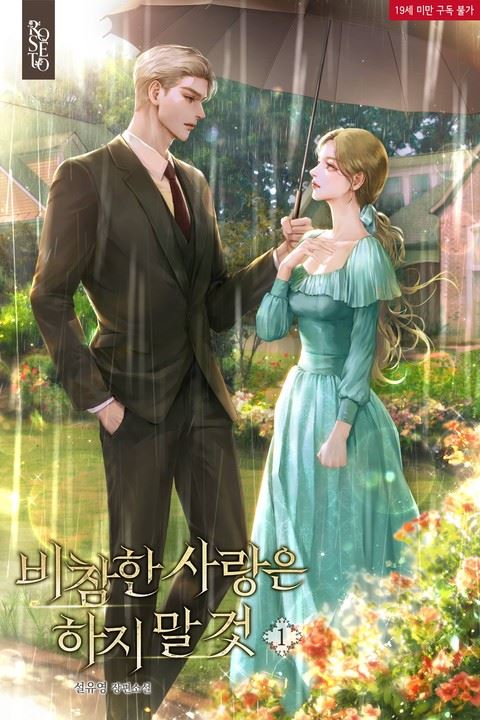
... Read More
This batch is a masterclass in violent tonal whiplash and I am here for it. Chapter 11 opens with Prince Edward pinned under a corpse in a wrecked carriage, flies buzzing, vomit hitting the floor, and the narrative doesn't blink — it just zooms out to show us a scrap of paper with a family photograph. A photo! Of someone else's life, lying in the mud next to dead soldiers. The Prince picks it up and casually says "Find out who this woman is" before shoving the body aside. The pacing here is suffocating and deliberate, every sentence short, every detail sharp. You can smell the blood. Then — and I cannot stress how jarring this transition is — we cut to Hazel sitting peacefully under a two-hundred-year-old plane tree reading a book at sunset. The prose itself slows down. The sentences get longer, softer. Rivers murmuring, green grass, an old sea-green book. It's like the author took a deep breath after nearly drowning us. And then Oliver shows up. Sweet, desperate Oliver asking her to Christmas Eve. Five minutes of normalcy. Domestic warmth. And then — soldiers at her door. Sally's face covered. Little Jen wailing. "Captain Colin Bennett has been killed in action." The pace doesn't just quicken, it detonates. The chapter structure across this batch basically does: political intrigue → near-death survival → pastoral calm → devastating loss → cliffhanger encounter. That's four complete emotional arcs in roughly twelve chapters. The finale with Kyle spotting Hazel at the theater, the chapter cutting mid-sentence as she screams his name — this is structural manipulation at its finest. The author knows exactly when to rip the rug out from under you.
... Read More
I have to say, the way this author builds atmosphere is genuinely cinematic. Like, you don't just read about Bukata—you feel the temperature shift, you hear the insects, you notice the peeling paint. The transition from the bright square to that narrower street is brutal in the best way. One minute Hazel's wandering around thinking it's fine to explore at night, and the next you've got: "A thick arm wrapped around her waist and yanked her sharply backward." Boom. No warning. And then the car that speeds past WITHOUT LIGHTS ON—this detail is doing SO much work. It's not just spooky, it's an immediate signal that something is fundamentally wrong with this place. These aren't just dangerous people; these are people who operate in deliberate shadow. The perfumed woman. The pressing bodies. The innkeepers with their eyes peeled for naive tourists. Every sensory detail reinforces that this isn't a neighborhood that's merely seedy—it's a functioning ecosystem of exploitation, and Hazel is completely unaware she's walked into it. "This isn't Sainsbury, Hazel. This is a place full of people far more dangerous than wild beasts." Kyle's line does double duty here—he's warning her about the location, but also subtly including himself in that description. The narrative itself seems aware of this, noting "perhaps Kyle Strauss himself could also be included among those dangerous people." And then his apartment! The gramophone, the telephone, the clock—all expensive objects that Hazel is terrified of touching because she's convinced she'll break something. This isn't just worldbuilding about Bukata; it's class architecture. The fact that Kyle lives alone in a four-story building with servants in the same structure but no one actually present... it creates this haunting domestic emptiness that contrasts perfectly with Hazel's memory of Alice's house being "bustling with servants." Both are wealthy, but one hums with life while the other echoes.
... Read More
The dialogue in this section issparse but absolutely vicious and I love it. Let me just collect the most damaging lines. Kyle: 'Who are you?' Three words. That's it. Three words that rewrite years of history into nothing. And then 'I don't know her.' Said to the woman clinging to his arm like it's the most natural thing in the world. The woman replies with this rippling laugh and says 'It must be tiring, being famous.' Which is either genuinely cruel or weirdly perceptive— she clearly sees through Kyle's dismissal but phrases it as a joke so no one has to admit the cruelty out loud. Then there's King Joseph III, who speaks with this effortless authoritarian boredom. 'What were you doing instead of stopping the Prince!' — pure rage, then immediately shifts to 'I shall summon Captain Bennett's father before long. It may be good for fathers to see each other's faces once.' Said almost casually, like he's arranging a lunch date. The way his speech patterns shift between booming commands and idle observations tells you everything about what kind of man he is. And Hazel— barely speaking at all. Her lines are apologies. 'I'm sorry. I thought you were a friend.' 'I was mistaken.' She doesn't even defend herself. She just folds. That silence is louder than any dialogue could be.
... Read More
I have to start with this one exchange because it stayed with me for hours: "If it was too much, I am sorry, Hel." HEL. Not Miss Fitzroy. Not Hazel. Hel. A nickname that belongs to a version of her that only existed before everything changed. And he says it in front of Madame Sinclair, in front of EVERYONE, and then immediately covers it with an apology that isn't really an apology. This is Kyle Strauss at his most dangerous — he weaponizes intimacy and makes it look like courtesy. The dialogue throughout this section is layered with what people DON'T say. Look at Agatha: 'I would ask that you use the east staircase whenever possible, and refrain from using the central staircase.' She doesn't explain. Hazel doesn't press. They both know why — the Marchioness doesn't want to see Hazel — but nobody says it aloud. The silence IS the explanation. Madame Sinclair's dialogue is almost comically over-the-top polite: 'what an unqualified hostess I am,' 'I know you are close with Alice, Hazel,' steering conversations like a ship through minefields. She's performing hospitality while actually doing something quite manipulative — dropping Hazel into a salon with inadequate matches. But Kyle — Kyle's dialogue is the most revealing. 'We were friends.' Five words. Past tense. Final. And then the nickname 'Hel' slips out like he can't help it, like some part of him still reaches for her even as the rest of him pushes her away. His dialogue is all deflections, jokes, polite apologies — never anything direct. Which means everything indirect matters ten times more.
... Read More
'She is pretty.' Just that. Three words. Kyle says it and walks away like it's the most neutral observation in the world, but Hazel? Hazel hears it in the bathroom and her chest actually PHYSICALLY hurts. She presses her hand over her sternum like she's holding something in. I need to sit down. Here's what kills me — she's not even mad that he called her pretty. She admits it. She even thinks, 'That's why I liked you. Even now I still do.' She swallows that alive. And then she does something so incredibly honest and raw: she looks in the mirror and pulls the meanest face she can manage and says 'And what makes you so great?' as if insulting him will make the wound stop bleeding. It doesn't. But then — THEN — she pivots. She decides that instead of chasing someone who only has 'pretty' to offer her, she'll find someone whose CHARACTER is actually decent. That's not just pride talking. That's a seventeen-year-old girl who has been quietly in love with this untouchable boy since she was younger deciding that she DESERVES more. That's genuinely moving because it's not some grand declaration — it's whispered to a water-splashed mirror while everyone else is dancing. And Kyle? He's over here telling Dennis 'This sort of childish romance is a waste of time' but his eyes keep tracking Hazel across the room. He claims he's not free enough to humor women but then mutters to himself 'How much had he even seen of her, for disappointment to come rushing in like this' when she vanishes from sight. The man is so painfully oblivious to his own feelings it actually aches.

Leave a comment

You must be logged in to leave comments. or
