Divorce Mediation - Reviews

Divorce Mediation
+Add to Custom List
Sort
Add review
... Read More
Okay so this section is absolutely RIVETING in how it slowly peels back the layers of this mansion's rot. The reveal that Liliana has been trapped in there for two years while Raven was at war just... god. The plot architecture here is so deliberate. We start with the intimate scene between Raven and Liliana, and then suddenly we're thrust into this dark underworld of abuse and conspiracy. It's like the author is saying: look, what you think is a sweet reunion? No. Nothing is sweet here. The pacing of revelations is masterful. First we get Rachel's lie that Liliana is picky and eats little. Then Raven notices the empty plates. Then the question about going outside. And BOOM - she's never left the mansion. Never. The stable scene is where it really hits. I literally had to pause and process. She was sleeping beside a horse in winter, hiding under its belly for warmth, while servants harassed her. And the Grand Madam's rule - that Liliana has to open the door herself for anything to happen? That's psychological torture at its finest. Meanwhile, cut to the villains plotting in real-time. They want to kill Raven but need to prevent any pregnancy heir first. Damon needs to inherit. The whole setup is a chess game where everyone thinks they're playing but the board is rigged. What's brilliant is how the narrative switches perspectives - we see Raven's investigative side, Liliana's hidden suffering, and the antagonists' malicious planning all interwoven. The tension isn't just building, it's coiling like a spring ready to snap. I'm hooked on how the author withholds information strategically. We know the servants violated the boundary set by the Grand Madam, but what exactly happened behind that closed door? The author makes us sit with that horror without satisfying our curiosity. That's bold storytelling. And Raven's realization that his entire family might be fake? The blue blood line that turned out to be nothing but obligation? That's a gut punch that recontextualizes everything we thought we knew about him.
... Read More
I need to talk about this dialogue for a minute because it is both ridiculous and perfect. Raven, this man who sits like a statue, this man of military discipline and restraint, looks at Liliana after weeks of holding back and asks — dead serious — 'May I suck your chest?' And she just... considers it. Not with disgust. Not with fear. With genuine negotiation logic. 'Just sucking, right?' The fact that she treats this like a transaction she can negotiate around shows everything about her character and nothing about her shame. And then the follow-up: 'Anywhere? Yes, anywhere you want! My chest is fine, and below is fine too. My fingers, my toes — I'll give them all to you.' This is the most heartbreaking negotiation in the history of romantic fiction. She's offering pieces of herself like she's distributing rations. Meanwhile Raven is just sitting there with this insane amount of restraint and she's just handing him everything and he takes it gently. The dialogue between them is so natural because it's flawed — she doesn't understand the weight of what she's offering and he understands too much. That gap is the entire love story.
... Read More
The pacing here is surprisingly tight for an opening. We jump from Lilliana's divorce demand → Raven's reaction → his flashback to meeting her → back to Lilliana's present-day resolution, and each transition feels purposeful, not gratuitous. Chapter 1.1 moves at a frantic pace—almost claustrophobic—which mirrors Lilliana's psychological state perfectly. Then Chapter 1.2 slows down just enough to give us context without losing momentum. My one critique: the Raven POV section in 1.2 has a slight drag when he's reminiscing about his father and his promises to his stepmother. It's emotionally relevant, but it does pause the forward momentum briefly. That said, it serves a purpose—we need to understand why Raven can't simply refuse his family, because that's exactly the trap Lilliana is caught in. The chapter structure itself is smart: ending on Lilliana's vow ('Anywhere would be better than this') creates a natural cliffhanger that pulls you into whatever comes next. The dual-POV switching also works well for building dramatic irony—we know things about Lilliana's experience that Raven completely misses, and that gap is where the tension lives.
... Read More
The dialogue in this opening is interesting because of what it DOESN'T say as much as what it does. Lilliana and Raven's conversation is painfully brief and stilted—'Divorce me, Raven Kreuten.' 'What?' That's it. Two lines that carry the weight of an entire destroyed marriage. The dialogue feels intentionally cold, which mirrors the emotional distance between them. Raven's lines are clipped and practical ('Aren't you eating?' 'Is my wife ill?'), reflecting his military background and emotional unfamiliarity with domestic crises. But the real voice work happens in the internal monologue and the quoted memories of the Kreuten women tormenting Lilliana. Those lines—'You're nothing but a broodmare brought in to bear heirs!'—are brutal in their directness, and they're delivered like dialogue from a horror movie. The narrative voice itself is close third-person, staying firmly anchored in Lilliana's head for most of it, with the Raven section providing just enough contrast to avoid becoming a one-note perspective. I appreciate that the author doesn't over-write the dialogue; it's lean and functional, which lets the emotional subtext do the heavy lifting. The line 'It was my own fault for coveting such things' really captures Lilliana's internalized shame, and it's delivered without any explanatory padding.
... Read More
The author here is playing with some serious tonal whiplash and I am HERE for it. We go from Liliana being pinned down and tortured with needles in the span of, what, two pages, straight into Raven carrying her to a dressing room and flirting with her in front of society? That transition is insane. One moment you're holding your breath because this woman has sharp objects shoved into her fingertips, and the next you're watching a Duke sweep his wife into public like a goddamn rom-com lead. But it works. Because the pacing isn't just fast — it's deliberate. The author spends exactly as long as needed on the horror (which is still disturbingly brief, honestly), then pivots hard into recovery and reclamation. The dressing room scene is basically Raven rebuilding her from scratch: new clothes, new makeup, a public display of devotion that sends every rumor mill in Kreuten into shock. It's structured like rehabilitation — expose the wound, clean it, then bandage it in public so everyone knows she's protected now. The chapter breaks are also doing heavy lifting. We get a *** break right after Raven kills the head maid and locks Rachel away, then restarts with Chapter 10 titled "I'll Make You Blush." From execution to romance in a single line. That's not careless pacing, that's control. The author knows exactly when to let you breathe and when to keep squeezing.
... Read More
The dialogue in this book does exactly what I love most when it is sharp and layered. Characters rarely say what they mean, especially the Grand Madam and Rachel, whose lines drip with performative sweetness. Watch how Rachel greets Raven: "Welcome home! Are you hurt anywhere? You seem thin." It sounds caring, but you know her true thoughts the moment they turn away from him. She pats his hand and says, "We've held out well so far," while imagining vicious deeds. The gap between her spoken words and her internal monologue is where the voice lives. Liliana's dialogue reflects her trauma. She speaks in fragments, hesitations, small noises. "Th-then, from now on, are we no longer husband and wife?" "I-I don't know." Her voice is cracked glass, barely holding together. But there are moments when she speaks firmly, when she says, "I understand," after learning about the one-year timeline. Even in her broken state, she finds steel. Raven is different entirely. His voice is direct, warm, and surprisingly honest. When he kneels before Liliana and tells her he fell in love with her at first sight, the dialogue strips away all pretense. There is no subtext, no game. He says exactly what he feels, and that honesty becomes a kind of weapon against the lies surrounding them. Their exchange about why he would be upset if she is sick is quietly devastating. Liliana has never experienced concern from anyone. She asks, almost disbelieving, "If I'm sick, you're upset?" And Raven answers simply, "Yes." Two words that carry the weight of a lifetime of abuse and the dawning possibility of safety. Dialogue like this does not need shouting. It works because it is human and raw.
... Read More
"Lily. You're in a chemise right now. It's a very intimate attire. I don't want to share that with anyone else." I'm not okay. I am genuinely not okay. This man just walked in on his wife being tortured, killed the head maid with his bare hands five minutes ago, and his first concern is making sure no one else sees Liliana half-dressed. The possessiveness could be a red flag in any other story, but here? It's the only thing keeping her alive. He's a monster to everyone except her, and that's terrifying and beautiful at the same time. But the part that actually made me ugly cry was when Raven wipes her tears and says "I promise this will never happen again" and she doesn't believe him. She literally tries to argue, like she's convinced she deserves this punishment. The abuse has rewritten her sense of reality. She thinks the needles were her fault. That's the deepest wound in this entire chapter — not the physical torture, but the psychological dismantling of a person who already believed she was worthless. And then later, when she comes out of the dressing room in that new dress and he pulls her close, saying "It suits you well, Liliana" — she believes him. For the first time. Her face turns red and she fiddles with the hem, and I swear to god I felt something break open in my chest. After everything, she still wants to please him. She still hopes. That's not naive, that's courageous.
... Read More
Let me tell you, the stakes here are not just high; they are suffocating. Liliana signed divorce papers hoping to escape hell, only to learn she has to live in the same house as her tormentors for up to a year while the mediation drags on. One year. With women who have already tried to drive previous wives to suicide, who have raped her, starved her, and terrorized her servants into complicity. This is not a mild domestic dispute. This is survival horror wrapped in aristocratic silk. What makes the tension unbearable is that Liliana cannot simply leave. She has nowhere else to go. She was raised to be sold. Earl Everset owns her past, and Kreuten owns her present. The only thread pulling her forward is Raven, who is still figuring things out and does not yet know the full depth of what his family has done. And yet, even that thread is fraying because Raven is still technically her husband during the mediation period. She needs his protection but also fears dragging him into their web. Raven's conflict is equally intense. On one side, his family—the Grand Madam and Rachel—who have performed love and devotion for him his entire life. On the other side, his wife, who flinches when Rachel touches her and whom he is beginning to realize is dying inside his own home. Raven has spent two years at war, standing at the border of life and death. He knows what matters and what does not. And yet his family's manipulation runs deep enough that even now, suspicion might linger. That uncertainty is delicious. TheGrand Madam and Rachel are not cartoon villains. They are calculating. They plan to wait for Raven to leave again. They will look for things that leave no trace. They remind you that these women have killed before and gotten away with it. That adds real weight to every scene they share. Every smile they give Raven is a threat to Liliana.
... Read More
Let's talk about voices. Because this author doesn't just write dialogue; they write psychological autopsies through speech patterns. Raven's lines are jagged, declarative, often incomplete. “Well done.” “What happened to Damon?” “If this is love, then I suppose it is.” He doesn't embellish. Even his confession to the lawyer is a list of urges, not feelings. He says he wants to “keep her in bed all day,” then pauses, then adds “her smile looks beautiful.” The shift from possessive to poetic is so abrupt it's like watching a wolf suddenly recite Rumi. And it works because Raven isn't refining his emotions—he's discovering them in real time. His dialogue is raw footage, unedited. Liliana's interior voice is softer, hesitant, full of ellipses and questions. “Hmm… I want to take back what I said to Raven, but I don't know how.” She doesn't speak in declarations; she speaks in uncertainties. Even her joy at the pond is tentative: “Maybe, I'll try.” The contrast between Raven's certainties and Liliana's doubts creates this magnetic tension—you can almost hear the space between their words vibrating. But my favorite? The maids' gossip. Oh, the maids. “Is that why that young lady wore such a dress?” “Yes. I heard it was quite revealing!” It's trivial, yes, but it's also brilliant worldbuilding. In this society, women's bodies are public text. The maids read each other's clothes like novels, assigning meaning to hemlines and necklines. Their dialogue is a survival mechanism—gossip as armor, as currency, as distraction from the bloodstains on the garden stones. And the lawyer! His single line—“Do you love the Duchess?”—is a masterpiece of professional curiosity bleeding into personal concern. He doesn't pry; he asks. And Raven's answer—“I want to kiss her, cherish her, protect her… keep her in bed all day”—flattens the lawyer's expression into blankness. That's the power of dialogue here: it doesn't just reveal character; it reveals the gap between social expectation (a nobleman should love honorably) and brutal truth (a nobleman loves like a feral cat). One scene I can't stop thinking about: Raven licking Liliana's earlobe and whispering about the reward. No dialogue tags, no description of setting—just sound and sensation. The author trusts us to feel the warmth of his breath, the tremor in her lip, the shift from public Raven (the executor of justice) to private Raven (the hungry lover). That's voice control at its finest. The prose doesn't describe desire; it becomes desire.
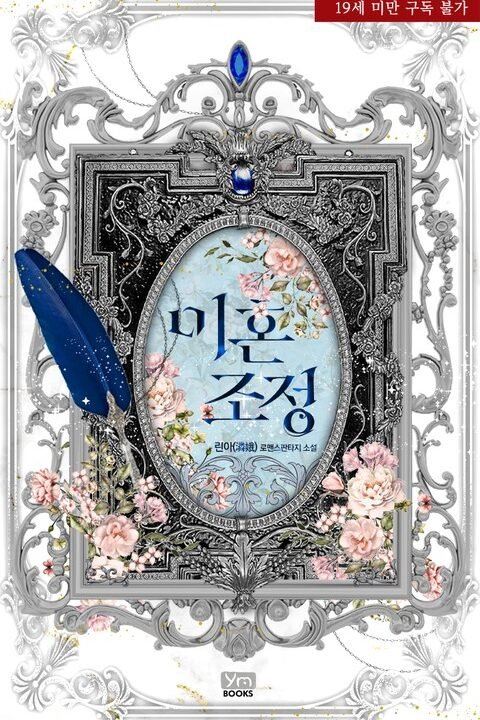
... Read More
There are two images that keep echoing through this passage and they're doing heavy thematic work. Raven is described as a bronze statue crafted by the gods — sacred, untouchable, disciplined. Liliana is described as 'a person as pure as an uncut gemstone.' One is hardened metal, forged and cooled into permanence. The other is raw stone, unshaped, still carrying the dust of the earth. Together they form the central tension of the entire novel: can something soft survive something unyielding? Or will the unyielding thing learn to bend? Raven's restraint is the statue — every muscle locked, every instinct swallowed. But the statue is cracking. His eyes go red. His voice comes through clenched teeth. He's holding onto something fragile and he knows it. Liliana's purity isn't innocence — it's survival strategy. She forgot the pain because dwelling on it doesn't help you live. 'Humans are creatures of forgetfulness, after all.' That line is the thesis statement. The novel keeps asking: what happens when the wounded learn to trust again? What does healing look like when you've been trained to negotiate your own worth? Raven and Liliana are answering that question together, one clumsy, desperate, beautiful moment at a time.
... Read More
What are we really fighting for in these chapters? On the surface, it's revenge—Raven dismantling the Grand Madam's family, ruining Rachel, exile for Damon. But the stakes are never about power; they're about proximity. Every conflict circles back to Liliana's body and her breath. The external conflict is obvious: enemies to destroy. The stablekeepers mutilated, the Grand Madam fed beast-stimulants, the lawyer tearing up divorce papers. But watch how the author layers the internal stakes. Liliana's crisis isn't “should I stay or leave?” It's “who am I when I'm not afraid?” Before Raven, she couldn't walk in her own garden. Now she dips her feet in a pond and hears maids gossip about dress lengths. The victory isn't political; it's sensory. She's learning to occupy space again. Raven's conflict is more terrifying. He's not fighting external foes; he's fighting his own nature. The lawyer notes the shift: “On the first day, he'd been like an untamed beast; now, he seemed a tamed predator.” But predation doesn't disappear—it focuses. Every act of violence is redirected toward protection. The knights who dragged the stablekeeper are the same knights who will drag anyone who threatens Liliana. The lawyer who tears up divorce papers is the same lawyer who will bury evidence. Raven's moral geometry has collapsed into a single axis: her. The highest stakes? The divorce itself. It's not just a legal status; it's a test of trust. Liliana asked for it, but not because she wanted freedom—from Raven, she wanted freedom from the poison surrounding her. When Raven tear up the papers, he's not rejecting her agency; he's accepting it while refusing to let her run. That's the core conflict: can love exist without cages? Can safety exist without violence? And yet—the most devastating stake is the one no one names. When Liliana trembles at Raven's name, “as if something in her name bound her soul,” she's not just succumbing to passion. She's acknowledging that her identity is now irrevocably tied to his. The Grand Madam's fate, Damon's beating, the lawyer's blank expression—all of it leads to this: a woman who has everything to lose, standing in a pond with her husband, knowing he would burn the world for her, and wondering if she still wants to. The stakes aren't life and death anymore. They're meaning and void. And Liliana's choice—to let him carry her inside—feels less like surrender and more like the first brave step into a labyrinth she helped build.
... Read More
The dialogue in this section is deceptively simple, but that's exactly what makes it so powerful. Most of the meaningful communication happens through what isn't said. When Raven asks Liliana if she's ever gone outside, her blush is the entire answer. When she says 'I don't like horses,' her teeth chattering is louder than any explanation. Raven's voice is precise, economical. He doesn't waste words. Even in passion, his speech is 'shortened.' This is a man who speaks in military precision - direct, efficient, no filler. When he says 'You don't like horses,' he's not just repeating her words. He's testing them, weighing them, already building the case against whoever made her afraid. Liliana's dialogue reveals her trauma through fragmentation. 'N-no' is all she can manage. 'I'd like that!' comes too quickly, too bright - a performance of normalcy that screams the opposite. She's learned to please, to accommodate, to survive through compliance. Her voice is small because her world has made her small. The servants' dialogue is where the author shows real skill. Their vulgar jokes are disgusting but believable - crude, predatory, entitled. 'Madame, doesn't it itch down there?' 'If you don't like it between your legs, how about between your cheeks?' These lines make my skin crawl because they're so casually cruel. They reveal a power dynamic where women exist only for male pleasure and mockery. Rachel's voice is the most insidious. 'Liliana seems thin.' 'She's very picky and leaves a lot untouched.' Polite words wrapping poison. The way she performs concern while systematically destroying another woman's health. And the Grand Madam's voice - cold, calculating, ruthless. 'A strong move is needed. Liliana's unexpectedly tough.' She sees people as obstacles to be removed, not human beings. The contrast between these voices creates a symphony of manipulation and survival. Every character speaks differently because every character operates from a different moral position.

Leave a comment

You must be logged in to leave comments. or
