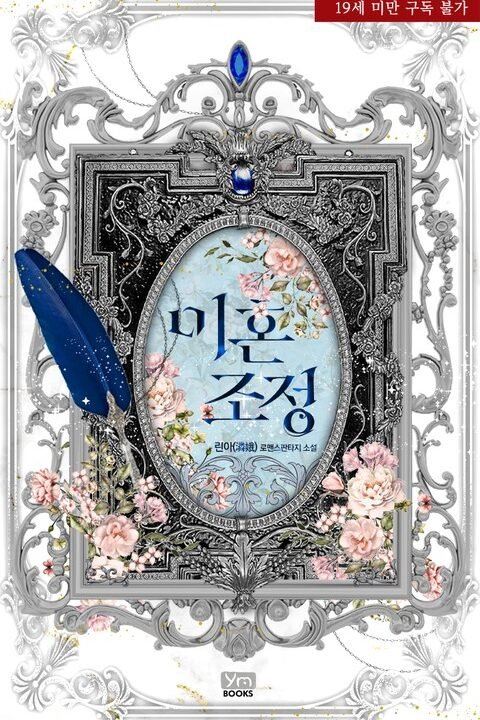
Divorce Mediation
Novel Info
  • Author:
  • Status:Ongoing

Summary

... Read More

Lilliana Everset was born into poverty and sold to pay her father’s gambling debts. After her fiancé, Steven, died in war, she remained an unwanted burden in her family. To escape destitution, she accepted a marriage proposal from Raven Kreuten, a war hero and Duke who had lost his first two wives to suicide. Lilliana believed the union offered stability, unaware that she was being used as a broodmare to secure the Duchy’s lineage.

Upon arriving at the Kreuten mansion, Lilliana discovered a hellish reality. For two years while Raven was at war, the Grand Madam and his half-sister Rachel subjected her to severe physical and psychological abuse. They confined her to the stables, forced her to sleep near horses, and hired servants to harass and torture her. They also administered medicines to prevent pregnancy, ensuring no heir would threaten their plan to pass the Dukedom to Rachel’s son, Damon.

Raven returned home unexpectedly after two years. Lilliana, traumatized and desperate, demanded a divorce, even stabbing herself to prove her resolve. Raven, confused and hurt, agreed to mediation but secretly sought to understand the source of her distress. He noticed her fear, malnutrition, and phobias, particularly regarding horses and female authority figures.

As Raven investigated, he uncovered the truth. He discovered Lilliana being tortured by maids with needles under Rachel’s orders. Enraged, Raven imprisoned Rachel in the annex, subjecting her to the same torment she inflicted on Lilliana. He fired the complicit staff and placed Lilliana under his direct protection, vowing to expose the Grand Madam next.

Raven also revealed that he had fallen in love with Lilliana at first sight and had initiated the marriage proposal himself, contrary to her belief that she was merely a purchased commodity. He expressed genuine concern for her well-being, offering comfort and respect she had never experienced. Despite his kindness, Lilliana remained terrified, unable to trust due to her prolonged abuse.

The story follows Raven’s efforts to heal Lilliana while dismantling the corrupt power structure within his family. He protects her from further harm, provides her with proper medical care from his loyal physician Silvia, and begins to rebuild her self-esteem. Meanwhile, the Grand Madam plots to eliminate Lilliana before Raven can fully secure his control, fearing the exposure of their crimes.

Raven’s journey shifts from military conquest to domestic defense, as he fights to save his wife from the psychological scars left by his own family. The narrative explores themes of trauma, recovery, and the complexity of trust, as Lilliana learns to see Raven not as another abuser, but as a potential savior. The conflict escalates as Raven prepares to confront his mother, aiming to reclaim his estate and ensure justice for Lilliana and the previous wives who died under similar circumstances.

Latest Release
DateGroupRelease
2026-10-03dusk blossoms c1

Community Reviews

Rating(0 / 5.0, 35votes)
5 stars
0(0%)
4 stars
0(0%)
3 stars
0(0%)
2 stars
0(0%)
1 stars
0(0%)

Popular reviews

... Read More
Okay so this section is absolutely RIVETING in how it slowly peels back the layers of this mansion's rot. The reveal that Liliana has been trapped in there for two years while Raven was at war just... god. The plot architecture here is so deliberate. We start with the intimate scene between Raven and Liliana, and then suddenly we're thrust into this dark underworld of abuse and conspiracy. It's like the author is saying: look, what you think is a sweet reunion? No. Nothing is sweet here. The pacing of revelations is masterful. First we get Rachel's lie that Liliana is picky and eats little. Then Raven notices the empty plates. Then the question about going outside. And BOOM - she's never left the mansion. Never. The stable scene is where it really hits. I literally had to pause and process. She was sleeping beside a horse in winter, hiding under its belly for warmth, while servants harassed her. And the Grand Madam's rule - that Liliana has to open the door herself for anything to happen? That's psychological torture at its finest. Meanwhile, cut to the villains plotting in real-time. They want to kill Raven but need to prevent any pregnancy heir first. Damon needs to inherit. The whole setup is a chess game where everyone thinks they're playing but the board is rigged. What's brilliant is how the narrative switches perspectives - we see Raven's investigative side, Liliana's hidden suffering, and the antagonists' malicious planning all interwoven. The tension isn't just building, it's coiling like a spring ready to snap. I'm hooked on how the author withholds information strategically. We know the servants violated the boundary set by the Grand Madam, but what exactly happened behind that closed door? The author makes us sit with that horror without satisfying our curiosity. That's bold storytelling. And Raven's realization that his entire family might be fake? The blue blood line that turned out to be nothing but obligation? That's a gut punch that recontextualizes everything we thought we knew about him.
... Read More
I need to talk about this dialogue for a minute because it is both ridiculous and perfect. Raven, this man who sits like a statue, this man of military discipline and restraint, looks at Liliana after weeks of holding back and asks — dead serious — 'May I suck your chest?' And she just... considers it. Not with disgust. Not with fear. With genuine negotiation logic. 'Just sucking, right?' The fact that she treats this like a transaction she can negotiate around shows everything about her character and nothing about her shame. And then the follow-up: 'Anywhere? Yes, anywhere you want! My chest is fine, and below is fine too. My fingers, my toes — I'll give them all to you.' This is the most heartbreaking negotiation in the history of romantic fiction. She's offering pieces of herself like she's distributing rations. Meanwhile Raven is just sitting there with this insane amount of restraint and she's just handing him everything and he takes it gently. The dialogue between them is so natural because it's flawed — she doesn't understand the weight of what she's offering and he understands too much. That gap is the entire love story.
... Read More
The pacing here is surprisingly tight for an opening. We jump from Lilliana's divorce demand → Raven's reaction → his flashback to meeting her → back to Lilliana's present-day resolution, and each transition feels purposeful, not gratuitous. Chapter 1.1 moves at a frantic pace—almost claustrophobic—which mirrors Lilliana's psychological state perfectly. Then Chapter 1.2 slows down just enough to give us context without losing momentum. My one critique: the Raven POV section in 1.2 has a slight drag when he's reminiscing about his father and his promises to his stepmother. It's emotionally relevant, but it does pause the forward momentum briefly. That said, it serves a purpose—we need to understand why Raven can't simply refuse his family, because that's exactly the trap Lilliana is caught in. The chapter structure itself is smart: ending on Lilliana's vow ('Anywhere would be better than this') creates a natural cliffhanger that pulls you into whatever comes next. The dual-POV switching also works well for building dramatic irony—we know things about Lilliana's experience that Raven completely misses, and that gap is where the tension lives.
... Read More
The dialogue in this opening is interesting because of what it DOESN'T say as much as what it does. Lilliana and Raven's conversation is painfully brief and stilted—'Divorce me, Raven Kreuten.' 'What?' That's it. Two lines that carry the weight of an entire destroyed marriage. The dialogue feels intentionally cold, which mirrors the emotional distance between them. Raven's lines are clipped and practical ('Aren't you eating?' 'Is my wife ill?'), reflecting his military background and emotional unfamiliarity with domestic crises. But the real voice work happens in the internal monologue and the quoted memories of the Kreuten women tormenting Lilliana. Those lines—'You're nothing but a broodmare brought in to bear heirs!'—are brutal in their directness, and they're delivered like dialogue from a horror movie. The narrative voice itself is close third-person, staying firmly anchored in Lilliana's head for most of it, with the Raven section providing just enough contrast to avoid becoming a one-note perspective. I appreciate that the author doesn't over-write the dialogue; it's lean and functional, which lets the emotional subtext do the heavy lifting. The line 'It was my own fault for coveting such things' really captures Lilliana's internalized shame, and it's delivered without any explanatory padding.
... Read More
The author here is playing with some serious tonal whiplash and I am HERE for it. We go from Liliana being pinned down and tortured with needles in the span of, what, two pages, straight into Raven carrying her to a dressing room and flirting with her in front of society? That transition is insane. One moment you're holding your breath because this woman has sharp objects shoved into her fingertips, and the next you're watching a Duke sweep his wife into public like a goddamn rom-com lead. But it works. Because the pacing isn't just fast — it's deliberate. The author spends exactly as long as needed on the horror (which is still disturbingly brief, honestly), then pivots hard into recovery and reclamation. The dressing room scene is basically Raven rebuilding her from scratch: new clothes, new makeup, a public display of devotion that sends every rumor mill in Kreuten into shock. It's structured like rehabilitation — expose the wound, clean it, then bandage it in public so everyone knows she's protected now. The chapter breaks are also doing heavy lifting. We get a *** break right after Raven kills the head maid and locks Rachel away, then restarts with Chapter 10 titled "I'll Make You Blush." From execution to romance in a single line. That's not careless pacing, that's control. The author knows exactly when to let you breathe and when to keep squeezing.
... Read More
The dialogue in this book does exactly what I love most when it is sharp and layered. Characters rarely say what they mean, especially the Grand Madam and Rachel, whose lines drip with performative sweetness. Watch how Rachel greets Raven: "Welcome home! Are you hurt anywhere? You seem thin." It sounds caring, but you know her true thoughts the moment they turn away from him. She pats his hand and says, "We've held out well so far," while imagining vicious deeds. The gap between her spoken words and her internal monologue is where the voice lives. Liliana's dialogue reflects her trauma. She speaks in fragments, hesitations, small noises. "Th-then, from now on, are we no longer husband and wife?" "I-I don't know." Her voice is cracked glass, barely holding together. But there are moments when she speaks firmly, when she says, "I understand," after learning about the one-year timeline. Even in her broken state, she finds steel. Raven is different entirely. His voice is direct, warm, and surprisingly honest. When he kneels before Liliana and tells her he fell in love with her at first sight, the dialogue strips away all pretense. There is no subtext, no game. He says exactly what he feels, and that honesty becomes a kind of weapon against the lies surrounding them. Their exchange about why he would be upset if she is sick is quietly devastating. Liliana has never experienced concern from anyone. She asks, almost disbelieving, "If I'm sick, you're upset?" And Raven answers simply, "Yes." Two words that carry the weight of a lifetime of abuse and the dawning possibility of safety. Dialogue like this does not need shouting. It works because it is human and raw.
See all reviews

Custom lists

See all custom Lists