Dim Sum Dao - Reviews

Dim Sum Dao
+Add to Custom List
Sort
Add review
... Read More
Okay so let me just say—the opening hit me like a wok to the face. Luke dying in a kitchen explosion and THEN waking up as Liu Baozi in a cultivation world where cooking is literally life-or-death cultivation? That is a bold choice. I did not see it coming. And then within the first chapter he's deciding to stay instead of running away, which is genuinely impressive for a protagonist. Most isekai heroes would be like 'I need a new identity and a quiet life,' but nope. This guy's like 'I'm going to open a food stall in the slums because dinner's waiting for me at home.' The emotional logic is so tight it made me actually smile. The way the plot layers two deaths—Luke Liu dying in San Francisco AND Liu Baozi dying in Fragrant Bowl City—to create one new person felt almost deliberate, like the universe had been drawing a circle this whole time. "Luke Liu died thinking of dumplings. Liu Baozi died thinking of dumplings too. And somewhere between those two deaths, something new began to stir." That line is the thematic keystone of the entire story so far. It's not just a crossover; it's a convergence. And then there's the uncle betrayal, which is classic cultivation-waste-of-good-recipe drama, but the execution lands because the stakes are immediate: broken meridians, a family that wanted him dead, and no power to fight back. The plot does not coddle him. It throws him into the dirt and says cook your way out. I respect that.
... Read More
The sensory world-building in these chapters is insane. We're talking about a novel that opens with the smell of rotten eggs in a kitchen, and that smell becomes this recurring motif of corruption and wrongness. Every detail serves the atmosphere—the sweltering heat, the hot roar of flames, the crackle-spit of oil, the bubbling rapids beneath bamboo steamers. Liu doesn't just describe a kitchen; he makes you feel the humidity pressing on your skin and the migraine building behind your eyes. But then the world starts to shift and the descriptions go next-level. When Luke's reality fractures, the prose itself seems to fracture with it. The investor's Airpods coming out as he whispers 'How are you creating that incredible projection?'—this moment where the mundane world misreads the supernatural is pure comedic gold, but it's also world-building. These investors can't conceptualize anything beyond technology, so they immediately try to fit a xianxia transformation into their framework of 'tech entrepreneurship.' The most visually stunning scene has to be the pizza emerging from the oven. Not just 'it looked delicious'—no, we get 'concave, crimson-lacquered moons,' 'molten lakes of ivory silk,' 'jade scallion ribbons curled by flame,' and then the kicker: it glows, exudes golden fog, and generates its own soundtrack. This is food porn meets fantasy epic, and the synthesis is seamless. The world of this novel operates on the principle that cooking is literally a form of cultivation, and every dish is a manifestation of qi. That's a worldbuilding premise I haven't seen done this well.
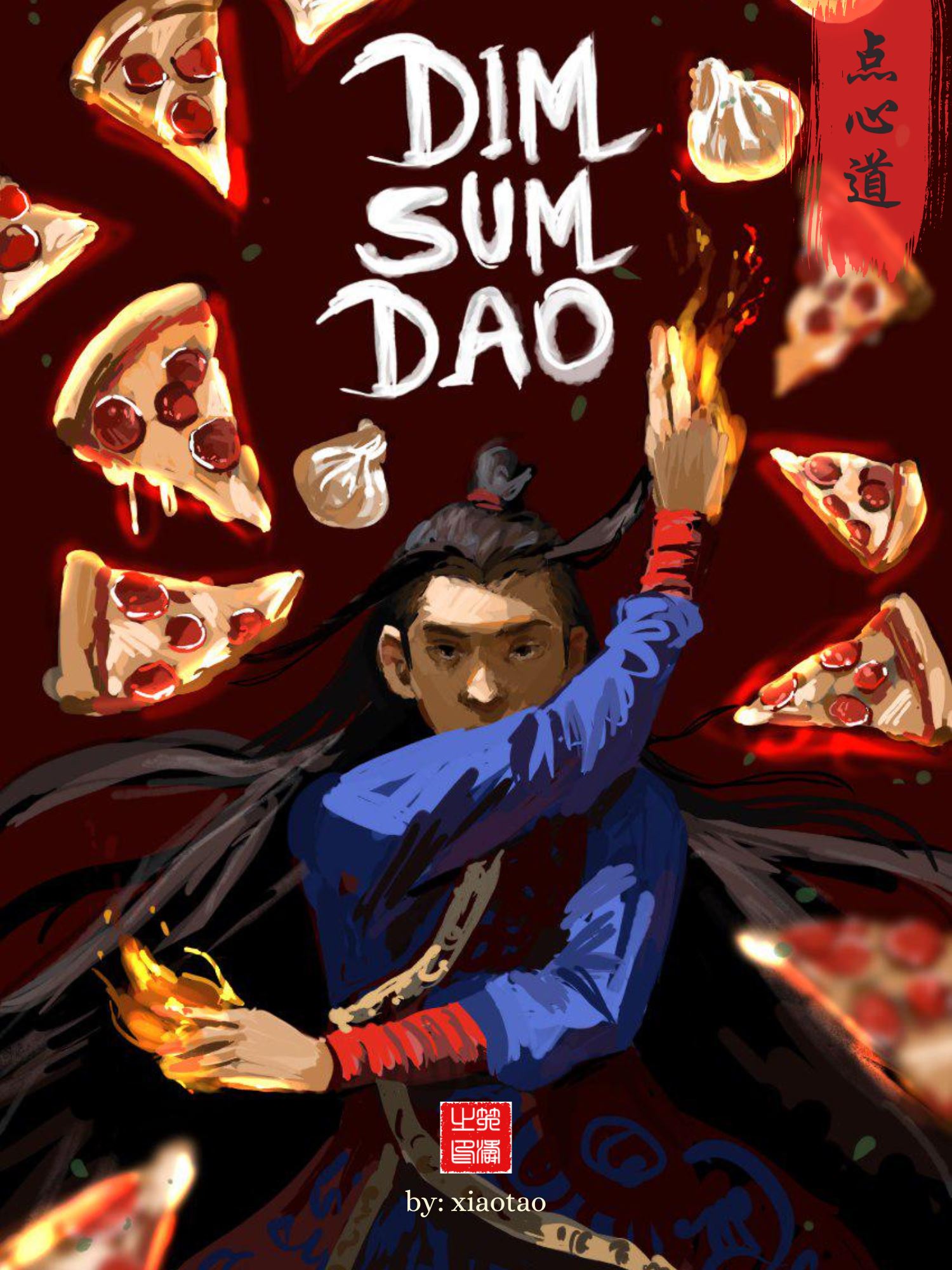
... Read More
This chapter is a masterclass in escalating tension and I'm still recovering. It opens almost comically — vendors begging Ming Shi to share his emotional reactions to yogurt starters and dried plums. The tone is light, warm, slightly absurd. We're in a bustling market buying spring onions and mushrooms. It feels like a Breather Chapter™. And then — the silk flash. Pearl-white livery. Blue, silver, and gold embroidery. The Colors Of Death. In roughly two paragraphs, the story goes from comedic market visit to life-or-death confrontation. No warning. No gentle ramp. Just... oh shit moment. That's the pacing move that got me. But here's what's really impressive: the author doesn't rush the resolution. Once Zhen starts his con, the chapter keeps building through layers of complication instead of resolving quickly. First the four guards get distracted. Then they huddle and panic. Then Cao Liheng arrives — and he's worse. Way worse. Early Core Formation. Someone who knows Ming Shi's voice and mannerisms. And he's not fooled. The final moment — Cao Liheng's nostrils flaring, the temperature dropping, his declaration that HE is the manager — lands like a drumbeat. The chapter ends on that frozen beat, and it's perfect. No cliffhanger question, no dramatic line. Just the cold realization that the con bought them time, not safety, and the real predator is now standing three feet away. Every transition earns its place. Every escalation raises the stakes. And that shopping basket full of mushrooms? Still there. Still irrelevant. Still somehow the funniest detail in the scene.
... Read More
I kept rereading the market scene and I genuinely think it might be one of the most vivid worldbuilding passages I've encountered. Let me just quote this because it deserves it: "ginger roots crawled like pale, ambitious caterpillars toward herbs that beckoned with come-hither leaves, drab brown mushrooms unfurled to shed constellation-like spores, and sacks of spirit-rice hummed harmonies that shifted key with each passing chef's qi-signature." This isn't description for description's sake. Every detail tells you something about how this world works. Ingredients are alive—some aggressive, some seductive, some musical. The vendors use fire between their palms to prepare produce. Prices are barked in what the narrator calls 'the ancient language of highway robbery' and countered in 'the time-honored dialect of in your mother's dreams, son.' This is a place that runs on chaos and negotiation, not rules. The atmosphere description layered on top—the scents stacked in layers, sounds spiraling in dizzying arcs, the electric tingle of qi imbuing the morning hustle—makes me feel like I could step into this market tomorrow morning and get run over by an auctioneer shouting from a hovering platform. And the detail about chefs moving through the crowd like soldiers, executing 'flanking maneuvers on unsuspecting produce'? That's not flavor text. That tells you these people treat ingredient gathering like combat. The world feels lived-in because even the background characters—the stout yogurt vendor, the Sunthorn Pear seller—feel like they have entire lives outside this scene. The pre-dawn timing matters too. It's liminal—between night and day, between the underworld and the city above—and the whole place exists in that threshold space.
... Read More
"Come survive us! Come and taste us! Eat the street, from east to west!" I am screaming. I am actually aloud screaming at my phone right now. This book takes the concept of "immersive worldbuilding" and sets it on fire with culinary qi and then dances on the ashes in perfect tempo. Let me talk about Riverback Street Market because this is one of the most audacious setting introductions I've encountered in cultivation fiction. Usually you get a paragraph about what the market looks like and then you move on. Here? The entire Lower District breaks into a choreographed musical Number for one guy walking down an alley. A jianbing vendor leaps over her counter and sparks fountain out of her griddle. A man throws egg tarts into the air and one of them explodes into a flaming chick that cheeps in harmony. A woman bursts out of a cake—like, physically emerges from inside a cake—with honey wings and an operatic vibrato. And the signage! "WE HAVE UPDATED INSURANCE" embroidered in glowing qi threads across the whole street. The sheer commitment to the bit is breathtaking. But what makes it work isn't just the absurdity. It's the history behind it. The flashback to Lord Chef Liang creating the Fragrant Bowl City Tourism Board because of Public Works Donations, the exhausted accountants who haven't slept in a month, the slogan rejection process—"City of Flavors and Dreams" being the most diplomatic language they could find for "innovative delusion." This is a world where bureaucracy and cultivation intersect in the most mundane-yet-absurd ways. It feels lived-in because the author has clearly thought about who pays the bills, who writes the slogans, and who survives the marketing photoshoots. Then you have Madam Wan's private collection room—walls lined with panels that hide jars of weaponized condiments. Eighty-Eight Hells. A mixer that turns it into something consumer-friendly. The whole setup of spirit-food being treated like classified magical weaponry while also being something you casually recommend to a Mortal Cook. The contrast between the public shopfront chaos and the quiet, deliberate backroom ritual of bonding with the oil—that's worldbuilding through atmosphere, not exposition.
... Read More
This book does not believe in slowing down. The opening explosion throws Luke across the room and then within pages he's dead, reincarnated, betrayed, homeless, and deciding to start a food stall before the first chapter ends. That is insane velocity. Most authors would spend two chapters on the transmigration mechanics before letting the protagonist take a single action. Here, Luke is making life-altering decisions while half-dead from shattered meridians and the narrative is still moving forward like a chef during the dinner rush. The structure is remarkably efficient too. The transmigration scene functions as both climax and inciting incident simultaneously—which is ambitious, honestly. Usually these things are separate beats. The memory flashbacks (parents teaching Pearl Essence Dao, uncle's betrayal, the spirit-cleaver) are inserted at moments of maximum emotional vulnerability, so they hit harder than if they'd been explained earlier. Old Man Zhen's dialogue serves triple duty: exposition, comic relief, and dramatic opposition—all while the external threat (the Kitchen Guards, then the Wardens) keeps closing in. The cliffhanger is perfect timing. Luke just made his choice, showed his resolve, said something genuinely funny about the path to immortality beginning with one wok—and then Warden Wang appears, with the added dread that broken meridians might be legally trackable. The pacing between the comedic beat and the sudden tension spike is like someone dropping a tray of hot oil and then immediately handing you a fire extinguisher. You don't get to breathe. And I wasn't allowed to stop reading. Classic.
... Read More
Okay so I need to just—Warden Wang touching the kid and immediately realizing these aren't fatigue wounds. Not fatigue. ATTACK wounds. Spirit-blade damage. Mincing-Intent aimed at a PERSON. And the old man's reaction—grabbing the kid and bolting like a rat caught in a wok—WHAT IS GOING ON HERE. I went from "cute old chef mentoring young cook" to "oh hell no this is a cover story" in literally three seconds. Warden Wang is basically the hero we deserve: he sees red flags the size of sailcloth, tries to help, and gets absolutely yeeted out of the alley by a head of cabbage. A CABEED. The most wholesome murder attempt imaginable and I am SO here for it. And then the chase sequence through the Lower District night market—this is peak worldbuilding-as-action. Every step they run past is a new sensory explosion: rice-cake mallets thundering like heartbeat, oil-bread sizzling, the fortune teller reading destinies in yin-yang soup steam. It reads like a camera panning through a living painting. And the Wardens are right behind them, whistles blowing, getting confused by all the competing qi signatures. I was literally leaning forward reading this. Then—BAM—they reach Boss Wu's shop and just as they think they're safe, another hand on Luke's shoulder. I actually gasped. The tension in this chapter is INSANE. It starts slow with Warden Wang's concern, escalates to the reveal, explodes into a chase, and then ends on the most perfectly timed cliffhanger. Who touched him? Who is after Luke? What's his real identity? I need the next chapter NOW.
... Read More
The stakes in this chapter are absolutely feral and I love it. Let's enumerate what Ming Shi is actually up against: he's surrounded by four Kitchen Guards, all at minimum Middle Stage Foundation Establishment, with paranoia marinated into their meridians. They carry spirit-cleavers. They can detect concealed qi signatures. One of them — Cao Liheng — has personally overseen Ming Shi's training for a decade and knows his scent, his voice, his habits. They work for a restaurant whose mottos include "culinary warfare" and "spiritual assassination that leaves no evidence." And Ming Shi is a Novice Gourmet holding a basket of mushrooms, wearing a concealment-fruit that might or might not hold up. But here's what makes the conflict so compelling: the author refuses to make it simple. It's not just "bad guys chase good guy." The Kitchen Guards aren't even the primary threat in this scene — they're the secondary threat. The real danger is what happens when they realize something is wrong and they can't figure out what. Their own paranoia becomes the weapon. Zhen exploits this beautifully, but the story also shows us that this could have gone either way. One sniff test and Ming Shi is dead. The internal conflict is equally sharp. Ming Shi keeps oscillating between panic and strategy, between the impulse to run and the recognition that running makes you look guilty. His thought about causing a distraction so Zhen can escape — that's the real character moment. He's not just thinking about his own survival. He's already considering sacrifice. That's who he's becoming. And the stakes keep expanding even as the immediate threat pauses. Cao Liheng's final reveal that he's Early Core Formation — that's not just a power escalation, it's a promise. The chapter doesn't end the conflict; it endsthe breathing room.
... Read More
"Say goodbye to the Flame," said Old Man Zhen gently. "Like you would to a friend who dropped by for dinner. It will leave if you just tell it to go." I need to sit with this. I need to really sit with it because this is the moment that changed everything for me in this chapter. Here's a man who runs an illegal spiritware shop, who just watched a device he owns shatter and his customer catch fire, and his first instinct is kindness. Not panic. Not greed. Not even relief that he still has his shop. Just gentle, practical guidance delivered with the warmth of an elder who has seen far worse things and knows that this boy needs someone to tell him it's going to be okay. And Luke's response — "Well, uh, it was great to see you. Hope you enjoyed the meal. Getting late now, so, uh … let me know when you get home?" — is one of the most human moments I've read in a fantasy novel. He's terrified. He's facing what he genuinely believes is a death sentence. And he addresses the entity consuming his soul with the same polite awkwardness he'd use to dismiss an overstaying guest. It's funny, yes, but it's also devastating. This is a man who has died before and is doing it again, and he's choosing politeness over panic. The friendship between Old Man Zhen and Boss Wu is also quietly beautiful here. Boss Wu immediately grabs Old Man Zhen and hauls him over the counter before the explosion, not because he's scared for himself but because he's protecting his friend. And after the chaos, it's Boss Wu who recovers fast enough to deliver the good news while Old Man Zhen handles the emotional labor. They're a team. They've been doing this dance for years and neither one questions it. The emotional core of this chapter isn't the supernatural fire or the cultivation system. It's three people who care about each other navigating impossible circumstances with humor, warmth, and enough courage to keep going.
... Read More
"Where his plain black hair should have been there raved the unholy lovechild of a bonfire and a bad perm — a pyrotechnic clown's wig of ridiculously incendiary, bouffant proportions, bobbing and weaving like a drunken street performer." I literally read that passage three times. Three times. The visual imagery in this book is INSANE and I'm not even mad about it. Let me just sit with this description for a moment because the author has crafted something truly special here. This isn't just "his hair caught on fire." This is full haute couture cosmic horror meets New Year's celebration. Some flames went "haute couture by twisting and braiding themselves together." HAUTE COUTURE FLAME HAIR. Luke looks in a wok and sees his head hosting a elemental fireworks display and the most urgent thing on his mind is whether ongoing cranial combustion is GOOD or BAD news. And the worldbuilding around this concept is what makes it land so hard. Boss Wu is genuinely excited — "Good news — we know your path: Steady Flame, it is!" Old Man Zhen is trying not to panic but failing miserably. The shop itself seems almost unfazed by the explosion that follows, thanks to a fire-safety array that was apparently worth the spirit stones. This is a world where magical cookware dealers carry emergency protection and the worst thing that can happen to a client is a spectacular blast followed by aesthetic changes. Then comes the red-bean bun from the Flame Temple. A steaming pastry hurtling through the air like a celestial projectile, heavier than cast iron yet soft as clouds, with a token inside that catches fire and projects glowing text. The entire sequence reads like a cooking show directed by someone who mainlines fantasy lore. The world feels ALIVE in a way that's rare — every detail from the Three Approved Paths to the immigrant trials to the underground cooking-duel rings creates a texture that makes Fragrant Bowl City feel like a real place with real rules and real consequences.
... Read More
The stakes in this opening are established on three levels simultaneously, and they all escalate together. The first is personal: Luke is fighting to save his parents' restaurant from his uncle's corporate vision. If the investors don't back him, the soul of Golden Heart Dim Sum gets sold out and turned into rainbow dumplings with gold leaf. That's painful enough. But then the second level reveals itself: Luke is literally dying. The rotten egg smell wasn't a gas leak complaint, it was a death omen. And the third level—the one that recontextualizes everything—his parents weren't just restaurant owners, they were cultivators, and Luke was about to inherit something far bigger than a dim sum shop. The internal conflict is what made me care about the external stakes. Luke keeps telling himself to focus, to not have a mental breakdown, to just finish the pizza for Mrs. Wu. He's battling his own crumbling perception of reality while trying to do something as simple as deliver a birthday pizza to an elderly customer who watched him grow up. That contrast between the cosmic and the mundane is where the real tension lives. The most brilliant stake-raising moment is when Luke's parents' voices merge with his own and declare 'We do dim sum. This is the long game. We do food that lasts forever.' That's not just a cool line, that's a statement of infinite stakes. In a cultivation world, 'lasting forever' is the ultimate goal. His parents achieved it, and now Luke is about to enter their world—not as a student, but as someone who already carries their technique in his hands. The question isn't whether he'll survive, it's whether he'll be ready to pick up what they started.
... Read More
There's a theme running through this entire batch that I can't stop thinking about: debt isn't just a plot device, it's the worldview. Everything in Fragrant Bowl City operates on owed and owing. The Flame Temple's token is debt dressed as generosity. Boss Wu's equipment is debt with interest. Even the leaky wallet bag is debt—a constant drain that motivates through scarcity. The protection fees are unofficial but real. Luke's entire entry into this world is purchased on credit. And the cultivation system itself reinforces this. Temple Gourmets give up immortality for a year of unlimited shopping. It's a transaction so blatant it's almost honest. 'Your choice entirely,' the token says, and that's the whole lie—the choice exists but the circumstances make it illusory. You're either born into an Ancestral Kitchen with heritage cookbooks and spirit-cookware, or you're a nobody signing away your future to survive today. The Temples being number one on the public works donation list while themselves being in 'permanent shortfall' is such a sharp institutional critique. They're performing generosity while hollowed out, handing out tokens they can barely afford to people who can't afford to refuse them. It's a system that looks like opportunity and functions as control. But then there's the counter-theme: creativity as resistance. Luke's mind immediately goes to dough variants and sauce combinations despite being financially trapped. The market itself—with its chaotic bartering, its living ingredients, its chefs treating procurement like combat—feels like a world where resourcefulness matters more than pedigree. The Lower District is 'the most innovative place in the city' precisely because poverty breeds ingenuity. Boss Wu even says it outright: 'Financial desperation breeds cultivation excellence.' So the question the book seems to be asking is: can you cook your way out of debt, or does the recipe always include yourself as an ingredient?

Leave a comment

You must be logged in to leave comments. or
