Dim Sum Dao - Reviews

Dim Sum Dao
+Add to Custom List
Sort
Add review
... Read More
This whole batch reads like someone kept pulling the rug out from under Luke and he just had to learn to fall gracefully. The pacing is relentless in the best way. Good news—token with unlimited credit. Wait, actually it's a cultivation trap. Good news—equipment package. Wait, it's a debt spiral with a leaky wallet that eats spirit stones. Good news—Wen Niang's stall is available. Who is Wen Niang? What manipulations did she make? Also you're getting a mystery 'Sample' gift after your first meal at the market and we don't know what it is because apparently even experts can't predict it. Each 'good news' item comes with a darker underbelly revealed within paragraphs, sometimes lines. The author is basically gaslighting the protagonist and the reader simultaneously, and I am HERE for it. But the structure also gives breathing room. The market scene is a full reset—sensory, immersive, almost meditative compared to the deal-making chaos of Boss Wu's shop. Luke inhaling deeply, letting tension dissolve, feeling that connection to the chef's ritual across any world—that's a palate cleanser before the next wave of complications hits. The transition from Boss Wu's shop to the market works because it mirrors Luke's own mental state: from calculation and negotiation to hunger and possibility. He aches everywhere but his mind buzzes with dough variants and sauce combinations. The physical exhaustion contrasting with creative spark is such a clean structural note to end on. And that final line about the Sample? Absolute cliffhanger energy without being cheap. We don't know what Luke's first meal will gift him, and now I need to read the next chapter immediately.
... Read More
"Greatness, madness, and suicide. Kitchen Spirits are fickle. Never forget that. And sometimes, the poison's in the dose." This line. THIS LINE. It's spoken almost casually while buying eggs but it encapsulates everything this story is about. The central tension here isn't good versus evil — it's potency versus control. Kitchen Spirits can inspire greatness OR drive a chef to suicide. The same force. Different dose. Zhen himself embodies this paradox: a man with no cultivation who protected an entire restaurant from spiritual threats. His power came not fromqi but from something else — knowledge, technique, intent. The poison and the cure wearing the same face. The concealment fruit is another layer of this theme. It hid Ming Shi's true identity from someone as sharp as Cao Liheng. But concealment is its own kind of distortion — it hides truth just as effectively as it reveals it. Ming Shi spent his childhood without knowing his protector's true nature. The fruit protected him physically while obscuring him emotionally. What's the cost of being unseen? And the memory black hole — the year his parents died is almost entirely gone, orbiting around a void where a Kitchen Spirit incident apparently occurred. Forgetting as protection. The mind's own concealment technique. Is not remembering a mercy or a wound? There's also the theme of legitimate versus illegitimate knowledge. Zhen's recipes are being used by Cao Liheng's Kitchen Guards — stolen intellectual property powering the very system hunting Ming Shi. The Upper District commodifies what the Lower District creates. Zhen's bitter amusement at this — "It rankles me" — is really a microcosm of a larger structural injustice. The crowd's obsession with Ming Shi's "feelings" ties into this too. In a world where Intent is the fundamental currency — where Kitchen Spirits feed on and manipulate a chef's Intent — emotional transparency becomes both vulnerability and power. The crowd wants to witness his feelings awakening because they understand, instinctively, that this is dangerous territory. When a Gourmet truly feels, the world changes. "Sometimes the poison's in the dose." Everything here is about dosage. Everything is about knowing when to reveal and when to conceal. And Ming Shi is just beginning to understand his own strength.
... Read More
The dialogue in these chapters is absolutely delicious and I have thoughts. First — the crowd. A CHORUS. They don't speak as individuals; they speak as a body, aGreek drama committee of shoppers judging spiritual etiquette. "You jackass! Just pay up already!" "Compensate the Gourmet so he can get back to shopping!" "These Upper District dickheads are holding things up!" This is comedy gold. The fact that they treat a confrontation with a Young Lord like a minor inconvenience to Ming Shi's grocery list is the funniest worldbuilding element in the entire book. Then there's Zhen's voice — that slow, layered, misdirecting cadence. "Look at that venison sausage." "You wanted cured meats for your flatbread, right?" "Pick your cured meat, and then we'll do questions and answers." He deflects, redirects, feigns senility. "Haaahh? Really? Do explain. I'm old and senile." The man is performing ignorance as a tactical weapon and it's magnificent. Ming Shi's internal voice versus his external voice is also great. Internally: absolute panic, acrobatic intestines, rapid-fire speculation. Externally: "I'm feeling … unexpectedly … fortunate?" The gap between what he's thinking and what he's saying is where the humor lives. And the egg vendor — OH THE EGG VENDOR. "Behold! Could this be the egg of a Technically Very Minor Backyard Phoenix? As many as 906 generations removed from a Barely Qualified Hedge Phoenix, but who's counting? … Me. I am! It's 906 generations exactly!" This man has taken his craft to a level of obsessive specificity that is both hilarious and deeply endearing. He's not just selling eggs — he's CURATING a relationship with his customer through absurd devotion to detail. Cao Liheng's dialogue is sparse but every word counts: "For the ... misunderstanding," dragged from his lips like pulling teeth. "Report. Everything. Now." Cold, clipped, calculating. Even his silence speaks. Every character sounds DIFFERENT. That's rare. That's talent. Also the running gag of the crowd asking about feelings kept me laughing out loud on public transport. People, please, I'm trying to process a existential identity reveal and you're asking about my emotional state?!
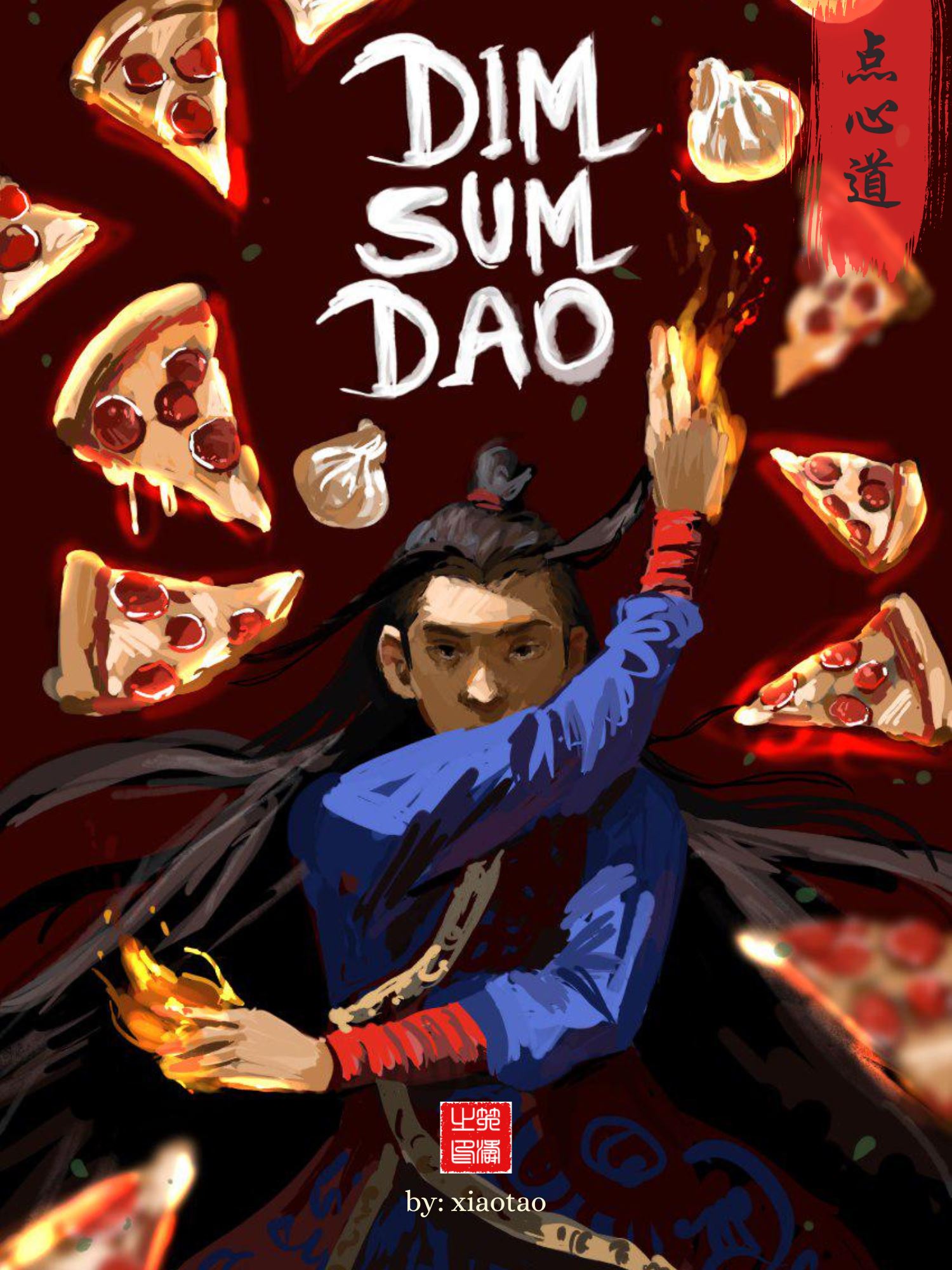
... Read More
Let's talk about what was actually on the line in this chapter, because it's deceptively layered. On the surface, there's the crowd conflict—Madam Wan's spirit-supplements facing a refund-policy revolt. The crowd is chanting "NO-SUPPLEMENTATION-WITHOUT-RECIPE-PUBLICATION" like it's a protest movement. This feels like it could be the main conflict, a class-struggle storyline about independent chefs vs. corporate垄断. But the author subverts it immediately—the crowd gets distracted by pre-orders and FOMO, becoming the very consumers they were demanding accountability from. "Propelled by the twin engines of FOMO and spiritual inadequacy, wallets slit open like sacrificial offerings at the altar of cultivation." That line is Brutal. It's both funny and devastating commentary on the exact dynamics the protest was trying to fight. Then there's Ming Shi's internal conflict—the hot sauce Sample acting as a cosmic tribulation. This is where the stakes get personal. Old Man Zhen explicitly frames it: "you can only defy Heaven on your own, when it singles you out for private lessons." The risk isn't death in a conventional sense; it's failure of Dao-heart. If he breaks under the pain, his cultivation journey (however dormant) is over. He walks into it knowing he has no qi defenses, no cultivation to speak of, and he still chooses to face it. That's the kind of courage that doesn't need supernatural power to be impressive. But the third layer of stakes is the one I keep coming back to: the Riverback Street Market musical isn't just entertainment. It's survival theater. "Deaths have gone up ten percent the last decade, but the street food remains delicious." Old Man Zhen says this with affection, as if deadly danger and great food are the same thing. Every vendor in that musical is literally performing to attract customers in a market where the insurance has been updated. The stakes here are economic existence—you perform or you starve. The musical number is both genuine community celebration and a high-stakes competitive ecosystem where charm is currency and qi-infused performances are the barrier to entry. What makes all these conflicts work together is that they're all variations on the same theme: what are you willing to risk for your craft? Madam Wan risks her reputation. Ming Shi risks his Dao-heart. The market vendors risk their livelihoods. And the author keeps asking, implicitly, whether the reward is worth it. So far, everyone in this story is saying yes.
... Read More
So Madam Wan basically puts Ming Shi on display at her infomercial and uses a spirit-pepper oil meant for Early Qi Condensation chefs on someone whose meridians are already shattered. Like bro, that's not a demo, that's attempted murder with extra steps. The whole scene plays like a classic bait-and-switch—she's got the crowd worked up, they're throwing money, tears and all—and then Ming Shi literally tastes his way out of dying. I love how the plot turns on its head when instead of fighting the pressure, he starts *cooking*. He's on the verge of death and his first instinct is to imagine dishes? The Mountain Fire chili, Black Widow Sunshine, Phantom Ember—he identifies each one through taste while his body is being crushed. That's not just chef energy, that's main character energy. And then he stands up, completely fine, and demands a refund policy. The reversal is so sharp it almost hurts. What I appreciated most is how the author never lets Ming Shi become bitter about the whole experience. He says explicitly: 'I'm not angry.' But he's clearly disappointed—and he channels that disappointment into making the scene work for him instead of against him. The plot here is doing double duty: it's advancing the cultivation-conflict storyline while also establishing Ming Shi's core philosophy. He doesn't fight the world the way the world expects; he adjusts it, like a recipe he can tweak. Also, Madam Wan's recovery time was impressive. One second she's trying to kill someone on camera, the next she's spinning it like 'oh yes, this was all part of the plan!' That kind of quick thinking from both characters in the same scene is why I keep coming back to this book.
... Read More
I need to talk about this dynamic because it is *chef's kiss*. Madam Wan tries to murder a stranger for marketing purposes, and instead of breaking down or lashing out, Ming Shi just... gets to work. He treats her like an ingredient that needs taming rather than an enemy that needs destroying. The moment he starts tasting those peppers and identifying them, you can see her mask slip. She's a performer—her whole thing is crowd control—and suddenly she's not in control anymore. But here's the thing that makes this relationship so good: she doesn't collapse. She recovers faster than most people would. That mutual recognition between them—she sees he's not afraid, he sees she's not stupid—creates this weird respect underneath the hostility. The crowd keeps calling him 'this Gourmet' like they just witnessed something legendary, and honestly? Same. But what really sells it is that line where he grins and says 'I'm not angry' three different ways. First when he's almost dying, then when he's standing up to confront her, then when he's laying out his terms. It's not naive optimism. It's a choice. He's looking at people who threw money while a man suffocated on stage, and instead of hating them, he's just... adjusting. Treating them like a recipe that needs tweaking. That's who he is. He'd rather understand the best in people than the worst, even when they've been spectacularly bad. And Madam Wan? She gets it. The look on her face—'incredulous respect'—that's someone who's used to winning through manipulation meeting someone who won through creativity instead. I think this sets up a rivalry that's going to be endlessly fun to watch.
... Read More
Let's talk about the family dynamics because this book is layered with grief in a way I didn't expect going in. Luke's relationship with his uncle is instantly establishment—Mr. LinkedIn with his ninety-seven 'hustle' and 'disruption' mentions is the perfect foil to everything Luke's parents stood for. The uncle sees the restaurant as a brand, a franchise opportunity, content for Instagram. Luke sees it as his mother's hands teaching him to pleat dumplings. That's not just conflict, that's a philosophical war over what food means. But the real emotional anchor here are Luke's parents, who we only encounter through memory and hallucination—and yet they feel MORE present than his living uncle. His mother with her Pearl Token and her 'obstinate chin raised,' his father with his 'breath-wreathed hands' demonstrating the cultivation of qi through cooking. The passage where his father wraps a galaxy in dough—that's not just beautiful prose, that's a father passing down wisdom that has nothing to do with technique and everything to do with devotion. And Luke himself—he's someone who carried his parents' legacy across four continents and eight years of culinary travel, only to come back to a restaurant that his uncle is turning into a content farm. When he says 'She watched me grow up here, put up with everything from my first wonky wontons to my first...' and trails off, that unfinished sentence is doing so much work. It's grief, it's loyalty, it's the weight of being the one who stayed behind to keep something alive. The mother's line 'You are the architect of moments that outlast the meal' is basically a inheritance bestowed from beyond the grave. And now that Luke is dead? I have a feeling she's about to get an upgrade.
... Read More
Okay so this opening is wild. We start with Luke Liu dying, and the narration immediately establishes a voice that's funny without being flippal about death. The whole setup of him thinking of dumplings while making pizza is a great character beat—it tells us everything we need to know about him in one line. But the real plot gymnastics start when he's reliving his last thirty minutes on Earth. The author does something clever here by making us think this is just a flashback scene in a contemporary story, then slowly introduces the supernatural elements through Luke's 'stress hallucinations.' The investors showing up, the rotten egg smell, the Mandarin slipping out—it all builds this sense that something is fundamentally wrong with reality, and then the reveal hits: he's not having a breakdown, he's perceiving another layer of existence. The plot twist of him dying mid-delivery and immediately being pulled into a xianxia world is executed with zero wasted beats. One moment he's holding a pizza box, the next he's levitating three feet off the ground in robes while investors think he's some kind of tech visionary. That transition from 'he's having a mental episode' to 'oh my god this is actually happening' is masterful pacing. What really sold me was the line where he raises the pizza and it blazes with radiance, and his parents' voices merge with his to say 'We do dim sum. This is the long game.' That's the thematic thesis of the entire novel right there, dropped in chapter one. The plot is basically set: a chef who died is about to recreate everything his parents built in a cultivation world, and food is going to be the vehicle for immortality.
... Read More
Okay so let me just say—the Flame Temple token is the most beautifully sinister plot device I've seen in a while. On the surface it's a welcome gift: unlimited credit, residency waived, everything a hungry nobody needs to survive in Fragrant Bowl City. But the fine print? Oh, it's delicious. The moment you accept, your cultivation gets permanently capped at Peak Foundation Establishment. No immortality buffet for you, buddy. And Boss Wu basically hands you a walking debt trap—the leaky wallet bag alone will bleed you dry in spirit stones. It's a whole ecosystem of control disguised as opportunity. What really got me though is how Luke's instinct kicks in immediately. He doesn't grab the token. Not until he's checked Liu Baozi's memories and confirmed there's no other way out. That sequence—refusing, then resigning—is such a clean character beat wrapped into a plot turn. He knows it's a bribe, maybe even a trap, but his physical needs and the damaged steamers on his tab force his hand. The line 'This is an offer you can't refuse' flashing on the token? Chills. Actual chills. And then there's the Wen Niang setup—her pitch opening up at Riverback Street Market right when Luke needs it, Boss Wu and Old Man Zhen exchanging that loaded look. Who is this woman? What 'manipulations' did she make? It's a thread dangling right in the middle of everything and I am already obsessed with finding out. Also the Fang family angle. Their rivalry with his uncle's Ascension Cuisine faction is apparently what's keeping him safe in the Lower District right now, which means this whole arrangement is fragile as hell. One shift in the political chessboard and he's exposed again.
... Read More
"His cultivation might be Ascension-enhanced, but his brain certainly isn't. Truly it defies the Heavens that he's made it to Foundation Establishment alive." Boss Wu, saying the quiet part loud while charging people for mint lozenges. This man is a NATIONAL TREASURE. The dialogue in these chapters is just RIDICULOUS in the best way. Every character has a voice so distinct you could tell them apart blindfolded. Warden Wang speaks like a concerned big brother who read one too many medical textbooks—"meridian disruption," "assault occasioning grievous spiritual harm," the whistle halfway to his lips with righteous certitude. You can HEAR him. He's the type who would absolutely try to heal you with a head of cabbage and then cry when it didn't work. Old Man Zhen is all short commands and performative coughs. "Run!" "Move!" "Watch out behind—!" Then immediately pivoting to tearful elder mode when the situation calls for it. His voice shifts like a seasoned actor because honestly? That's what he is. The man is a grizzled survivalist who has mastered the art of looking like a harmless senile grandpa while literally yeeting people with vegetables. And Luke—oh dear sweet Luke. His dialogue is mostly panic and instinct until he starts talking about pizza, and THEN suddenly he's a different person. The way his hands start miming rolling-pin actions, the speed at which he goes from terrified runaway to passionate chef explaining fermentation techniques—it's the most authentic "someone talking about their thing" I've ever read. You can feel the shift from survival mode to something warmer, something that reminds him who he actually is. "Pi—what?" said Old Man Zhen. "Pi—sha?" said Boss Wu. "What path is that?" I am not okay. The comedic timing here is chef's kiss.
... Read More
I need to talk about how the worldbuilding here doesn't just describe a setting—it makes you FEEL it. The moment Luke opens his eyes in that alley and the narrative shifts into sensory overload: the mingled aromas of a thousand meals, raw street food scents interwoven with threads of qi energy, the distinction between mortal cooking fire and spirit-temperature flames. The worldbuilder didn't just give us a magic system; they gave us a CULINARY magic system where every ingredient has its own qi signature. The concept of spirit-aged soy sauce absorbing ambient energy over months is the kind of detail that makes you want to cook in this world immediately. And the visual contrast between the Upper District restaurants blazing with spirit-crystals like stars and the cramped, wooden Lower District alleys where Luke crawls out of a trash cart? That's not just scenery—that's the class structure of this entire world rendered in one image. The Upper District has Ascension Cuisine; the Lower District has Daos with strict regulations on advancement. You can taste the inequality in the description. There's also this fantastic comedic worldbuilding moment with Warden Wang's arrest statistics—693 drunks attempting cultivation techniques after drinking spirit-wine, 118 Young Masters trying forbidden aphrodisiac recipes. The fact that underground cooking duels resulted in NEGATIVE arrests because the duelists called upon Senior Brothers? That's a tiny detail that makes the entire bureaucracy of this world feel lived-in. The world feels like it existed long before Luke arrived and will continue long after. Which honestly makes the lower-stakes moments—the concealment fruit that tastes like champagne-fizzy peaches, the all-night cookware market—feel even more real, because they're anchored to something massive and coherent.
... Read More
Okay so this chapter absolutely wrecked me with the Old Man Zhen reveal and I need to talk about it before I explode. I always thought Zhen was just this sweet old guy — the kindly nanny figure, right? The one who brought toys, told bedtime stories about Kitchen Spirits, got assigned to babysit Liu Baozi while his parents were off at banquets. Sweet, harmless, probably makes the best omelets in the district. And yeah, part of that was probably true. The man genuinely cared about Ming Shi. But Jesus Christ, the layers. He wasn't a Head Steward by accident. He was the Head of Operational Security. That's not a typo — the guy ran security for an Upper District restaurant against Kitchen Spirit attacks that literally require specialized cultivation to counter. And he had no cultivation himself. How?! That's the question that's been keeping me up at night. Suppressed cultivation? Ancient techniques? Pure skill? I don't know but I need to know. And here's what absolutely gutted me — the one hostile Kitchen Spirit that DID get through during his tenure. He doesn't say when. He doesn't say what happened. And Ming Shi doesn't remember because apparently that whole year his parents died is just… a black hole in his memory. Liu Baozi's recollections are fractured around it like shattered glass. There's a ghost in those memories, and Old Man Zhen's silence around it is louder than any confession. The relationship shift here is BRUTAL. Ming Shi realizes his entire childhood was framed by someone who was essentially his bodyguard in plain clothes. Every treat, every story, every moment of warmth had an undercurrent of protection he never saw. That's not manipulation — well, maybe a little manipulation, but it's the kind that comes from someone who carried weight so a child didn't have to. I keep coming back to one line: "I won't lie. It rankles me that it's now your uncle's Kitchen Guards using my recipes." This is a man whose life's work was stolen by the very people hunting his charge. And he just… says it. With dry humor. While selling eggs. Who IS this man, really?

Leave a comment

You must be logged in to leave comments. or
