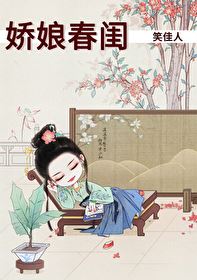
Delicate Maiden's Spring Boudoir
Novel Info

Summary

... Read More

A-Jiao, a young woman of striking beauty, endures a life of hardship after being sold to Huayue Brothel by her aunt, Madam Jin, five years prior. The sale was orchestrated to save the life of A-Jiao’s cousin, Zhu Shiyu, who had fallen gravely ill. Left alone with her uncle, Scholar Zhu Chang, A-Jiao returns to the household only after the brothel is raided by the law. The raid, led by Zhao Yanping, the stern and upright Chief Constable of Wu’an County, saves A-Jiao from her planned deflowering. However, she reveals a devastating secret: she was forced to drink a sterilization potion, rendering her barren. This, combined with her past as a courtesan, makes her unmarriageable in the eyes of respectable families. Despite her uncle’s guilt and determination to find her a good husband, no suitable match is found. Meanwhile, Madam Jin resents A-Jiao’s presence, viewing her as a burden and a constant reminder of her own cruelty, and subjects her to relentless domestic labor and emotional abuse.

The dynamic shifts when Zhao Yanping, unaware of his grandmother’s machinations, learns of A-Jiao’s plight. Old Madam Zhao, desperate to secure a wife or concubine for her single grandson and quell rumors about his masculinity, sees A-Jiao as a solution. She approaches Zhao Yanping with a proposal to take A-Jiao into their home. Zhao Yanping, driven by a sense of justice and perhaps a hidden compassion, agrees but insists on formalities. He demands that A-Jiao be brought in as a proper concubine with full dignity, offering a substantial bride price of ten taels of silver, far exceeding the local standard. This act of respect confounds his grandmother, who expected him to take advantage of A-Jiao’s desperate situation, but Zhao Yanping remains unmoved by her complaints about the cost.

Simultaneously, tensions within the Zhu household escalate. Zhu Shiyu, harboring illicit desires for his beautiful cousin, attempts to assault A-Jiao on her sixteenth birthday. A-Jiao escapes and contemplates suicide by the river but ultimately chooses to live, fueled by a newfound resolve. Her uncle, Zhu Chang, discovers the attempted assault and confronts his wife. The resulting argument culminates in Madam Jin leaving the house with their daughter, Zhu Shuangshuang, effectively abandoning her husband and younger son. This leaves A-Jiao in a precarious position, caught between her abusive aunt’s legacy and her uncle’s protective but powerless stance.

As the story progresses, A-Jiao’s relationship with Zhao Yanping develops subtly. He protects her from the gossip and scorn of the townspeople, ensuring she is treated with the respect due to a scholar’s niece. Old Madam Zhao, initially skeptical of A-Jiao’s character due to her perceived cunning and extravagance, begins to see the girl’s resilience and kindness. The narrative explores the complex social hierarchies and moral ambiguities of the time, highlighting how A-Jiao’s past defines her in the eyes of society but does not diminish her intrinsic worth. Zhao Yanping’s unwavering support challenges the prejudices of those around him, including his own grandmother, who gradually softens toward A-Jiao.

The central conflict revolves around A-Jiao’s struggle for identity and acceptance. She is neither fully accepted by her uncle’s family nor able to reintegrate into society as a respectable woman. Her only path forward seems to lie with the Zhao family, where she must navigate the strict rules and expectations of being a concubine. Yet, Zhao Yanping’s insistence on her dignity suggests a relationship that may transcend traditional roles. The story sets the stage for A-Jiao to find a place where she is valued not for her beauty or her past, but for her character, while Zhao Yanping confronts his own feelings and the societal pressures regarding marriage and lineage.

Key turning points include the raid on Huayue Brothel, which saves A-Jiao’s life but exposes her infertility; the attempted assault by Zhu Shiyu, which breaks the fragile peace in the Zhu household; and Zhao Yanping’s decision to formally take A-Jiao as a concubine with full honors. These events force A-Jiao to confront her trauma and make a choice about her future. The narrative concludes with A-Jiao standing at a crossroads, no longer a victim of circumstance but an active participant in shaping her destiny, supported by a man who sees her humanity amidst the societal constraints of their world.

Latest Release
DateGroupRelease
2026-08-11shanghai fantasy c122
2026-08-11shanghai fantasy c121
2026-08-11shanghai fantasy c120
2026-08-11shanghai fantasy c119
2026-08-11shanghai fantasy c118
2026-08-11shanghai fantasy c117
2026-08-11shanghai fantasy c116
2026-08-11shanghai fantasy c115
2026-08-11shanghai fantasy c114
2026-08-11shanghai fantasy c113
2026-08-11shanghai fantasy c112
2026-08-11shanghai fantasy c111

Community Reviews

Rating(3.7 / 5.0, 47votes)
5 stars
14(30%)
4 stars
11(23%)
3 stars
15(32%)
2 stars
7(15%)
1 stars
0(0%)

Popular reviews

... Read More
Okay, I need to talk about this scene because it genuinely shook me. A-Jiao standing at the riverbank, the water looking dark and bottomless, the crooked pagoda tree casting shadows... this is the moment where everything could have gone differently. Her aunt had just branded her a seductress in front of the whole neighborhood. Her cousin tried to violate her. Her uncle believed her but couldn't protect her from the gossip. The stakes were literally life and death, and the author makes you feel every weight of it. But here's what got me—she wasn't brave. She literally calls herself a coward. She says so out loud. And that's what makes her decision to live so much more powerful. She doesn't suddenly become some fierce warrior type. She just... thinks about the two words people kept using about her—"good luck." And that's enough. That's almost absurdly small, and that's why it works. The tension throughout these chapters is masterful. You have the external conflict with her aunt and cousin, the internal conflict of whether to survive, and then this quiet simmering conflict with Old Madam Zhao who is clearly calculating something. The author never lets you relax. Even when A-Jiao seems safe, there's this undercurrent that something else is coming. And I was right to be on edge.
... Read More
Can we just talk about how GOOD the dialogue is in this book? Specifically the riverbank gossip scene, because that is some of the most realistic, devastating dialogue I've ever read. The women at the river aren't just background noise—they're a Greek chorus of cruelty, and each voice feels distinct. One woman says 'Don't say that. I heard when the brothel was raided, she hadn't entertained a single customer—still a virgin.' And another immediately shoots down: 'Pfft, and you believe that?' That back-and-forth feels SO real. These are people who don't know A-Jiao but have formed opinions about her anyway, and they're using her suffering as entertainment. Then there's Cui Niang's dialogue, which is completely different—fast, breathless, overflowing with complaints about Old Madam Zhao. 'Honestly, since the officer saved us, we're willing to be his servants, but the old lady is just too hard to please.' This girl talks with her whole body. You can SEE her gesturing, her expressions changing. And A-Jiao's responses are so restrained, so quiet—'It's best not to. My reputation is bad.' The contrast between these two voices tells you everything about their characters without any narration. Old Madam Zhao's dialogue is even more interesting because it's mostly internal monologue mixed with brief spoken lines. When she says to Cui Niang, 'That Jin woman's heart has been rotten for a long time,' it's sharp and knowing. And her thoughts about her grandson—'Was Zhao Yanping suffering from some hidden illness?'—are delivered with this perfect mix of maternal concern and social curiosity. Each character has a distinct voice and the author never lets them blur together. The dialogue carries the story as much as the narration does.
... Read More
Zhu Chang. Oh god, Zhu Chang. I need to discuss this man because he is written in the most painful way possible. He slaps his own son. Brutally. One look at A-Jiao and he knows, and he doesn't even need her to speak. That slap—"The impact swelled her cousin's cheek instantly"—it's so violent and immediate, and it shows exactly who he is. He believes her. He protects her, at least physically. But then what? Then he goes back to being caught between his wife and his niece, sighing apologetically, saying "I promised your mother I'd take care of you" while doing absolutely nothing to change the fact that his wife and son still live under the same roof as her. And A-Jiao! She tugs at her sleeve, lowers her eyes, and nods slightly. She plays the part because she has to. The tragedy is that her uncle is not a bad man—he genuinely tries—but he is fundamentally powerless in this household. His apology is real, and it's also empty. Then there's Old Madam Zhao, who comes borrowing rice and ends up telling her whole tragic backstory about her daughter-in-law Liu-shi and her granddaughter Xiangyun. She sold Xiangyun. She made a choice that destroyed her own family for money, and now she's watching A-Jiao and seeing something she lost. There's this weird, complicated maternal energy between them that I am NOT ready for. The author is setting something up and I'm here for it.
... Read More
Okay, I need to talk about Zhao Yanping because this man is a walking paradox and I am OBSESSED. Let me start with something that genuinely threw me: he's taking a concubine before marrying. His mother Liu Shi literally asks the same question I was thinking—"You haven't even married a wife—why are you taking a concubine first?" And his answer? "I don't intend to marry." Wait, WHAT. This man has been building a life around searching for his lost sister Xiangyun, he's cultivated relationships with traveling merchants, he's maintained his position as a constable, and now he's casually dropping that he has zero interest in marriage. But then he goes out of his way to personally pick up his mother and half-sister for the concubine banquet. He tells them everything about A-Jiao's background without hesitation. He's performing this role of the dutiful grandson, the respectful son, the magnanimous master—and I genuinely cannot tell where the performance ends and the real man begins. Then there's the Shen family drama. Shen Wenbiao, his half-brother, who never respected him until he became a constable. Zhao Yanping basically ignores him entirely—no revenge, no confrontation, just cold dismissal. That's more powerful than any shouting match could be. And Liu Shi! She's this fragile-looking woman who remarried an old man, but she's clearly the emotional anchor of the family. The moment Master Shen whispers something to her and she immediately complies—there's a whole history between them that the text never explains but I need to know. And don't even get me started on the Zhu family. Madam Jin trying to claim the betrothal gifts and getting shut down by Cui Niang's clever words. The Zhao family outmaneuvering them without throwing a single punch. This is a woman who knows how to play the game.
... Read More
Let me just say—this author knows how to paint a scene with words. The riverbank chapter is straight-up cinematic. "A crooked old pagoda tree stood by the shore, its thick branches blocking the moonlight and casting eerie shadows over the water. The surface of the river looked dark and bottomless, as if something sinister lurked beneath." I literally got chills. You can SEE this. The moonlight filtered through branches, the dark water, a fragile girl standing at the edge between life and death. It's haunting. And then you have this completely different scene—A-Jiao in her kitchen, humming a Jiangnan folk tune while making honey-glazed stuffed lotus root. The sweet scent of honey wafting from the pot, the domestic warmth of it all. This contrast is everything. One moment she's contemplating suicide by the river, the next she's happily cooking because she finally has a day to herself. The author uses food as this tiny rebellion, this small act of self-care that says I am still here. The brothel flashback is also visually striking—"Countless courtesans had been ruined by those beastly bailiffs." You don't need graphic description to feel the horror. And Old Madam Zhao's house, the courtyard, the narrow alley where the donkey cart turns—everything feels lived-in and real. This world has texture.
... Read More
The Qinghe River scene is one of those moments in a book where everything just clicks into place—the setting, the atmosphere, the social world of this story. Let me tell you why this passage is absolutely masterful. The author describes the stone piers, the women washing clothes after days of rain, the sunlight finally breaking through. It's such a vivid, sensory scene. You can practically smell the river water, feel the sun on your back, hear the gossip floating across the water. And then A-Jiao walks into this scene and the entire atmosphere SHIFTs. The women's whispers follow her like a curse. The gossip is brutal—mixing truth with lies, with people inventing stories about how brothels train girls, saying she's definitely not a virgin anymore. The cruelty of ordinary people in this world is chilling. But then the purple robe floats down from upstream and the scene transforms again. The visual of that deep purple fabric against the clear river water, A-Jiao reaching out with her laundry beater—it's so cinematic. And the contrast between A-Jiao's filthy, black-as-coal bedding (her cousin's, deliberately given to her to humiliate) and the Zhao family's clean, simple clothes is such a sharp visual statement about two different worlds colliding. The river itself becomes this liminal space where A-Jiao's isolation is both highlighted and temporarily broken. It's a setting that does SO much work—establishing the social hierarchy, the gossip culture, the poverty, and then offering a fleeting moment of connection. The author doesn't need grand descriptions or elaborate worldbuilding exposition. A laundry scene at a river tells you everything you need to know about this world.
See all reviews

Characters

See all characters

Custom lists

See all custom Lists