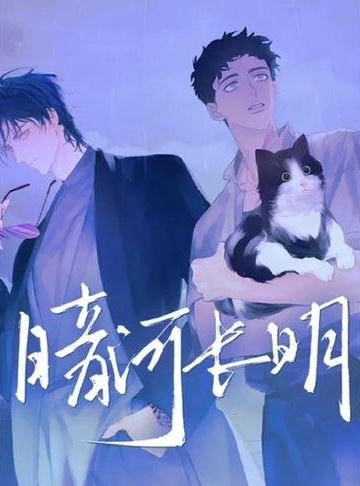
This chapter is absolutely dripping with symbolism and I need to unpack it because something about Lu Zerui's relationship to love and death haunts me.
Let's start with the cartoons. Throughout the chapter, there are references to cartoon scenarios—parents reading bedtime stories, lullabies, the idealized family moments the boy sees on screen and desperately wants in real life. These cartoons are the template against which his reality is measured. He's not just a child wanting attention; he's a child who has consumed media images of parental love and is trying to replicate them. The tragedy is that he's performing emotional labor for an adult who can't reciprocate.
Then there's the theme of forgiveness as self-erasure. Lu Zerui forgives Li Yan for wanting to kill him. Not for accidental neglect, not for harsh words—for the deliberate, violent rejection implied by "you wanted to strangle me when I was born." And the boy's response isn't anger, isn't boundary-setting, isn't even confusion. It's: "I still forgive you. I'm not afraid to die."
This is a child internalizing abuse as normal. The symbolism here is brutal—a five-year-old offering unconditional forgiveness to the person failing him, treating love as something that must be earned through suffering. He's performing the role of the good child, the patient child, the forgiving child, because he believes that's the only way to keep someone from leaving.
The scraped knee is another symbol—physical pain as a metaphor for emotional wounding, but also as a bargaining chip. The boy gets hurt, and in caring for that wound, Li Yan performs the caregiving role. It's almost as if Lu Zerui needs to be wounded to receive love. The injury becomes the entry ticket to intimacy.
And Li Yan's damp floor—tears falling while he treats the wound, unable to speak, unable to apologize. The water imagery throughout this chapter (rain, tears, dampness) connects to the emotional drowning both characters experience.
The Lu family resources could provide "three nannies doting on him at all times," but Lu Zerui insists on coming to Li Yan specifically. The symbolism of choice here—wealth, comfort, professional care—all rejected in favor of one person who keeps failing him. Love as addiction. Love as the only currency that matters.
This is a story about how children absorb and normalize rejection, and how adults sometimes fail them not through malice but through their own inability to process their own trauma. Both father and son are trapped in cycles they can't break.