Dark River, Ever Bright - Reviews

Dark River, Ever Bright
+Add to Custom List
Sort
Add review
... Read More
Okay so let me just say — that five-year time skip? I literally gasped out loud. One moment you've got Li Yan standing in his doorway after confronting Chen Yu, and the next thing you know we're in a completely different storyline with this kid Lu Zerui. And not only that, but the way the pieces start falling into place? Chef's kiss. I mean, think about it. The author planted ALL of this earlier — Chen Yu defending Li Yan, saying "it's all that bastard's fault," Li Yan snapping back to defend Master Qin Liu, the father's name being Lu Lianning... and then bam, five years later, Lu Zerui is asking if the person in the photo is his mother, and the butler drops the line "No. He is your mother." That is such a clean pivot. The old storyline with Li Yan's recovery and Chen Yu's growth runs parallel to this new generational thread, and they're clearly converging toward something. What I love is that the author didn't dump all the exposition at once — we get glimpses. Lu Zerui stole the photo from his dad's study. Hidden deep in a cabinet at the very bottom. That detail alone tells me this person meant everything to Lu Lianning. And the fact that Lu Zerui's father never shows up to parent-teacher events? Something's going on. Is Li Yan really the mother? Because if so, that changes EVERYTHING about what we thought we knew. This book is playing 4D chess with its plot structure and I am HERE for it.
... Read More
Okay can we talk about the ATMOSPHERE in this chapter? Because the author really knows how to paint a scene and I am HERE FOR IT. Let's start with the main setting: dim candlelight. We're not talking about bright, cheerful daylight here. This is low-light, intimate, slightly surreal territory. 'Seeing Li Yan lying beside him in the dim candlelight, Lu Lianning seemed happy, as if it were a dream sparked by a match flame.' That comparison—dream sparked by a match flame—is gorgeous. Matches are fleeting, they burn bright and then go out. That's exactly how Lu Lianning sees this moment. Precious because it's temporary. The physical space matters too. Lu Lianning is 'carefully inching closer to Li Yan' but there's 'no room behind him.' He's trapped between his desire for closeness and the physical reality of the space. When he stops at 'that almost intimate distance,' you can feel how fragile this moment is. One wrong move and it shatters. And then there's the red yarn. Li Yan buys this 'large ball of soft, bright red yarn—a festive color' at a clearance sale. Why does this detail matter? Because it's SO specific. It's not just any yarn—it's bright red, festive, something you'd buy for a holiday gift. And he chooses it for Lu Zerui, not Lu Lianning. The color choice tells us everything about Li Yan's personality: he's practical, he's thoughtful, but he leans toward dark shades for himself. 'This was definitely not a color Li Yan would pick for himself.' The contrast between the warm domestic scene (knitting, cooking, family) and the cold emotional reality (gland damage, unrequited love, guilt) is stunning. You have Lu Lianning wearing that bright red scarf like armor, standing in a doorway with 'half of his body leaning in as if he were about to step inside' but not quite crossing the threshold. He's physically present but emotionally hovering at the edge, afraid to fully enter. And the ending image—two boys, one red scarf, a father sitting on a small stool with an empty bowl—this is cinematic. It's like a photograph frozen in time, full of unspoken tragedy.
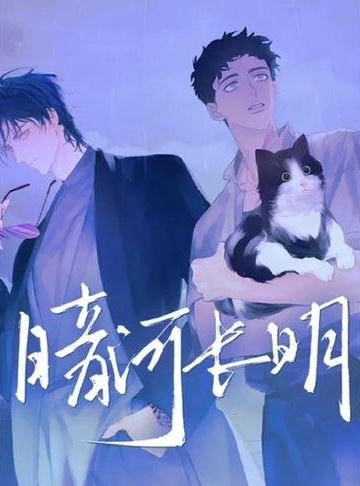
... Read More
Okay so can we just talk about the absolute chaos that is Lin Sheng entering this story? Like, Lu Lianning and Li Yan were finally, FINALLY making progress. Four years of mending broken pieces. Getting better. And then this golden retriever energy basketball player walks in and suddenly Li Yan is THROWING TANTRUMS. Which is honestly the best plot development because it shows how far he's come. The old Li Yan would never have spoken to Lu Lianning that way. He used to be too scared to make a sound. But here's where it gets really interesting — the author doesn't make Lin Sheng a villain. He's genuinely nice. Healthy. Good temperament. That's what makes him dangerous, not some scheming antagonist. He's literally everything Li Yan was missing, and Lu Lianning knows it. The jealousy scene is brutal: "Jealousy burned inside him, so much so that he felt like he might vomit blood." And then the hotel subplot! Lu Lianning offering Li Yan a job at his family's hotel is such a weird power move wrapped in what almost looks like care. Li Yan immediately asking "Will I get paid?" breaks me every time. His instinct is still transactional, still survival-mode, even when given an opportunity. The ramen shop confrontation at the end is the perfect hook. Lin Sheng corners him there, and I NEED to know what happens next. The author has basically set up the most delicious love triangle tension while also keeping us invested in whether Lu Lianning and Li Yan can actually make this work.
... Read More
Okay so this chapter has this scene where Li Yan falls asleep on the toilet at 3 AM because he's terrified of the dark bedroom, right? And Lu Lianning finds him there and drags him back, and Li Yan starts having some full-blown panic attack about how dark and quiet it is, clinging to the toilet like it's the only thing keeping him grounded. And then—here's the thing that got me—Lu Lianning doesn't just leave him alone or punish him for this. He actually goes back and plugs in a nightlight. A goddamn nightlight. Like that changes everything about how I've been reading this whole dynamic. Because up until this point, every interaction between these two has been pure power play. Lu Lianning is cruel, sarcastic, physically and emotionally abusive, and Li Yan is just surviving it with silence and retreat. But the nightlight? That's not something a captor does. That's something someone does when they notice the person they're hurting is actually broken in a way they didn't fully account for. And it ties back to earlier too—remember how Li Yan once held a knife to Lu Lianning's throat and demanded to leave? That version of Li Yan is completely gone now. The plot has taken him from feral resistance to this ghost-like existence, and Lu Lianning... well, he built all of this. The house, the rules, the greenhouse, the silence enforced by staff. He created the cage, but now he's the one flicking on the light at 3 AM. The pacing here is also masterful. We get this intimate, almost domestic moment—the bathroom, the night, the vulnerability—and then the narrative immediately pulls back to give us the broader context of Lu Lianning's life: the family business, the social events, the pressure of being the perfect heir. It reminds us that his cruelty isn't just personal sadism; it's layered with something else. Powerlessness? Guilt? The text never says, and that's what makes it so good. Every time I thought I had the plot figured out, it slipped through my fingers like smoke.
... Read More
The black hat is doing symbolic work that I couldn't stop thinking about after finishing. Li Yan puts it back on after bowing—a small act of regaining himself—then Lu Lianning knocks it off. It's not violence, exactly; it's ownership. The hat between them with a soft thud mirrors the three bows hitting the floor with resounding thuds earlier. Something ceremonial being undone, something personal being stripped. And Chen Yu—the name keeps coming up like a ghost neither character can exorcise. Chen Yu represents the future Li Yan wanted, the life beyond debt, the health recovered after illness. Lu Lianning weaponizes Chen Yu by threatening to send people after him. The body becomes collateral in a debt economy where relationships are just another currency. The lubricant bottle on the nightstand—such a clinical, modern object in what should be an intimate scene—tells you everything about what this relationship has become: transactional, prepared, expecting. "By the third time, Li Yan was at his limit." The number three matters because it suggests repetition, ritual, a pattern both of them recognize. They've done this before. The theme isn't revenge or romance—it's entrapment dressed as devotion, and the author keeps showing us the bars while making it look like a bed.
... Read More
Let me just sit with this image for a moment: Li Yan, sitting in the back of a truck filled with dirty sheep, surrounded by dung, breathing in thick exhaust smoke, and he's SMILING. He's holding a lamb and feeding it hay. This is the first time in the entire story I've seen him genuinely happy, and the author places it in the most unlikely, unglamorous setting possible. Why does this hit so hard? Because we've spent all this time watching Li Yan curl into himself, apologizing in a small voice, pinning his hands against cold glass while Lu Lianning lectures him through the night. And now—suddenly—he's found something that makes him light up, and it's not luxury or comfort or safety. It's this raw, honest, smell-it-all moment in a truck heading toward the place he grew up. Meanwhile, Lu Lianning is looking at that exact same photo and thinking... what? Is he angry? Relieved? Amused? The text says "He found Li Yan amusing" and saves the picture. Doesn't respond. Doesn't order a retrieval. Just watches that smile and files it away. What does that say about how he FEELS about Li Yan? Because there's definitely something there beyond control and possession, even if Lu Lianning himself hasn't named it yet. And the worst part—I know how this story goes. Li Yan thinks he's escaped. He thinks he's going home. But we already know Lu Lianning is letting him believe that. The trap is already set. And I'm sitting here emotionally compromised over characters who have no idea they're living inside someone else's plan.
... Read More
Qi Zhen is the funniest character and also the most terrifying. His dialogue is SO distinct — that casual, almost amused tone when discussing horrifying things: 'Aren't you the expert here?' 'That painting in Uncle Lu's house. My aunt's birthday is next month, and I want to give it to her.' Deal. Just like that. No moral weight. No hesitation. Qi Zhen talks about torture devices the way other people discuss weekend plans. And Lu Lianning's voice? Cold, precise, calculating. Watch how he never wastes words: 'Li Yan hasn't been very obedient since I brought him back.' 'That's it!' 'What do you want?' 'Deal.' He's economical to the point of being chilling. Even his threats are quiet: 'I just don't want to break him too soon. It'll be no fun if he's ruined too early.' That's not angry. That's... thoughtful. Which is worse. But my favorite dialogue exchange is probably this one: 'Why? Are you still worried about his health at this point?' Lu Lianning's expression remained aloof, a cold smile appearing on his lips. The smile. The cold smile. The author never tells us what expression Lu Lianning makes — but that cold smile says everything about someone who genuinely doesn't understand why Qi Zhen would think he cares. And Li Yan's dialogue? 'No! I want to see Lu Lianning! Let me talk to him!' Desperate. Raw. Human. It contrasts so sharply with everyone else's cold detachment.
... Read More
What's interesting is how the author controls the tension here. It starts almost domestic—sleeping on a lap, comparing skin tones, preparing fruit—these tiny moments that feel like breathers. Then the filming begins and the pace picks up. Day after day of extreme weight loss, double workloads, the director's relentless criticism mounting. By the time Lu Lianning finally snaps after the fifth take, you've been walking toward this explosion the whole time. The argument scene reads fast and chaotic—you can feel the noise, the shaking hands, the script hitting the floor. Then immediately after, it cuts to the dark apartment. Silence. Wine bottles. Low screen glow. The pacing slows to a crawl, which makes the emotional intensity hit even harder. And then the week-long dispute that just... resolves with a dinner invitation. No fanfare. The author trusts us to fill in what happened in those seven days. That's confident storytelling.
... Read More
"Perhaps he was truly freezing, as his face had taken on a slightly blue tinge. Without his usual complaints, he gave Chen Miao a mildly disdainful look before slipping his hands into the warmers." I read that sentence five times. FIVE. Because that is NOT how a picky, temperamental rich kid behaves when someone gives him literally anything. Lu Lianning rejects thick clothes Chen Miao packed. He spits out boxed lunches. He finds fault with everything. But those ugly colorful hand warmers? He takes them without a word. The disdainful look isn't rejection—it's performed attitude masking genuine gratitude. The man would rather die than admit he's thankful. And Chen Miao? He notices EVERYTHING. He knows Lu Lianning's fingers have turned red from cold even though the man's expression stays frozen. He drapes a cotton coat over him the second the scene wraps. He runs down the mountain daily to cook soup because he knows his boss won't eat the catering. This isn't duty. This is someone who has mapped another person's entire existence onto the circumference of his own days. The coat warming him up only to be removed for the next shot, making him feel even colder than before—that's basically a metaphor for their whole dynamic. Warmth and distance. Care and rejection. Getting close and being pushed away. Every time Lu Lianning lets Chen Miao in, there's a scene waiting that forces him back into costume mode.
... Read More
This is the kind of chapter that makes you put the book down and just stare at the wall for ten minutes. Let me walk through the pacing here because the author is clearly a wizard. We start with Li Yan feverish and broken, Liu Qing taking care of him — slow, deliberate, almost meditative pacing. You can feel the recovery happening in real time: half a month, then a month, then card games and ramen and those familiar street food moments where Li Yan begins to remember what living feels like. The author lets us BREATHE through this section. No urgency, just steady healing. Then BOOM — five years. Full stop. We're suddenly in a school setting with a completely new perspective character. Lu Zerui, this fierce, lonely kid who beats up anyone who talks bad about his parents. The pacing here is quicker, sharper, almost comedic with the teacher scene and the kid insisting his mom is an Omega despite looking like a Beta. But the real structural genius is how the author uses Lu Zerui's question — "Did my father kick my mother out because of this person?" — as a pivot point. The butler's answer "No. He is your mother." lands with the force of a nuclear bomb, and then the chapter ENDS mid-sentence with Lu Zerui's suspicion that the butler is lying. This is cliffhanger writing at its finest. The author takes you from the slowest possible pace (recovery, congee, medicine) to the fastest possible emotional whiplash (identity revelation, potential lies, a child's shattered assumptions) and somehow makes it all feel seamless. My heart rate literally spiked reading this.
... Read More
There's a recurring image in this chapter that won't leave me: blood. It's everywhere. On Li Yan's stomach, on the car seat beneath him, on Lu Lianning's hands, on Chen Yu's face as he cries, spreading across the pavement like a map of everything that went wrong. Blood is the great truth-teller here. Lu Lianning built his control on silence and manipulation—keeping Li Yan hidden, making him disappear from the world. But blood cannot be hidden. It leaks through door gaps, it soaks through upholstery, it stains the hands of the powerful until even they look like something ruined. The moment Lu Lianning opens that car door and smells it, all his control evaporates. He's just a man covered in someone else's suffering. The operating room door is another symbol I keep coming back to. Closed. A barrier between life and death, between hope and grief, between the world that was and the world that will be after these characters walk out. Chen Yu sits behind it broken. Lu Lianning stands before it trembling. Neither can control what happens next. For people who spent the entire story trying to control everything, that door is the ultimate humiliation. And Li Yan's pregnancy—the thing that started all of this—is simultaneously his greatest vulnerability and his act of defiance. He carries something inside him that Lu Lianning created through violence, and he uses it as a ticket to freedom. The body that was used against him becomes the instrument of his escape.
... Read More
The plot structure here is brilliantly deceptive. On the surface, we're reading what appears to be a sweet domestic story—two people living together, a medical appointment, a business trip. But the author is quietly stacking time bombs under every conversation. The most chilling moment isn't dramatic at all; it's Zheng Zhi's flat statement that Li Yan "doesn't seem to know yet" about the pregnancy plans. That single line recontextualizes every affectionate gesture Lu Lianning has shown, turning them into something manipulative rather than loving. Then the narrative pivots hard. Qi Zhen's arrival feels almost cartoonish at first—sunglasses indoors, persistent friend energy—but the author uses this comedy to lull us before the trap snaps shut. The car driving in the wrong direction is such a mundane detail, yet it's the moment everything shifts. By the time they reach the manor on the sixteenth floor, we're no longer in a romance. We're in a thriller. The parallel between Lu Lianning's secret plan and Qi Zhen's open exploitation is devastating. Both men are using Li Yan's body without his consent; one does it with love, the other with malice. The author forces us to confront a horrifying question: which is worse? The plot doesn't answer—it just holds up two mirrors and watches us squirm.

Leave a comment

You must be logged in to leave comments. or
