Could You Not Tease Me? - Reviews

Could You Not Tease Me?
+Add to Custom List
Sort
Add review
... Read More
Okay so let's talk about the STRIPTEASE SCENE because my entire being is still recovering from it. Five minutes and thirty seconds. FIVE. MINUTES. Winston basically teases Hunter so cruelly that Hunter has to bolt to the restroom and literally see McGrady making out with someone to fuel his own desperation. This man is a WAR criminal and I am HERE for it. But here's what actually wrecked me — it wasn't even the physical tension. It was the aftermath. Hunter sitting in that car with Shen Chuan, looking out at Abu Dhabi at 4am, asking "Do you believe Winston has been seducing me?" like it was some casual thing. Like his entire nervous system wasn't shot to hell. And Shen Chuan's response — the whole 'chaste nobleman' thing, fans shipping them — and Hunter laughing it off on the outside while inside he was just... devastated. Because he WISHED it was true. He HOPED Winston was seducing him under the guise of friendship. That's not just crush energy, that's full-blown romantic doom. And then Owen shows up like "You want Vann Winston to stay by your side forever. You're afraid he'll leave you." And Hunter can't even deny it. The man reads him like a book and Hunter's just standing there with no defense. This is the kind of emotional gut-punch that makes you close the book and stare at the ceiling for twenty minutes.
... Read More
Can we just talk about how good the dialogue is in this chapter? Because I am OBSESSED. "When do you think I'm most charming?" / "When you're not bothering me!" / "Well, it seems I'll have to give up on being charming then." I AM DEAD. This is exactly the kind of banter I live for. It's sharp, it's got this underlying current of something real beneath the jokes, and you can tell these two have a history—like they've done this dance before but the stakes feel different now. But then the drunk Hunter dialogue?? Absolutely unhinged in the best way possible. "Bunny girl... Why are you here?" And then he's touching Winston's face, his neck, his ears—this completely vulnerable, tactile conversation that says more than any serious dialogue could. The fact that he keeps testing Winston, poking him, making him prove he's real and not just some hallucination from the alcohol... it's both hilarious and kind of devastating? And Winston's voice is just *different*. Listen to this: "Knowing that I don't like you remembering other men, so you deliberately act as if your mind is blank?" THAT LINE. He sees right through it. He knows Hunter's playing a game even while half-unconscious, and he's calli ng it out in this soft, almost amused way that's somehow more threatening than if he'd yelled. The narrative voice itself is also great—this observer who can step back and notice things like Vince's stuttering confusion or the assistants being "momentarily stunned." It never feels overly literary or pretentious, just observant in a way that makes you feel like you're right there in the room. The author knows when to compress (the kiss scene) and when to linger (Hunter's drunken rambling). Perfect rhythm.
... Read More
OKAY. The stakes in this chapter are INSANE and I need to talk about why. On the surface, it's a drunk guy being picked up by his friend (well, more than friend, we all know). But underneath? This is a power struggle dressed in silk. Every line between Hunter and Winston is a loaded gun. Look at the question Winston keeps throwing: "Which description is true? Which one is false?" He's comparing what Hunter told HIM versus what Hunter told Nicky. Someone named Nicky apparently. AND Winston knows Hunter remembers but is choosing oblivion as a weapon. That's psychological warfare at its finest. The physical stakes matter too—Hunter is AT WAR with himself. His body is betraying him (leaning into Winston, kissing him without fully understanding why) while his mind is fighting to stay in control through this drunken performance. And Winston? He's the one holding all the cards but you can feel him trembling beneath the surface. "I'm not a bunny girl," Winston says, and his voice is HOARSE. He's losing composure. The dominant one is cracking. And then—the KISS. This isn't romance novel soft. This is "parched traveler," this is "prelude to a brutal war." Winston takes over completely, gripping Hunter's head, invading his mouth with this desperate intensity. But here's the thing: WHO IS REALLY IN CONTROL? Hunter initiated all of this. He called Winston. He seduced him (or claimed it was revenge). And Winston—calm Winston, composed Winston—lost it. He had to be reminded by someone else's voice approaching to finally step back. The tension doesn't drop even at the end. It coils tighter. And I was absolutely NOT prepared for the next chapter.
... Read More
I have never been this tense reading a book chapter and actually set it down twice because my heart was pounding. The stakes escalate so organically too—from Merlin's quiet intensity to the knife appearing to Johnny getting slammed in the head to Winston literally knocking on the door outside. Every beat raises the temperature. What makes this scene work is that there are competing threats and you genuinely don't know which one is more dangerous. Is Merlin going to snap right here? Is Winston about to burst in and escalate things further? Is Hunter going to lose his leg before the race because he can't afford to be injured? The author plays all these tensions against each other like a conductor. The photos are where everything peaks for me though. Hunter seeing those images—"You keep saying that you're my fan, so how can you think this way about me?"—and suddenly he's forced to confront how his friendship with Owen looks from the outside. Even Hunter himself admits the images make them look intimate. The conflict isn't just Merlin vs Hunter anymore, it's Hunter vs his own reputation, vs how his actions are perceived, vs the fact that he never thought about how these moments would look to an outside observer. And that ending—Merlin demanding to know who Hunter actually likes, threatening to kill someone if he doesn't get an answer, while Winston is STILL KNOCKING—what kind of author leaves you there?! I need the next chapter immediately. This is not a request, this is a demand.
... Read More
I want to talk about how this excerpt controls the reading experience like a masterclass in pacing. It begins almost lazily—sunlight, grass, a photoshoot that hasn't even started yet. Hunter sitting there holding a rose, waiting for Rossi's signal. Nothing urgent. The energy is warm, golden, almost sleepy. Then the intensity climbs in waves. First it's the physical proximity—Winston kneeling, the rose petal in his mouth. Then it's the power play—Hunter grabbing Winston's tie, spinning him around. Then the dark turn—Winston's hand on Hunter's chin, the rose stem pressing hard enough to make him gasp. Hunter's actual fear response is so visceral: "Fuck! You scared me to death!" The reader feels it too. That's good pacing—escalation that makes your pulse quicken. But then it drops again. The blindfold scene is slow, deliberate, almost meditative. The silence between them. The heartbeat against Hunter's back. This is the breath before the fall. And then—BOOM. Back in the car, routine conversation about flights and apartments, and then the elevator encounter, the rose on the door, the envelope. The pace SNAPS from romantic to suspenseful in three paragraphs. I went from sighing at the blindfold scene to needing to know what was in that letter within seconds. The chapter structure here is doing exactly what it should: seduce you, make you comfortable, then pull the rug out. I clicked to the next chapter immediately. No regret.
... Read More
Okay, let's talk about atmosphere because this chapter is *dripping* with it. The interview studio first—confined space, bright lights, Mr. Cacho asking questions while underneath the table Winston is slowly, methodically undoing Hunter with his fingers. The description of Hunter tracing Winston's hand, noticing “their length, strength, and the way his joints moved,” and then immediately getting flustered because his own heartbeat is doing backflips? That's not just tension, that's sensory overload. The reader is trapped in Hunter's body for those entire minutes. You can feel the tie being too tight, the room being too hot, the smile being too fixed. Then they step outside and the whole temperature shifts. The street scene opens up, you can hear passersby, see the F1 fans lingering around, feel the awkward distance Hunter's putting between himself and Winston. And then the utility pole moment—so mundane, so domestic, and then suddenly it's turned into something charged and intimate. Hunter tapping his finger against the pole like a kid playing some weird game, and Winston bending down to inspect his hand with this earnest concern before the whole thing pivots into the most unhinged make-out session of the century. And then the burger joint! Owen sitting by the window, repeatedly picking up and putting down his burger, Ciel across from him looking like he'd rather be anywhere else. The forced cheerfulness when Owen waves them over, Ciel's expression souring like milk. It's all so vividly cinematic. Every frame in this chapter could be a shot.
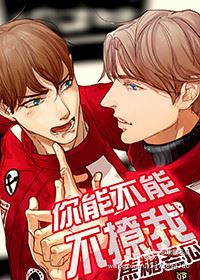
... Read More
The dialogue in this chapter is what makes it work. Like, the situations are intense but it's the VOICES that carry every scene. Owen's voice is instantly recognizable — that smug, teasing, deliberately provocative energy. "Kid, you did it. You took down the Great White Shark." The wink. The whisper. The arm-around-the-shoulder performance for Winston's benefit. And then later at the table: "You wanna die! Is winning once a big deal?" That's Owen being Owen — equal parts annoying and oddly protective. Ciel is the best. "Are you trying to trick the kid again?" followed by just a laugh that says everything. And his directness when explaining why Winston came — no filter, no pretense. "It's because he was worried Owen might bully you." Perfect. Just perfect. Donald's voice is pure chaotic good energy. The pizza suggestion, the enthusiasm, the way he's the social glue holding this group together even while getting legally denied under-the-table foot-rubbing advice from Owen. And Winston... god, Winston. His dialogue is SPARSE. "When did you get so close with Lawrence Owen?" That's it. That's his entire opening salvo. Not dramatic. Not raised. Just cold precision. Later: "I saw that I had some extra time, so I decided to stop by. After all, Owen is here." The subtext is SCREAMING but the text is ice. This is a man who would rather die than admit he came because he was worried about Hunter. Every character has a distinct rhythm. That's rare and I appreciate it.
... Read More
Everything in these chapters happens around water. The submarine, the underwater restaurant, the Persian Gulf pressing against the glass, the bath, the slipped foot on the wet floor. Water is this constant presence—it's dangerous, enclosing, inescapable. That's literally what the submarine conversation becomes about too. Hunter talks about trapping Winston underwater. Winston talks about locking his lover in a submarine with no escape. The water isn't just setting decoration here; it's the physical manifestation of their relationship dynamics. You can't escape it. It surrounds you. It presses in from all sides. And the reflection motif keeps showing up. Winston's reflection on the submarine glass. The way Hunter watches Winston's face through the water rather than the sea life. There's something about seeing someone doubled in water that feels like seeing them through desire—you know they're real but the image is distorted, shimmering, unstable. Hunter is always seeing Winston refracted through his own hunger, literally and figuratively. The sake detail is interesting too. Hunter expects something Western, something sophisticated like Lafite, and Winston says sake is most effective. It's a specific, almost clinical choice that hints at shared history without explaining it. The book trusts us to sit with the unknown. What happened that makes sake the answer? The text never says, and I think that's the point—their intimacy lives in the gaps, the things unsaid between them. The water holds those secrets too. What else is down there we haven't seen yet
... Read More
Let me sit with the roses for a second because this symbol is doing SO much work. Merlin sends roses to Hunter's door, unopened and unnamed, and when Hunter doesn't keep them, Merlin's entire emotional world collapses. Roses are traditionally symbols of romance and admiration, but here they function as something darker—a token of ownership. Merlin isn't giving flowers to make Hunter happy, he's giving them to establish a debt, to create a bond that Hunter hasn't consented to. And the fact that the cleaning staff threw them in the trash? That's the moment Merlin's fantasy彻底 shatters. His gesture of devotion was literally garbage to the person he admired. The roses became evidence of rejection without Hunter even knowing why. Then there's the phone—another symbol. Merlin's phone contains his entire obsession documented and organized, with Hunter's birthday as the password. It's the modern equivalent of a stalker's shrine, but dressed up as devotion. Meanwhile Hunter's phone vibrates with legitimate messages from Winston, and Merlin snatches it like it's a threat to his narrative. The phones represent two different kinds of connection: one manufactured and parasitic, the other real and reciprocal. The blood from Johnny's temple flowing into his eyes is also doing symbolic work—Johnny is literally seeing through the cost of Merlin's delusion. His assistant is bleeding because he walked into a room where someone's fantasy was being enforced at knifepoint. That image stays with me.
... Read More
"Hunter saw Winston in a red Ferrari seemingly reaching out and gesturing 'Follow me.'" I read this scene five times. Five times. And each time it hits different. Winston — pole position winner, the established number one, the guy Hunter has been chasing his entire career — reaching out to him on the podium? Not to his Ferrari teammates. Not to Owen right behind him. To Hunter specifically. This man has spent the entire narrative being the ceiling Hunter can't break through, and in this single gesture, Winston is literally saying: the ceiling is now a doorway. And the hug. "Winston was hugging his shoulders tightly, so tightly it didn't feel real." That's not just sportsmanship. That's a younger driver who has spent so long carrying the weight of expectation, finally being held by someone who understands exactly what that weight feels like. But honestly? The moment that broke me was earlier. When Marcus says "If you go crazy, we'll go crazy with you." These guys aren't just a team — they're a family that chose each other. Hunter is surrounded by people who would literally lose their minds alongside him, and that's rarer than any podium finish. Then there's Shen Xi watching from home, the whole emotional ecosystem of people who care about Hunter's success stretching far beyond the track. This story keeps reminding me: none of this is solo.
... Read More
'Is your brain okay?' That's it. That's the line. Two words after Hunter asked if desert safaris could blast off your trunks, and Winston just walked ahead like he'd said something completely normal. This man is a weapon. A beautiful, championship-winning, emotionally constipated weapon. The dialogue in these chapters is genuinely funny because it's so grounded. Hunter's internal monologue reads like a actual human being who panics—'Oh my god—' and then later 'I felt like crying but couldn't shed any tears.' That's not dramatic writing, that's observation. The author understands how embarrassment actually feels. And Winston's voice is perfect because it's so sparse. He doesn't do monologues. He doesn't do lengthy explanations. 'Hold this for me. I'll try to find them.' 'Put your legs in.' 'Let's go.' Three words, sometimes two. But every time he speaks, it carries weight because the contrast with Hunter's chaos makes it shine. Hunter's voice, on the other hand, is pure chaos energy. 'Super fast!' 'Huh? Can desert safari really blast off your trunks?' 'To find them like this, you really are like Aladdin's genie!' He talks when he's nervous. He flatters when he's embarrassed. He questions everything. And Winston just... absorbs it all. Walks ahead. Says 'You look silly, you know that?' and takes the picture anyway. The fan scene was brilliant too. 'You're so awesome! There were people on the forums...' This stranger laying out his feelings about Hunter's racing while Hunter is over here quietly sharing Winston's cigarette habits and steak preferences like he's handing over state secrets. The contrast between public admiration and private intimacy—it's all in the dialogue. God, I love this writing.
... Read More
Burn calories. Pick up the soap. Don't catch a cold. These phrases repeat like mantras throughout the chapter, and I think the author is building a secret language here. Calories. This word becomes Winston's favorite deflection mechanism. Every time the scene threatens to become genuinely vulnerable, Winston redirects toward fitness. Sitting position burns 60 calories per minute. Both legs raised burns 26. You'll exceed 150. It is absurd. It is ridiculous. And it is exactly how Winston communicates affection without having to name it. Physical exertion as metaphor for emotional investment. The more they play, the more they burn, the closer they get. Hunter is trapped in a loop of his own making—he wants to win at ping pong, but winning requires effort, and effort means proximity, and proximity means Winston's hand on his waist and his breath against his ear. The blanket is the other major symbol. Hunter wraps himself in Winston's blanket without conscious thought. Later, Winston wraps Hunter's collar closed with the same concern. The blanket becomes a conduit for care that neither of them can yet express directly. It passes from Winston to Hunter and back again, a circuit of tenderness that operates entirely below the level of words. Shadows. This is the one that haunts me the most. Two separate silhouettes on the corridor wall. Hunter reaches out and pushes Winston's shadow until they merge into one shape. Then Winston stops walking, and the physical connection breaks, and the shadows separate again. The visual metaphor is so clean it aches. They are learning to exist as a merged entity, and the corridor is the threshold between together and apart. And the ping pong ball itself—a small white sphere bouncing back and forth, neither able to hold it, only able to strike it toward the other. The ball never stays. It only travels. That is their relationship right now. Constant motion. Constant redirection. The ball bounces to your side. Suit yourself. But Winston does not actually walk away. He sighs. He walks over. He kneels. He picks up the ball himself because he cannot bear to let Hunter sit in the frustration of it. The deeper theme here is about control. Who controls the distance between them? Who decides when to close it and when to pull back? Winston performs control through teasing and deflection. Hunter performs it through stubbornness and refusal to pick up the ball. But the author keeps revealing that neither of them is actually in control. The blanket was already around Hunter. The collar was already loose. The shadows were already merging. The ball was always going to bounce back.

Leave a comment

You must be logged in to leave comments. or
