Come Have Tea When You're Free - Reviews

Come Have Tea When You're Free
+Add to Custom List
Sort
Add review
... Read More
I need to talk about Song Qitao's internal state because this man is running on pure panic and three years of unresolved tension. When he first sees Meng Sicheng in that hallway—white shirt, casual trousers, looking like he just came off a competition podium—his immediate thought is 'Run away!' Not 'Oh my god it's been three years' but straight to fight-or-flight and he chooses flight. But then Meng Sicheng grabs his wrist and suddenly Song Qitao is trapped in a room where the only escape route is through trigonometry. The dynamic between them is so funny because Meng Sicheng is completely oblivious to the fact that anything inappropriate happened. He's sitting there in a chair with a blue manual, calmly teaching math like this is a normal Tuesday. And Song Qitao is over here sweating through a bathrobe having the most intimate accidental encounter of his life. The moment that broke me was when Song Qitao actually feels sorry for Meng Sicheng. Think about that. After everything, after the confusion and the panic and the near-medical-emergency situation, he's like 'this guy is suffering too, teaching math to a fool is his nightmare.' That's not hatred, that's not even awkwardness—that's something else. And Meng Sicheng? He just watches Song Qitao bounce around the breakfast buffet the next day and presses his temples like he's trying to remember something just out of reach. They're both pretending nothing happened. Yao Zhao even makes them all swear an oath: 'no one mentions this again or you're a little dog.' Song Qitao agrees immediately because obviously. But Meng Sicheng stays silent. That silence says everything.
... Read More
What I love about this chapter is how the author takes a situation that could have been extremely tense and turns it into this absurdist comedy of errors, but underneath all the humor there's real emotional stakes. On the surface: two guys get drugged by spiked wine, one ends up accidentally touching the other while trying to help him pee, and they both pretend it never happened the next morning. Low stakes, right? Comedic mishap. But the real conflict is underneath. Song Qitao has spent three years avoiding Meng Sicheng, and now they're forced into proximity again. He's terrified—not just of the physical situation but of what it means that he still cares enough to be this panicked. The scene where Song Qitao is counting down from 99 is genuinely tense in a weird way. He's sweating, his legs are trembling, he's considering calling an ambulance because he's so flustered he can't function. And then he uses the exam metaphor to get out of it. The humor comes from the absurdity, but the stakes feel real because we've been inside his head the whole time. Meng Sicheng's conflict is different but equally compelling. He's trying to remember what happened, and the surveillance footage shows him grabbing Song Qitao's wrist but he can't recall the emotional context. He wants to be close to Song Qitao—to know his employment direction, to be together—but he keeps hitting walls of his own forgetfulness and social awkwardness. The tension isn't 'will they or won't they' in a romantic sense, it's 'will they ever actually communicate about anything' and that's way scarier.
... Read More
The pacing in these chapters is actually really smart when you think about it. The author could have dragged out the pregnancy drama, the hospital scenes, the newborn adjustment — all of that has potential for a lot more pages. But instead, we get this rapid-fire sequence: prenatal check-up → surgery → newborn videos → nickname debate → departure → dorm life. It moves. What's interesting is how the author uses time jumps as emotional shorthand. The Spring Festival section covers weeks in a few paragraphs, but then we linger on the card game where Song Qitao doesn't know K is the highest card. That's the scene that stays with me — it's funny, it's tender, it shows us this domestic moment that could only happen because everyone is suddenly home together with nowhere else to be. Then the departure hits like a gut punch. "Leaving home, boarding the plane, getting off the plane, moving out of the dorm to rent independently" — three sentences that compress an enormous emotional shift. The story doesn't slow down to mourn. It just... moves forward. And that's probably the most realistic portrayal of new fatherhood I've ever read. You don't get to grieve. You pack your bag and you go. The chapter ending with him bumping into Liang Yi and talking about weight loss and insomnia feels deliberately understated. After all that intensity, we get this almost casual campus scene. It's like the story is saying: life continues, even when it shouldn't.
... Read More
Okay so this whole chapter is basically one massive comedic misunderstanding wrapped in a drugged wine incident and I am HERE for it. The setup is brilliant—Song Qitao avoids Meng Sicheng at the KTV room because he knows he's tone-deaf and doesn't want to sing, but then he ends up in Meng Sicheng's hotel room anyway because apparently math tutoring is mandatory when you're drunk. The plot twist isn't even a twist, it's just Song Qitao's internal monologue spiraling into absolute chaos while Meng Sicheng is just sitting there with a blue manual like a very handsome ghost. The real plot gold though is the surveillance footage reveal at the end. Meng Sicheng goes back to check the cameras and we get this cold, clinical timeline: 8:30, 8:32, 8:50, 9:40, 10:30. It's almost like a police report. And what does he conclude? That he probably just dragged Song Qitao to discuss math problems and that's it. Meanwhile Song Qitao is over here having a full existential crisis thinking he lost his virginity to a thigh. The dramatic irony is absolutely delicious. Also the fact that Yao Zhao is leaving for abroad soon and they make this little 'until next time' moment before Meng Sicheng ghosts off to investigate his own behavior like a detective in his own life? Chef's kiss. The subplot of Meng Sicheng secretly coming to Nancheng just to check on Song Qitao's employment direction is the kind of thing the author drops like a landmine and then walks away from. I need more.
... Read More
The stakes in these chapters are deceptively simple on the surface — it's a guy who had surgery, has a newborn, and needs to finish his senior year. But underneath that, Song Qitao is fighting a war on every front and he's not telling anyone. Physically: his wound still hurts when he gets too happy. He can't hold his baby yet. He's navigating recovery while pretending everything is fine for his family's sake. The umbilical cord wrapped around the baby's neck was a genuine medical scare that the author handles with this casual "it's not a big deal" tone that somehow makes it feel even more real. Emotionally: he's separated from his child, missing every moment, and has no one to talk to except a guy he deleted off his contact list. The internal conflict of wanting to be a good dad while being physically absent is the kind of guilt that doesn't have solutions. Socially: he's maintaining this elaborate cover story. He's back at school, nobody knows he had a baby, he's living off-campus with a cook his parents hired. If this falls apart — if someone finds out — everything he's built, every sacrifice, every careful arrangement collapses. And academically: this is his final semester. He's an intern illustrator, he's been absent for months, and he's supposed to just... blend in. The stakes aren't just about grades. They're about whether all that effort — the math papers, the pregnancy precautions he mostly ignored, the C-section, the homesickness — was worth it. The scene where he sobs into the quilt and then sees the video of Little Papaya alive and well — that's the moment where all these conflicts converge. He's failing at being present, failing at being strong, failing at being smart enough to handle this. And yet he keeps going. That's what makes it hit so hard.
... Read More
Okay so let me just talk about Song Qitao and Meng Sicheng for a second because this part absolutely wrecked me. You have this entire arc where Song Qitao is sobbing in his dorm at 2am, feeling like the worst dad in history, and his first instinct is to call Meng Sicheng. Like, of course he does. They're the two dads. But he doesn't — he calls, then immediately lies and says he's selling broadband, and when Meng Sicheng actually responds with this dry, almost tender "Crying because you can't meet your sales target?" Song Qitao hangs up and deletes him. That's the whole relationship in one gesture. He can't handle the fact that Meng Sicheng still exists, still answers, still has this quiet way of seeing right through him. It's not anger. It's self-preservation. Song Qitao says to himself "He's a dad now, he has to solve things himself" and that line hit me like a truck because it's both empowering and heartbreaking. He's choosing independence from the one person who might have actually understood. And the other relationship that's quietly devastating is with his mom. Jiang Mengli finding those papayas in the fridge, misunderstanding the nickname, thinking her son is buying papayas for milk or some remedy — the whole scene is hilarious but underneath it is this ache of a mother who's so worried she can't quite see her son anymore. She's managing everything: the hospital, the baby, the cooking, the cover story about him being back at school. Song Qitao is this giant man, a head taller than her, tiptoeing to look at his baby, and she still treats him like the kid who needs protecting.
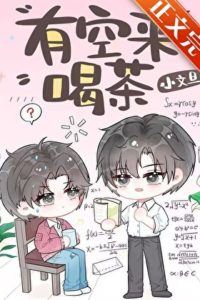
... Read More
I keep coming back to the fruit imagery in these chapters and I think it's doing a lot more work than I initially gave it credit for. Let me list what I found: Little Papaya / Little Peach as the baby's nickname, the summer quilt embroidered with peaches, the two papayas Song Qitao buys for a photo, the papaya he gnaws on whole instead of cutting, his swollen eyes looking like peaches, and his mom almost making red date oatmeal milk papaya because she doesn't understand. Peaches and papayas are soft fruits. They're sweet. They bruise easily. They have to be handled carefully — just like this baby, just like Song Qitao's recovering body, just like his fragile new role as a father. The fact that his mom misreads the papayas as food rather than props for a photo says everything about the generational gap in how they're processing this whole situation. But here's what I think the symbolism is really about: growth and ripening. A papaya doesn't become soft overnight. It goes through stages. Song Qitao is in that uncomfortable middle phase — he's no longer just a student, not quite a father who knows what he's doing, and definitely not the carefree guy who was ordering milk tea and coffee during his pregnancy. The fruit imagery reminds us that this softness, this vulnerability, is actually a sign of ripening. He's becoming someone. The quilt soaked in tears is still a peach quilt. He's still growing, even while he's falling apart.
... Read More
I keep coming back to the math motif in this chapter and I think it's the author's way of saying everything these characters can't say out loud. Meng Sicheng communicates through formulas. Song Qitao survives through perfunctory nods and fake understanding. Their entire relationship is built on this language of academic rigor that somehow manages to be both intimate and completely inadequate. The blue manual Meng Sicheng reads while half-drunk—what does that represent? It's his anchor, his comfort object, the thing that keeps him grounded when everything else is blurry. And Song Qitao, who can't remember a single formula, is forced to sit through three years of math regression while his body does things his mind can't process. The irony is almost painful. Then there's the counting. Song Qitao counts down from 99 to 1 like it's an exam, like he's handing in a paper, like this is just another problem to solve. But it's not a problem—it's a moment of vulnerability, of accidental intimacy, and he tries to math his way out of it. 'Rounding off equals nothing,' he tells himself. 'An unintentional act. No harm done.' But the reader knows that nothing is actually nothing. Every touch, every glance, every moment of forced proximity is building something. The watch he claims to have lost but was actually holding Song Qitao's wrist—that's the symbol that gets me. He checks the surveillance to confirm he had his watch, but what he's really looking for is confirmation of what happened. And he finds it: his hand on Song Qitao's wrist at 8:50. Three years of distance compressed into a single moment captured on camera.
... Read More
I need to talk about the scene where Song Qitao finally breaks. Like, he's been holding it together this entire chapter — the surgery, the hospital, the separation from his baby, the fake strength in front of his mom and sister — and then this woman named Wang Feng who's been hired to cook for him makes him some stupid simple soup and he just loses it. "Pouring a bowl of soup, he drank it, and tears he'd held back all day fell into it." That sentence. Just sitting with that for a second. It's not dramatic. It's not some huge event. It's a bowl of wakame shrimp ball soup from a cook with a soft accent who calls him "Peach" and asks if his wound hurts. And he says "Homesick, Aunt Feng" and composes himself in front of her but then at night he's sobbing into a peach-embroidered quilt. The detail about his eyes swelling "like peaches" made me literally gasp. The author is connecting the baby's nickname, the quilt, his physical state — everything is peaches. And then the video of Little Papaya comes through and he sobs again because he desperately wants to go back. There's no resolution here, no neat bow. Just a man who loves his child so much it physically hurts to be apart from him. What got me was the honesty of it. This isn't romantic love, this isn't the dramatic kind of crying you see in movies. This is the ugly, snotty, can't-breathe kind of crying where you feel useless and stupid and like you've failed at everything. And somehow that's the most emotionally true thing I've read in this novel.
... Read More
Let's just talk about this one exchange for a moment: Song Qitao: 'When I count to one, you let go. Exam over... understand? Time's up, hand in your paper, zero points if you keep filling in the answer sheet.' Meng Sicheng: 'Not an idiot.' Song Qitao: '...Meng Sicheng, you almost got taken away by 120, do you know that?' I am dead. I am actually deceased. The fact that Song Qitao tries to use MATH as a threat to get Meng Sicheng to stop touching him is the most on-the-nose thing I have ever read. He's literally speaking Meng Sicheng's love language to survive a sexual situation and it works, but of course Meng Sicheng's response is just 'not an idiot' like he missed the entire context of the conversation. And Yao Zhao's voice in this chapter is peak comedic relief. 'Meals and sleep were free, but I lost my face.' Bro you were drugged and you're worried about your reputation at breakfast? And then he curses three times on the phone and we get to hear the usually civilized Yao Zhao absolutely lose it. The dialogue here is so natural it hurts. Every character sounds different—Song Qitao's frantic internal monologue versus Meng Sicheng's short, clipped sentences versus Yao Zhao's dramatic complaints. The author's narrative voice is also doing a lot of heavy lifting. Lines like 'He felt like he was in a power outage dormitory, his chest hot and stuffy' and 'An unintentional act. No harm done. He had pushed him away in time, preserving both their innocence' are delivered with such deadpan seriousness that I couldn't stop reading.

Leave a comment

You must be logged in to leave comments. or
