Summary

... Read More

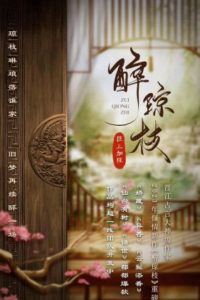
Li Si, a nameless ghost officer of the Underworld, has spent two centuries working as a low-level functionary tasked with capturing souls who attempt to flee reincarnation. Born at the Bridge of Forgetfulness with no family or identity, he is known only by his numerical designation. Despite his diligence, he has failed to catch a single fugitive for two hundred years, accumulating minimal merit and dreaming only of reincarnating into a noble family. His endless routine is shattered when Gu Yunwu, a beautifully dressed but frail ghost, approaches him seeking directions to the human world. Gu Yunwu claims he merely wishes to visit his family on his seventh-day memorial, but Li Si, suspecting an escape attempt, drags him before Lord Yama. There, Gu Yunwu cleverly exploits Underworld law to prove his actions were lawful, exposing Li Si’s misinterpretation. Yama assigns Li Si forty-nine days to investigate why Gu Yunwu died prematurely, despite having thirty years of life remaining in the Register of Life and Death.

Li Si inhabits the body of Chun Tao, a dying maid from Gu Yunwu’s estate, to accompany the ghost into the mortal realm. In An’nan Town, they discover the grim reality of Gu Yunwu’s life: though born into wealth, he was neglected by his father, Gu Changwei, and manipulated by his stepmother, Madam Liu. Chun Tao, a pawn of Madam Liu, had poisoned Gu Yunwu’s medicine for years to keep him weak and dependent. When Chun Tao’s fabricated pregnancy threatens Gu Yunwu’s inheritance rights, Gu Changwei orders her execution, leading to her death. Revived by Li Si’s possession, Chun Tao confronts the Gu family, enduring a brutal beating before Madam Liu intervenes. Li Si and Gu Yunwu uncover that the poison was laced with a rare toxic fungus, and Gu Changwei’s repeated changing of physicians was a deliberate ploy to hide his involvement.

As the investigation deepens, Li Si forms a bond with Gu Yunwu, who grants him the name “Li Si” using his late mother’s surname. This act marks a turning point, giving Li Si an identity he never possessed. They retrieve the incriminating medicine and confront Gu Changwei, who attempts to murder Li Si to silence him. Li Si survives the attack but is critically wounded, forcing his return to the Underworld. Before departing, Gu Yunwu ensures Chun Tao’s soul finds peace, expressing gratitude for her loyalty despite her earlier faults. Li Si completes his report, securing Gu Changwei’s condemnation in the afterlife, but feels a profound sense of loss upon Gu Yunwu’s reincarnation.

Months later, Li Si returns to the mortal world under a new guise, now possessing the body of a battered martial artist. He seeks out Jia Yi, a fellow officer who lost a soul, and helps him track down a runaway spirit associated with a pastry shop. Their search leads them back to An’nan Town, where Li Si encounters the fortune-teller who previously aided Gu Yunwu. Learning of the shop’s closure, Li Si enters a gambling den to earn money, revealing his continued mastery of chance and strategy. As he prepares for another round, the narrative suggests his journey is far from over, leaving his future actions uncertain.

Latest Release
DateGroupRelease
2026-09-25knoxt c8
2026-09-25knoxt c7
2026-09-25knoxt c6
2026-09-25knoxt c5
2026-09-25knoxt c4
2026-09-25knoxt c3
2026-09-25knoxt c2
2026-09-25knoxt c1

Community Reviews

Rating(4 / 5.0, 43votes)
5 stars
12(28%)
4 stars
18(42%)
3 stars
13(30%)
2 stars
0(0%)
1 stars
0(0%)

Popular reviews

... Read More
Let's talk about the imagery because oh my god the author knows how to paint a picture. The opening shot of Yi Si squatting by the roadside, drenched in sweat, fussing with a grape trellis—that's such an unexpected image for the Underworld. I expected grim darkness, but instead we get... agriculture? Vineyards? It's oddly pastoral, like the afterlife has a quiet countryside vibe. And then Gu Yunwu himself is described like a walking masterpiece: "his hair neatly coiled and fastened with an exquisitely carved jade hairpin," features like the bright moon, eyes like the morning light. This guy literally glows. Even as a ghost, he's radiant in a way that contrasts sharply with Yi Si, who is just dusty and smudged from working. The Bridge of Forgetfulness scene is gorgeous too. Nearly half an hour of walking, the Yellow Springs Road, the field of flowers where Gu Yunwu stumbles—it all feels cinematic. Like each location has its own mood. And Granny Meng! She's not the crone the stories tell, she's a graceful young woman whose mere presence draws crowds. The worldbuilding here is subtle but deep; you get the sense this realm has rules, routines, and a certain everyday beauty that makes it feel lived-in. The teahouse by the south gate of An'nan Town—I can already picture it. I want to visit.
... Read More
The stakes in this story just shifted from professional to deeply personal, and I am NOT ok with that. Let's break down what Li Si actually stands to lose here. Professionally: he's a ghost catcher whose job is to apprehend spirits. Gu Yunwu was supposed to be his case file — the first evil spirit he ever captured. Instead, Gu Yunwu became the person Li Si can't stop thinking about, the person he threw himself in front of a killing blow for, the person who now has reincarnated and moved on while Li Si is stuck filing paperwork. The internal conflict is brutal. Li Si keeps telling himself practical things: "He's bound to reincarnate." "That's not admitting it either, is it?" He's desperately constructing emotional distance while every action he takes proves the opposite. He sleeps for THREE DAYS from a soul shake caused by protecting someone. He broods for weeks. He gets irrationally angry that Gu Yunwu visited Chun Tao instead of him. And the external stakes? Gu Changwei is still out there. The old bastard tried to kill Gu Yunwu, imprisoned him, and clearly has deep connections to whatever happened to Li Si in his past life. Judge Cui Yu dropping that hint — "When the trial of Gu Changwei begins, I'll have someone notify you" — feels like the author absolutely promising more confrontation ahead. The tension hasn't peaked yet. It's coiling.
... Read More
I need to just appreciate the atmosphere the author builds in the Underworld scenes because it's genuinely stunning. The Naihe Bridge sequence is one of those moments that just stops time. Lady Meng with her red oil-paper umbrella, the reclining chair by the river, the sense that nothing has changed despite Li Si having just experienced a near-death (near-everything) event. "Everything around him was the same as he remembered, as if he had never left, only taken a nap." There's something deeply haunting about that normalcy — the Underworld doesn't care that you almost died. It just keeps flowing. And then the scene where Li Si encounters Chun Tao among the scattered travelers: "A young girl, bright-eyed, teeth like pearls, cheeks like peach blossoms. She was laughing as she walked." This image is so vivid it practically glows against the灰暗 background of the Yellow Springs. The contrast between her brightness and the Somber setting is heartbreaking because we KNOW she's the same person Li Si knew, but she doesn't remember him. The Hall of Yama itself is described with this bureaucratic dread — Yama holding the memorial with brows twisted into knots, the Bureau of Rewards and Virtues, Judge Cui Yu's dignified authority. It's a world that feels alive, layered, and ancient. Every location has texture.
... Read More
Let me just quote one exchange because it's everything: "You are actually not pregnant. Correct?" "Correct." And "And you already know something?" "I know." That's it. Four lines. Four words in the answers. But the dialogue here does SO MUCH heavy lifting. Madam Liu and Li Si have this incredible back-and-forth that feels like two people who've been circling each other their whole lives finally speaking directly. The restraint in their speech is the point—they don't need flourishes, they need truth. Compare that to Xia Yuan, who absolutely EXPLODES with emotion: "Can this be used as evidence?" and her near-tears reaction to the sachet discovery. Her voice is warm, impulsive, deeply feeling. Then there's Gu Yunwu, cold and clinical: "Without Chun Tao's testimony, this evidence means nothing." He speaks in judgments and warnings, never in vulnerability. Even his voice reflects his position—he's been betrayed, he's calculating, he's protecting himself before anyone can hurt him again. And Li Si! His dialogue shifts dramatically across this chapter. At the teahouse he's snarky and informal, then with Xia Yuan he becomes tender and urgent, then in the carriage he's all formal distance and controlled intensity. The narrative voice itself is fascinating too—it's third person limited but it dips into Li Si's head so frequently that we get his observations as raw as his thoughts. When he curses internally about the crow's mouth timing, that's pure voice. The author's style leans cinematic, embedding commentary in action rather than exposition. Even the fortune-teller's cryptic muttering feels distinct from every other character. Nobody sounds the same, and that's rare.
... Read More
I will say this—the pacing in this section is absolutely relentless and I cannot complain. We open with the fortune-teller encounter, which feels almost comedic in its absurdity, then immediately pivot to the teahouse investigation where Doctor Qin delivers the devastating herb analysis. The structure of this chapter is basically: hope (maybe we'll find proof) → disappointment (the medicine alone won't kill him) → new hope (the sachet!) → immediate threat (KNOCK KNOCK). That last beat is a masterclass in tension deployment. Just when the reader exhales, thinking they've found the evidence they've been waiting for, the author SLAMS the door open with danger arriving at their exact doorstep. What I love about the pacing here is how the author controls information delivery. First we get the fortune-teller's vague warnings, then Doctor Qin's clinical confirmation of poison, then Li Si's internal monologue revealing his long-held suspicions about Gu Changwei, then Chun Tao's accidental discovery of the toxic fungus. Each revelation builds on the last like a house of cards, and the sachet scene is the pinnacle—it reframes Chun Tao's entire character from "reckless servant" to "unwitting hero whose small act saved everything." The transition from the teahouse to the carriage feels organic too; Gu Yunwu warns about danger and then danger literally arrives. That's not coincidence, that's skillful structural design. The only slight drag I'd note is the Madam Liu conversation stretches a bit long in the middle, but honestly it earns its length because it's where Li Si's emotional arc peaks. The chapter ends on that fragmented, trembling question from Madam Liu, which is a PERFECT cliffhanger. I needed to know what she said immediately. The author knows exactly when to cut and when to linger, and this chapter proves it.
... Read More
The description of Annan Town after Li Si returns is just *chef's kiss*. Spring rains finally stopping, skies clearing brightly, streets bustling with that same old rhythm except now there's fresh gossip floating around like steam off morning congee. I could literally smell the damp stone and roasted tea leaves. The author didn't need a paragraph—they dropped three sentences and I was THERE, walking south to north in an hour, noting which gates are shut, which teahouses are open. But the best worldbuilding moment is hands down the gambling den. Calling it a "casino" is generous—it's just broken boards propping up a tent, a couple battered tables and chairs, smoke so thick you could chew it. Yet it feels MORE alive than most full-blown fantasy cities I've read. Why? Because the details ground it: idle men cursing, Wang Er Mazi shaking dice with his foot on a stool, the sound of coins clattering, the collective roar when someone wins. This isn't described setting, this is EXPERIENCED setting. You're in the room with them. The Underworld descriptions are sparse but efficient. We get merit systems, ghost officers, the concept of souls being bound to objects they carried in life. That pastry bag detail—Jia Yi pulling out this crumpled brown paper bag sealed with red paper, Yu Yun stamped on it—is the kind of thing that makes a fictional bureaucracy feel real. Someone thought about how paper bags work, where they come from, what the seals look like. That's the mark of a world that existed before the story started and will keep existing after it ends. Li Si possessing the martial arts roughneck's body is another gorgeous image—the riverbank washing, the faint trickle of power healing wounds, scars remaining, the itchy beard stubble he notices. Dead body, yes, but somehow more visceral than most living character introductions I've read. The author makes death feel tactile. I love that.
See all reviews

Custom lists

See all custom Lists