Chasing The Phoenix - Reviews

Chasing The Phoenix
+Add to Custom List
Sort
Add review
... Read More
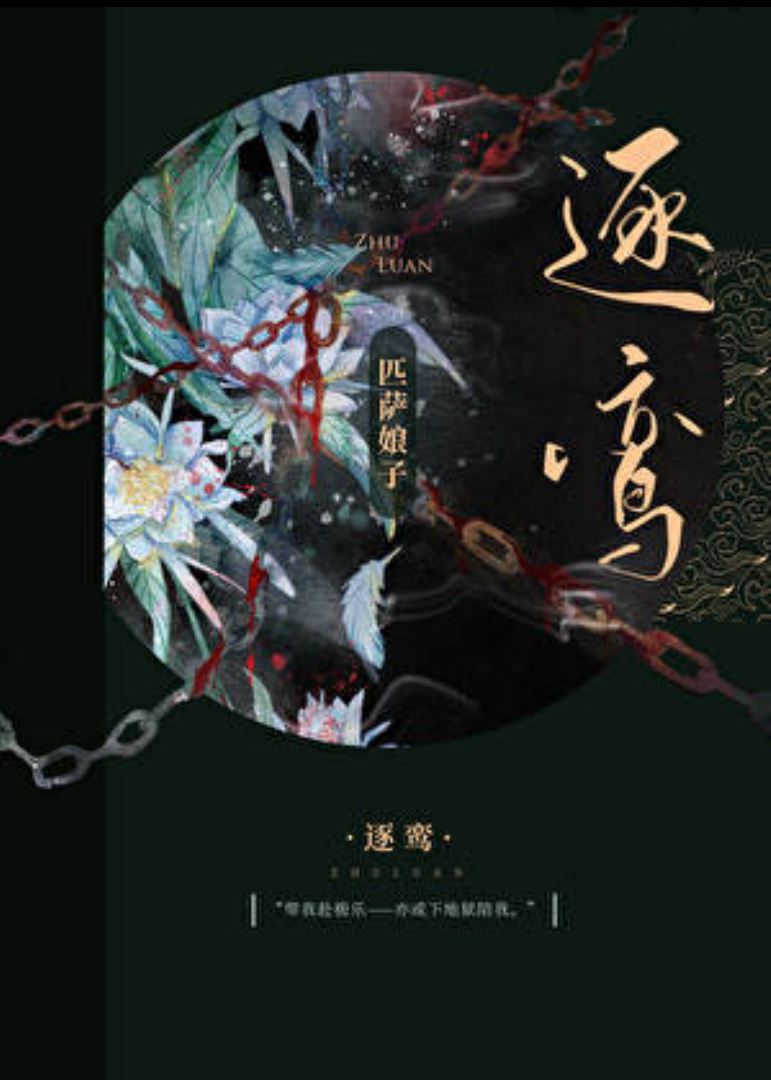
OK so I need to talk about the lotus pond scene because honestly I have not recovered. Li Zhi shows up in a full wedding dress, which is already the single most cinematic thing I've read all year, and then pulls Xie Lanxu—this man who has been cold, composed, untouchable—into a hidden pond where they have to share breath to survive. And the way she looks at him? "In her eyes, he saw his own startled expression." She sees herself reflected in him too, right? That reciprocity hit me so hard. But what really got me is what this reveals about them both. Li Zhi doesn't hesitate. She doesn't negotiate or plan five steps ahead—she just acts, grabs his hand, and runs into danger. And Xie Lanxu? He lets her lead. Not because he's weak, but because for once someone is taking control and he doesn't have to carry it alone. The fact that he's the one holding her face, pressing air into her lungs, while above them soldiers are hunting them like animals—that role reversal is everything. Then there's his backstory, which I didn't expect to be this devastating in the middle of an action chapter. His mother was a princess of a fallen kingdom, his father murdered hers, and their marriage was built on "cold, icy indifference cloaked in veiled hatred." He was never fully accepted, confined to a pavilion like a caged bird, and even his only real companion—the Ferghana horse Jing Lei—was killed because it wouldn't obey his half-brother. And the half-brother ended up floating in the same pond not long after. Xie Lanxu didn't order the burial. He just walked away. That's not cruelty—that's the exhaustion of a person who has lost everything and can't afford to grieve. And Li Zhi, in this chaotic fire-lit night, is the first person who's ever run toward him instead of away.
... Read More
This book keeps feeding me symbols and I am here for it. Diamond powder. The most boring, inert substance on earth—ground mineral, inedible, harmless in its natural form—becomes lethal only when reduced to powder and swallowed slowly over time. It adheres to the stomach lining. It accumulates. It causes internal bleeding. It kills you from the inside while looking like nothing at all. And the magistrate says: "Diamond powder is just one of many things that could kill him. There's no shortage of people willing to see him dead." What a perfect metaphor for this entire world. Everyone is poisoning everyone else slowly. Not with dramatic assassinations but with neglected rations, refused aid, calculated delays. The diamond powder isn't a murder weapon—it's a lifestyle. The real poison isn't the one in Xie Lanxu's food. The real poison is the system that makes poisoned food the default. And then there's the sweetness. That faint, elusive sweetness in the stale bun crumbs. Li Zhi eats it granule by granule, letting her saliva extract something barely there from something barely edible. She finds sweetness in degradation. Xie Lanxu tastes those same crumbs and feels them fill his mouth before he gives them to the dogs. They're both surviving on the residue of kindness. The jade carving of a child playing by a snowy pine—that image of innocence frozen in stone, admired by a man who will let a boy die in a hospital bed—how many times is this book going to juxtapose beauty against cruelty before I actually scream? Some things are best left to experts. The magistrate smiles and strokes his jade. Some things are best left to experts. The dogs fight over scraps in the moonlight. Some things are best left to experts. Xie Lanxu chews bitter greens and swallows his nausea. The experts at killing. The experts at surviving. Nobody wins. Nobody dies easily. And the sweetness? It's still there, faint and elusive, if you know how to look for it.
... Read More
What stakes are we even dealing with here? Real talk — Li Zhi survived a massacre, watched a man's children die, swam through freezing water while carrying a drowning burden, stole clothes off a corpse, got publicly whipped by a sadist, AND is still walking behind that carriage three days later with open wounds. But the REAL stakes hit differently in that punishment scene. Zheng Gong says if she doesn't cry, he'll give her an extra bun. LIKE A TREAT. And she endures it — "Was it painful? Was it terrifying? She didn't even see her own blood. What right did she have to be afraid?" THAT LINE. That's not stoicism. That's something darker. Something that comes from having already witnessed worse. Her twin sister died before her. She carries that guilt like armor. The whipping isn't punishment — it's confirmation that she's still alive, still relevant, still part of a story where she matters enough to be struck. The stakes aren't survival anymore. They're PURPOSE. And Xie Lanxu? He's exiled. His son is dead. His father — the eldest chieftain — just got slaughtered. Everything he knew is burning behind them. He's not running TO anything. He's running FROM everything. That's why Li Zhi's offer to help him escape "to wherever you want to go" breaks him. No one has asked him what HE wants in months.
... Read More
I need to talk about Xie Lanxu because this guy is quietly destroying me. Like, every scene with him hits different. There's this one moment where he gets this piece of bun from Li Zhi, crumbles it into tiny crumbs, lets his tongue absorb the faint sweetness, and then tosses the rest to the dogs. Not because he's hungry—well, obviously he is—but because he's making a statement. The line "He would be the one to reach Mingyue Tower alive" isn't some dramatic speech. It's just… stated. Flat. Like he's reading a weather report. That's what makes it so chilling. And then there's the part where he throws away his own ration to eat wild herbs instead. The guards give him food, he hides it, goes into the bushes to pick bitter greens, and forces himself to swallow them like an automaton. His body is betraying him—nausea, everything—but he suppresses it. This isn't just survival. This is something colder than survival. This is calculation. Meanwhile Li Zhi notices all of this but says nothing. She thinks to herself: "Why didn't Xie Lanxu use the rations given to him by the guards to feed the dogs?" That question haunts me. She's observant enough to notice the contradiction but distant enough not to intervene. Their dynamic is this quiet, unspoken tension—two people who see through each other but haven't decided yet whether to trust what they see. Also cannot let Li Jinzhi slide. The boy where he manipulates his mother into going begging by basically weaponizing her guilt, saying he'd crawl on all fours and bark like a dog for the family while his actual sibling is eight years old and crying in the corner—this is a boy who understands power and knows exactly how to use it. He's not evil. He's just ruthless. And that makes him terrifying.
... Read More
I have never wanted to read slower in my entire life. Let me trace what just happened because the structure of these chapters is doing something very deliberate. We open with what seems like a sexual assault scene—the chieftain, alcohol, a bride on a bed—and then in the very next paragraph we're cut to the fire alarm ringing. No transition. No cooling off. Just: disaster hits. Li Zhi appears in a wedding dress, drags Xie Lanxu out, they run, they hide in a pond, they share breath, and before the reader can even exhale, Dayan soldiers arrive and start executing people. A fifteen-year-old boy dies and his head goes on a belt. And Li Zhi realizes these soldiers aren't rescuers—they're hunters. That's one chapter's worth of escalation and I'm gasping for air. The author uses a flashback to Xie Lanxu's childhood right in the middle of this chaos, which on paper should kill the momentum. But it doesn't, because the flashback is triggered by the physical sensation of being underwater—"the water dulled their senses, distorting sound and vision"—and memory naturally surfaces when reality becomes unbearable. The past intrudes on the present, which is exactly how trauma works. So the pacing breaks feel organic, not editorial. And that ending. The eldest chieftain, drenched in blood, appearing at the end of the road. The sentence just trails off. No resolution. No safety. Just more threat waiting around the next corner. The structure of this narrative is essentially a series of doors slamming shut and characters having to find windows. Every time I thought we had a moment of safety, the author opened another door and something worse walked through. And somehow, despite the relentless pace, I never felt confused about where I was or who was doing what. That's craft.
... Read More
I need to be honest with you: I thought I understood the stakes going into these chapters. Li Zhi is hiding. Xie Lanxu is a prisoner. Bandits are searching for them. Standard survival thriller stuff, right? Then a Dayan soldier kills a fifteen-year-old boy and hangs his head on his belt like a trophy. And suddenly every assumption I had about this world got flipped upside down. Because those weren't rescue soldiers. They weren't coming to save anyone. They were coming to wipe out everyone in that basecamp, and Li Zhi and Xie Lanxu were just collateral that hadn't been found yet. When she realized this—when she understood that she could not count on anyone but herself—the stakes stopped being about escape and became about something far more terrifying: survival in a world where no one is on your side. "Li Zhi realized she couldn't count on anyone but herself to escape." Six words. Six devastating words. And the internal stakes for Xie Lanxu are just as catastrophic. Look at his history: his parents hated each other, his only friend was a horse that was shot for disobedience, his half-brother died in a pond and he didn't even bury it. He has spent his entire life being abandoned, confined, used as a political pawn, and now here he is—submerged in water, held alive by a woman who ran into a burning building in her wedding dress to save him. What does he have to lose at this point? Everything. Which means he has nothing left to fear. That's either the most dangerous version of a male lead or the most dangerous version of a love story. I haven't decided which.
... Read More
Okay let's talk about the bun thing because I am STILL not over it. Li Zhi gets whipped thirty times — thirty times! — and what does she do? She picks up that dusty steamed bun Zheng Gong tosses her like she's a dog, carefully wipes it off with a clean cloth, and then carries it to Xie Lanxu's carriage anyway. I had to put the book down. My hands were shaking. She says it so casually too: "As long as Your Highness doesn't go hungry, it doesn't matter who eats the bun." Who ARE you, Li Zhi, to be this relentlessly good when the world has already shown you nothing but violence? And Xie Lanxu — the guy who fed her saved food to a dog and told her to go away — he LOOKS at the bloodstains spreading across her shoulders and compares them to winter plum blossoms. PLUM BLOSSOMS. In the harshest cold! The author just absolutely demolished me with that imagery. The translator's note literally said prepare tissues. I WAS PREPARED. I thought I was ready. I was wrong.
... Read More
I have to start by saying: "Only a small piece is needed to feed the dog." This line from Xie Lanxu is absolute perfection. On the surface he's being dismissive about the food, using a joke to deflect gratitude, but we know he's actually being generous. He broke the bun in half and gave her the larger piece, then pretended it wasn't a big deal. His voice—quiet, restrained, somehow always two steps ahead of what he's actually feeling—is so distinct from Li Zhi's practical, warm tone. And Li Zhi's dialogue is wonderful too. "Eating every other meal keeps me more alert." Straightforward, selfless, completely without guile. She's not playing games. The most realistic exchange though has to be between the family members. Li Xiang screaming "I'm not family with her!" while simultaneously reaching for food—that's the kind of contradictory human behavior that makes dialogue feel alive. And Madam Zheng "glaring furiously but refraining from causing a scene" because of the other Li family members watching? The unspoken tension in that silence says more than any line could. I also love how Li Zhi's dialogue shifts when she's with Xie Lanxu versus when she's with her family. With him, she's careful, probing, genuinely concerned. With her family, she's deflective and placid, barely registering the abuse. One line that stuck with me: "If it weren't for you, Li Xia wouldn't have died—I'll never forgive you!" That accusation hanging in the air, and Li Zhi just smiles faintly and says "You're not wrong." What a devastating response. Not defensive, not angry, just accepting. Her voice in that moment revealed everything about her character.
... Read More
Can we talk about how Xie Lanxu speaks? Every line from him feels like it's been weighed and measured. "The medicine won't cure her." Three words. That's it. Not "I'm sorry" or "Let me try" or any of that. Just straight facts, delivered with this calm detachment. And Li Zhi? She doesn't flinch. "Even so, better to try than to do nothing." She's learned that hope isn't about feeling good, it's about action. The exchange between them has this incredible tension because neither is being honest about what they want. Xie Lanxu asks "What could you possibly offer me?" like he genuinely doesn't know, like her desperation is either amusing or irrelevant. And Li Zhi's answer - "Everything" - comes out steady and resolved, but you can feel underneath it how much it costs her to say those words. She's offering away her dignity, her autonomy, anything to save her sister. Then there's Li Xiang's dying speech, which is wildly different in voice. Where Xie Lanxu is clipped and controlled, Li Xiang is fragmented, confused, honest. "How could someone like her—never sick a day in life—suddenly bleed to death?" That's not performative, that's pure bewildered grief. And her accusation about that night - "If only you hadn't slept so soundly" - it's cruel and unfair and completely understandable. Li Zhi's dialogue throughout is fascinating too. Early on she's performing - the kowtow, the gratitude, the promises. But by the end, after Li Xiang dies, her words shrink to almost nothing. Just instructions to herself: "Tomorrow... make sure you wake me." Even in grief, she's still thinking about duty, about keeping promises. The author really understands how different people process loss through their speech patterns.
... Read More
Let me just say this first: the setting of this exile convoy is one of the most viscerally rendered worlds I've encountered in recent reading. The author doesn't just describe the landscape—they make you FEEL it in your bones. From the very opening line: "cape remained unchanging—endless mountains, devoid of life." That's it. That's the whole vibe. No繁复 description needed. Just endless, dead mountains stretching in every direction, and a setting sun that looks sick. "its light dim and sickly, as though afflicted by a mortal illness." I literally shivered reading that. But what really gets me is the smaller details. The latrine groups expanded from three to five people because of wild animals. Li Zhi glimpsing glowing green eyes in the darkness. The bread being described as having gone from fist-sized to palm-sized—this kind of specific, granular deterioration makes the starvation feel real in a way that generic 'they were hungry' never could. And then there's the cold. "The biting cold seemed to bury a million needles in each gust of wind." This is the line that lives in my head now. Every chapter I read, I can feel those needles. Li Xiang walking around half-dressed while everyone else clings to their threadbare clothing—this visual detail says everything about her mental state too. She's so done with surviving that the cold no longer registers as something to resist. The scene where Li Zhi first sees Li Xiang on the ground—"her half-lidded eyes glassy and unfocused. Her slightly furrowed brow gave the impression she was lost in thought." This is the most haunting image in the entire batch. A girl lying in the dirt about to be executed, looking like she's somewhere far away. I've been rereading this paragraph for ten minutes and I still can't stop seeing it.
... Read More
Can we just talk about the bun for a second? Because I keep thinking about it. Li Zhi breaks a dry, hard bun into halves. One half goes to Shendan, who devours it. The remaining piece—she eats it slowly. Almost granule by granule. The text literally says the dry crumbs absorbed her saliva and "finally released a faint, elusive sweetness." Faint. Elusive. That word choice alone wrecked me because it's not just about food. It's about everything in their lives right now. Sweetness doesn't come easy. It has to be earned, extracted, coaxed out of something barely edible. And then Xie Lanxu gets the scraps she didn't eat. He crumbles them, lets the taste linger, then gives the rest to starving dogs. That sequence—Li Zhi's careful rationing, her sharing with the dog, Xie Lanxu's almost reverent consumption of the crumbs, his final act of feeding the pack—I keep replaying it in my head. Nothing is said between them. No grand gesture, no emotional confession. Just food passing between people who are too exhausted to perform feelings. The worst part is the contrast with Li Jinzhi's family. Madam Wang being shamed into humiliation, forced to beg from officials because her son basically told her she'd be murdering her youngest if she refused. "If I were the one with connections, I'd go without hesitation—for the sake of the family." Said with such righteous self-importance. Meanwhile Huizhi is crying, eight years old, and nobody is protecting her. Nobody is even noticing her except Li Zhi, who observes everything and feels… something, I think, but masks it completely. I don't know what's coming between Li Zhi and Xie Lanxu. But the fact that they're both feeding dogs with the remnants of kindness—that's got to mean something, right?
... Read More
Okay so this section is where things really start clicking into place for me. The plot thread about Li Xiang's death not being natural? That's the kind of thing that makes you sit up and pay attention. Li Zhi's whole arc here - she's been pushed to this absolute breaking point and what comes out on the other side isn't breakdown, it's something harder. More dangerous. "Her death... it wasn't natural. There's something more." That line from Li Xiang before she dies? Chilling. Absolutely chilling. And then Li Zhi's response - "Her death will not go in vain" - you can feel the shift. This isn't just a sister mourning anymore, this is someone making a vow. The plot has officially entered revenge territory. But here's what's interesting: the political subplot with Xie Lanxu. He's this mysterious highness who could help or hurt them, and he's holding all the cards. The moment where Li Zhi basically offers him everything - "Everything... I am willing to give everything I have" - that's the kind of plot pivot that tells you she's reached her limit. She's not begging anymore, she's bargaining. And Xie Lanxu? He actually gives her medicine. Not out of kindness, apparently. "Consider this repayment for your care." Wait, what care? What happened before this section? I need to go back and check earlier chapters. The structure of this exile journey itself is genius plotting. You've got the physical journey mirroring the emotional one - they're moving deeper into harshness, further from civilization, and Li Xiang is literally dying along the way. Then she dies. And the grave-digging scene? Where Li Zhi digs with "bloodied fingers" so wolves can't take the body? That's not just a scene, that's a plot declaration. This character is done playing nice.

Leave a comment

You must be logged in to leave comments. or
