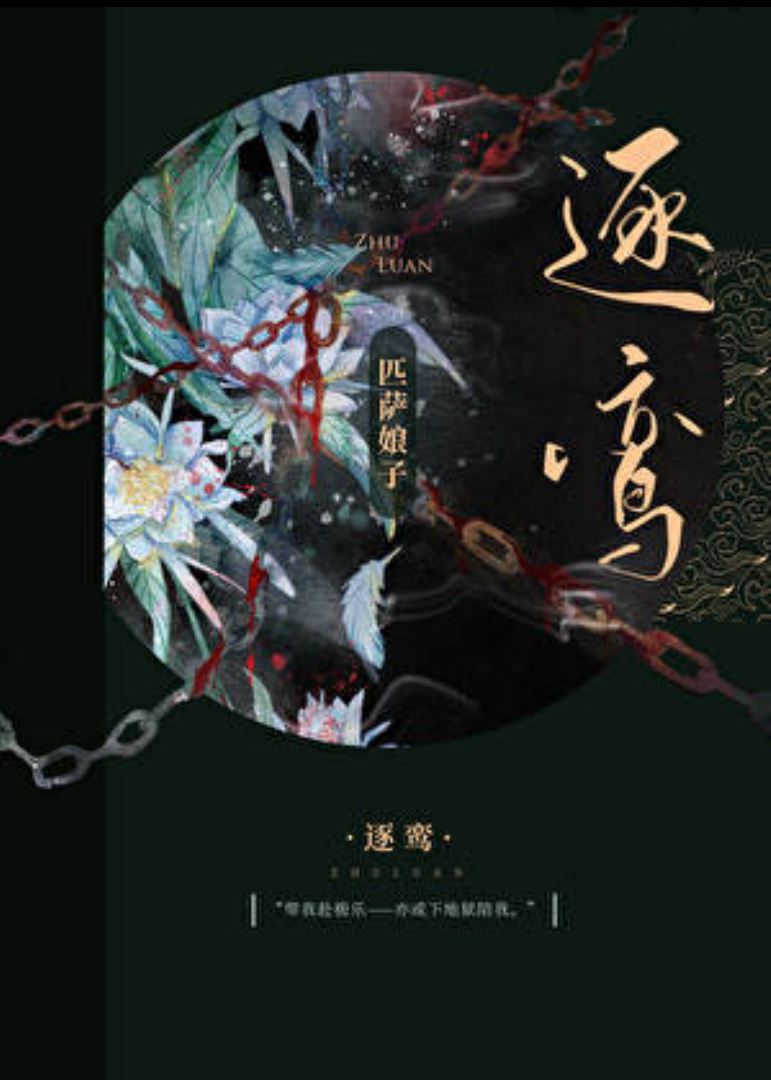
Summary

... Read More

Li Zhi was born into the prestigious Li family, the daughter of a concubine and twin to Li Xia. The Li family, led by Chancellor Li Qiaonian, held immense power in the capital until the deposed Crown Prince, Liangshan, was accused of treason. In the ensuing purge, the Li family was decimated, and nearly all surviving members were sentenced to exile to Mingyue Tower, a three-thousand-mile journey through harsh winter conditions. Among the exiles were Li Zhi, her half-siblings Li Xiang and Li Jinzhi, their mother Madam Zheng, and the matriarch Madam Wang. Also among them was Xie Lanxu, the frail son of the executed Crown Prince, who was shackled in a carriage at the rear of the convoy. Li Zhi, once a pampered noblewoman, found herself stripped of status and forced to endure starvation, cold, and brutal treatment from the guards.

Despite her family's hatred for Xie Lanxu, believing he caused their downfall, Li Zhi treated him with compassion. She shared her meager rations with him, even after he callously fed her gift to wild dogs. This act of perceived ingratitude should have deterred her, but Li Zhi persisted, driven by a sense of duty and perhaps a deeper, unspoken connection to his suffering. Their interactions were minimal but significant; she once massaged his legs to relieve pain from long hours in the carriage, and he offered her medicine when she was whipped for attempting to rescue him. Li Zhi's resilience was remarkable; she endured thirty lashes without a sound and continued to care for her sick half-sister, Li Xiang.

The journey was plagued by danger. Bandits attacked the convoy, specifically targeting Xie Lanxu. During the chaos, Li Zhi defied orders and raced into the forest to save him. She disguised herself as a prisoner seeking refuge with the bandits, offering herself as a bride to their third leader to gain entry. On her wedding night, she set fire to the bandit camp, creating a diversion that allowed her to rescue Xie Lanxu. They escaped by hiding in a lotus pond, where Li Zhi saved him from drowning by performing mouth-to-mouth resuscitation. They were eventually found by imperial soldiers, but these troops were not there to rescue him; they were assassins sent to kill Xie Lanxu. Li Zhi and Xie Lanxu fled deeper into the wilderness, relying on each other for survival.

Upon returning to the convoy, Li Zhi was punished again for her disobedience. However, her actions revealed her true capability and determination. As the exile continued, the hardships worsened. Li Xiang fell ill with a fever, and despite Li Zhi's efforts, she died. Li Zhi buried her sister in the frozen ground, vowing to uncover the truth behind her twin Li Xia's death, which had occurred years prior under mysterious circumstances. The loss of Li Xiang and later the death of her loyal dog, Shendan, who was killed and eaten by starving guards, broke something inside Li Zhi. She became a hollow shell, moving mechanically through the agony.

Xie Lanxu, though physically weak, showed glimpses of his own trauma, revealing that his half-brother had also killed his beloved horse, Thunderbolt. This shared understanding of loss forged a bond between them. When Li Zhi collapsed from illness and despair, Xie Lanxu used his remaining influence to secure her care. The story follows their painful journey toward Mingyue Tower, where they must confront the political machinations of the capital and the assassins sent to eliminate Xie Lanxu. Li Zhi, once defined by her beauty and innocence, is now hardened by suffering, yet she retains a sharp mind and unwavering will. Xie Lanxu, though dying from a slow-acting poison, displays a growing respect and perhaps affection for the girl who refused to abandon him. Their path is fraught with betrayal from within their own family and deadly threats from the empire's elites who wish to keep the past buried.

The narrative explores themes of survival, loyalty, and the transformation of identity under extreme duress. Li Zhi's relationship with her family deteriorates as she distances herself from their petty grievances and focuses on her promise to her dead sister. Meanwhile, her dynamic with Xie Lanxu evolves from one of reluctant assistance to a deep, unspoken partnership. As they near their destination, the secrets of the Crown Prince's treason and the Li family's involvement begin to surface, promising a reckoning that will change the fate of both characters and the empire itself.

Latest Release
DateGroupRelease
2026-09-25knoxt c60
2026-09-25knoxt c59
2026-09-25knoxt c58
2026-09-25knoxt c57
2026-09-25knoxt c56
2026-09-25knoxt c55
2026-09-25knoxt c54
2026-09-25knoxt c53
2026-09-25knoxt c52
2026-09-25knoxt c51
2026-09-25knoxt c50
2026-09-25knoxt c49

Community Reviews

Rating(4.1 / 5.0, 34votes)
5 stars
14(41%)
4 stars
11(32%)
3 stars
9(26%)
2 stars
0(0%)
1 stars
0(0%)

Popular reviews

... Read More
Okay, I need to talk about this scene where Li Zhi presses her hand against Xie Lanxu's right leg. This was the FIRST TIME she had ever touched a man's leg, and the author just dumps us right into her panic without any preamble. Her ears growing warm, fighting to keep her expression neutral—this is such a specific, human detail. You can almost feel her frozen in place, terrified of rejection. And the way she covers for it by inventing a fake twin sister backstory? Brilliant character work. She's improvising her way through intimacy, using the memory of her dead sister as a shield. But here's what really got me: Xie Lanxu doesn't push her away. He endures the discomfort, says thank you, and then shares his bun with her. He says "only a small piece is needed to feed the dog" but we know exactly what he's doing—he's testing whether she'll accept his gesture, and she does, cheerfully. This quiet exchange of half-buns between them is where something real is beginning. Meanwhile, the family dynamics are so toxic. Li Xiang literally screams "I'll never forgive you" over a dead sibling, and Li Jinzhi just pockets the bun she refused like it's nothing. Everyone's performing kindness while quietly stealing from each other. And Li Zhi? She keeps giving pieces of herself away while getting nothing back. I wonder when she'll finally stop.
... Read More
I need a minute. Just a minute. The twin relationship between Li Zhi and Li Xiang is written with this devastating intimacy that just gets under your skin and won't leave. "If only you hadn't slept so soundly that night... everything would have been different." This line from dying Li Xiang? I actually had to put the phone down. It's this terrible, unfair guilt that Li Zhi carries - she slept when her sister needed her. But then Li Xiang herself says "I know I'm only taking it out on you. It wasn't your fault." And that's the emotional whiplash, right? Both sisters are hurting, both are blaming themselves, and neither can stop. The physical details hit so hard too. Li Zhi stroking her sister's "dry, yellowing hair that had once been as lustrous as silk" - that contrast between what was and what is now. Or the way Li Zhi force-feeds the medicine, same method she used on that sickly dog Shendan. It shows how much she's had to harden herself, how survival has changed her. But then she's cradling Li Xiang's head in her lap afterward, gentle as anything. And that final scene - fifteen years of sisterhood ending with Li Zhi digging a grave with bloodied fingers, whispering to her dead twin like they're sharing a secret. "She must have been so tired to sleep this soundly." That's the kind of line that just destroys you. It's Li Zhi finding some twisted comfort in the idea that her sister finally got rest, that maybe death was mercy after everything they've endured. I'm not crying, you're crying. This bond between them feels so real, so precious, and watching it get ripped away in the harshest possible way... I need the author to make it up to me somehow.
... Read More
'Bright red blood and the soul-rending pain of loss — history seemed to repeat itself.' This line came out of nowhere and just stopped my breath. Because it's not just about Shendan dying. It's about the pattern. Li Zhi has lost people before. She's buried family before. And the word 'incompetence' follows it — 'Because of her incompetence.' That's the theme of this entire section crystallized in two sentences. Every time someone dies, it's framed as her fault. Not the guards. Not the system. Not the starvation or the cruelty. Her. This keeps happening and she can't stop it, and that's the real horror — not death itself but the cycle of helplessness. The Gobi Desert reinforces this. It's endless dunes and desolation, a place where nothing grows and nothing stays the same except suffering. Even the carriage — that recurring image of bells jingling faintly as the slowest exiles arrive — it's like a soundtrack to inevitable decay. And Li Zhi comparing herself to a sieve is the perfect symbol. She doesn't absorb pain or let it transform her. It just passes through. But sieves also break eventually. The dirt she's burying Shendan in is barren. 'Once she left, how lonely Shendan would be.' Even in death, the dog is alone. And Li Zhi is alone with him. That grave in the middle of nowhere is the most honest image in the book — no flowers, no marker, just a pile of sand and a carved wooden branch. The world keeps moving. The convoy keeps going. But some things are buried forever and no one will remember them except the person who dug the hole.
... Read More
Let's talk about the whiplash here. The author spends what feels like three full pages on this tender, awkward moment between Li Zhi and Xie Lanxu—her kneading his leg, the nervous dialogue, the bun-sharing—and then BAM, dogs start barking and suddenly we're in completely different emotional territory. It's like the author knows we got comfortable and decides to yank us out of that warmth. The dog reunion itself is handled well, I'll give it that. Shendan appearing out of nowhere is genuinely surprising, and the physical description—skin and bones, ribs protruding, matted fur—is brutal. It hits hard because we already know she found him during the Lantern Festival and her twin sister helped save him. That backstory insertion is well-timed, giving the reunion emotional weight instead of just being a cute moment. But then the family scene follows immediately, and the pacing inside that scene is excellent. Li Xiang's outburst, the simmering mother rivalry, Jinzhi's casual theft of the bun—all of it escalates naturally. The chapter basically does a full emotional arc: intimacy → joy → shock → family conflict, and I stayed engaged the entire time because the stakes kept shifting. One thing I will say: the wound-tending setup at the beginning felt slightly slow, but it established the harshness of their journey, so I can forgive it.
... Read More
Let's talk about what these people are gambling with, because it's everything and I mean EVERYTHING. On the surface level, it's survival. The convoy is killing people daily—those too weak to walk get executed without ceremony. Li Xiang is about to become another statistic when the imperial grandson's carriage appears. Li Zhi risks her own life standing up to guard authority. Zheng Gong threatens to whip her for disturbing the imperial procession. Zhen Qiao warns that interfering is punishable by death. One wrong move and Li Zhi joins the pile of dead exiles. But the deeper stakes are what actually keep me up at night. Li Zhi and Li Xiang's relationship is on the line. Whatever happened with Li Xia—whatever guilt Li Zhi carries—this moment forces it all to the surface. If Li Xiang dies, Li Zhi loses her last connection to their shared past, to the little girl who used to chase koi and climb trees. If Li Zhi fails to save her, she's failed twice now. And then there's the imperial grandson himself. Why is he here? Why does his carriage appear at this exact moment? The suspense is maddening because the author knows exactly how to dangle this. We get the wind chimes, the ash-gray fabric, theswaying curtain—but no face, no words, no resolution. Just the carriage approaching through the mountain pass while Li Zhi's forehead bleeds onto the rocks. "Freshly healed wounds on Li Zhi's back split open again." — this detail matters more than you'd think. She's already broken and breaking, and she's still kneeling. The physical stakes mirror the emotional ones perfectly. Both sisters are being torn apart, and the question isn't whether they survive but WHAT survives them
... Read More
Let me just say this: the desert scenes in these chapters are the most visceral worldbuilding I've read in a long time. The author doesn't describe the Gobi the way you'd expect — no sweeping panoramic vistas or poetic sand dune descriptions. Instead, the environment attacks you through deprivation. Food grows scarcer by the day. Rations are distributed by who you know, not who you are. Zheng Gong takes out his frustrations on Li Zhi because she's young and defenseless and he can. The sand isn't just dirt — it's where Shendan dies pinned beneath countless hands, where Li Zhi digs a grave with bleeding fingers, where the exiles eat dog meat and smile like they've been saved. There's a moment where Zheng Gong lashes her but stops when she shows no reaction, and then just... leaves her. He isn't even interested in torturing her anymore because she's already broken beyond the point of being worth punishing. That's worse than any whip. And the visuals — muted purple figure against the desert, the jingle of bells from the carriage as the weak stumble in, the bubbling pot of stew, bright red blood on black fur. These aren't pretty images. They're ugly and sharp and they stick to your ribs. The world feels alive in the worst way. It doesn't care about you. It doesn't care about Li Zhi. It just exists, vast and indifferent, and the people in it are smaller and smaller as the chapters go on.
See all reviews

Custom lists

See all custom Lists