Bursting After He Transmigrated into the Cannon Fodder Omega - Reviews

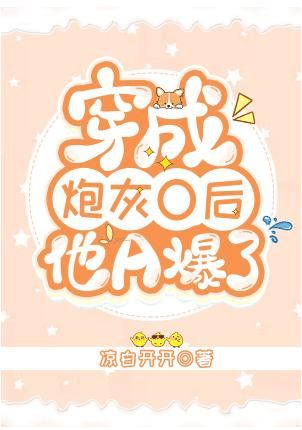
Bursting After He Transmigrated into the Cannon Fodder Omega
+Add to Custom List
Sort
Add review
... Read More
Can we just appreciate how the author paints this world in just a few paragraphs? I keep going back to the scene where Yun Xingze is on the aircraft heading to the black market. The description of those neat lights and colorful virtual projections turning on at night, the aircraft 'occasionally passing between the lights and shadows turned into black spots the size of ants'—I swear to god I was THERE. It's such a vivid contrast: the open, civilized metropolis above ground, and then you descend into the underground black market where damp breath hits your face and signs are haphazardly squeezed together like they're fighting for space. The three-floor layout of the black market is also such a smart worldbuilding detail—clothing on the first floor, bars and gambling on the second, weapons and mechas on the third. It gives you this sense that this place has its own economy, its own social order. And the price of mechas being millions of star coins immediately tells you something about the class system in this world without the author having to explain it. Subtle and effective.
... Read More
The mecha contest promotional animation is honestly one of the best worldbuilding moments in this entire section. Let me walk through it because the author really went ALL OUT here. We get SIX different mechas introduced through an action sequence rather than a boring info dump: The Lightsaber mecha (samurai-shaped) vs the Storm mecha (defensive giant). The slash gets DEFLECTED by the shield—sound design in text form, people! "Turned into a buzzing sound"—I could HEAR that. Then Meteor (long-range artillery, flame imagery) vs Double Star/Dual-Star (two-mecha combo, reconnaissance tactic). This one showed mecha COMBAT STRATEGY, not just big explosions. Then Comet (disassembly tools, mechanical) vs Phantom (invisibility specialist). The "flashes of collisions burst between the two flexible mechas"—this is a ghost-vs-technician matchup and it's SO cool. And then the tagline: "Let mechas become humanity's protection." The golden dust dissipating into the air is such a vivid visual. It felt like watching a trailer for a movie I'd pay money to see. What I love about this scene is that it does triple duty: it introduces the contest, it worldbuilds the mecha technology and variety, and it makes Yun Xingze's desire to participate feel COMPLETELY justified. I wanted to sign up too at that point. The author didn't just tell us mechas are cool—they MADE us watch the demo and feel it.
... Read More
This chapter is a masterclass in parallel tension-building. Two protagonists are simultaneously trapped by their own biology—Luo Wenchuan by an allergy that could cost him games, Yun Xingze by an estrus that could cost him everything. The narrative cuts between them like two clocks ticking toward the same disaster. What struck me most is how the author weaponizes dramatic irony: we know both secrets, but the characters around them don't. Ke Lei thinks he's being helpful suggesting inhibitors; Yun Xingze is one bad breath away from exposure. And then there's Su Zinan, who reads like a chess player moving pawns. When he intercepts Chi Yu with tears and trembling lips, the audience knows exactly what he's doing—he's isolating Yun Xingze from his only potential protector. The foreshadowing here is delicious: “Chi Yu didn't notice the flash of triumph in Su Zinan's eyes.” That single line does more work than three pages of internal monologue. It's also worth noting how the structure mirrors ABO worldbuilding itself—two threads converging toward a collision course. Yun Xingze leaning against that cold wall, nails biting his palm, while alphas stream through backstage corridors moments away. The plot isn't just building toward romance; it's building toward survival.
... Read More
I need to just stop and acknowledge what happened at the end of this chapter because the writer absolutely did not come to play. So Luo Wenchuan — apparently afraid of omegas, right? That's been established — he's sitting across from Yun Xingze eating their meal, and then these two desserts arrive. One pink and cute for the omega, one brown and plain for the alpha. And Luo Wenchuan literally watches Yun Xingze take a bite, sees his eyes light up, and immediately says 'replace mine with the same one.' The waiter is SHOOK. And why wouldn't they be, this guy barely touches desserts??? Then he makes some awkward excuse like 'your portion looks delicious' which is the most transparent lie I have ever encountered in fiction. And THEN — and this is the part that actually ruined me — he looks at Yun Xingze's lips stained with cream and mutters 'It's soft?' Like he didn't mean to say that out loud. I SCREAMED. This man who supposedly fears omegas is now casually trading desserts with one and staring at his mouth. The tension is unreal. Their whole dynamic is this weird power imbalance where Luo Wenchuan keeps throwing resources and opportunities at Yun Xingze but Yun Xingze still has no idea what the endgame is. Meanwhile Luo Wenchuan is clearly developing feelings and trying to hide it behind business propositions. Classic. Painful. Perfect.
... Read More
The pacing in these chapters is basically perfect, and I want to explain why without getting too academic about it. It starts slow and intimate — just two people under an umbrella, the inhibitor injection, the quiet moments of pain and restraint. This section pulls you in because it's personal and visceral. You're right there feeling the sting, the tears, the shaking. About 40% of the chapter is spent in this compressed space, and it works because we're already invested in what's happening between these two. Then the collapse happens, and there's a brief moment of stillness — Yun Xingze unconscious, the rain stopping, sunlight breaking through. This is the breath before the storm. The author lets us sit in the aftermath for just long enough to feel the weight of what occurred. Next, the infirmary scene with Chi Yu and Su Zinan. This is the comedic relief beat — Su Zinan joking about money, Chi Yu being impatient, the "only Xingze xuedi in your heart" line. It's lighter, yes, but it's doing crucial work: building the emotional baseline before the explosion. Without this scene, the ending would feel unearned. And then — BAM. Chi Yu stops. His back freezes. Su Zinan hits his shoulder. And there it is. The visual that destroys everything: Luo Wenchuan, wet from rain, carrying Yun Xingze like he weighs nothing, walking toward the infirmary with that urgent stride. The chapter ends on the confrontation starting, and the pacing from that stillness to this collision is so sharp it cuts. Some might say the transition from the rain scene to the infirmary feels jarring, but I think that's the point. Life doesn't pause for emotional moments. The world keeps moving even when yours is falling apart.
... Read More
The pacing in these chapters is really deliberate and I think that's by design. It starts quiet—Yun Xingze alone with his new mecha, practicing swordsmanship movements, discovering that his classical training actually translates. This is the calm before the storm, and it serves a purpose: it grounds us in his skill set before throwing him into the chaos of the competition. Then we cut to the dorm, the conversation with Lu Ranxu, and everything gets more energetic. The information drops fast—Luo Wenchuan paid him, he hates omegas, Yun Xingze lied about why he learned mecha modification. It's exposition-heavy but it's delivered through natural dialogue so it doesn't feel like a textbook. After that, the scene shifts to the training facility and the rules explanation. Zhuo Feiyue lays out the obstacle race format, and this is where I appreciate the author's choice to include the warning about not fighting each other. It's not just world-building—it's dramatic irony. We now know someone is going to exploit this, and every time two competitors clash in the actual race, we'll remember this scene. Then the simulation begins and the pacing picks up dramatically. We get a quick rundown of the obstacles, Yun Xingze's strategic approach, the tension building as competitors fall one by one. The save of Oriel is a beat of pure adrenaline. And then—the stop, the stagger, the almost-fall. The chapter ends mid-action. No breathing room. Just the hatch opening and... I think the author is really comfortable with this kind of structure. They know when to slow down and when to accelerate. The only thing I might question is whether the dialogue sections could have been slightly tighter—the Lu Ranxu exchange about Luo Wenchuan's omega hatred goes on a beat longer than necessary—but honestly, it's minor. The overall flow from quiet setup to explosive action to unresolved cliffhanger is exactly what keeps you turning pages.
... Read More
I need to talk about this one scene because it is VISUAL PERFECTION and I'm not even being dramatic. The moment the training mech activates - 'Like a sleeping behemoth, it suddenly opened its eyes.' YES. This line alone is worth the price of admission. The imagery of orange energy lights flooding the training hall, reflecting in everyone's pupils, the physical vibration underfoot as the mech takes those first steps... I could SEE this. I could literally see the camera angles, the lighting, the whole damn movie playing in my head. And the soundscape! The 'slight vibration on the ground,' the 'wengweng sound of the anti-gravity engine' penetrating Yun Xingze's ears, the engine becoming 'like a depressed demonstration by a beast.' The author isn't just describing what we see - they're building an entire sensory environment. The training hall ceiling being high enough for aerial practice, the open area where the mech runs and jumps - you feel the scale of this place. What really sells the atmosphere though is the contrast between the mechanical behemoth and the human pilot inside. You have this giant machine moving with incredible smoothness, executing aerial maneuvers like it was born to do it, while inside the cockpit Yun Xingze is practically dying - heart pounding, chest hurting, brain getting heavier. The juxtaposition of the mech's effortless power against his crumbling physical state creates this tension that's almost painful to read. And Oriel's perspective! From below, looking up at the mech hovering over him like some kind of apex predator. The narration shifts to make the mech feel threatening - 'those eyes seem to be able to catch all prey.' Even though we know it's just Yun Xingze trying to scare this guy, the mech itself carries this inexplicable sense of coercion. That's worldbuilding that works on a visceral level. The infirmary scene at the end is a different kind of atmosphere too - 'snow-white ceiling,' 'smell of disinfectant' - stark clinical contrast to the high-energy training hall. It grounds us back in reality after that electric sequence. Honestly if this novel gets adapted I am watching it. The visual language here is just that strong.
... Read More
Okay can we just talk about the sheer audacity of Yun Xingze trying to take down an S+ ranked player with a B-level mecha? The win rate hits 24.15% and Lu Ranxu is losing his absolute mind over it—and honestly I'm right there with him. That's not a sure thing, that's a miracle wrapped in a gamble. And then Yun Xingze's response? "Still too low." Like, bro you just turned a 1% shot into a quarter chance and you're not satisfied?? The stakes are brutal though—lose and he doesn't just walk away empty-handed, he's looking at a destroyed mecha and maintenance fees that could cripple him. That's not just a match, that's survival. And let's not forget the storm mecha's particle cannon threat hanging over everything. The tension here is tight because we KNOW Yun Xingze isn't going to back down, but the book also isn't lying to us about how dangerous this is. Every read of that modification plan, every time he tweaks something, it feels like we're watching someone keep piling chips onto a table where the odds are still terrible. But he plays anyway. That's the kind of stake that keeps me glued to the screen.
... Read More
Okay so Yun Xingze just completely outsmarted the entire competition with this split-team strategy and I am HERE FOR IT. The fact that he looked at the rules, analyzed the pros and cons of solo vs team play, and basically invented a THIRD OPTION right on the spot — that is the kind of protagonist moment that makes you slam the book shut and stare at the ceiling. "In racing competitions, everyone will choose a small or medium mecha." But what he actually does is neither. He uses three mechas operating almost independently but communicating in real-time, marking green zones and red danger areas on a shared map. It's like a living neural network of movement. And Zhuo Feiyue watching from the stands, completely baffled — I literally laughed out loud at his frozen expression when he sees them scatter like they're abandoning each other, only to realize they're playing 4D chess while everyone else is still figuring out checkers. "These three people seemed to have disbanded the team, but with a strange tacit understanding, they almost bypassed all obstacles! How is this possible?!" Right?? That's what we're all screaming. And the best part — this isn't some sudden power-up or deus ex machina. The text literally shows us his thought process beforehand: he'd been pondering this after playing Mecha Star. He's been preparing. This is the payoff for reader investment. Also dropping a subtle bombshell with Luo Wenchuan spotting that C-class lightsaber mecha — the one he sold to Boss Chu — and thinking "That guy who can't even fight outside the black market… actually participated?" What does this mean for later??? I need answers NOW.
... Read More
There's something deeply symbolic about anonymous IDs in this passage that I can't stop thinking about. Yun Xingze's chosen name — 'I'm so weak' — is the complete opposite of who he actually is. He's an A-level mental power player hiding at rank 11. He's deliberately playing small. And then there's 'L,' which is just a single letter, completely anonymized, representing the ultimate untouchable force in this virtual world. But the irony is that both of these identities are masks. Yun Xingze hides his strength, and Luo Wenchuan hides behind 'L.' The mechanical beast chain sword move — something Yun Xingze himself noted is rare — becomes this unintentional tell, this crack in the mask that both men recognize but neither can afford to name out loud. The entire PK system is this arena where real abilities are tested but real identities remain concealed. And yet, Yun Xingze's heart pounds not just from the fight but from the dawning realization that his virtual opponent IS the person he knows in real life. The symbolism of 'L' accepting a challenge from someone he finds suspicious but compelling? That's not just plot mechanics — that's two people drawn together even while hiding from each other.
... Read More
I need to process what just happened in this chapter because the stakes just went from "competition drama" to "existential crisis with a timer." Let's break down what Yun Xingze is actually facing. External conflict: an S+ storm mecha piloted by someone equipped with Yun family parts, with a 1.21% win rate according to the most reliable analysis tool available. His own modification attempts keep failing—defensive approach? Useless. Speed approach? Zero fault tolerance. He is genuinely outgunned on every axis. Internal conflict: he WANTS the 500,000 star reward, he's not going to pretend otherwise, but he also knows what happens if he loses. The school team spot is mentioned casually but it's clearly a real backup plan, which means giving up IS an option. He just... won't take it. The tension the author builds here is brutal because there's no magic solution in sight. Zhuo Feiyue's hint about the shield vulnerability is a POSSIBILITY, not a plan. Yun Xingze goes back to his optical brain with "some ideas" but we don't know what they are. The chapter ends on that note of determined uncertainty, which is exactly the right place to leave a reader. You're not relieved, you're not panicked—you're HOOKED. What makes this conflict work emotionally is that the story has already established Yun Xingze's track record. We know he's won against tough odds before. We know he modded his own mecha. We know he's stubborn. So the 1.21% doesn't feel like a death sentence—it feels like the story setting up its biggest challenge yet. The suspense isn't "will he survive?" (we know he will, this is a novel). The suspense is "HOW?" and that's a much more interesting question. Meanwhile, the Su Zinan/He Haomin scene raises the stakes even further by showing us that the opponent isn't just strong—he's being strategically supported by someone who's been watching Yun Xingze this whole time. This isn't a fair match. It never was. And Yun Xingze knows it. That's the real tension.
... Read More
Can we just pause and appreciate the emotional subtlety in the corridor scene? Everyone expects a grand confession or a dramatic declaration, but what we get is a guy in a corner asking for time. 'You think about giving me an answer.' That's it. No pressure, no manipulation—just a quiet offer hanging in the air. For Yun Xingze, who has been betrayed and slandered all day, this moment of calm is almost more overwhelming than the chaos. He's grateful. I can feel it in his narration. He offers to refit the mecha for free as repayment, showing his innate desire to balance the scales, to not owe anyone. But he's also terrified. The emotional stakes aren't just about winning a tournament; they're about vulnerability. Trusting an Alpha who supposedly has phobias? That's a leap of faith that could break him. And Lu Ranxu! When he finds out Yun Xingze was slandered, his immediate reaction is violence. 'I'll go to him now... blow up that green tea bitch's dog head!' It's raw, protective, and so endearing. It reminds us that despite the high-stakes political maneuvering, Yun Xingze isn't alone. He has people who will burn the world down for him. That warmth makes the cold calculus of Luo Wenchuan's offer feel even riskier, but also more tempting.

Leave a comment

You must be logged in to leave comments. or
