Bursting After He Transmigrated into the Cannon Fodder Omega - Reviews

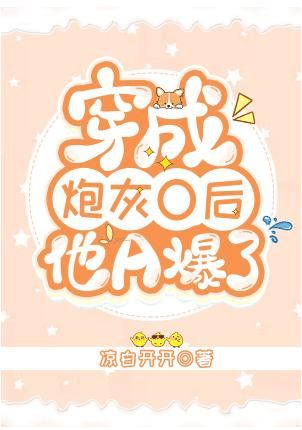
Bursting After He Transmigrated into the Cannon Fodder Omega
+Add to Custom List
Sort
Add review
... Read More
Let me just say — the chapter structure here is SO satisfying. We get two nearly symmetrical scenes that mirror each other in the most delicious way. Scene one: Chi Yu, drunk, being cornered by his father in a dimly lit space. The tension ramps up slowly — wine glasses, dispersing students, the weight of the General's presence — and then EXPLODES with that slap. The pacing is deliberate, letting us sit in Chi Yu's discomfort before hammering him with revelations about the war bill and forced pairings. Scene two: Yun Xingze, sober, surrounded by holograms of family members who smile while stabbing him emotionally. The pacing here is almost quieter on the surface — it's a video call, right? — but the subtext is SCREAMING. Yun Changsheng's fake warmth, Yun Wu's oblivious sweetness, Qin Shuang's switch-flip from housewife to truth-teller. Each character enters and exits with their own agenda, and the reader is left piecing together what's real. The transition between these scenes is a masterstroke. One moment Chi Yu is trembling, convinced his love can be claimed through force and politics. The next moment we're with Yun Xingze, who probably has NO IDEA any of this is happening. The dramatic irony is THICK. What I love is that neither scene resolves cleanly. Chi Yu doesn't get his happily-ever-after — he gets coerced into compliance with a sliver of hope. Yun Xingze doesn't get family bonding — he gets a warning about his future and a mother who sees him clearly but still manipulates him. Both endings are open-ended, uneasy, and full of unspoken tension. This is how you build a slow-burn enemies-to-lovers setup. You give us two people on opposite sides of the same trap, both being squeezed by family, both carrying their own wounds, heading toward a collision course we can't wait to watch.
... Read More
I'm still recovering from the Zhuo Feiyue and Yun Xingze training sequence because honestly it was one of those moments that just… got me. Think about it. Zhuo Feiyue is an older mentor figure who can't even pilot a mecha himself anymore. He's watching his student get belittled by Richard—called out for being an omega, for being weak—and instead of just getting mad and doing nothing, he finds a way to help. He digs out a gaming helmet, fires up Mecha Star, and says "let go and hit me. Don't be afraid of hurting me. You can't touch me anyway." That line broke me a little. He's giving Yun Xingze permission to unleash everything, knowing full well his student is going to destroy him. There's pride and vulnerability in that offer. And Yun Xingze—he doesn't gloat. He doesn't celebrate. He just plays, wins, and then asks respectfully: "What special training?" He's humble, focused, trusting. When he defeats Zhuo Feiyue five times in a row, the narration tells us Zhuo Feiyue's reaction: "Your morality is extinguished. As long as you follow this momentum, you will surely defeat that group of lunatics from Jicot Military Academy!" Even in defeat, his mind goes to his student's success. That's the kind of teacher-student bond that makes you want to rewrite the whole series just to see more of it. The emotional core here isn't romantic or familial—it's the fierce, protective love of a mentor who sees potential in someone and wants nothing more than to watch them shine. Zhuo Feiyue may be old, may be beaten in a VR game, but his heart is in exactly the right place. And that's worth more than any championship trophy.
... Read More
The author has a gift for placing the reader inside a scene so completely that the world stops feeling like fiction and starts feeling like memory. The training hall sequence is the centerpiece here, and it works because of the specific sensory details that anchor it. Yun Xingze arrives before dawn, rubbing his eyes sleepily, and the first thing he notices is the contrast between the gray sky outside the window and the harsh artificial lights flooding the massive training hall. This single image tells us everything about the world he has entered. The school treats this team with enormous seriousness. These are not hobbyists playing around, they are athletes operating in a space designed for combat simulation, and the early hour signals that greatness here demands sacrifice. Then there is Coach Richard, and the description of him is remarkably efficient. A scar at the corner of his left eye, an extremely short haircut, the same age as Zhuo Feiyue but looking younger. That scar is doing enormous narrative work in just two words. It tells us this man has been in battles, survived them, and carries the evidence. He is an alpha who flies a double-star mecha, which immediately places him somewhere important in the hierarchy of this universe. The author does not waste time explaining the technicalities of mecha classification or alpha-beta-omega dynamics. Instead, they trust the reader to absorb meaning from context, and that trust pays off. The social landscape is equally vividly rendered without exposition dumps. The Yun family's position as nobiliens riche in the Imperial Capital, their secret shame about originating from a barren star, their desperate攀附 to the powerful Chi family, all of this is conveyed through dialogue and behavior rather than narration. We learn about the world's class system through Qin Shuang's sneer, through Chi Yu's weaponized lineage, through Yun Wu's quiet dissent. The author has built a society that feels lived-in, where every character's accent, posture, and vocabulary reveals their place in the hierarchy. The scene at the family gathering itself, with its awkward forced celebrations and whispered tensions, is a microcosm of the larger world, and it lingers in the mind long after the page is turned.
... Read More
The stakes in this chapter operate on at least five different levels simultaneously and the author never lets you forget any of them. On the surface: two mecha pilots fighting. One wins, one loses. Standard competition. But then you layer on the technical impossibility — a B-level pilot operating modifications that should overload the system. If Yun Xingze fails, it's not just a lost match, it's proof that his entire approach was insane. His reputation, his team's faith, everything hangs on pulling off something nobody believes is possible. He Haomin's stakes are different but equally high. He's already established as a top-tier opponent. Getting beaten by a first-year omega isn't just embarrassing — it's existentially threatening to his self-image. "How did Yun Xingze hit him?!" isn't just confusion, it's the crack in a confident fighter's worldview. The pain in his chest is physical, but the shock is psychological. Luo Wenchuan's stakes are the most interesting because they're hidden. He placed a bet — not on money, but on faith in someone the rest of the team was casually dismissive about. His smugness isn't just satisfaction, it's vindication. When he says "It's over," he's not just calling the match — he's confirming his judgment was right. And then there's the crowd's shifting energy. From silence to gasps to "What the hell?!" to genuine terror (Su Zinan). The audience becomes a sixth stakeholder, and their disbelief mirrors ours. We're not just watching a fight — we're watching the moment everyone's assumptions get dismantled in real time. The final blow isn't just a victory. It's a reckoning.
... Read More
The tension architecture in this chapter is incredible. Three separate conflict threads are running simultaneously, each escalating, and they're about to collide. Thread one: Chi Yu vs. Luo Wenchuan. This opens the chapter with pure hostility —Chi Yu's pupils shrink, fists clench, the air "smells of explosives." But the stakes here aren't just rivalry; Chi Yu is fighting for his emotional survival. If Yun Xingze's feelings are negotiable, then everything Chi Yu has done — every maneuver, every claim — collapses. That's why he can't just walk away. He has to win this confrontation or lose his entire world. Thread two: Luo Wenchuan vs. his own restraint. This is the quieter, more dangerous conflict. He has information. He suspects something about the cake, about Chi Yu's control over Yun Xingze. He wants to ask about unbound pheromones — the most intimate question possible. But he holds back. The stakes here are: how much longer can Luo Wenchuan play it safe before someone gets hurt? His inaction IS a decision, and it's about to cost someone. Thread three: Yun Xingze vs. the world's expectations. The cafeteria scene is the climax of this thread. Every person staring at them is a micro-stakes moment — social judgment, gossip, reputation. Yun Xingze is choosing to be visible with Luo Wenchuan, and visibility is dangerous when you're an omega in a world that treats omegas as fragile things to be managed. The chapter ends on the forum cleanup detail — Ke Lei processing posts about Yun Xingze's personal information. That's the author whispering: the stakes are rising because everyone is watching now.
... Read More
This batch ends on such a deliberate cliffhanger with Zhuo Feiyue asking Yun Xingze whether he knows where the name 'comet mecha' comes from, and I've been thinking about what that question is really doing here. We've seen Kaleb's fighting style described as having a 'murderous aura,' that his moves are aimed at complete destruction, and the audience was scared silence after his matches. A comet — it streaks across the sky fast, bright, and devastating, leaving nothing behind. That's Kaleb. And then there's Yun Xingze with his ugly, slow, heavily modified lightsaber mech that can barely afford to take damage. His name literally contains 'xing' (star) and 'ze' ( brilliance/pool) — he's meant to shine too, just in a different way. The contrast between the comet and the lightsaber isn't just tactical; it's thematic. The comet represents raw power and inevitability. The lightsaber represents precision, speed, and skill. One wins by overwhelming force, the other by finding the single opening. And Yun Xingze's whole approach — watching replays, calculating costs, refusing to fight direct — is the approach of someone who knows he can't match power with power. He has to outthink. The question about the comet's name feels like the author hinting that the answer matters more than just lore — it might be the key to how Yun Xingze fights. Maybe understanding what a comet truly is will change how he sees his own chance. What do you think the name means? Is it about speed? Destructive trajectory? Something he can exploit?
... Read More
Okay so Chi Yu showed up at Yun Xingze's door looking all guilty with bluish circles under his eyes and honestly I just wanted to shake him. The guy REPORTS Yun Xingze and then has the audacity to show up apologizing like they're still close. And then what does he do? Keeps talking, keeps trying to explain himself, keeps saying things like "We are all important to each other, aren't we?" BRO. YOU REPORTED HIM. That line from Yun Xingze hits perfectly: "Donate your brain to others if you don't need it." I laughed out loud. And then the CLIMATE WHEN YUN XINGZE casually drops "Sorry, I have already become Luo Wenchuan's mecha master" — that is a POWER MOVE. You can literally see Chi Yu's face. The jealousy, the anger, the desperation — it all comes pouring out and he can't even hide it anymore. What's interesting is that Chi Yu used to just leave when Yun Xingze was mean to him and wait for regret, but now he doesn't even have the confidence to do that. Their dynamic has completely shifted. He's desperate. And honestly, reading the translator notes about how people are reacting online to this whole situation adds another layer — the public spectacle of it all makes everything messier. Chi Yu really did everyone a favor by opening his mouth.
... Read More
I need to address the comedic timing in this chapter because the author absolutely cooked. You go from this incredibly heavy scene — Yun Xingze learning his entire family views him as a marriage commodity, his pheromone match being discussed like a business transaction, the original owner's tragic fate hanging over everything — and then BOOM. Next paragraph: the principal putting up a banner that says 'Wishing Xinghai Military Academy's School Mecha Team another success!' and then the narrative literally stops to explain that 'another' is being used loosely because the school hasn't won in twenty years. This is the literary equivalent of someone telling a deeply sad story and then their phone goes off with a TikTok sound. It works. It actually works so well. The tonal whiplash gives you space to breathe after an emotionally dense scene, which is honestly good craft even if it's unintentional on the author's part. Then we transition to the dorm scene — Yun Xingze carrying luggage, Luo Wenchuan waiting under a tree, Lu Ranxu providing commentary. The pacing here is slower, more observant, letting you feel the shift from family pressure to something almost tender. The spaceship departure, the banner, the tree, the luggage, the breakfast, the conversation in the aircraft — it all unfolds in real time, minute by minute, and you feel Yun Xingze physically leaving one environment and entering another. The chapter ends on what appears to be a cut-off sentence: 'So I bought...' I waited for the next batch and it was still cut off. Classic cliffhanger energy. The author knows exactly what they're doing here — they give you the complete emotional arc of the breakfast scene, the revelation about the sweets, and then just... stop. No resolution. Just the dangling 'So I bought...' and you're immediately clicking to the next chapter. Structurally, this chapter moves from confinement (the family discussion, the Yun family's control) to departure (the spaceship, the aircraft) to an open ending. It's a perfect micro-arc: pressure, escape, mystery.
... Read More
So I was going to write a long essay about this chapter's structure, but honestly? The chapter just works. It opens in a conversation space—Yun Xingze and Lu Ranxu with the software, tension building through numbers and worry. Then it CUTS to the modification room, slower pace, solitary, Yun Xingze alone wrestling with impossible engineering problems. Then ANOTHER cut—afternoon section marker—and suddenly we're in a completely different location with Su Zinan and He Haomin, the antagonist duo doing their villain thing. Three distinct spaces. Three distinct tempos. The author never lets the reader get comfortable in one mode. The pacing of information is also smart. We don't get the 1.21% reveal until about a third into the chapter. Before that, we're building: Yun Xingze's frown, Lu Ranxu's worry, the software being introduced as a casual thing, the testing against Su Zinan (62.25%—comfortable), then the He Haomin input. The contrast between the two results does so much work emotionally. 62.25% makes you exhale. 1.21% makes you hold your breath. That's textbook tension engineering, and the author nails it. The Zhuo Feiyue scene could have dragged—teacher comforts student, student stays determined, standard stuff. But the dialogue moves fast, and the key insight drops like an accidental gift rather than a lecture. Then Yun Xingze sends him off and immediately goes back to his optical brain. No dramatic pause, no moment of crisis, just action. The chapter ends on the Su Zinan/He Haomin scene which operates as a dark mirror—while Yun Xingze is the only one genuinely trying to solve the problem, his opponent is being coddled and manipulated by someone who's already celebrated the victory before the fight happens. One concern: the translation notes at the beginning and end break immersion slightly, but they're clearly separate from the narrative itself so I guess they don't count.
... Read More
'Ranxu, thank you. Let's do this, I will modify the mecha for you, although it may not be too late…' I read that line five times. Five. Because it's the single most devastating sentence in this entire chapter, and it's dressed up as something casual. Yun Xingze doesn't say 'I believe in you.' He doesn't say 'you can win.' He says: I will spend my time, my attention, my knowledge of materials and their limits — all of it — on making your machine work within YOUR boundaries, not some fantasy of what you should be. That is such a specific, concrete form of love that it almost hurts to think about. And then the physical moment — 'he couldn't help hugging Lu Ranxu with a solemn tone' — the author didn't make this romantic, didn't make it sexual, didn't make it about either of their omeganatures at all. It was just two people who understood exactly how stupid this was and chose to do it together anyway. That's the whole emotional architecture of this chapter, isn't it? What broke me was the aftermath. Lu Ranxu gets out of the mecha 'almost couldn't stand firmly' — and Yun Xingze is watching, holding his breath, unable to look away. The crowd is cheering for Su Zinan. Yun Xingze is cheering for… what, exactly? Not a win. Not even survival. Just the fact that his friend refused to quit. The performance score reveal at the end — 'Can your performance score exceed 0.5?' — that line from Lu Ranxu is the emotional payoff of everything. It's not revenge. It's not even about the match. It's about proving that the system which measured him as inadequate was measuring the wrong thing entirely. He couldn't beat Su Zinan's score, but he could make Su Zinan's victory incomplete. That's a very quiet, very specific kind of vindication. And Su Zinan's response — 'you'll only suffer if you don't have the strength' — he thinks he's being wise. He thinks he's being gentle. But it's the most violent thing in the room because it reduces everything Lu Ranxu just did to a misunderstanding. He doesn't get it. He never will. And that's the tragedy, really, isn't it? Not that Lu Ranxu lost. But that winning didn't change anything in the person who mattered.
... Read More
This chapter is a masterclass in how to escalate tension without a single punch being thrown. Let me break down why it works so well. We start mid-crisis — Yun Xingze is already in early estrus, vulnerable,发烧, and completely at Luo Wenchuan's mercy. The author doesn't waste time with exposition dumps about why this is happening. We get it through action: the inhibitor, the pain, the tears. The stakes are immediate and physical. Then comes the collapse. This is the turning point of the entire chapter. Yun Xingze tries to stand up to thank Luo Wenchuan, his legs give out, and he falls straight into the other man's arms. The narrative slows down here almost imperceptibly — we get the mint smell, the hot breath, the breathing in his ears, the stiffness of Luo Wenchuan's body. It's a moment that changes everything between them, and the author knows it without saying a word. After that, the scene shifts to the infirmary with Chi Yu and Su Zinan. This isn't filler — it's essential setup for the confrontation that's coming. We learn that Chi Yu is deeply attached to Yun Xingze, that he's protective, and that he hasn't seen Luo Wenchuan show any physical affection toward ANY omega before. All of this context makes the final moment hit so much harder. And the ending — Luo Wenchuan walking into the infirmary carrying Yun Xingze, Chi Yu blocking his path, the word "estrus period" dropping like a bomb — this is textbook cliffhanger structure. The chapter doesn't resolve anything. It opens a door and slams it half-shut. I needed the next chapter immediately.
... Read More
There's something haunting about this passage that goes way beyond 'guy pilots mech good.' The line that stopped me cold: 'He's so very close to the dream carried over from his previous life.' This isn't just about learning a skill. This is about reincarnation, about carrying longing across lifetimes, about a desire so deep it follows you into a new body and a new world. Yun Xingze isn't just excited to fly a mech - he's fulfilling something he couldn't fulfill before. The weight of that history changes everything about how we read his determination. The nanosuit wrapped around him, supporting him forcefully, keeping him suspended upright - there's something almost visceral about this imagery. He's being held together by machinery, barely surviving the connection between human and machine. The mecha becomes an extension of his limbs ('The body merged and became a part of his limbs'), but it's also what's killing him. This duality is everywhere: the mech is both dream and danger, freedom and limitation, power and vulnerability. And that orange energy light - 'abundant, dazzling and shining, reflecting in everyone's pupils' - it feels almost mythic. A sleeping behemoth opening its eyes. The mech isn't just a machine; it's a beast awakening, and Yun Xingze is the one who roused it. The transformation from dormant to alive mirrors his own transformation from invisible C-level nobody to someone who just broke every expectation in the room. But then the fall. The collapse. The dream temporarily denied. Yun Xingze wanted MORE - more time in the cockpit, more complex movements, more proof that he belonged up there. But his body couldn't sustain it. There's something profoundly human about that limitation, about dreams outpacing our physical capacity to chase them. The infirmary Scene - snow-white, sterile, smelling of disinfectant - feels like waking from a dream. Back to reality. But Yun Xingze's first concern isn't his health, it's his part-time job. 'I almost recovered now, and I have to work part-time.' The dream isn't gone; it's just deferred. And that hope - stubborn, irrational, beautiful hope - is what makes this scene land so hard. What is this story really about? I think it's about the cost of chasing what you've always wanted, and how worth it every single penny of that cost.

Leave a comment

You must be logged in to leave comments. or
