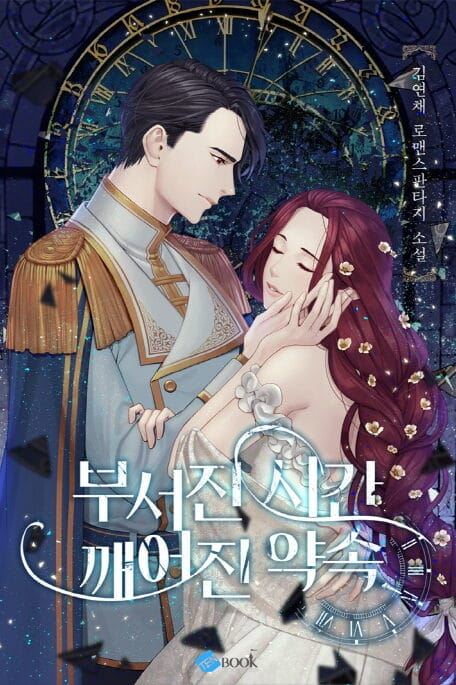
Broken Time and Broken Promises
Novel Info
  • Author:
  • Status:Ongoing

Summary

... Read More

Ellen Valère is the only daughter of the declining Viscount Valère family in the Kursh Kingdom. Due to being born female in a conservative kingdom that values male heirs, she endures lifelong neglect and emotional abuse from her parents. Her father calls her useless, and her mother, who died giving birth to her, treats her with cold indifference. The only source of warmth in Ellen’s isolated childhood is Lennox Lennon, a boy of noble descent whose family fell into poverty. They become inseparable friends, sharing secrets and finding solace in each other’s company. However, political instability and the rise of the Aryan Empire force Lennox away. Fearing for Lennox’s safety and believing that staying with him would only endanger his future, Ellen cruelly rejects him and agrees to an arranged marriage with Baron Tur Dermann, a wealthy but brutish and violent man without genuine noble lineage. She hopes to erase her past and protect him by disappearing from his life.

Five years later, Ellen lives as the lonely Baroness of the Dermott estate, married to a husband who despises her and subjects her to frequent physical abuse. She has a four-year-old daughter named Innis, whom she protects fiercely. Unaware of the looming war, Ellen secretly prepares for an escape by stockpiling supplies in the basement, anticipating the collapse of the Kursh Kingdom due to trade blockades by the Aryan Empire and internal unrest. During this time, she encounters a mute servant named Theon, who works in the basement. Theon possesses piercing red eyes that remind Ellen of Lennox, triggering painful memories of the man she left behind. Meanwhile, the Kursh Kingdom falls to the Aryan Empire. Lennox, who has risen to become the Commander of the Pamphilenet Order, the elite personal guard of Crown Prince Richel Aryan, leads the invasion forces. He returns to the Dermott estate not merely as a conqueror but as a man consumed by lingering love and betrayal.

Lennox bursts into Ellen’s room, revealing that he is the mute worker Theon, having worn a grotesque mask to disguise his identity and observe her suffering firsthand. He has come to claim what he believes is rightfully his: Ellen. He reveals that Baron Dermann’s title was purchased from Lennox’s mother, adding a layer of familial debt and insult to the conflict. Lennox brutally beats Baron Dermann, breaking his teeth and stripping him of his rings, effectively ending the marriage through violence. He demands that Ellen leave her past behind and return to him. However, Ellen refuses, citing her duty to protect her daughter and the fact that she has moved on. Lennox, enraged by her refusal and the existence of Innis, threatens to kill the child to force Ellen’s submission. Ellen breaks down, begging him to spare her daughter, which solidifies Lennox’s resolve to keep Innis alive but use her as leverage.

The story reaches a critical turning point when Lennox offers Ellen a bargain: if she endures with him until the arrival of winter and the festival of tulips, he will spare her husband and daughter and allow them to live quietly out of his sight. In exchange, Ellen must submit to him completely. Ellen agrees, recognizing that she has no power against the Aryan Empire and its Commander. The narrative shifts to explore the complex and toxic dynamics between Ellen and Lennox. While Lennox is driven by jealousy and a need for possession, Ellen is torn between her enduring love for him and her maternal instinct to protect Innis from the fallout of their turbulent history. Flashbacks reveal the depth of their childhood bond, contrasting sharply with the harsh reality of their reunion. Ellen’s acceptance of her fate marks the beginning of a new chapter where she must navigate life under the control of the man she once loved, while preparing for the uncertain political future of the fallen kingdom and her own survival alongside her daughter.

Latest Release
DateGroupRelease
2026-10-03dusk blossoms c67
2026-10-03dusk blossoms c66
2026-10-03dusk blossoms c65
2026-10-03dusk blossoms c64
2026-10-03dusk blossoms c63
2026-10-03dusk blossoms c62
2026-10-03dusk blossoms c61
2026-10-03dusk blossoms c60
2026-10-03dusk blossoms c59
2026-10-03dusk blossoms c58
2026-10-03dusk blossoms c57
2026-10-03dusk blossoms c56

Community Reviews

Rating(0 / 5.0, 28votes)
5 stars
0(0%)
4 stars
0(0%)
3 stars
0(0%)
2 stars
0(0%)
1 stars
0(0%)

Popular reviews

... Read More
I've read probably a hundred books where gifts between characters are just... gifts. Plot devices. Token gestures. But the cookie box in this chapter hit me like a freight train and I'm not okay. Let me explain why. Ellen spent time selecting cookies. Different flavors — chocolate chip, butter, tea, lemon — because she didn't know which one Lennox would like. She gathered a bunch. She was nervous about giving it to him. She rushed to explain it away before he could refuse. And Lennox? Lennox sits alone at night, cheek still throbbing from where the servants hit him earlier, and eats a tea cookie — his favorite — and the flavor lingers and the moonlight hits his face and for the first time in this entire text, we see him smile. Not a smirk. Not a polite half-expression. A smile that 'quietly bloomed on his lips.' The author chose those exact words and I am not over it. What made this scene land so hard for me is the contrast with Lennox's backstory. We learn that his mother was forced to kneel and beg for forgiveness because Lennox became friends with a noble lady. They were expelled. Their livelihood was destroyed. And now here is another noble lady — another Ellen — handing him something fragile and sweet, and his entire nervous system is going: THIS IS HOW IT ENDS. THIS IS WHERE IT GOES WRONG. But he eats the cookie anyway. He eats it. And he smiles. And he decides: 'I should greet her properly. Next time I'll smile at least once.' That is the most quiet, devastating act of courage I've read in any novel this year. Not a grand declaration. Not a dramatic confession. Just a boy choosing to believe that maybe, just maybe, this time could be different. And then the lemon candy. Oh god, the lemon candy. She calls it precious. He calls it just a single candy. The gap between those two perspectives IS the emotional core of this entire relationship. To her, it's proof that someone sees her. To him, it's barely something. And yet both of them are holding onto it like it's the only real thing in the world. That's what this book understands about emotional connections between people of different worlds — it's not about grand gestures. It's about the weight you give to small things.
... Read More
I need to talk about Laura. Just—Laura. Who is this woman and why does she radiate so much quiet warmth it literally makes my chest ache? Let me paint you the scene: Ellen, this girl who has apparently never been touched with kindness, is embroidering tulips. Failing. All over again. Her tenth or fifteenth attempt is a hot mess of tangled threads. And what does Laura do? She doesn't sigh. She doesn't say 'just give up.' She looks at that disaster and says—get this—'My Lady, you have a wonderful sense for color.' She finds something genuine to praise in something that looked like a rat had run through it. And then she sketches a pattern for her. Patiently. Gently. And the hair-stroking moment?? Laura just smooths Ellen's hair after she finishes and Ellen's entire face changes. 'The warm, gentle touch lingered vividly—a kindness she'd never received from her parents.' I literally gasped out loud. This girl had never been held like that. Never. But then—AND THIS IS THE KILLER—Ellen goes to present her finished embroidery to her MOTHER. The Viscountess. And what happens? The mother doesn't even take the box properly. She 'carelessly untied the ribbon Ellen had worked hard to tie.' She tosses it on the side table. Not one word of praise. Not one smile. And when Ellen finally summons the courage to ask for Laura as her nanny, the silence that falls is so heavy I could feel it through the page. The contrast between these two women—Laura giving everything freely, the Viscountess giving nothing—broke something open in me. I kept thinking about that dream Ellen has at the end: Laura embroidered nearby, alive and warm, while her real mother wasn't even in the picture. That's the whole story right there. Family isn't blood. It's the person who sits with you in the quiet and makes your world softer. I'm not okay.
... Read More
Okay so let me just start by saying the author really doesn't need flashy twists to make a plot work. This whole section is basically the slow build of two people who keep finding reasons to be near each other, and honestly? That's the part that got me. Not some big dramatic event — just a kid giving cookies to another kid, and then a year passing like nothing but everything. The structure here is really interesting because the plot doesn't move in the traditional sense. There's no villain, no external crisis forcing them together. What drives the story forward is simply: Lennox sees Ellen at the window, Ellen waits for Lennox at the window, and slowly the space between them collapses. The spring chapter, the summer transition, the autumn party — the author uses seasonal shifts as natural plot milestones instead of relying on external conflict. It's kind of revolutionary for a fantasy romance setup because the stakes aren't 'will they survive' but 'will they survive staying honest with each other.' And then there's Lennox's backstory — or rather, the backstory we learn in pieces. The first time he meets Ellen, we know almost nothing about him. By the time he refuses to let her scold the servants for him, we've only gotten fragments. But then BAM, Chapter 13 drops the entire history of his mother kneeling and begging, and suddenly everything Lennox does makes sense. Every distance he keeps, every flat reply he gives, every time he says 'no need' when Ellen tries to help — it all recontextualizes. The revelation doesn't feel tacked on; it feels like the author was setting us up to understand why this specific boy would be scared of exactly this situation. The ending of this section — Lennox coming to her window at night to tell her the party felt empty without her and asking her to sneak down — is the kind of moment that doesn't need fireworks. It's quiet. It's dangerous. And it's the biggest commitment either of them has made yet. He broke protocol. He risked punishment. He told her he missed her. That's the plot spike, and it lands perfectly because we earned it.
... Read More
I don't usually write about dialogue separately from plot or character, but this text has some passages that are so finely tuned I had to stop and just appreciate the craft. Let's talk about the lemon candy exchange. It's four lines of dialogue between Lennox and Ellen, and it contains more emotional information than most romantic scenes in entire novels. 'Can you stop speaking formally to me?' — Ellen initiates. She's the one crossing the boundary first, and she does it with such casual certainty that it's almost terrifying for someone like Lennox. 'Are you sure I can speak informally?' — Lennox. Not 'I don't want to.' Not 'that's inappropriate.' He's asking for permission. He's treating informality like something that could be taken away, like a privilege rather than a default state. 'No taking it back?' 'I won't!' — And here's the thing that made me laugh out loud: Lennox is literally negotiating the terms of their friendship like a treaty. 'Really?' 'Yes!' 'No taking it back?' 'I won't!' This is two children having the most important conversation of their lives and neither of them knows it yet. 'I heard from Marie. You like lemon candy from Allemang's Confectionery. I bought it for you on the way back from my errand.' — This is Lennox at his most vulnerable. He remembered. He sought out something specific. He incorporated it into his routine without making it seem like he did. And then immediately minimizes it: 'It's just a single lemon candy.' The self-sabotage is immediate and automatic. Ellen's response — 'This candy is more precious to me than anything' — is the kind of line that only works because the author has earned it through sixteen chapters of patient, unglamorous buildup. It's not dramatic. It's not overwrought. It's just true, and that's why it hits. The narrative voice throughout these chapters is also worth noting. It's restrained. It doesn't tell us how to feel about anything. It describes Lennox's mother kneeling and then immediately cuts to Lennox thinking about cookies. The emotional whiplash is intentional. The author trusts the reader to sit with the discomfort. And the final exchange before the party scene? Pure gold: 'Isn't it fine as long as no one sees you?' '….' 'I know a place where you can watch the party up close, but no one will see you.' No romance novel could write that line better. No amount of dramatic music could enhance it. It's just two people standing in a garden at night, and the entire future of their relationship is contained in that silence.
... Read More
"Was it sadness, despair, joy? Or perhaps all of those? Ellen herself didn't know the meaning of the tear — it simply fell as it pleased." I'm not crying, you're crying. This entire scene between them is built on five years of unsaid things. Five years of him trying to forget her and failing. Five years of her convincing herself she never loved him. And then during sex — which itself is complicated as hell given he's the knight who destroyed her home — she cries. Not from pain. Not from pleasure alone. From the sheer overwhelming contradiction of wanting someone who represents everything that was taken from her. And Lennox's internal monologue: "He had thought that after five years in the Aryan Empire, he could at least learn to hate Ellen, to stop loving her. But he hadn't." FIVE YEARS. He's been carrying this. And she thinks SHE'S the one who's been suffering in silence. The flashback to her childhood really reframes everything though. A little girl picking tulips for a mother who won't even look at her. Being called disgraceful on her birthday. That's the root of why she clings to Baron Dermann — someone abusive is still someone, right? At least he's her husband. At least he's family by law. It's pathetic and heartbreaking and I hate that her father told other noble families not to associate with her. She was alone then. She's alone now. Except Lennox is finally there.
... Read More
I keep coming back to two images from these chapters and I don't think they're accidental. First: the tulip embroidery. Ellen spent time making this for her mother. Clumsy, but done with love. Viscountess Valère looks at it and tosses it in the trash. "Completely useless." That single act says everything about the world Ellen lives in. Her love is literally thrown away. And she doesn't even know—she walks out happy, thinking she did something good. The reader knows. That dramatic irony is a knife. Second: the pinky promise. Lennox and Ellen make a heart-pinky promise that Ellen won't leave her room. But can a promise between two powerless children protect anyone from the will of a noble? Of course not. Lennox himself regrets it minutes later: "I should've ignored the stupid errand and stayed by Ellen's side." The deeper theme here is about the brutality of a world where a child's smallest desire—to play with her friend, to have her favorite maid stay—can destroy someone else's livelihood. Ellen wanted to bring Laura and Marie closer to her. That's it. That's her motivation. Pure. And it results in Marie being cast out, accused, humiliated. The story keeps showing us that in this world, goodness without power is just another form of vulnerability. Ellen is good. Ellen is kind. Ellen is also completely helpless. And the novel doesn't let us forget that.
See all reviews

Custom lists

See all custom Lists