Born to Be Either Rich or Noble - Reviews

Born to Be Either Rich or Noble
+Add to Custom List
Sort
Add review
... Read More
Okay, let me just breathe for a second because the plot density in this batch is absolutely insane. First, the divorce subplot — Qian Tong storming in with actual drafted papers? That is SO satisfying. Her sister has been rotting in that Cui household for five years, bedridden and neglected, and Qian Tong doesn't come to cry with her. She comes with paperwork. 'Have him sign this. Once you're ready, send word.' Chillingly efficient. And the detail about the half-panel of nacre window lattice that Cui had set with his own hands, now dull and lifeless — that visual hit me like a truck. Five years of a marriage slowly dying, captured in one rotting window pane. Then the second layer drops: the tea smuggling reveal. Qian Tong didn't just observe the Cui family's decline — she engineered it. She had them followed, gathered evidence, and pushed them to the edge. The way she slides that wooden box across the table to Song Yunzhi while discussing his brother like it's a casual afternoon chat? 'He's fine,' she lies so smoothly. Meanwhile she's playing three-dimensional chess while everyone else is playing checkers. But here's what genuinely surprised me — the Qian family's pivot from bankrupt to benefactor with those ten porridge stalls. That wasn't desperation, that was strategy. Feeding the poor while the city thinks they're ruined? That's how you control the narrative. By day three, the entire city is asking 'why hasn't the Cui family done anything?' And the Cuis are sitting on zero silver because Madam Cui literally handed two hundred thousand taels to Miss Qian to save face. Every move Qian Tong made was four steps ahead. The only thing I'm slightly confused about is the timeline of Song Yunzhi's infiltration — he was embedded in the Qian family, then sent by them into the Cui household as an undercover agent? That's treachery upon treachery, and I need to understand exactly whose side he's actually on at this point. Also, that ending with 'Remember the man who hit you that day? Let's go pay him back.' — WHAT MAN. WHO HIT HIM. I need to know now.
... Read More
I have to talk about this name moment because it's absolutely perfect. When Qian Tong answers for Song Yunzhi — "Song Yunzhi, 'Yun' as in sunlight, 'Zhi' as in growing grass" — and then immediately reads his reaction and GUESSES RIGHT — that's one of those tiny character beats that does so much work. It tells us everything about Qian Tong: observant, intuitive, quick to impress herself (in a charming way), and already deeply invested in understanding him. And Song Yunzhi? His face flickers with something — surprise, yes, but also the recognition that someone finally SAW him correctly. Not as a hostage, not as a servant-in-all-but-name, but as a person with meaning behind his existence. But then — classic Song Yunzhi — he won't even acknowledge her triumph. He just goes cold. The guy is wounded pride wrapped in ice. And Qian Tong, bless her, keeps pushing anyway. She explains the family situation, tries to bridge the gap between them, and drops this devastating line: "So I'm one of your hardships, then?" And her reply — "No — you're my salvation" — I actually said "ouch" out loud. That's the kind of emotional honesty that cuts both ways. She means it. He can't quite believe it. And the reader knows he WISHES he could believe it. Then there's the Old Madam scene — nearly seventy, still sharp as a razor, calling Qian Tong wise while simultaneously warning her not to be naive. This woman runs an empire from a quiet courtyard with incense and sutras. Absolute queen energy. And her parting advice about the Cui family eldest branch — "Don't burn every bridge. Leave her some dignity" — shows she's playing a much longer game than anyone else in the room. The matriarch doesn't think in days or weeks; she thinks in lifetimes.
... Read More
"What in this world comes free?" The waiter says this line and it just... stuck with me. Because the whole chapter is about what things cost. Not just money. The scholar thought his letter of introduction was enough currency, but in Yangzhou that meant NOTHING compared to a word from the right person. The Cui family preys on people who think the world still operates on fairness. And Qian Tong — oh, she knows the price of everything. She walks into a restaurant owned by the family that betrayed hers, with a husband who might not even trust her, and she picks a fight she can't necessarily win. But here's what I keep coming back to: the porridge. She feeds the poor every day. She's building goodwill, yes, but she's also buying loyalty. The crowd that turns against the Cui family? Some of them were strangers minutes ago. Now they're risking their lives because she made them believe justice was possible. And Song Yunzhi — he's dressed in fine silk now, gold coronet, jade belt, but he's still the man from the docks. The parasite inside him, the danger of being recognized by Lan Mingquan... his nobility is costume-deep. The real question this chapter keeps asking is: who pays the price for survival in a city like this? The Cui family profits from deception. Qian Tong profits from rebellion. Everyone else just tries to stay alive. And that scholar who escaped — he's proof that sometimes the system DOES work, if you're loud enough, brave enough, or lucky enough to shout "help!" at the right moment.
... Read More
I need to talk about the moment when Qian Tong forces Song Yunzhi's hand open. Like—seriously. The author doesn't even acknowledge how charged that scene is, but I was completely undone. She's literally touching his palm, sliding her fingers between his to pry them apart, and then pressing his hand flat so she can see the wound. “See? You've drawn blood. I told you not to strain.” And his pulse quickens? At a woman who just drugged him, kidnapped him, and is currently holding his life in her hands? The contradiction is delicious. He can't help it, that physical response, and instead of leaning into the vulnerability, his face hardens. He decides right then that he'll kill her. Not because he's immune to her—clearly not—but because acknowledging anything else would be dangerous. Meanwhile, Shen Che is across from him, jumping up shouting “What did you do to him?” and honestly? If that were me, I'd be screaming too. The protectiveness there is so raw and immediate. It's not romantic love, exactly—it's something sharper. Loyalty weaponized. And Qian Tong notices the shift in him, feels that heat radiating off him, and instead of pushing away, she softens. “Relax. You're holding too tightly—it'll only hurt worse.” Who talks like that during a hostage situation? Nobody. That's not threat language. That's someone who's never actually encountered a man who could make her heart stutter even while she held all the cards.
... Read More
There are three symbols haunting this chapter and they keep coming back to me like refrains. First: SALT. The Qian family's entire identity is built on it — generations of mining and refining, the source of their wealth and their danger. Salt preserves. Salt preserves food, yes, but it also PRESERVES reputation, power, life itself. And Qian Tong's decision about the salt price — refusing to raise it despite the crisis — is the ultimate statement of what salt means to her: integrity over profit. Preservation through honesty, not through exploitation. The guild rules, the matriarch's authority, the warning to stewards — it's all about maintaining the substance of the family rather than just its appearance. Second: THE TREE. "When a tree grows too tall, it catches the wind." This isn't just a business observation — it's the thesis statement for the entire novel's political landscape. The Four Great Families are trees, and the wind is the emperor's investigation. But Qian Tong's twist on it is what matters: "The only way to survive is to keep our heads down." She literally kept her head down by bringing home a humble servant as a fake son-in-law. The tree bends. The tree survives. It's Darwinian pragmatism disguised as weakness. Third: NAMES. "Yun as in sunlight, Zhi as in growing grass." A name that describes what the person ISN'T yet — sunlight and grass need light to grow, and Song Yunzhi is currently living in darkness. But names in this world are prophecies. The Old Madam understands this instinctively; she's the one who gave Qian Tong the name-based lesson about fate. Every character in this story is trapped between what their name promises and what their circumstances deliver. And then there's the PARASITE — literally inside Song Yunzhi's body, feeding on him, weakening him. What else but a parasite could explain why someone so proud would submit to this arrangement? The parasite is fate's cruel joke: it makes him vulnerable while making him dangerous at the same time.
... Read More
The pacing in these chapters is what I'd call "controlled suffocation" — the author knows exactly when to tighten the screw and when to let the reader breathe, and it's masterful. Let me walk through the structure. We open in claustrophobia: Song Yunzhi beneath the eaves, being examined like livestock by the patriarch. The silence stretches. The unspoken humiliation. Then Qian Tong breaks it by answering for him — and suddenly we're moving again, walking back down that long empty veranda. The corridor becomes a conversation space, a confessional, and the pacing slows to a almost meditative walk-and-talk. This is where she explains the family's salt business, the political danger, her reasoning. It's exposition disguised as intimacy — the reader learns everything about the world while feeling like they're eavesdropping on something private. Then BOOM — cut to the Old Madam's courtyard. Different temperature, different power dynamic, different pacing entirely. Slower, heavier, ritualistic. Incense, bowing, silence. The Old Madam speaks in measured words and the chapter breathes differently here. When she says "make sure you've investigated everything clearly. Don't be left in the dark" — the story just got a notch more tense. And then the pivot to the teahouse — Qian Tong escaping the family drama by literally leaving the house. The scene with Young Master Lan is comedic relief but with an edge. She needs money and he needs validation, and both walk away with what they wanted. Quick, sharp, satisfying. The final beat at the salt warehouse brings it back to gravity. The shopkeeper's question about raising prices, Qian Tong's refusal, the mention of imperial inspectors — the chapter ends not with a bang but with a whisper that lands like a stone in water. "A tiny ripple, and everyone starts flapping like startled cranes." Perfect closing image. The tension isn't resolved; it's just held, suspended, waiting.
... Read More
I need to talk about Song Yunzhi because this character is doing something very dangerous with my heart and I'm not sure he knows it. There's this moment—just one sentence, really—where Qian Tong leans close and murmurs "Don't take it to heart" while the magistrate's wife is eviscerating her. And the narration calls it "a demon's sympathy." That's the exact phrase. Not angel, not kindness, *demon's* sympathy. Because she knows exactly what she's doing, and he knows she knows, and somehow that makes it more complicated instead of less. But then—here's the thing that wrecked me—he looks at her face and thinks about swallowing her whole. Not romantically. Not literally. But with this ferocious, almost predatory intensity that suggests he's been holding something back so far he's about to break. And then he controls himself because "a mighty dragon shouldn't pick a fight with a local snake." THAT LINE. A dragon. A local snake. He just categorized himself and her in one breath and I was on the floor. Their entire dynamic is built on mutual deception. She thinks he's a penniless orphan from the docks. He knows she's the Qian family's Seventh Miss playing a long game. And yet, when she offers to help his family with money, something shifts. His voice becomes quiet, almost teasing, and that faint smile on his lips? The author makes it clear it's deliberate. He's performing for her, just like she's performing for everyone else. Two actors on the same stage who both think they're directing the play. And then there's the sister thread. Qian Tong visits the First Madam's courtyard—her eldest sister, married into the Cui family five years ago, childless, now ill and isolated. The sister who was once close to Madam Cui, who used to give her candy, and who is now silently suffering in a house that despises her. The contrast between the two women—one publicly performing weakness, the other privately enduring it—is devastating.
... Read More
The opening chapter is a masterclass in establishing a world without info-dumping. March spring waters swelling, hundreds of boats racing downstream, winter ice falling into the surging waves—that's your opening shot. And then the author pulls back to show us the teahouse built above the tide, thatched roof, wooden steps, and there's this young woman in Song brocade threaded with gold standing like she belongs to the sea itself. The visual writing is exceptional. When Qian Tong turns her head and the gauze of her sun veil lifts, we get "dark hair, bright eyes, skin like jade, lips like blossoms"—but then the author immediately undercuts that classical description with the housekeeper's dissatisfaction. She's beautiful, yes, but she's also dangerous. A merchant's daughter with ambition glinting beneath gentleness. The docks scene is where the world really comes alive. Sunlight glinting off countless sails, merchants bustling, the air thick with shouting and laughter. And underneath all that prosperity—the Cui family brokers dragging off poor souls, the little girl who knocked over the teacup, the knockout powder that made Shen Che's head spin. The contrast between Yangzhou's glittering surface and its underbelly is constant. Even the alley where Song Yunzhi and Shen Che end up captured—the narrow passage full of laughter, people drinking tea, playing chess under the spring sun—before everything goes dark. And then the room where they wake up. Carved shell lattice windows, crabapple blossoms stretching in from outside, the faint scent of tea, and Qian Tong sitting there in that golden coronet like she's part of the architecture. The worldbuilding works because it never stops feeling alive. There are always people moving in the background, merchants and poor souls and brokers and girls with teacups, all existing in this vibrant, corrupt, beautiful city. Even when our protagonists are bound and gagged, the world keeps spinning around them. That's the mark of an author who understands setting isn't just backdrop—it's another character entirely.
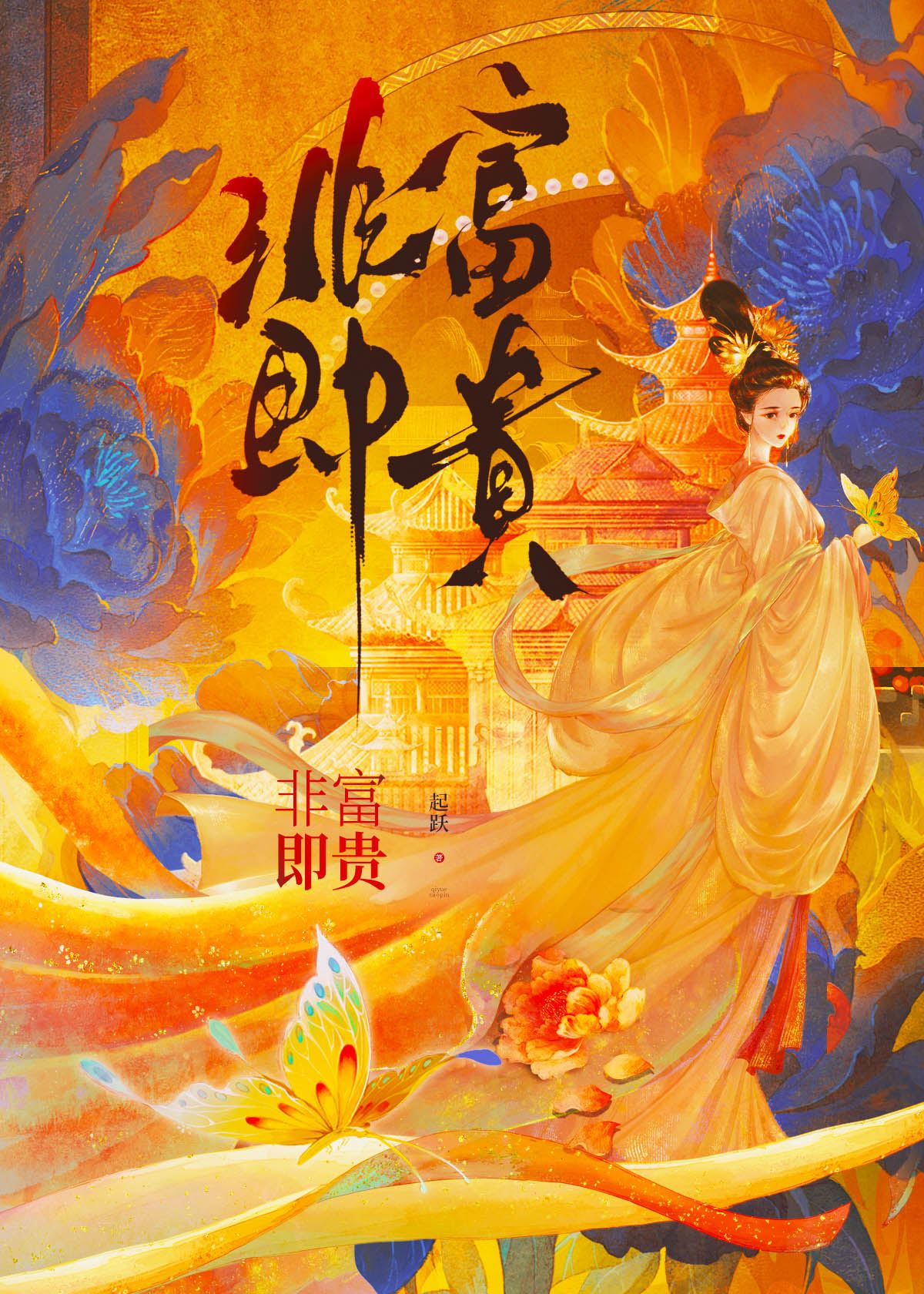
... Read More
That golden cicada. Just… that golden cicada. The text tells us explicitly what it represents—control, poison, a curse—but I think the symbolism runs deeper than the author's own footnote suggests. A cicada is an insect that spends years underground before emerging, singing its brief, desperate song into the sunlight. It's a creature of patience and sudden, fragile life. And Qian Tong chooses it. She doesn't use a snake, or a spider, or anything traditionally menacing. She uses something beautiful. Something that would catch the light and gleam at the bottom of her porcelain cup like a hidden jewel. The cicada enters Song Yunzhi's bloodstream through a wound he inflicted on himself—by clenching his fist too tightly. His anger, his resistance, creates the very mechanism of his captivity. The text says: “Before I entrust my fate to you, I must hold your life in my hand.” But flip that. It's not just about her holding his life. She's asking him to trust her with something equally vulnerable. Trust her with his willingness to be controlled. And the most damning part? When she wipes the blood from his palm, when she calls him “Sir” with that softened tone—she's performing care. Genuine, practiced, perhaps even accidental care alongside the threat. Is the cicada only poison? Or is it also a bond? A golden thread stitching two proud people together whether they'll admit it or not?
... Read More
The dialogue in this opening is sharp enough to cut glass and I love how each character sounds distinct. Housekeeper Cao—his speech patterns immediately tell you who he is. Nervous, deferential, trying to deliver bad news gently. "The prefect says… they'll think it over." The ellipsis does so much work there. You can hear him choosing his words carefully around a woman who could ruin his family with a word. But then Qian Tong's voice—she barely speaks in the opening scene and yet every line lands like a hammer. "There's no need for you to worry about the dowry." Calm, assured, already making decisions about her own future while pretending to be discussed as property. The servant boy blurting about Young Master Lan is perfect comic relief—the kind of character who says exactly the wrong thing at exactly the wrong time. And then Shen Che and Song Yunzhi's banter in the alley. "Those bastards are too arrogant!" versus the calm "They're merchants. It's in their nature." You immediately understand their dynamic: Shen Che is fire, Song Yunzhi is ice. Shen Che sees injustice and wants to fight it. Song Yunzhi sees systems and understands how they work. When Song explains pickpockets and bandits and Shen's face pales—that exchange tells us everything about who these men are without a single description. And Qian Tong's dialogue with Song Yunzhi afterward? "You're wondering if this is a dream, aren't you?" She reads him instantly. "See? It's real." Pinching his arm like it's nothing. "A pie from heaven landed right on you today, sir. Aren't you happy?" The irony dripping from that line. She's the pie. She's offering herself as currency. The narrative voice itself is wonderful—equal parts classical Chinese novel sensibility and modern wit. When the text says "Qian Tong was no villain. She tried to project gentleness" that's the author winking at us, acknowledging the complexity of a woman who is simultaneously kind and ruthless. The voice never settles into one register, and that keeps every scene fresh.
... Read More
I need to just say it: the stakes in this chapter are EVERYWHERE at once and it's brilliant. On the personal level, Song Yunzhi is a prisoner in all but name, carrying a parasite that controls his body, forced to play the role of son-in-law to a woman he wants to destroy. He's lost his freedom, his reputation, his autonomy — and yet his internal monologue makes it clear he's NOT broken. "Sooner or later, she would fall into his hands and taste every form of earthly suffering." This is a man planning revenge while sitting cross-legged in someone else's house. The conflict inside him is volcanic. On the family level, the Qian family is under investigation. The salt licenses could be revoked. The patriarch is being squeezed. Third Master and Fourth Master are questioning Qian Tong's judgment at home. Debt collectors are at the gates. This is a household in freefall and Qian Tong is the only one holding an umbrella. On the political level, imperial envoys from Jinling are arriving in days. The Cui family has made a marriage alliance with the magistrate. The other merchant families are panicking and considering price hikes. The entire commercial ecosystem of Yangzhou is one wrong move away from collapse. And yet — the most electric conflict is the one between Qian Tong and Song Yunzhi walking down that corridor. She's offering trust. He's offering silence. Neither is backing down. When she says "You're my salvation" and he walks away without a word, that's not just romantic tension — that's two people whose fates are locked together fighting a war on every front simultaneously. The chapter ends with the shopkeeper asking about salt prices and Qian Tong saying no — that's the story telling us explicitly: the conflict isn't over. It's just changing shape. And I am NOT ready for what comes next.
... Read More
The pacing in these chapters is absolutely INSANE and I need everyone to understand what the author pulled off here. It starts SO quiet. We're at a restaurant. People are eating. A scholar complains about the food. Normal stuff, right? Then the waiter's smile drops. ONE moment the scene is warm and golden and Yangzhou-is-wonderful, and the NEXT it's a hostage situation with a hundred-tael bill. The author doesn't warn us. They just pivot HARD and we're falling down the rabbit hole with everyone else. Then Qian Tong enters — and suddenly the energy shifts AGAIN. She's calm, measured, saying exactly what she needs to say. But the reader? We're already screaming internally because we KNOW what's coming. And when she says "hit him" — BOOM. Fight breaks out. The narrative EXPLODES outward like a dropped bomb. You've got scholars fleeing, maids crying, the crowd turning into an angry mob, the constables arriving with that rotund man trying SO hard to look authoritative. And through all of it, Qian Tong sits down and asks if her husband wants to sit too. The restraint in the middle of chaos is what makes this pacing work. The author could have gone full action-novel for eight pages straight, but instead they give us these tiny human moments — a touch on the lip, a question about sitting — that ground everything. It's controlled chaos. And I was completely hooked from start to finish.

Leave a comment

You must be logged in to leave comments. or
