Summary

... Read More

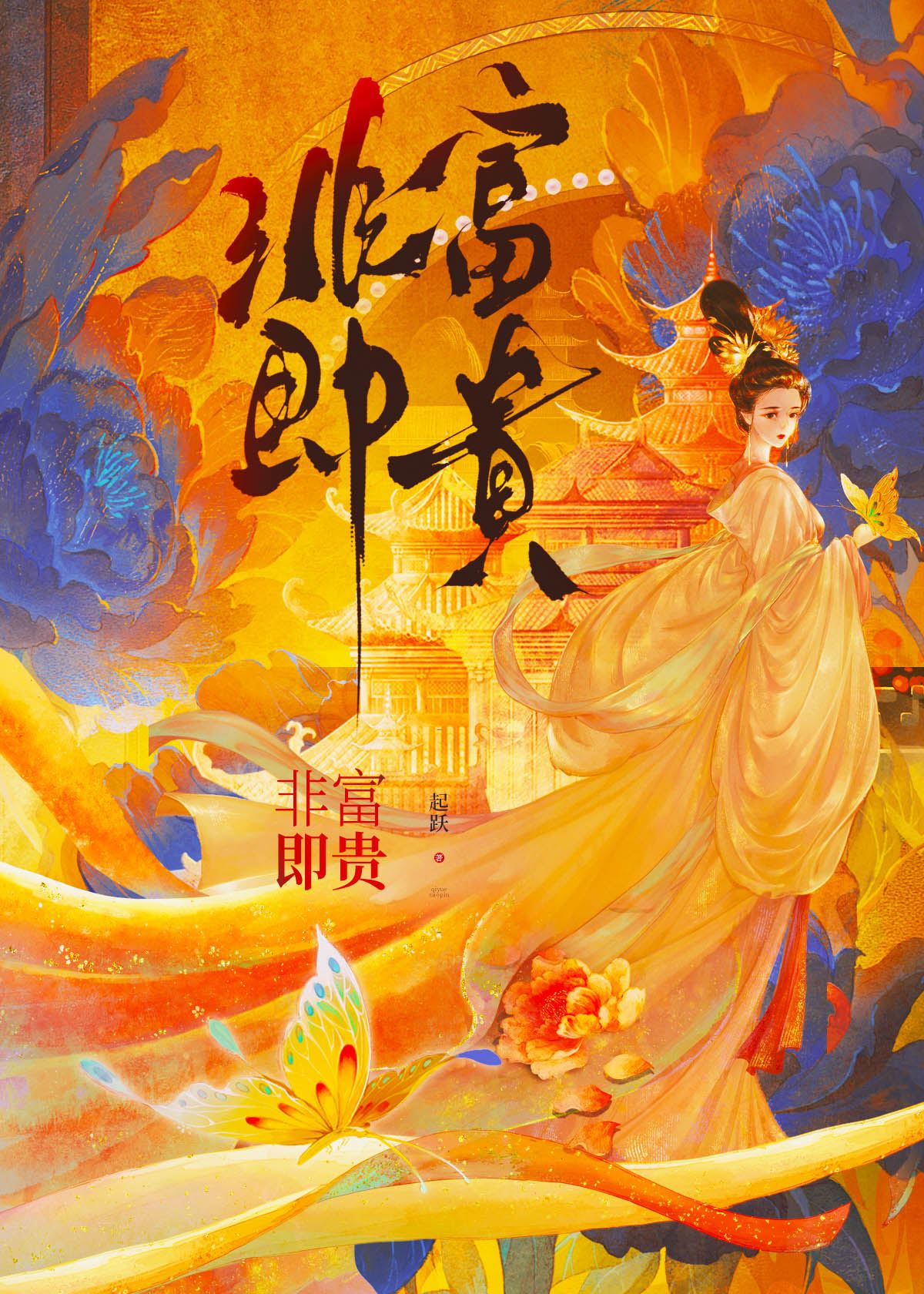
Qian Tong is the only daughter of the Qian family, one of the four great merchant houses in Yangzhou that built its fortune on salt mining. Her family has survived by maintaining strict neutrality through regime changes, but five years have passed since the current emperor, a former soldier from humble origins, seized the throne. The emperor has not forgotten that the merchants refused to aid him during the war, and imperial inspectors have arrived to investigate the salt lords, threatening the families with extinction. To secure protection, Qian Tong’s parents arrange her marriage to the young son of the Prefect of Yangzhou, paying an exorbitant bride price. However, Qian Tong has no interest in this political alliance. She seeks a different path to survival and power, one that does not involve submitting to the whims of a corrupt official’s family.

At the Yangzhou docks, Qian Tong spots a destitute warrior named Song Yunzhi, who is actually the nephew of the Empress Dowager and a high-ranking imperial official on a secret mission to expose corruption. She kidnaps him and his companion, Shen Che, using a paralyzing drug. Song Yunzhi initially refuses her offer of wealth and status, driven by duty and pride. However, after a confrontation with local thugs, he is forced to accept her terms when she holds his life hostage with a venomous insect called a Gu. This parasite can only be neutralized by a monthly antidote, which Qian Tong controls. Realizing they cannot escape without succumbing to the poison, Song Yunzhi agrees to pretend to be her betrothed to infiltrate the Qian household and continue his investigation from within.

The engagement test becomes a pivotal moment of tension and absurdity. When Song Yunzhi refuses to cheat on the marriage examination, Qian Tong storms onto the stage, rewrites his answers for him, and publicly declares him her chosen husband. The family is scandalized by his humble origins and coarse appearance, but Qian Tong’s determination silences their objections. She introduces him to her father, Qian Minjiang, as a distant relative from Jinling who needs employment. Despite the humiliation and the constant threat of the Gu, Song Yunzhi begins to adapt to his new role. He lives in luxury, far surpassing his own modest residence, yet remains acutely aware that he is a prisoner of war in all but name.

Meanwhile, Qian Tong reveals her true motivations. She is not merely a vain merchant’s daughter seeking a handsome husband; she is a strategic player navigating a dangerous political landscape. She sees Song Yunzhi’s potential and believes that by binding herself to him, she can elevate her family’s status and protect them from the emperor’s wrath. Their relationship is a delicate dance of manipulation and reluctant respect. Song Yunzhi is frustrated by her cunning and shamelessness, while Qian Tong is puzzled by his stubborn pride and refusal to appreciate the fortune she has thrust upon him. As they navigate the complex web of Yangzhou’s merchant politics and imperial scrutiny, both must decide whether their initial goals—his mission to destroy the merchants and hers to secure power—can coexist or if one will inevitably destroy the other.

Latest Release
DateGroupRelease
2026-10-01hiraeth translations c80
2026-10-01hiraeth translations c79
2026-10-01hiraeth translations c78
2026-10-01hiraeth translations c77
2026-10-01hiraeth translations c76
2026-10-01hiraeth translations c75
2026-10-01hiraeth translations c74
2026-10-01hiraeth translations c73
2026-10-01hiraeth translations c72
2026-10-01hiraeth translations c71
2026-10-01hiraeth translations c70
2026-10-01hiraeth translations c69

Community Reviews

Rating(0 / 5.0, 33votes)
5 stars
0(0%)
4 stars
0(0%)
3 stars
0(0%)
2 stars
0(0%)
1 stars
0(0%)

Popular reviews

... Read More
Okay so let me just say—Qian Tong is either the most fascinating merchant daughter in all of historical fiction or the author wrote her straight from the mind of someone who loves watching good girls do bad things. Because what did she just DO? She saw two men getting kidnapped at the docks, both obviously in over their heads, and she was like "I want the one in the straw hat." Not the scholar, not the refined one. The ragged, seawater-soaked warrior. And when she saw his face beneath that cheap hat? Her entire expression shifted. This woman who had apparently selected him based purely on physical attributes—tall frame, practical clothing, poor clothes—was suddenly caught off guard by something she hadn't planned for. His face. Sharp features, pale skin, dark eyes with restrained fury simmering beneath them. The quiet defiance of a man who refuses to be humiliated even while bound in burlap. And here is the thing that got me: Qian Tong didn't flinch. She leaned in close, pulled the cloth from his mouth, and offered him a lifetime of wealth and glory. She was offering herself as the transaction. "A pie from heaven landed right on you today, sir." But I couldn't stop thinking about what this means for their relationship dynamic. She chose him because he was desperate—"the poor are easier to control." But then she saw his face and realized maybe control wasn't going to work the way she planned. There's something devastating about a woman who has spent her life assessing people by their utility, by what they can provide, and then being blindsided by a moment of genuine human connection she didn't anticipate. Song Yunzhi responded by having his eyes flash with cold fury. He's perfectly lucid, perfectly aware of what just happened, and he still turned his head from her light. The interaction between these two feels like watching two predators realize they've both been hunting the same prey—and now they're standing toe to toe with no idea whether to bite or bow.
... Read More
Okay, let me just say this—the most satisfying scene I've read in months. Qian Tong walks into a banquet where everyone thinks she's the prey, and within ten minutes she's systematically extracting money from four of the most powerful families in Yangzhou. The reversal is so clean it almost hurts. What made it work wasn't just the twist itself—it was the setup. The author spent two full chapters establishing the Cui family's contempt for the Qians, Madam Cui's glee at the engagement celebration, the magistrate's wife's dismissive posture. Every single one of those characters is primed to mock her, and then she flips the script not with drama but with cold, ledger-based precision. She doesn't cry or negotiate—she produces account books and asks to be paid. The structural brilliance is in the escalation. First, she reveals she has a husband (shock). Then she claims the Qian family is ruined (pity). Then she starts collecting debts (power reversal). By the time the magistrate's wife realizes she's being played, Qian Tong already has silver in her hands. The scene turns from humiliation spectacle into a heist, and I was literally sitting up in bed reading this. There's also the subplot thread about the eldest sister—the one married into the Cui family for five years without children, now sick and silent in the First Madam's courtyard. That thread feels like a loaded gun that hasn't gone off yet. I have a very strong sense this is going to matter.
... Read More
Let's talk about stakes because this author understands something most writers don't: the best conflicts aren't about life and death—they're about *face*. Qian Tong walks into a room where the Cui family is celebrating their son's engagement to the magistrate's daughter. She has nothing. Her family is supposedly ruined. She's brought a mysterious husband who may or may not be legitimate. Every person in that room has every reason to humiliate her. The stakes are social death—exposure, mockery, irrelevance. For a merchant's daughter in this world, that might as well be execution. But here's what makes the conflict so gripping: the author never lets us forget that Qian Tong is *choosing* this. She could stay home. She could play the victim safely. Instead she walks in, performs her grief, and then—bam—produces account books like a magician revealing doves. The conflict shifts from external (how will others treat her?) to internal (what is she willing to sacrifice to win?). And the risks are real. If she fails—if the magistrate's wife refuses to pay, if Madam Cui exposes her bluff, if Song Yunzhi cracks under pressure—she loses everything. Not just money, but her family's remaining dignity, her sister's chance of rescue, her own position in a city that eats weak merchants alive. The tension is maintained because the author keeps raising the temperature. First the husband reveal. Then the poverty claim. Then the debt collection. Each moment is a new gamble, and each success only deepens the danger that follows. When the magistrate's wife finally says "settle every last account and may we never have dealings again," Qian Tong has won the battle—but she's also declared open war on all four great families. And that's the hook. The conflict isn't resolved. It's escalated. The ledger is full, but the enemies are everywhere. What happens next?
... Read More
I need a moment. Song Yunzhi HATES her. I can feel it in his bones. He spent the entire night after being drugged and physically manhandled by her clutching that cold sweet cake and swearing revenge. 'What he had suffered today, he swore he would one day repay upon that demoness tenfold.' Tenfold. He's not just angry—he's feral. And yet. And YET. The next morning she sends him new clothes. Not hand-me-downs, not scraps—silk robes tailored perfectly for him. 'A pearl polished once more,' Ah Jin thinks. She saw him at his worst: sweaty, humiliated, trembling from poison, and she still made sure he looked like a prince when he walked into that banquet. And then—the line that wrecked me—she leans in and whispers: 'Don't be afraid. Stay with me—I'll show you the world.' That is NOT something a ruthless mastermind says to a captive she's trying to break. That's something someone says when they actually want him to stay. Also, the way the text describes them standing together at the banquet: 'golden boy and jade maiden,' 'an image of perfection, radiant as a scene painted under sunlight.' Everyone else sees a power couple. Song Yunzhi probably sees his own humiliation. But the reader? The reader sees something terrifyingly close to genuine connection forming between two people who would literally kill each other if given the chance.
... Read More
I need a minute. I actually need to sit down. The sister scene. Qian Tong walking into that stifling, herb-choked room and seeing her once-vibrant sister reduced to a ghost on a bed — and the sister's first instinct isn't to complain, isn't to beg for rescue. She deflects. She asks about Qian Tong's marriage. She talks about how she nearly helped her elope and now considers herself a joke. The self-loathing in that moment absolutely wrecked me. 'What a joke I've become.' Five years of marriage reducing a woman who used to climb trees for cherries into someone who can barely sit up. And Qian Tong — she doesn't offer empty comfort. She offers an exit strategy. She's furious but she channels it into action. The way her temper flares at Chunliu about the windows, the way she physically places the divorce letter into her sister's palm — this is love expressed through force, not tenderness. And it's perfect for these two. Now let's talk about Song Yunzhi and Qian Tong because OH MY GOD. She notices immediately when he goes cold after her mother's insult. She doesn't ignore it. She pivots — apologizes,softens, tries to fix it. And then she winks at him. WINKS. 'I know you're a forgiving man, Yunzhi.' The audacity. The absolute charm. But the real gut-punch comes when she reminds him of his younger sister — the one who loves ribbons and throws tantrums. She's sharp as a blade, he's soft underneath, and yet here they are, partners in crime, building something together while pretending it's just business. That line 'we're a family now' breaking his patience? He wanted to say something. I can tell he wanted to say something. And then she changes the subject to revenge before he can. Also the jade comb gift? Damp air causes wood to mold, so she had a jade one made instead. She REMEMBERS. She pays attention to the small things he mentions. This woman is dangerously good at making people feel seen.
... Read More
Let's discuss pacing, because the author plays with time in a way that nearly drove me insane in the best possible manner. The kidnapping happens fast—you're tied, gagged, dragged through a teahouse, and suddenly you're being questioned by a woman who doesn't blink. Then: rejection. Song Yunzhi walks away. And the reader thinks, okay, that's it, the tension broke, we're moving on—NOPE. The author immediately introduces Chai Tou and his thugs, escalating violence within three paragraphs. A brawl ensues, and right when you've caught your breath, Qian Tong appears on the second floor with his sword. The crabapple tree detail lands here with devastating timing: she's not just watching from above—she's holding his weapon, surrounded by petals, and casually asking about damages. The power dynamic flips so smoothly you barely notice the turn. Then comes the tea scene, and suddenly everything slows to a crawl. Questions drip forward like water: name, age, betrothed status. Each answer takes up space, each silence stretches. The “insolence!” outburst from Shen Che acts as a pressure release valve before Qian Tong pivots the conversation and the guards block the door. And then—the golden cicada. Right when you think you've settled into this conversational rhythm, the author slashes the pace again with a venomous parasite biting into flesh. What's brilliant is that the entire sequence mirrors the structure of a negotiation: establish power, test resistance, offer reward, reveal threat. By the time the chapter ends on “I must hold your life in my hand,” you're not sure whether to scream or laugh.
See all reviews

Custom lists

See all custom Lists