Black Shroud of Corpses - Reviews

Black Shroud of Corpses
+Add to Custom List
Sort
Add review
... Read More
Let me just say this: the author knows how to stage a scene. The sequence where they hike through the Camphor tree forest at dusk, the smell of camphor growing stronger, the thunder rolling in from the edge of the sky, the downpour hitting—then they find shelter and wait. Wait. Wait. And then: "Another lightning flash, lighting up the top of the old Camphor Tree as bright as day. Hansheng clearly saw a huge black bat standing majestically on a tree fork, looking up at the sky. Silver strands of hair on its forehead fluttered in the wind, and its claws held high above its head… a sanitary belt…" I literally gasped. A hundred-year-old bat, using a stolen sanitary belt as a lightning rod shield, dodging bolts of lightning like some kind of feral guardian. This is the kind of image that stays with you. It's absurd, it's terrifying, it's bizarrely beautiful. And then the contrast of returning to the thatched house, the oil lamp, Hansheng examining the bloody, scorched cotton sanitary belt under warm light—this mundane, almost embarrassing object now sacred with supernatural significance. The worldbuilding here doesn't rely on exposition; it just drops you into moments so vividly rendered that the magical realism feels completely natural. Even the ending image of the hermit standing under a big tree at the valley entrance, watching Hansheng leave, is quietly devastating. A man who chose isolation, still showing up to see someone off.
... Read More
Okay let's talk about what just happened because my heart rate is not recovering. Hansheng's stakes going into this were already massive: save Lan'er's face, cure her disease, prove that the Black Satchel actually works. He succeeds! He gets the sanitary belt! He's ready to go down the mountain and fulfill his promise! And then within THREE PAGES he gets kidnapped. The men grab him without warning, shove Lan'er to the ground when she reaches for him, and drive off in a Jeep. Lan'er screaming "Mother..." with bright red tears—I cannot unsee that. But the stakes have fundamentally shifted. This isn't just about healing a girl anymore. Now Hansheng is in the hands of Huang Qiansui, Meng Zhuqi, and Wu Daoming—people who are clearly involved in something much bigger involving Dragon Veins, Earth Spawns, and a Taiji Yin Halo. His father is apparently there too, which means the family is caught in whatever this is. The scariest part? Wu Daoming didn't immediately attack Hansheng. He pulled him aside under an osmanthus tree and started speaking in a lowered voice, offering what sounded like advice. That's not the behavior of an enemy. That's the behavior of someone who might be operating on a different board entirely. Hansheng went from a young healer on a personal mission to a pawn in something involving fengshui, secret lineages, and possibly the same forces that destroyed Lan'er's village. The scope of this story just expanded so much and I'm equal parts thrilled and terrified for everyone involved.
... Read More
Okay so let's be real for a second—Wu Daoming is absolutely terrifying and I love it. The man walks into a stranger's house, observes his face for literally thirty seconds, and then in his own head is already doing a full personality assessment: sunken forehead, no angle to the left temporal bone, turbid voice. He's reading people like open books. And what's worse? He's completely genuine about using Zhu Biao. The text literally says [What a despicable person!] and Wu Daoming just... agrees with himself and moves on. The dynamic between these two is pure predator and prey, but the weird part is that Zhu Biao is fully aware he's being manipulated and he still leans in. He's desperate enough about the Ghost Foetus situation that he literally offers to become Wu Daoming's slave. Meanwhile, Doctor Zhu is this whole other energy—stoic, principled, refusing gifts, deflecting Wu Daoming's advances with polite silence. Their conversation about Hansheng becoming Wu Daoming's disciple had me sweating. Wu Daoming comes in with a pig leg (literally twenty or thirty kilograms of pork as a bribe), talks about the Classic of Changes, praises Hansheng's virtue—and Doctor Zhu just sits there silently after he leaves. You can feel the distrust radiating off the page. But here's what really got me: the moment Wu Daoming notices Lan'er with her wrapped head and then smiles to himself, already plotting something. This man sees human beings as pieces on a board and I cannot look away.
... Read More
I need a minute. Zhu Biao telling the story of Shen Caihua is one of the most emotionally devastating sequences I've read in this book and it just keeps hitting me harder every time I think about it. This woman—beautiful, from a good family, carried someone else's child—and what does she get? Her husband's family breaks both her legs. Both of them. And she still doesn't betray the father. She dies hanging herself because she literally cannot endure the torture anymore, and then they bury her in an inauspicious grave without even a coffin because she has no family to claim her. Zhu Biao sobbing with his head on the table—that's not acting, that's genuine shattered guilt after all this time. And Wu Daoming, who is basically a sociopath, still manages to extract this confession by asking about the foetus with genuine-sounding concern. The tragedy is layered so beautifully: Shen Caihua chose death over betrayal, which means her resentment is now trapped in limbo because her child died with her—or did it? The text says the grass on her grave is lush and green while everything around it is barren, which the author uses as this eerie visual metaphor for life persisting from death. And Zhu Biao, who did nothing while she suffered, who ran away instead of stepping forward, is now willing to sell his soul to find that child. That's not just plot, that's raw human brokenness. I've been sitting here replaying that dinner scene in my head and I genuinely cannot stop thinking about it.
... Read More
This batch is a masterclass in breath control. The opening—Hansheng at the tomb, the soil, the coffin lid—feels like a slow exhale. He's working methodically, clearing away soil and lime paste, bowing to the grave, then the crack, then the gas, then the fungus, then scrambling out as the rain starts. By the time he's filling the pit and his flashlight dies, I'm already out of breath. Then the author makes a sharp cut. Hour later, home, oil lamp, the wooden box. We get the letter, the unwrapping, the paper slips, and then—just as we're settling into the medical text—the rooster crows. Three times. The entire sequence from midnight to dawn plays out like a single long take, and Hansheng doesn't even realize how much time passed until his dog starts barking. What I love about the pacing here is how the author uses the pregnant woman's storyline to create a pivot. We've been in this almost dreamlike state of discovery and revelation, and then suddenly it's past tense—someone needs help NOW. The transition from Hansheng hiding the Classic under his bed to walking into a crisis is jarring in the best way. It's like the story itself is saying: yes, this is amazing, but the real test is what you do with it. The chapter ending on 'Unlike ordinary cr...'—that cliffhanger is petty and I love it. Hansheng needs mole crickets, can't find any, and the sentence just cuts off. I had to click immediately.
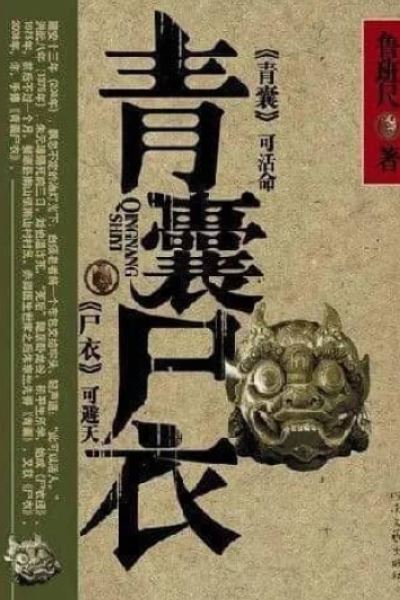
... Read More
The dialogue in this passage is doing insane amounts of work and I want to break down why it's so effective. First, Wu Daoming's voice is immediately distinct—he speaks in complete, formal sentences even when he's manipulating someone. 'The way of a doctor lies in virtue. Remember, treat all patients equally, regardless of their wealth or status.' That's not something a con artist usually says out loud unless he's building false trust. His questions to Zhu Biao about the foetus are perfectly calibrated: probing but never pushing, letting Zhu Biao volunteer everything. Then there's Doctor Zhu, whose dialogue is almost entirely reactive and restrained. 'I don't understand nor am I interested in superstitious things like Feng Shui.' Short, dismissive, definitive. He doesn't waste words and that's exactly what makes him feel principled. The contrast between Wu Daoming's elaborate speech patterns and Doctor Zhu's economical responses tells you everything about their moral positions without the narration having to say a word. And Zhu Biao's dialogue shifts so dramatically—we go from his confident, award-winning Youth Shock Troop persona to this broken man whispering through sobs, 'Old Wu, please show me the way.' The register drop is immediate and it's heartbreaking. Even the peasant woman gets a voice: 'Not even a month old yet.' Five words, but you can hear the exhaustion and the tenderness. Every character sounds like themselves.
... Read More
I need to talk about Doctor Zhu and Hansheng because this relationship is doing SO MUCH work in these chapters. On the surface, it's just a rural doctor father and his son. But watch how they operate together. When Wu Daoming presses them about the Earth Spawn, the father takes the hard line — refuses to talk, even when offered half a year's income. But then Hansheng steps in and says he buried it at his grandfather's grave. This is brilliant misdirection. The son is protecting the secret while making it sound like sentimentality. They're playing different roles in the same performance, and it works. But here's what gets me — the father's internal monologue afterward. He's actually terrified. He reads Wu Daoming's physiognomy like a horror novel: "preys on people," "facing execution." This man has seen enough of the world to know what kind of predator he just met. And yet he still sends his sixteen-year-old son off alone to wander the market. Then Hansheng finds Lan'er and her mother. Something shifts in him. He doesn't just help — he commits. The Classic of the Black Satchel is supposed to be about "helping the world," and suddenly we see him actually living that mission. No hesitation. No looking back. Their conversation after the healing is everything. Lan'er says "I'm willing to marry you" and Hansheng's face reddens and he RUNS. Not cowardice — I think it's the sheer overwhelm of a kid who just performed a miracle and now has to deal with the human fallout. He promised to return at the next fair though. That's character growth right there — accountability.
... Read More
Let me be clear: this author understands tension like most writers spend entire careers trying to learn it. Chapter one opens with a bureaucratic notice and ends with Hansheng tossing in bed, excited about digging up a grave. That's a perfect hook - mundane premise, restless energy. By chapter two, the father's warnings about corpse gas colors establish dread before any danger actually appears. We know something bad could happen, we just don't know when. The structure of the grave-digging sequence is masterful. You've got the daytime scene - laborious, hot, mosquito-infested - building to the discovery of black gas. Then the evening scene, counting bones, the storm, the realization of what's missing. Then the night return, the long descent into the Golden Well, and... another coffin. Each act escalates the mystery while the physical danger remains low-key, which is somehow more unsettling. The terror isn't in action sequences; it's in the slow dawning that the father's world has layers Hansheng hasn't even begun to comprehend. Chapter transitions deserve praise too. The father being called away for a delivery forces Hansheng alone with the bones - that's not coincidence, that's narrative architecture. Every obstacle pushes the protagonist toward deeper questions rather than away from them. The rain stopping and stars appearing between the bone-counting and the night return creates breathing room that makes the final descent feel even more inevitable. But here's what I love most: the author trusts the reader. No exposition dumps explaining the Cultural Revolution context beyond what Hansheng naturally remembers. No over-explaining Feng Shui theory - just enough detail to make it feel real. The pacing never feels rushed because every scene earns its place. Seven chapters, roughly 20,000 characters, and I'm already planning to stay up way too late finishing whatever comes next. This opening establishes a story that operates on multiple frequencies simultaneously - historical fiction, family drama, supernatural mystery, and something deeper that I can't quite name yet but definitely feel.
... Read More
I need to talk about the reunion scene because honestly I got choke-eyed. Doctor Zhu had been locked up for two days — blisters on his lips, hair turning white — and when Hansheng bursts in screaming "Dad!" and they just collapse into each other crying? Classic. But then the dad immediately starts scolding him about the leg, untie bandages, noticing the bone is already mending in two days? That's Doctor Zhu being a doctor even in his own trauma. He doesn't get to grieve properly, his brain goes straight to clinical mode. I love that. And Hansheng? He omits the old bat and the sanitary belt when explaining how he fell. Classic son behavior, right? Some things you just don't tell your dad. Then later when his father pressures him about the prescription, Hansheng is trapped between loyalty to the Hidden Master and filial duty to his dad. That internal tug-of-war is so real. He finally deflects by blaming the Hermit of Wuchu Mountain — technically not a lie, just strategically vague. I kept waiting for the dad to press further but he just accepted it (barely). The Lan'er thing is interesting too. Hansheng sees her and her mother at the market and immediately says "let them get in the car too." His father looks at him like wtf, and Hansheng just casually says "they are my patients." Like, bro, you literally adopted an entire family in one sentence. And Lan'er calling him "Uncle Zhu" deferentially while being ugly as hell but somehow having that gentle loyalty? There's a soft friendship developing here that I'm fully invested in.
... Read More
The stakes in these chapters escalate in the quietest possible way and that's what makes it so tense. We start with a family burial—intimate, personal, rooted in grief. By the end, a stranger with a Lingnan accent appears on the same path, and suddenly the ground beneath Hansheng's feet feels less stable. The transition from 'digging up ancestors' to 'someone is watching us' happens in about three pages and it's brutal. The internal conflict is equally sharp. Hansheng wants to be a doctor like Hua Tuo—he says so explicitly—but he's also being groomed for Feng Shui by his father, and he's secretly ambitious enough to want the Tai Chi Halo for himself. Three competing desires, none of them aligned. What happens when they collide? The external stakes are just as uncertain. Who is this stranger? Why the Lingnan accent—does that place him in a specific faction or underworld? And what does he mean when he laughs 'heartily' at a moment when Hansheng's father is visibly shocked? The cliffhanger isn't just 'what happens next'—it's 'whose side is this man on?' The text cuts off mid-word and I physically cannot wait.
... Read More
The dialogue in these chapters is deceptively simple but every line is doing double duty. Take the father's explanation of the Tai Chi Halo: 'There is one eternally auspicious burial site called Taiji Halo. It's extraordinary, capable of producing emperors.' Then immediately: 'Shh, keep your voice down. Be careful not to let others hear of this.' The contrast between the enormity of what he's revealing and the paranoid whisper is perfect characterization in three sentences. But the stranger's introduction is where the author really flexes: 'His voice was high and clear when raised, and like a mouse, gnawing when low. There were even lingering echoes at the end of his sentences.' That 'gnawing' description is disgusting and memorable in equal measure. You don't just hear this voice—you feel it crawling into your skull. Whoever this man is, the narration already tells us he's dangerous without showing a single threat. Hansheng's eye-roll response to his father—'What success can a farmer have?'—is such a natural teenage deflection. The casual cruelty of it paired with his later reverent internal thoughts reveals everything about their relationship. His father speaks in riddles and prophecies; Hansheng speaks in sarcasm but listens intently.
... Read More
Okay so let me just say — this batch has like three separate threads all tangling together and I am HERE for it. First there's the Wu Daoming thing. This Hong Kong Feng Shui master shows up out of nowhere asking about Hansheng's Earth Spawn, and suddenly your whole sense of danger shifts. Remember how the father read Wu's face — eagle nose, execution eyebrows, all of it? That's not just character detail, that's a full-on threat establishing scene. The author is whispering "this man will come back" and I believe it. Then BAM, you've got the market scene where Hansheng cures this woman with ALS using a wood silkworm from his green egg. Not only does he know how, but he also recognizes the condition as "Crying Blood Disease" from some ancient text. This kid's got a cheat code in his pocket and he's just out here playing hero at county fairs. And the slowest burn but potentially most dangerous thread? The grave relocation. The father connects the dots — Chairman Meng, Wu Daoming, the Linggu Cave graves being moved — and whispers "they've come for the Tai Chi Halo." Two hundred yuan was offered for the egg. They're not just curious. They're hunting. The structure here is doing something clever. It's tripartite — confrontation, display of power, looming threat — but it all circles back to one question: what exactly is underneath that village and why does everyone want it?

Leave a comment

You must be logged in to leave comments. or
