Beyond Another Darkness ~ B.A.D. - Reviews

Beyond Another Darkness ~ B.A.D.
+Add to Custom List
Sort
Add review
... Read More
Mayuzumi and Yusuke's dynamic is absolutely delirious. Let me just say this first: I have never encountered two characters who make each other this uncomfortable and yet refuse to look away. Yusuke tells her straight-up: "Can you please burn my pops to death too?" said jokingly, eyes dead serious. This is not banter — this is a man offering payment in human flesh to the one person who might actually do it. And Mayuzumi's response? "While I would love to grant your request, it's first-come, first-served." She doesn't even flinch. She declines him like a restaurant turning down a reservation. But the real relationship drama lives in the ghosts. Yusuke's mother — Asako — hanged herself alongside her child because Yujirou drove her into that corner. And Mayuzumi's grandmother? The one who stopped the deaths in the family by saying "This is what happens when you keep burning your own daughter's arms." A curse-fixer who casually explains genocide-level retaliation as if discussing weather. The fact that Mayuzumi carries this legacy with a grin and a chocolate truffle makes her one of the most chilling protagonists I've read. And the protagonist himself — he's trapped between them. He can't leave because of whatever lives inside him. He can't accept Mayuzumi's help because he's already too deep in debt to her. He's stuck being the emotional sponge for Yusuke's trauma while simultaneously being hunted by the thing in his stomach. The scene where he hears Mayuzumi offer help and refuses — "I already owed her too much, and the interest was still increasing by day" — that is a man who understands exactly how these relationships work and is trying (and failing) to stay intact.
... Read More
The structure here is doing something really clever that I want to unpack. We open with this intense hospital confrontation — raw emotion, a broken hand, a wish for death, chocolate offered like nothing happened. It's chaotic and visceral. And then — cut. Story II Part 01. Night. A different setting entirely. The laughing woman, the slammed head, the tatami mat soaked in blood. It's disorienting on purpose, right? You're thrown into another nightmare without warning. Then we get Mayuzumi stomping on that old man's back. Cold, almost comedic in its cruelty. And then — the cake scene. Baking. Chocolate cake. Hot chocolate. Two sprinkles of sugar. It's domestic. Mundane. After everything we just saw, this feels jarring, and I think that's the point. Life continues. People eat cake. A woman's husband hears dead relatives laughing in his ear and his girlfriend asks for sugar. But the real masterstroke is that "I didn't know what she was talking about at the time. But three days later, I realized what she meant." Three days. Just gone. Poof. The author doesn't waste a single word on that gap. We don't get the events — we get the consequence. And then we're immediately thrust into the garden with the corpses hanging from a tree. The pacing is relentless. There's no breathing room, and honestly, I don't want any. Every scene escalation feeds the next like a chain reaction. The transition from the specimen room back to dialogue — "I heard yo" — cuts off mid-sentence. Of course it does. The chapter just stops. I had to keep reading. There's no other option.
... Read More
I heard a sound, like someone being slammed on the pavement. That opening line has been stuck in my head since I first read it. Not because it's the most beautiful sentence ever written—though it definitely is—but because it sets the entire emotional frequency of this story. Something heavy just fell. Something that should not have fallen. And the narrator is alone, thirsty, sweating, standing under a sky that's too blue, too bright, too indifferent. But the real emotional gut-punch comes later, when we hear the client's voice on the tape recorder: "I loved my sister. Loved her more than anyone. That's why I have to kill my sister. It's my duty. That's why I have to kill her. Did I tell you why? Well… Because I love her." Say that three times. Let it sink in. This is not a story about murder. This is a story about love so intense it curdles into something horrifying. Kazue genuinely believes that killing her sister's remnant body is an act of compassion. Her sister threw herself off a building, survived, disappeared from the hospital, and now pieces of her are falling from abandoned buildings like some kind of twisted fruit tree. And Kazue—this pale, beautiful, broken girl—wants to find her sister's body before every piece falls, just so she can put it out of its misery. The sibling bond here is suffocating. Kazue's house is a shrine to her dead sister. Dozens of photos. Two identical pairs of shoes (why?). A garden overrun with weeds because she can't bring herself to let go of anything. And yet her sister's smile in the photographs is so bright, so healthy, so alive—it makes Kazue's ghostly perfection look almost grotesque by comparison. There's a line where Kazue asks Odagiri "Isn't my sister beautiful? Isn't she lovely?" and she gives this childlike smile. For one moment, the mask drops. She's not a woman who wants to murder her sister's corpse. She's just a sister who misses her sister. And that's when my chest actually ached. I'm not okay with this book.
... Read More
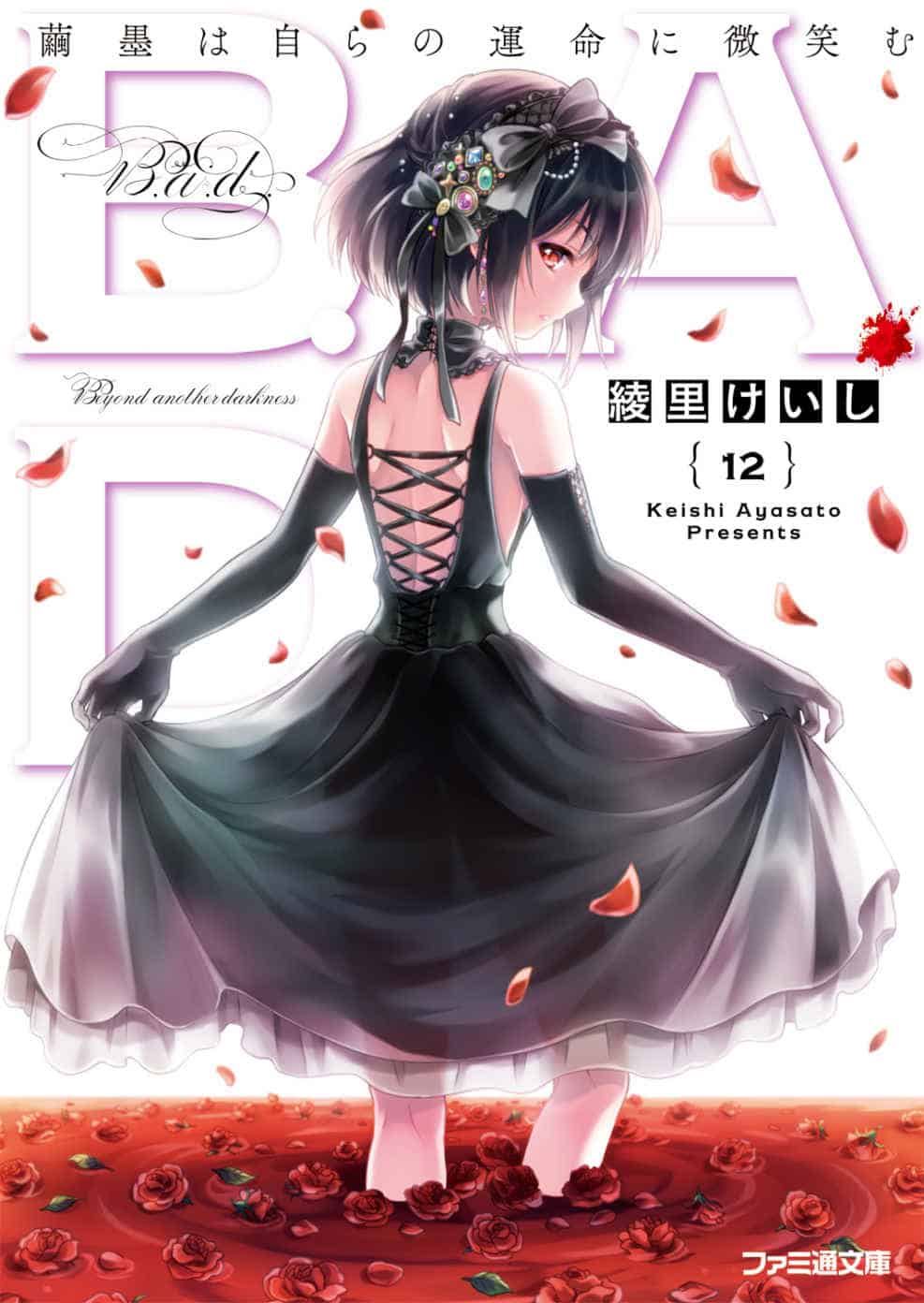
Honestly, the way Mayuzumi and Asato are written is chilling. They aren't just siblings; they are distorted reflections of each other. When they face off, it feels like looking into a warped mirror. Mayuzumi says, 'I suppose you were feeling better than I thought, little sister,' and Asato replies, 'Like you thought, it was just a cold, brother.' The lip-syncing grin! That detail alone sent shivers down my spine. It shows how inextricably linked yet opposed they are. But what really got me was Odagiri's realization about Mayuzumi. He touches her cheek, she pops like a bubble, and then he mutters, 'You never change' while looking at Shizuka's memory. It's not about Kotoko anymore; it's about the pattern. He sees the same fate repeating. And Mayuzumi? She lets him think what he wants. She lets him fight Asato. She says, 'Who's to say that's not what makes you happy?' It's manipulative, sure, but also incredibly freeing for him. She's handing him the sword while pretending she's just watching. And then Chihana shows up. The acting head of the family. The voice on the intercom that sounded sweet as honey but felt like ice water. Mayuzumi hides under the blanket. She refuses to acknowledge her. 'I. Am. Not. Here.' That's not just avoidance; that's a declaration of war. The family dynamic here is suffocating. Mayuzumi left, and now they're coming for her through Odagiri. I'm just wondering—does Mayuzumi actually care about Odagiri, or is he just the best tool she has to break free from the Mayuzumi clan? Because if she doesn't care, that chocolate-throwing scene takes on a whole new, darker meaning. Is she protecting him, or just keeping her weapon sharp?
... Read More
Let me be honest—the first chapter of this book threw me into the deep end and I did not know how to swim. Organ falling from a building. Uterus on hot asphalt. A girl in gothic lolita eating chocolate at a crime scene. My brain was like: wait, what? Since when am I reading a supernatural detective mystery that opens with internal organs raining down like some kind of body-horror monsoon? But here's the thing: the author doesn't rush. They slow down in all the right places. That scene where Odagiri arrives at Kazue's house and walks through the garden of waist-high weeds past garbage bags ripped open by ravens? I literally slowed my reading speed. The detail work is insane—the stench, the shoes piled at the entrance, the way Kazue steps over the trash like it's nothing. You can feel the rot. And then you go inside and the living quarters are somehow better maintained, which makes it creepier because obviously nothing about this situation is normal. The chapter structure works really well for this kind of story. Part 01 dumps you into the weirdness with the organ-falling incident and introduces Mayuzumi in one fluid motion. Part 02 pulls back to show us the detective agency—the actual absurdity of a fourteen-year-old running a psychic detective office with no legitimate cases—and then we get the client meeting. Part 03 deepens the mystery with Kazue's backstory and those devastating details about the shoes and the photos. What I love most is how the author uses Odagiri's interiority as a pacing device. His nausea, his headaches, his urge to smoke, his memories of his own sister jumping from a building—they're like emotional pressure valves. When the external mystery gets too heavy, we cut to his internal struggle, and that creates this rhythm that's almost musical. Tension, release, tension, release. By the end of Part 03, when Kazue is asking him questions and he's realizing how much he doesn't understand her, I was already turning the page like my fingers had a mind of their own. The cliffhanger on the tape recorder—is she delusional or is there something genuinely wrong with the way she thinks? Mayuzumi won't say. Of course she won't say. She just lies back on the sofa in her white coat and says "I like monotony, though" while Odagiri storms out into the summer heat. Perfect ending beat.
... Read More
"You can't help what you can't cure." I laughed out loud when I read that. Mayuzumi really said that. After Odagiri just tore his stomach open, after he crawled like an animal, he comes back and tries to threaten her with her own chocolates. And she just... analyzes him? "The frustration of letting a woman die is mentally draining you." She's diagnosing his trauma while eating sweets. The banter between these two is top-tier. It's not just witty; it's a power struggle disguised as conversation. Odagiri throws the chocolate out the window—'Off you go'—and Mayuzumi bows. "Thank you for the meal." He bows back. "You're very welcome." This is the most normal interaction I've ever seen in a supernatural thriller. They treat domestic disputes like corporate negotiations. But then the tone shifts instantly with Chihana. Her voice is described as 'soft' and 'sweet as honey,' yet it makes Odagiri's skin crawl. She calls him a 'servant' and asks to speak to Azaka-sama. The shift from the gothic lolita humor to the rigid, polite horror of the Mayuzumi family dialogue is jarring in the best way. It shows how many masks Odagiri has to deal with. One minute he's shouting at his boss to take her medicine, the next he's being asked to escort a matriarch to a restaurant. The author doesn't let the reader breathe. Just when you get comfortable with the chocolate standoff, the doorbell rings and the genre flips from dark comedy to psychological thriller. And that line 'Like the girl who popped like a bubble'—the narrator comparing the client's voice to Kotoko's death scream? Chills. Absolute chills.
... Read More
A functioning liver suddenly fell from a building. A uterus hit the scorching asphalt. And the victim is someone's dead sister who supposedly committed suicide a month ago but whose body disappeared from the hospital before death was confirmed. Let me just sit with that premise for a second. Because this is the kind of story that takes one bizarre image and then just… keeps going. Keeps digging. Keeps making the stakes higher with every chapter until you realize the characters aren't just fighting a mystery—they're fighting the collapse of reality itself. Kazue's stakes are personal and immediate. Her sister is dying again, in the most visceral way possible, and every falling organ means another piece of her is lost. If they don't find the body in time, Kazue loses her sister permanently—not just to death, but to dissolution. The sister's body is literally coming apart, and Kazue wants to kill her to stop the suffering. But can you kill something that's already supposed to be dead? What does that even mean? Odagiri's stakes are quieter but no less real. We learn in Part 01 that his own sister threw herself off a building a month ago—wait, same timeline as Kazue's sister? Coincidence? The text says: "My sister threw herself off a building a month ago." Then later Kazue's sister did the exact same thing. An organ fell from the same building. Odagiri knew it belonged to his sister. His sister's body is escaping the hospital and falling apart just like Kazue's. These two cases are connected and I am NOT OK with that revelation. The external conflict—the falling organs, the police investigation, the strange phenomenon—is matched by an internal conflict that runs through every character. Kazue's love for her sister is also her torture. Odagiri's love for his sister is his wound. Mayuzumi… what is Mayuzumi? She seems to know more than she lets on. She calls Kazue's thinking "wrong" in a way that suggests she understands the pathology even if she can't explain it yet. And the suspense? Insane. Every chapter ends with a question that pulls you forward. What happened to the sisters? Why are organs falling? What does Mayuzumi know? Who was on the rooftop watching? I was literally holding my breath during the scene where Odagiri feels like someone is watching him from the roof. The author does this thing where they layer dread on top of mystery on top of emotional weight until the whole thing becomes this壓迫感 that you can't escape. This is not a story where the stakes go down. They only go up. And I am here for it.
... Read More
The dialogue in this chapter is absolutely razor-sharp and I need to talk about why. Chihana speaks in this measured, almost musical cadence. Her sentences have rhythm—long, flowing statements punctuated by sudden drops into something almost whispered. 'In short, deaths and births are nothing but noble sacrifices. Wouldn't you agree?' That's not a question. That's someone who has completely rewired their moral compass and genuinely believes this. Then there's Kugutsu, and holy shit, his voice is a masterclass. Every sentence is laced with self-abasement. 'As you can see, I am but of lowly birth and belong furthest away from the table. Normally, I wouldn't be able to get close to you, good sir.' He says 'hehe' out loud. He describes food as 'awful... disgusting' while eating it. And then he pitches himself as a human shield with the same cheerful deference he uses to discuss household chores. This is a person who has been so thoroughly broken by the system that even his gratitude is performative subservience. Odagiri's narration is this great anchor—sarcastic, tired, internally screaming but externally composed. 'What the hell do you think humans are?!' is his internal monologue while his external response is basically '...okay, I'll take him.' The gap between what he thinks and what he says is where the entire comedy and tragedy of this story lives. Azaka never physically appears in this chapter but her voice echoes through everyone else's perception of her. Chihana quotes her worshipfully. Odagiri reconstructs her casual dismissal. Even Kugutsu's description of her—'Azaka-sama is more slender than I thought'—tells us something about how differently each person sees her. The dream sequence at the end shifts into this visceral, almost poetic prose that feels completely different from everything else: 'Insert the blade through the side. Cut the liver into thin slices while it's still fresh. The soft organ wraps around my tongue, its sweet fat melting.' Short, imperative sentences. Sensory overload. This isn't Odagiri narrating anymore—it's the demon speaking, or the dream logic taking over. The author uses narrative voice itself as a storytelling tool, not just dialogue.
... Read More
Okay, so. I was halfway through this chapter thinking 'this is a weird family drama' and then Chihana just drops the lore bomb and my entire understanding of the premise shifted. Let me get this straight: the Mayuzumi family used to be village heads, some farmer clan, and at some point in the distant past they captured a demon, killed it, and... drank its blood. Not metaphorically. Literally consumed it to gain spiritual powers. Hearing voices of the dead, cursing people, lifting curses. This is how they built their empire. Industrialization, connections, everything—it all traces back to demon digestion. The whole bloodline is built on something so feral and ancient. But here's where the plot gets genuinely interesting. The family discovered that the power was strongest in the girls, so they flipped the entire hierarchy. The male head became a figurehead while the female got enshrined as an actual god. And then Azaka's brother—asato—found out and tried to purge the demon blood from the family because he was sick of his sister being imprisoned in a dungeon. Obviously that backfired spectacularly when everyone who supported him started dying unnatural deaths, and the surviving family members had to grovel back to Azaka and make her the absolute ruler. The layering here is insane. Every character's motivation is tangled up in this history. Azaka doesn't want to be worshipped—she told Odagiri herself that relying on people is morbid—but the family structure demands it. Asato tried to free her and became the villain for it. Odagiri is caught in the middle, loyal to someone who doesn't want loyalty, serving a god who never asked to be worshipped. And now there's Kugutsu, this broken person they've given to him as a 'shield'—a human bodyguard who exists only to die instead of his mistress. The chapter ends with Odagiri's dream about eating demon meat. That's not just a creepy detail, is it? It's the family's founding act echoing inside his head. They've been consuming this darkness for generations and it's starting to seep into everyone around them. Or maybe it already has.
... Read More
I need to process what I just read because my emotions are ALL over the place. Kotoko's confession scene is genuinely beautiful in a tragic way. The way she says 'I haven't had any scary encounters thanks to you' while secretly orchestrating supernatural attacks - that's the kind of emotional complexity that keeps me up at night. Her sweetness feels real, and the anxiety about being together 'all the time' shows she actually cares. But is it love or is it hunger? The text says 'I got the urge to just stay with her. Stay like this forever. Then I wouldn't have to suffer. Why willingly return to hell?' This is the entity's manipulation at its most insidious - it's offering him something warm and safe while slowly consuming him. And then Mayuzumi. God, Mayuzumi. The moment he finds her body and sobs 'Why?' because he'd decided he'd laugh at her death but now his eyes burn with tears - that scene wrecked me. All that history, all that twisted codependency, and despite knowing she's dangerous and enigmatic and possibly the source of all his suffering, he still loves her. 'She was the worst person I had ever met. But she had always been by my side.' CHILLS. Absolute chills. But here's what's killing me emotionally - Mayuzumi just took his memories AGAIN. When Kotoko was attacking him earlier, we heard 'someone was closing my stomach, and the memories along with it, slowly sinking deeper, locked away once more.' This isn't the first time she's done this. She's been editing his mind, protecting him by making him forget, and now we don't even know what he's lost. Is that love? Is that care? Or is it the ultimate violation wrapped in the pretense of protection? And the way she speaks to him even after all this - 'You were away from me for far too long' - there's genuine hurt and longing there. The emotional tension between these two is toxic, beautiful, and utterly compelling.
... Read More
Okay so let me just—okay. The plot of this thing is absolutely unhinged and I am HERE for it. We have a sister who jumps off a rooftop and her body comes apart mid-fall, organs landing in different places, yet somehow she keeps coming back? And now there's this ghost at a vending machine? What is happening?? The whole setup with the body parts being in police custody while the body supposedly 'reappears' dead anyway—that's some serious logical gymnastics. I love it. The narrative keeps layering mysteries on top of each other: first the suicide, then the missing body, then Kazue's weird performance, then Sugita accusing her of murder, and now Mayuzumi pulling out ghost powers like it's nothing. "People are bound by simple reasons. And simple reasons are the ones that get you killed." That line hit me so hard. It reframes everything about Yukiko's situation, right? She wasn't some random victim of circumstance—she was trapped by this mundane loop at a vending machine because she literally couldn't buy a drink. The horror of that is so much better than any dramatic death scene. The pacing between Ch.7 and Ch.14 is also masterful. We go from a tense confrontation with Kazue to Mayuzumi eating chocolate and casually dropping bombshells, then to this early morning ghost-hunting expedition. The tonal whiplash is intentional and it works perfectly. I couldn't put it down and I legitimately stayed up way too late reading.
... Read More
Okay so let me just process what happened here because my brain is still reeling. Yukiko gets murdered by her own sister, but because she was ALREADY trying to kill herself, the murder doesn't full work? Her soul gets knocked out but her body keeps coming back piece by piece like some biological boomerang? And the reason Kazue wanted her dead isn't even about inheritance or hate—it's because Yukiko was going to ACTUALLY commit suicide and that would mean Kazue lost ownership of her? That is such a sick way to love someone. But here's the thing that actually kept me up at night: Mayuzumi's whole motivation for taking the case. She didn't care about justice, she didn't care about Kazue, she didn't even care about solving the mystery properly. She says it straight: "I wanted to see someone jump to their death right in front of me." She gave Yukiko the coin out of CURIOSITY. She orchestrated the whole thing like it was a little experiment. And then—oh god—Kazue stabs Odagiri in the stomach, and he wakes up in a hospital to find out Sugita pushed Kazue off the roof while she was in a coma. Did Mayuzumi GOAD Sugita into doing it too? The chapter ends with that question hanging there and I am NOT okay. The plot just keeps unwrapping like an onion made of nightmares. Every time I think I understand someone's motive, it turns out they're playing a completely different game.

Leave a comment

You must be logged in to leave comments. or
