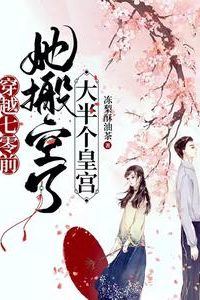
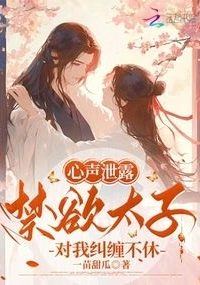
“Before Traveling to the 1970s, She Emptied Out Half the Imperial Palace”
Novel Info

Summary

... Read More

Gongsun Wanru, the daughter of the disgraced Prime Minister Gongsun Li, stands sentenced to death by waist-severing in the imperial prison of the Dayan Kingdom. Her father has rebelled against the throne, and she is blamed for treason and the fall of border cities. Unknown to the court, Wanru is not the original host intended for a system named Xiaodu. The system, a novice device from a higher dimension, mistakenly bound to her due to a spatial error, as she shares an identical appearance with her cousin, Gongsun Wanyan. With only three days remaining before her execution, Xiaodu reveals a desperate plan: utilize the upcoming transit of Venus to transport Wanru through time to a new era where she can escape her fate. However, the system lacks sufficient energy for a direct jump and requires Wanru to accumulate points by completing tasks first. To prepare for the journey, Wanru must survive the final days in the Cold Palace.

Using an invisibility cloak borrowed from the system mall, Wanru embarks on a nocturnal spree through the imperial palace. She systematically empties the outer and inner imperial kitchens, seizing vast quantities of food, utensils, and luxury items. She also loots the Empress’s quarters and the Shanggong Bureau, collecting bedding and fabrics. Her most audacious act involves using her mental connection to the system space to teleport the entire structure of the Emperor’s private treasury into her storage dimension. The thefts plunge the palace into chaos, causing the Emperor to suffer a heart attack upon discovering the empty vaults. Meanwhile, Wanru hides in the Imperial Garden, waiting for the celestial event. On the night of the transit, a blinding white light engulfs her, and she vanishes from the prison, leaving behind only rumors of her ascension to heaven.

Wanru awakens in a dense, primeval forest, far removed from the imperial city. The system, Xiaodu, falls into a deep slumber due to energy depletion, leaving Wanru alone and disoriented. She changes into coarse peasant clothing and begins a perilous journey toward the setting sun. Lost and exhausted, she is found by Lu Yao, a reclusive hunter known for his ferocity and a distinctive centipede-shaped scar on his face. Lu Yao, suspicious of her strange attire and evasive answers, interrogates her but ultimately decides to help her after realizing she is a victim of human trafficking rather than a spy. He carries her to his mountain cabin, where she recovers and witnesses a lush, free landscape that contrasts sharply with her confined life in the palace. She learns that she has traveled to the year 1973 in the People's Republic of China, a time and place without emperors or feudal hierarchies.

Lu Yao arranges for Wanru to obtain a false identity as Ji Wanru, an educated youth sent to the countryside for re-education. He secures her household registration and a letter of introduction, enabling her to legally reside in Yushugou Village. In exchange for her help, Wanru gives Lu Yao a collection of precious gems and gold taken from the imperial treasury, which he secretly sells on the black market to generate funds for her future. Wanru joins a group of educated youths, including Qiao Xiaobei and Du Meiting, and travels to the Sikanzi Brigade. As she settles into her new life of manual labor and rural simplicity, Wanru embraces her hard-won freedom, unaware that her past in the Dayan Kingdom is slowly being forgotten, while the system Xiaodu begins to recharge, hinting at future complications.

Latest Release
DateGroupRelease
2026-08-11shanghai fantasy c130
2026-08-11shanghai fantasy c129
2026-08-11shanghai fantasy c128
2026-08-11shanghai fantasy c127
2026-08-11shanghai fantasy c126
2026-08-11shanghai fantasy c125
2026-08-11shanghai fantasy c124
2026-08-11shanghai fantasy c123
2026-08-11shanghai fantasy c122
2026-08-11shanghai fantasy c121
2026-08-11shanghai fantasy c120
2026-08-11shanghai fantasy c119

Community Reviews

Rating(3.9 / 5.0, 24votes)
5 stars
6(25%)
4 stars
10(42%)
3 stars
8(33%)
2 stars
0(0%)
1 stars
0(0%)

Popular reviews

... Read More
The pacing in these chapters is absolutely masterful. You've got the slow, dreamy opening with Zhao Qianjin falling asleep on the bullock cart—this lingering sense of journey and distance—then BAM, you're thrust into the chaotic arrival scene with everyone rushing around, luggage being carried, introductions being made. Then the Wanru-Lu Yao night encounter hits like a scene change in a movie. Dark courtyard, sudden grab, terror, recognition, tenderness. And just when you're still processing that emotional beat, you cut to the Zhang brothers spying, which is tonally completely different—comic, suspenseful, ridiculous. Then the next morning with Wanru's boundless energy pulling her roommates out of bed, the porridge scene, and then the work assignment where Song Honglian immediately creates conflict. The chapter transitions are sharp but natural. The author knows exactly when to slow down (the Lu Yao-Wanru moment by the wall) and when to speed up (the Zhang brothers' frantic escape). And the cliffhanger with Lu Yao noticing shadows and disappearing? Perfect. You need to keep reading. The structure moves between intimate character moments, worldbuilding details, and plot advancement in a rhythm that never lets you settle.
... Read More
Can we just appreciate how distinct these two characters sound when they talk? Ji Wanru's dialogue is this relentless stream of questions and observations that just spills out. She doesn't do pauses. She doesn't do subtlety. 'The city? They must sell candied haws there, right?' 'Are there any street performers?' 'Are there any monkey shows?' It's comedic gold but it also tells you everything about her—she's curious, optimistic, completely unbothered by Lu Yao's scowls. And Lu Yao? His lines are short. Brutal. 'No.' 'No.' 'No!' 'My name is Lu Yao, just call me by my name. And don't get too close to me; I'm not a good person!' He says the most dramatic things with the flattest delivery and it's perfect. The narrator's voice is also doing a lot of work here—there's this wry, almost teasing tone that comments on situations without being heavy-handed. Like when it says 'Lu Yao, who keeps getting the good sir card…' or 'Oh my god! What to do?' inside his head. The contrast between his internal panic and his external ice face is where the humor lives. And Grandma Lu! 'Grandson! You're up to something!' That old woman's gossip energy is unmatched. She lets him go with 'Alright, I won't ask' and then immediately thinks 'I'll find out sooner or later.' She's not fooled for a second and the reader knows it.
... Read More
Okay so I need to talk about this spy scene because honestly it completely shifted how I see Lu Yao. Up until Chapter 22, I was reading this like a wholesome rural romance—guy delivers eggs to a girl, bros are happy for him, cute stuff. Then BAM. Cut out his tongue, break his hands. The sheer coldness of it. And the worst part? The workers don't even flinch. The newcomers are horrified but the old-timers just go back to work like it's Tuesday. That's when it clicked—this man built an entire underground economy and he's not some reluctant criminal, he's a boss. The parallel with Tong Guoan's scene is brilliant too. Two different worlds, same kind of dangerous men. Meng Qing thinks Tong Guoan is just interfering in love affairs, but we know Tong Guoan plays a much bigger game. And Lu Yao's workers? Refugees from the famine. He fed them when no one else would, and now they'd kill for him. That's not manipulation, that's loyalty earned through survival. The plot is layered way deeper than I initially gave it credit for.
... Read More
Let me start with something that's been sitting heavy in my chest since I finished these chapters: Gongsun Wanru was supposed to die at birth. Not executed, not abandoned—literally scheduled for drowning because she was the second twin girl in a family that considered it an omen. Her only saving grace was her mother's "trace of compassion." Sixteen years of being treated as an invisible, ominous creature in the back garden. And then the story opens with her being sentenced to death for crimes committed by people she barely knows. The symbolism is almost too on-the-nose and yet it lands with real weight. Wanru is a girl who was never meant to exist, now facing execution for existing in the wrong place at the wrong time. Her father rebelled. Her family is gone. The emperor she never met has sentenced her to death. She has no allies, no status, no power—and yet she's the one doing the stealing, the scheming, the surviving. The twin system itself is a powerful metaphor. One sibling is valued, the other is cursed. In the story's world, this is treated as natural law—but the narrative clearly frames it as absurd cruelty. Wanru's survival is an act of defiance against a world that decided she shouldn't be here. And then there's the theft. "What does that treacherous minister's rebellion have to do with me? Just you wait!! I'll empty your house!!" This isn't just comedy—it's a girl who has been told her entire life that she doesn't matter, taking everything that the people who condemned her hold dear. She's not stealing food; she's stealing back agency. Every sack of rice, every pot of broth, every golden bowl is a declaration that she exists and she will not be erased. The time-travel plan adds another layer: the system offers her a world with "no emperor, no minister, you can do whatever you want." Freedom as the ultimate theme. Not just physical freedom, but the freedom from a story that was written for her before she was born.
... Read More
I want to talk about how the author structures these chapters because honestly it's really tight. You open with Ji Wanru in the mountain cabin, dealing with the practical problem of what food to pack, worrying about starvation, then cut to Lu Yao coming down the mountain and immediately we're getting worldbuilding through his reputation—the scar, the vagrants, the dead family, the whole tragic backstory. That's a lot of exposition to absorb, but it's woven into action (him walking through the village, giving secret instructions) so it never feels like a info-dump. Then we cut back to the cabin, she's waiting, he arrives, there's this whole scene where he basically flees because he's flustered, then the next day he's securing her paperwork through corrupt officials. The chapter transitions are sharp—no lingering, no filler. Each scene advances either character development or plot, sometimes both. The pacing between the mountain sequences and the village/county sequences creates a nice rhythm too. You get the quiet, almost domestic moments (her eating the braised chicken leg, him watching from outside) contrasted with the tense underworld stuff (midnight meetings, ginseng bribes, betting pools among his crew). And that ending with Ji Wanru getting her household registration and introduction letter? Perfect cliffhanger. She's about to enter this new world and we know Lu Yao is watching over her, but from how far away? The author knows exactly when to cut and when to linger.
... Read More
There's this one moment—just a passing description—and it completely grounded me in this world. Ge Qiuju going home at noon to pick vegetables from her private plot, adding an egg, cooking a big pot of hot soup, and the whole family eating together with buns. Old and young, men and women, each holding a bowl. That's it. Three sentences. But I could SEE it. I could smell the soup. I could feel the warmth of that communal meal after morning labor. The author doesn't over-describe anything. The production team system, the work points, the difference between the disciplined third and fourth teams versus the lazy sixth and seventh where women bring sewing baskets to the fields—none of this is explained with infodumps. It just emerges naturally through Zhang Chunsheng and Zhang Chunfa's conversation while they're weeding. You learn about the entire social structure of this village through people doing their actual jobs. And the elm tree scene where Lu Yao waits for Wanru—morning sun, the scar on his face, people passing by, the tension of being seen together. The author writes: "Just standing face to face like this had already attracted the attention of many people." You feel the eyes. You feel the risk. This isn't just a romantic moment; it's a moment that exists under constant surveillance in a place where reputation is everything. The kerosene lamp, the medicinal wine passed around between the three girls, the thick porridge and coarse-flour buns for breakfast—all these details build a world that feels lived-in and specific. Not a generic "rural China" backdrop but a place with its own rhythms, its own hierarchies, its own rules about what you can and can't do without facing consequences.
See all reviews

Characters

See all characters

Custom lists

See all custom Lists