“Before Traveling to the 1970s, She Emptied Out Half the Imperial Palace” - Reviews

“Before Traveling to the 1970s, She Emptied Out Half the Imperial Palace”
+Add to Custom List
Sort
Add review
... Read More
Can we just appreciate how distinct these two characters sound when they talk? Ji Wanru's dialogue is this relentless stream of questions and observations that just spills out. She doesn't do pauses. She doesn't do subtlety. 'The city? They must sell candied haws there, right?' 'Are there any street performers?' 'Are there any monkey shows?' It's comedic gold but it also tells you everything about her—she's curious, optimistic, completely unbothered by Lu Yao's scowls. And Lu Yao? His lines are short. Brutal. 'No.' 'No.' 'No!' 'My name is Lu Yao, just call me by my name. And don't get too close to me; I'm not a good person!' He says the most dramatic things with the flattest delivery and it's perfect. The narrator's voice is also doing a lot of work here—there's this wry, almost teasing tone that comments on situations without being heavy-handed. Like when it says 'Lu Yao, who keeps getting the good sir card…' or 'Oh my god! What to do?' inside his head. The contrast between his internal panic and his external ice face is where the humor lives. And Grandma Lu! 'Grandson! You're up to something!' That old woman's gossip energy is unmatched. She lets him go with 'Alright, I won't ask' and then immediately thinks 'I'll find out sooner or later.' She's not fooled for a second and the reader knows it.
... Read More
Okay so I need to talk about this spy scene because honestly it completely shifted how I see Lu Yao. Up until Chapter 22, I was reading this like a wholesome rural romance—guy delivers eggs to a girl, bros are happy for him, cute stuff. Then BAM. Cut out his tongue, break his hands. The sheer coldness of it. And the worst part? The workers don't even flinch. The newcomers are horrified but the old-timers just go back to work like it's Tuesday. That's when it clicked—this man built an entire underground economy and he's not some reluctant criminal, he's a boss. The parallel with Tong Guoan's scene is brilliant too. Two different worlds, same kind of dangerous men. Meng Qing thinks Tong Guoan is just interfering in love affairs, but we know Tong Guoan plays a much bigger game. And Lu Yao's workers? Refugees from the famine. He fed them when no one else would, and now they'd kill for him. That's not manipulation, that's loyalty earned through survival. The plot is layered way deeper than I initially gave it credit for.
... Read More
I want to talk about how the author structures these chapters because honestly it's really tight. You open with Ji Wanru in the mountain cabin, dealing with the practical problem of what food to pack, worrying about starvation, then cut to Lu Yao coming down the mountain and immediately we're getting worldbuilding through his reputation—the scar, the vagrants, the dead family, the whole tragic backstory. That's a lot of exposition to absorb, but it's woven into action (him walking through the village, giving secret instructions) so it never feels like a info-dump. Then we cut back to the cabin, she's waiting, he arrives, there's this whole scene where he basically flees because he's flustered, then the next day he's securing her paperwork through corrupt officials. The chapter transitions are sharp—no lingering, no filler. Each scene advances either character development or plot, sometimes both. The pacing between the mountain sequences and the village/county sequences creates a nice rhythm too. You get the quiet, almost domestic moments (her eating the braised chicken leg, him watching from outside) contrasted with the tense underworld stuff (midnight meetings, ginseng bribes, betting pools among his crew). And that ending with Ji Wanru getting her household registration and introduction letter? Perfect cliffhanger. She's about to enter this new world and we know Lu Yao is watching over her, but from how far away? The author knows exactly when to cut and when to linger.
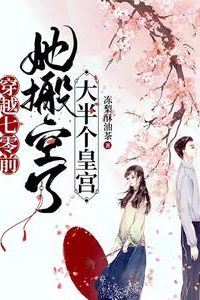
... Read More
There's this one moment—just a passing description—and it completely grounded me in this world. Ge Qiuju going home at noon to pick vegetables from her private plot, adding an egg, cooking a big pot of hot soup, and the whole family eating together with buns. Old and young, men and women, each holding a bowl. That's it. Three sentences. But I could SEE it. I could smell the soup. I could feel the warmth of that communal meal after morning labor. The author doesn't over-describe anything. The production team system, the work points, the difference between the disciplined third and fourth teams versus the lazy sixth and seventh where women bring sewing baskets to the fields—none of this is explained with infodumps. It just emerges naturally through Zhang Chunsheng and Zhang Chunfa's conversation while they're weeding. You learn about the entire social structure of this village through people doing their actual jobs. And the elm tree scene where Lu Yao waits for Wanru—morning sun, the scar on his face, people passing by, the tension of being seen together. The author writes: "Just standing face to face like this had already attracted the attention of many people." You feel the eyes. You feel the risk. This isn't just a romantic moment; it's a moment that exists under constant surveillance in a place where reputation is everything. The kerosene lamp, the medicinal wine passed around between the three girls, the thick porridge and coarse-flour buns for breakfast—all these details build a world that feels lived-in and specific. Not a generic "rural China" backdrop but a place with its own rhythms, its own hierarchies, its own rules about what you can and can't do without facing consequences.
... Read More
The pacing here is absolutely wild and I love it. Chapter 21 starts almost comedic—five bros eavesdropping on their leader's love life, drinking water to settle rankings, the whole village gossip energy. Then it pivots to Song Fei's arc with Meng Qing, which adds romantic tension. You're sitting there thinking this is a period romance with some business subplot. Then Chapter 22 drops the hammer. The breeding farm description alone is chilling—100 chickens, 800 pigs, 30 adult pigs sent out daily. This is a full-scale illegal operation. The spy scene is brutal and the transition from the lighthearted village gossip to 'cut out his tongue' is jarring in the best way. Chapter 23 then does this incredible tonal whiplash by going back to Ji Wanru's perspective, shopping in town, worrying about not seeing Lu Yao for three days. It's like the author is breathing. After the suffocating tension of Chapter 22, we get sunlight and ox carts and flower-print shirts. But even that feels layered—Wanru is secretly planning to mix grain from her space, and she hasn't told anyone. The structure keeps you off-balance and that's exactly what makes it addictive.
... Read More
The whole novel seems built around this question: what does it mean to owe someone, and how do you repay a debt that can never truly be settled? Wanru keeps saying she owes Lu Yao. She owes him for the medicinal wine, for the eggs, for the job, for protecting her from Song Honglian, for everything. But the beautiful turn in this chapter is when she says: "when you are in danger, I can protect you too." This is the moment the debt dynamic flips. She's not just a passive recipient of his care—she wants to be his protector. She wants the relationship to be reciprocal. Xiaobei understands this on a deeper level. She knows Wanru can't repay him with money or labor, so she orchestrates situations where Wanru can give back in ways that matter—like the lamb-grazing job that gives her independence, or the medicinal wine that lets her care for her friends. Xiaobei's rebirth knowledge makes her a ghost architect of their happiness, quietly rearranging the board so the pieces can find each other. The scar on Lu Yao's face is doing heavy symbolic work too. It's described as "terrible" and "hideous," but Wanru explicitly says it doesn't scare her. In a village where he's been called a traitor and ostracized for years, her refusal to flinch at his face is the purest form of acceptance. The scar marks him as an outcast, but Wanru's gaze reclaims him. And the eggs—warm, shared, insisted upon. Food as love language. Food as the only currency Wanru has to offer. "Let's have one each! No refusing!" She won't let him carry everything alone, not even something as small as an egg. That's the theme in miniature: two people learning how to be equal, one warm egg at a time.
... Read More
There's something deeply symbolic about the eggs in this story. Lu Yao delivers them to Ji Wanru every day as this gentle, almost courtly gesture—fresh eggs, personal visits, caring attention. But those same hands that carefully carry eggs are the same hands that order a spy's tongue cut out. The duality is intentional. The breeding farm itself is a symbol of everything this era demanded for survival. Pigs and chickens aren't just profit—they're nutrition, power, currency in a time of scarcity. The 800 pigs feeding butchers and the black market simultaneously represents how the line between legal and illegal dissolves when people are hungry. And then there's Tong Guoan, who appears as a small clerk one moment and a cooperative director the next, then at the grain bureau. He moves through institutions like water. His name literally means something like 'passing through' or 'transient.' He's a man who exists in transitions, just like Lu Yao's workers who are caught between famine refugees and contracted laborers. The story keeps asking: what makes a good man? Lu Yao feeds orphans and gives them purpose, but he's also a criminal. Tong Guoan protects Song Fei from a predator, but his methods are ruthless. The eggs and the blood are the same story.
... Read More
Let me just say this upfront: Song Honglian is the kind of antagonist who makes you physically angry. Not because she's dramatic or over-the-top, but because she's calculating. She didn't sleep all night waiting to see the three newcomers collapse. She stamped her foot in jealousy when they walked away refreshed. She couldn't even get out of bed on her second day and now these girls are eating dry buns like it's nothing and she has NOTHING to do about it. The stakes here are so layered. On the surface, it's a dormitory feud—someone being mean, someone standing up for themselves. But Du Meiting literally escalates it to "undermining the enthusiasm for supporting construction" and "disrupting the unity of workers and peasants." In this world, that's not hyperbole. That's a weapon. That's the kind of accusation that can ruin your life. Song Honglian knows this, which is why she's forced to apologize even though she's seething inside. And Wanru! This sweet, gentle girl who Song Honglian clearly thought would be the easiest target—"the easiest to bully" according to Guren—just quietly dismantles her with a misunderstanding about the word "hook up" that leaves Song Honglian speechless. The irony is delicious. Song Honglian spent years building power through manipulation and gossip, and she gets taken down by someone who genuinely doesn't understand the insults being thrown at her. But the real tension isn't just between these women. It's Lu Yao's scar, the rumors about him being a "traitor," the fact that he's been criticized for years and now this beautiful girl is falling for him. Every moment they're together carries the weight of potential scandal. That's what makes the ending so tense—even sharing an egg feels dangerous.
... Read More
Okay I need to talk about the ending of this chapter because MY HEART. Lu Yao is out here practically organizing Wanru's entire life—talking to the secretary, rearranging her work schedule, making sure she has a temporary job as a lamb grazer—and she just looks at him and says she wants to protect him too. Like. Excuse me?? This woman has been drowning in debt and he's been carrying her on his back and her first instinct is "when you're in danger, I can protect you too." I literally gasped out loud. And then the egg thing! She forces a warm egg into his hand and says "let's have one each! No refusing!" This is the most Wanru way to express affection—through food, through insistence, through tiny acts of reciprocity. She can't swim, she's clueless about modern dating, but she KNOWS she owes him and she wants to give back. That's the whole romantic arc right there. But then Xiaobei winks at her and says "guard your lower body!" and I SCREAMED. The generation gap humor is chef's kiss. Wanru sitting there blushing like a tomato while her best friend gives her the talk about dating meaning marriage and children and the big bad wolf eyes—this is comedy gold. And Lu Yao just stands there confused like "is she hot or sick?" Meanwhile Wanru's internal monologue is just pure, soft, devastating sincerity. The contrast is everything. Also can we talk about how Xiaobei basically set up the whole lamb-grazing job as a way to keep them apart so gossip doesn't destroy Wanru's reputation? That's not just being a good friend, that's strategic matchmaking with a side of protection. This girl knows exactly what she's doing.
... Read More
Okay so let me just say this out loud—Lu Yao is one of the most interesting characters I've come across in a while. On the surface, he's this terrifying figure. Half his face is covered in a centipede-like scar, he's got this reputation that makes kids quiet down and adults avoid him. The backstory alone is brutal: at ten years old he hacked down three vagrants with a cleaver, blood everywhere, and then in five years his whole family died one by one. That's not just trauma, that's a lifetime of loss packed into a decade. But here's the thing that got me—every time he acts all cold and gruff, he's actually doing something soft. He runs out of the cabin because he's flustered by her offering him steamed buns, then immediately throws her a package with clothes and actual food. He tells her not to get too close, calls himself not a good person, and yet he's the one making sure she's taken care of. The scene where he presses her against the wall and then abruptly leaves because he can't control himself? Chilling and hilarious at the same time. And that moment when he sees her happily eating the braised chicken leg and his lips curl up just slightly—I literally had to put the book down. This man is a walking contradiction and I am HERE for it.
... Read More
The stakes in this story are layered in a way that keeps you on edge. On the surface, Lu Yao is running some kind of illicit operation—he's clearly involved in smuggling or black market goods, moving product at midnight with guys like Lao Qizi and Lao San. But then there's the bigger picture: he's trying to get Ji Wanru settled in the county town, and he's willing to part with a century-old ginseng—a thing that could save lives—to make sure the officials look the other way. The scene with Secretary Yu is where it all comes together. Yu Zhen is this polished guy in a Zhongshan suit, all connections and confidence, and Lu Yao is just... cold. But the moment Yu Zhen asks about his relationship with Ji Wanru, you can see the gears turning. The other guys are BETTING on whether Lu Yao is smitten. Bet. On. Him. And the gatekeeper Kangfu offering to keep an eye on the courtyard like it's no big deal—this world feels so lived-in, so real. Every character has their own agenda, their own secrets, and the tension comes from not knowing which thread will snap first. Is Lu Yao's criminal life going to catch up with him? What happens when Ji Wanru finds out what he really does? The author doesn't rush any of it, just lets the pressure build.
... Read More
I need to talk about this one moment. The woman—Ji Wanru, I think?—is waiting for Lu Yao to come back and she's just sitting on that stone behind the cabin, watching the village lights below, imagining her future. And then when he finally shows up, her first instinct isn't to ask where he's been or what took so long. She's asking about CANDIED HAWTHS. Like, this is a person who survived imperial kitchens and mountain cabins and still has this light in her eyes. And Lu Yao's response is just... no. No. No. No. And she keeps going anyway—street performers? monkey shows? sugar figurines?—and he's just standing there losing his mind. Then he pins her against the wall and she's like 'are you hungry, do you want to eat me, I have steamed buns.' I cannot. I literally cannot. The way she completely misses every romantic signal and just exists in her own little world is the most endearing thing ever. And the fact that he's this terrifying mountain man who can't handle her innocence? That's not just chemistry, that's a whole vibe. The scene where he watches her eat his dinner from outside and smiles? I'm not okay.

Leave a comment

You must be logged in to leave comments. or
