Becoming the Empress, Starting from Impersonating the Prime Minister’s Widowed Sister-in-Law - Reviews

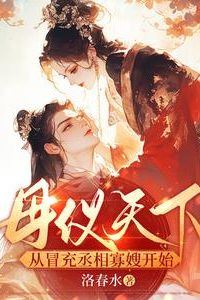
Becoming the Empress, Starting from Impersonating the Prime Minister’s Widowed Sister-in-Law
+Add to Custom List
Sort
Add review
... Read More
I need a minute. I actually had to pause the book after the Moon Lake scene because my chest hurt. So Feng Qingsui never actually met Xiao Yu in person, right? She only saw portraits her brother-in-law painted. But the way the author writes these memories—it's devastating. The little voice of Xiao Yu asking 'Suisui Yi, when are you coming back to the capital? If you don't return soon, I'll start losing my baby teeth.' That line. That specific, childish detail about losing baby teeth. It's so ordinary and so heartbreaking because we know Xiao Yu is dead. She drowned in this very mansion's pond. And Feng Qingsui's reaction—she's standing right there at Moon Lake, the place where the child died, and she's drowning in memories while Madam Wei is sitting next to her talking about opera stages. The contrast between the mundane conversation and the internal storm is so well done. Feng Qingsui snaps back and asks about the murals on the stage like nothing happened. But we, the readers, we know exactly what happened inside her head. What got me the most was the sister dynamic. The text says 'Xiao Yu closely resembled her [Feng Qingsui's] sister when she was young, so looking at Xiao Yu's portrait always felt like gazing through time at her sister.' This woman has lost everyone. Her husband is dead, her sister is gone, and now this child who was like a daughter to her is dead too. And she's standing at the edge of the pond wondering 'in which pond of the Rongchang Marquis Mansion did you drown?' The grief is so quiet and so heavy. But then there's also the warmth. The memory of Cuique clinging to her sister at the orphanage, the stolen purse incident, the way Feng Qingsui protected her sister even as a blind child. These flashbacks aren't just plot devices—they're emotional anchors. They show us who Feng Qingsui was before all this tragedy, and they make her current strength feel earned rather than given. And can we talk about Ji Changqing for a second? The gloves scene. His mother tells him Feng Qingsui made him wool gloves, and he's sitting there trying them on, realizing they're 'much softer and more flexible than those made of fur—fitting like a second skin.' He's wearing something she made him without even knowing. That's the kind of quiet romantic tension that makes my heart explode. He's suspicious of her, yes, but he's also wearing her handiwork every day. The author is playing 4D chess with emotions and I am HERE for it.
... Read More
I need to process what just happened with Xiao Yu. Up until this chapter, the conflict felt somewhat abstract — Cuique is a threat, Feng Qingsui is investigating, Ji Changqing is searching for her. But then the author connects Cuique directly to Xiao Yu's death and everything changes. This isn't just about revenge anymore; it's about a murder that happened years ago and the reader is realizing it alongside Feng Qingsui. Let me break down the stakes here: Wu Yuanqing's family is facing annihilation because he sold Cuique to bandits. Feng Qingsui's elder sister is dead, possibly murdered by Cuique. Ji Changqing is hunting Cuique but doesn't yet know the full extent of what she's done. And Cuique herself? She's positioned as a pillow companion to a marquis's heir — which means she has access, influence, and protection. The internal conflict for Feng Qingsui is also escalating. She's not just seeking justice for herself; she's uncovering that Cuique killed someone she loved. That personal connection raises the emotional stakes from "I want to win" to "I need this person to pay." And the external stakes? If Cuique is connected to the Rongchang Marquis Mansion and has already destroyed one family through financial ruin, what happens when she turns her attention to Feng Qingsui's circle? The chapter ends on an incomplete thought — "she shouldn't have been" — which creates this agonizing tension. We know Xiao Yu drowned, we know it was likely Cuique, but we don't know the full mechanism yet. The author is making us sit with that uncertainty, and it's working.
... Read More
Okay so I need to talk about Ji Changqing because this man is growing on me in the most unexpected way. At first I was like 'ugh another cold noble type' but then he says he actually likes the wintersweet scent now? And Feng Qingsui's reaction—just '…'—I literally laughed out loud. The way she guards her flowers like a dragon hoarding gold, then reluctantly hands him two branches with fewer flowers? That's not just stinginess, that's this weird unspoken dynamic where they're both playing games but also… I don't know, caring in their own broken way? And then there's Xun Shan. The man who poisoned Lady Jiang but whose grandson is the real victim here. When he finds out the puppet was stolen by his own grandson, his reaction—'What a cursed fate'—hit different. He's not a villain, he's just a pawn who made one bad choice and now his whole world is collapsing. The fact that he chooses to drink the blood-clotting drug instead of letting his grandson suffer? That's not weakness, that's the most devastating kind of love. Feng Qingsui's line 'A life for a life. You owe Madam Jiang a life. Whether you repay it with your grandson's life or your own, you decide'—chills. Absolute chills. She's not cruel, she's just… done playing nice. And Ji Changqing watching her be meticulous about everything, even her excuses for going outside? He sees right through her but says nothing. That's not suspicion, that's something else entirely.
... Read More
I need to address the fact that Ji Peiyuan is the funniest character in this book and I didn't see it coming. 'Although I am not well-versed in medical skill, I have read a few medical books. I have only heard of wolf leakage, rat leakage, bee leakage, centipede leakage, and hemorrhoid leakage… but never intestinal leakage.' Bro. You listed five types of leakage and none of them are intestinal. The confidence. The absolute unearned confidence. And then when Feng Qingsui just bows and says 'I suppose even if I spoke, Your Highness would not believe me. In that case, I should take my leave'—Ji Peiyuan's entire face must have fallen. Princess Shouyang has to literally call 'Wait' because she's the only adult in the room. The dialogue between Feng Qingsui and Wuhua is also chef's kiss. 'Our Second Master can compose poems, right?' 'Probably. After all, he once topped the imperial examinations.' 'That makes sense.' The casual manipulation forming in real time. She's already plotting to use Ji Changqing's exam-winning poem as payment to meet Qiao Zhenzhen, and we're just along for the ride. And Ji Changqing's line about the wintersweet—'In the past, I truly didn't care for it, but the scent of this wintersweet is exceptionally crisp and cold. Having a pot in the study would be acceptable.' Feng Qingsui's '…' response says everything. He's clearly lying but he's also clearly interested, and the subtext is so thick you could spread it on bread.
... Read More
Okay so I need to talk about Cuique/Zhenzhen because this chapter completely recontextualized everything I thought I knew about her. When she first showed up, she seemed like just another wronged orphan, right? But Wu Yuanqing's backstory? Chilling. Like, genuinely chilling. The way she manipulated everyone — the fake pregnancies, the concubine who tripped, the black cat incident — she was playing 4D chess while everyone else was playing checkers. And that scene where she tried to blow up the whole household with fireworks? She was NINE. NINE YEARS OLD and already plotting patricide/matricide. I keep thinking about what made her this way. The text says she was feeding stray cats, including that black cat. Was she trying to bond? Or was she already learning how to weaponize affection? The Wu wife's suspicion feels almost justified in hindsight — the concubine pretending to be pregnant and then getting tripped, Zhenzhen growing close to the concubine who miscarried after eating plum sauce... this kid had a network. She wasn't just reactive, she was strategic. And the worst part? When they caught her with the fireworks, she didn't deny it. She played the victim card like a pro: "If Mother hadn't been jealous of me, falsely accused me... how could I have lost my mind like this?" She weaponized their guilt against them. No wonder Ji Changqing is so obsessed with finding her. Feng Qingsui's assessment that "those who obey her are harmed, those who defy her perish" isn't just a summary — it's a warning label.
... Read More
The opening scene of this chapter is just *chef's kiss*. Ji Changqing is out in public, sees a funeral procession, and immediately goes into investigator mode. The detail about him furrowing his brow and ordering Baifu to find out whose funeral it is—this is a man who can't turn off his job brain even on a casual walk. And then the setting shifts to Ci'an Hall, where Madam Feng and Madam Qi are basking in the sun. I love how the author uses the sun as a kind of dramatic spotlight. Everyone's sitting in the courtyard, the food is being prepared, and there's this domestic warmth that contrasts sharply with the murder investigation happening in Ji Changqing's head. The kitchen scene is another highlight. Ji Changqing rolling up his sleeves and cooking—this image of a powerful prime minister in an apron is just delightfully unexpected. And the meal itself, with three people sitting together at one table, feels intimate despite the underlying tension. Then we jump to Fanlou, this pleasure quarter establishment, and suddenly the world expands. Qiao Zhenzhen's backstory—losing her mother at birth, her father framed and dying in prison, ending up on the streets—is told through her internal monologue and it paints such a vivid picture of this harsh, unforgiving world where a talented woman has to sell her art just to survive. The contrast between the warm courtyard and the precarious world of Fanlou really shows how different social strata exist side by side.
... Read More
This chapter is a masterclass in gradual revelation and I'm still recovering. Let me trace how the author builds this: we start with Ji Changqing at the Charity Orphanage, flipping through ledgers — dry, methodical, almost bureaucratic. Then BAM, we cut to Feng Qingsui and Wuhua arriving at Wuliu Lane, and the reader is already doing detective work alongside them. The house is now owned by the Li family, not the Wus. Three years ago, Wu Yuanqing lost everything. What happened? We don't know yet. Then they track him to the outer city, to a thatched hut, and the scene shifts from investigation to something almost domestic — the wife cooking wheat cakes, the smoke making her eyes water, the little five-year-old daughter. This domesticity makes the reveal hit harder. Wu Yuanqing starts explaining, and the author doesn't rush it. We get the miscarriages one by one, each more devastating than the last, building like a horror movie where you know the monster is in the house but can't see it yet. Then the fireworks scene — finally, the truth. And just when we think we have the full picture, Feng Qingsui drops the Xiao Yu revelation at the end. The chapter doesn't end with closure; it ends with a new mystery. That's not a cliffhanger, it's a hook that pulls you into the next chapter by the throat. The pacing between chapters 60-67 also deserves mention — Ji Changqing's parallel investigation with Shi An's orders creates this dual-track tension. Two people hunting the same truth from different angles. Brilliant.
... Read More
The stakes in these chapters are layered like an onion and every layer makes me more anxious. On the surface, there's a murder investigation—Physician Xun is dead and Ji Changqing suspects foul play. But the real tension comes from knowing that Feng Qingsui is hiding something and Ji Changqing knows she's hiding something, and neither of them is saying it outright. The scene where he tests her with the fake story about the dog bite is pure suspense. We're watching her face, waiting for a crack in her composure, and the author makes us wait just long enough. Then there's the Fanlou subplot—Qiao Zhenzhen is terrified that Ji Changqing is setting a trap to confiscate their establishment. Madam Fan's theory about the national treasury being short on funds adds political stakes to the personal danger. And Ji Peiyuan! This guy poisoned his own nephew's treatment and now he's sneaking off to meet Jin Shi. His 'malicious intentions had yielded good results' line should be a red flag to every reader. Something is going to blow up in his face. The internal conflicts are just as intense—Feng Qingsui wants to find out who sent the floral-scented ink to Fanlou, but she's also trying to stay alive in a city full of people who want her dead. Every conversation is a potential trap. Every gift could be poison. And Ji Changqing? He's the most dangerous person in the room because he's the only one who sees the whole board. The chapter ends with Qiao Zhenzhen writing a reply with tears in her eyes, and I just know this is leading somewhere terrible.
... Read More
'He was bitten to death by a dog?' — just one line and I knew exactly who was speaking. Feng Qingsui's dialogue is sharp, witty, and she has this incredible ability to turn any conversation into a negotiation. When she says 'Being a physician in the Xi Kingdom is truly too dangerous' and then immediately pivots to 'I earnestly hope you will soon promote legislation,' she's basically using a fake display of virtue to test Ji Changqing's reaction. And he falls for it beautifully—well, not falls, but he plays along. The exchange where she asks about his lyrics and he says he burned them all for his elder brother is comedy gold. Her internal reaction of '...' says everything. And then Madam Qi's line: 'How could you burn such messy, improper things for your elder brother? Utterly disgraceful.' This woman is the perfect comic relief. She's completely missing the subtext and just judging her son's poetry choices. Meanwhile, Qiao Zhenzhen's dialogue is softer, more anxious. When she says 'Mother, maybe I should send a reply saying everything is fine and she doesn't need to come,' you can hear her desperation. And Madam Fan's voice is world-weary and pragmatic—'That man has more tricks up his sleeve than there are ants on the ground.' The narrative voice itself is also doing a lot of work. It's omniscient but has this wry, knowing tone that occasionally drops little asides like 'As one of the capital's top songstresses, and a chaste performer who sold her art, not her body'—this kind of narrative commentary adds so much flavor.
... Read More
Can we talk about how distinct the voices are in this chapter? Because I read a lot of novels where every character sounds like the author, and that's NOT happening here. Wu Yuanqing's dialogue has this defeated, weary quality — his sentences trail off, he uses phrases like "I thought she would meet her end" and "What's the use of regretting now?" He sounds like a man who has been beaten by life and is just trying to survive the conversation. Madam Sun, on the other hand? Sharp, bitter, no filter. "I told you to cut the weeds at the root, but you wouldn't listen. You deserve to be swindled." That's not grief, that's rage dressed as hindsight. And Feng Qingsui — her dialogue is minimal but devastating. She doesn't need to explain herself. When she says "You sold her to bandits, causing her to become a 'skinny horse.' Do you think, given her temperament, she would spare your daughter?" — that's not a question. That's a death sentence delivered in conversational tone. The narrative voice also deserves credit. It doesn't moralize. When Wu Yuanqing describes Zhenzhen's plan with the fireworks, the narration stays neutral: "a smug smile curling at the corner of her lips." No authorial judgment, just observation. That trust in the reader lets the horror speak for itself. And Ji Changqing's lines throughout are almost all imperatives or cold statements — "That is not for you to question," "Go and investigate." His voice is power, not personality. Every character occupies their linguistic space perfectly.
... Read More
I am not okay. I am genuinely not okay after the wintersweet scene. One second she's arranging flowers in a celadon vase and the next she's six years old again, touching her sister's cracked hands and remembering the promise she made: 'I'll make the best hand cream in the world, so your hands won't crack all winter.' And then the devastating line—'Now she could make the best hand cream in the world, but the best sister in the world would never get to use it.' I had to put the book down. Like actually physically set it aside because I needed a moment. The orphanage flashback is so understated too. No dramatic music, no big revelations—just two kids talking about fried glutinous rice cakes, and the sister embroidering until her hands bleed, telling the blind younger sister 'they'll heal by spring.' The cruelty of that lie, the love underneath it. Feng Qingsui didn't even realize her sister was lying 'until she felt the rough cracks' and 'the scent of blood.' That detail—the scent of blood mixed with the wintersweet fragrance later—connects everything. The past and present, loss and revenge, love and grief all braided together like roots. She sits there crying and then just… stops. The tears dry. She opens her eyes and takes out the puppet. 'It's alright. I have a lifetime.' That's not closure, that's resolve. That's a woman who turned her grief into a weapon and decided to wield it.
... Read More
The stakes in this passage operate on multiple levels and they keep escalating, which is why I couldn't put it down. At the personal level, we have Xun Shan facing an impossible choice: his grandson's life versus his own morality. The scene at the mass grave is devastating because it's not just physical danger — it's the violation of a grandfather's deepest instinct. He dotes on this child, takes him everywhere, and now someone is using that love as a weapon. When the masked figure starts shoveling dirt and the child goes from muffled struggles to being buried alive, the urgency is suffocating. Xun Shan's confession isn't just about survival — it's about buying time. Fifteen minutes. That's all he gets to either save the child or be complicit in murder. At the political level, the stakes involve Vice Minister Jiang's family, the Princess, and probably the imperial court. Lady Jiang's death wasn't natural — it was orchestrated, and Xun Shan was the tool. The question of who gave the order and why is a much bigger conflict than a single physician's dilemma. But what really raises the stakes for me is Feng Qingsui's position. She's a blind woman from the provinces in the capital, surrounded by people like Ji Peiyuan who see her as expendable, and Princess Shouyang who couldn't care less. Yet she's the one actively investigating, connecting dots, and operating independently. When she tells the Princess she needs time to think rather than giving a quick diagnosis, she's risking anger but also asserting control. She won't be rushed into saying what everyone expects. The internal conflicts are equally compelling. Ji Changqing is torn between suspicion and something softer — he watches his mother laugh with Feng Qingsui and feels replaced, yet he also ordered his guard to protect her. Madam Qi's anxiety about Feng Qingsui visiting the Princess mansion shows genuine maternal care, not just political calculation. And Xun Shan — the man who followed medical ethics his whole career, who was destroyed when his son made a mistake — now faces the ultimate test of those same ethics. What makes all this work is that the author never lets us forget what's at stake. The longevity lock on the floor, the puppet in the masked figure's hand, the freshly dug grave — every detail reinforces the danger. And Feng Qingsui, operating in the background, is the thread that might pull everything apart.

Leave a comment

You must be logged in to leave comments. or