Beautiful Mother Raising Cubs in the 1970s - Reviews

Beautiful Mother Raising Cubs in the 1970s
+Add to Custom List
Sort
Add review
... Read More
There are so many layers to this story that the author isn't even trying very hard to hide. Let me start with the most obvious symbol: the blanket. Wen Nuan pulls the blanket back over her sleeping daughter after the baby kicks it off. In a story where the original character abandoned her child, this tiny act of covering a sleeping baby is almost radical. It's a promise. Every time she tends to this child—feeding her, carrying her on her back, keeping her warm—she's actively rewriting the fate that the original character sealed. Then there's the setting itself. Late October in the south, 'the heat was still stifling; her back was slick with sweat.' This physical discomfort mirrors the emotional suffocation Wen Nuan lives under. The house has no soundproofing—she can hear every word spoken next door, every insult, every scheming conversation. She cannot escape even in her own home. The single-story brick and tile structure, the poor lighting, the faded red slogan on the enamel cup that reads 'Serve the People'—these are details that ground the story in a specific era and a specific ideology where individual women's suffering was invisible, expected, and politically incorrect to complain about. The portrait of a great leader on the wall is such a loaded detail. It's watching over this domestic drama, this family of women being torn apart by greed and jealousy and rigid expectations. And the cracked mirror Wen Nuan uses to look at herself—cracked, like the original character's life, like the family structure, like the society that values sons over daughters and treats women as transactions. But Wen Nuan sees something different in that reflection. 'Her gaze was firm, devoid of that fragile feeling that could be blown away by the wind.' She's not the delicate white flower the original character was. She's something harder. Something that can survive.
... Read More
Okay, can we talk about how Gu Qinghan literally just stands there like a deer in headlights whenever the child looks at him? He walks behind Wen Nuan pushing the stroller and literally feels like "the kind of bad person who followed women and children." That line had me wheezing because it's so painfully honest. He's this tough military man who can handle himself in any situation except... being a dad. And then the whole breastfeeding scene. He walks in, says "Where did you put the rice?" like a normal person would, and Wen Nuan is over there half-unbuttoned and trying to decide whether to cover up or hide. His immediate reaction isn't creepy or entitled — he just closes the door and says "Sorry" in this muffled, guilty voice outside. That's actually really sweet in a clumsy way. He's trying, he just doesn't know how. But Zhao Wuzhu is something else entirely. The woman is a snake. She whispers to Gu Qinghan "Take advantage of these days off to have a son" while snatching the child away. A SON. As if Wen Nuan's already given them one isn't enough. And the whole allowance thing — she only wants Wen Nuan to stay behind so the money keeps flowing to her. What a manipulative piece of work. The sibling dynamic between Gu Qinghan and Gu Qingsong is also interesting. Qingsong gave up his room for them, sleeps in the living room. Doesn't seem to resent it. Meanwhile Wen Nuan insisted on the bigger room. Is she selfish or just surviving? I keep oscillating on this. What do you think — is Gu Qinghan actually a good guy underneath all the awkwardness, or is he just polite?
... Read More
So Chapter 7 starts with them buying groceries and ends with Zhao Wuzhu whispering "have a son" and the chapter break hits right there. In between, it's just... domestic life. But the pacing is deceptively good because every small moment is loaded with unspoken tension. The market scene — Gu Qinghan follows behind, feels like a creep. Quick beat. Back home — he cooks, she watches. Another beat. Breastfeeding interruption — awkward, funny, tense. Beat. Bath time — he brings water without being asked. Beat. Shower scene — yellow light, blushed cheeks, silent eye contact. BEAT. Dinner — Zhao Wuzhu monopolizes Gu Qinghan, Wen Nuan can't speak up about going north. Beat. Bedtime — Zhao Wuzhu steals the child, drops the son comment. FINAL BEAT. Each scene is short, almost vignette-like. The author doesn't linger on any single moment for too long but also doesn't rush. It's the pacing of real life — small accumulations of awkwardness and proximity that build into something larger. What I appreciated most: the chapter doesn't have a traditional plot event. Nobody dies, nobody confesses, no big revelation. And yet I stayed engaged the whole time because the emotional stakes are clear — these two people are trying to figure out if they can be a family, and every interaction is a test. The only slight drag was the diaper-changing sequence. I get that it shows Wen Nuan's competence and growth as a mother, but honestly I skimmed that part. Not judging, just being real.
... Read More
I'm going to go out on a limb here and say the chopped chili fish head is the most important symbol in this entire chapter. Wen Nuan asks for the fish head specifically — "Chop off the fish head; I'll steam it to make a chopped chili fish head." She's been craving it. It's something she wants for herself. And Gu Qinghan chops it... in half. Leaves the other half "for an unknown purpose." What is that other half for? I'm guessing it's for the child. Or for tomorrow. But the fact that he prepares it exactly how she asked — with red chilies, garlic, ginger, green onions, soy sauce and salt — and then puts it in the pot with the rice... he's learning her. He's paying attention to what she likes. The fish head becomes this tiny symbol of their entire situation: two people trying to share something, dividing it, figuring out who gets what, learning each other's preferences through food. It's domestic intimacy without any romance tropes. Other symbols I noticed: - The unlocked door = Wen Nuan's vulnerability, both physical and emotional. She's exposed. - The two half-buckets of water = Gu Qinghan's way of contributing without knowing how to do more. He brings exactly what's needed, no more, no less. - The child clinging to Wen Nuan's neck instead of Gu Qinghan = the trust that hasn't been built yet, the barrier that exists. The story isn't really about war or politics or grand drama. It's about whether two strangers can learn to share a fish head, a room, a life. And honestly, that's more terrifying and more beautiful than any battlefield scene.
... Read More
Let's be real — the biggest conflict in this chapter isn't between Wen Nuan and Gu Qinghan. It's between Wen Nuan and her entire family system. She's already made up her mind: "Wen Nuan had already made up her mind to follow Gu Qinghan to the North and no matter what, Gu Qinghan was the child's father." But she can't say it out loud. Not at dinner. Not with Zhao Wuzhu there. Not when the old woman is literally calculating how much allowance money Wen Nuan would take if she left. The stakes are enormous and they're never stated directly. If Wen Nuan stays: she continues being drained by her maternal family, schemed against by her mother-in-law, forced to outsmart her sister-in-law at every turn. If she goes north: she enters a marriage with a near-stranger, raises a child in an unfamiliar place, and has to prove herself to a military community that will judge her. What I love is how the author layers the conflict. On the surface, it's a quiet domestic scene — cooking, bathing a baby, eating dinner. But underneath, EVERY interaction is a power struggle. Zhao Wuzhu trying to keep Wen Nuan dependent. Gu Qinghan trying not to be a burden. Wen Nuan trying to assert herself without causing a scene. The child becoming a bargaining chip is the most chilling part. Zhao Wuzhu saying "have a son" reduces the baby to a tool for securing Wen Nuan's position — or rather, securing the family's financial position. The child is innocent, already frightened of her father, and already being used. I'm genuinely worried for Wen Nuan. She thinks going north is the escape, but she's trading one set of predators for another. Or maybe she's just learning to hunt them back.
... Read More
The worldbuilding in this book is quietly incredible. I don't mean grand descriptions of castles or futuristic cities — I mean the way the author makes you FEEL what it's like to live in a 1970s Chinese military compound with barely anything. Let me paint you some pictures from the text: The enamel basin. The wooden stroller returned to the sister-in-law. The cobwebs on the windows before Wen Nuan cleaned them. The iron bars on the windows that she scrubs spotless. The cooling mat and mosquito net she washes. These aren't random details — they're the texture of a specific time and place. I can literally see this room. I can see the half-buckets of hot and cold water Gu Qinghan carries for the bath. I can smell the chopped chili fish head steaming alongside the rice. The bathroom is described as "very simple and cramped, making it difficult to turn around. Moreover, the door was rickety and couldn't be locked." This single detail tells me everything about Wen Nuan's life — her discomfort, her compromises, the lack of privacy she's endured. And the Eight Immortals table in the living room where they eat. The two rooms. Gu Qingsong's bed in the living room. The way the house is divided and who sleeps where — it all maps out the family hierarchy without a single exposition dump. The author never stops to explain the historical context. We just live it through the characters' daily routines. That's masterful.
... Read More
Let me tell you about the stakes in this story because they're sneaky. On the surface, it's a domestic romance about a woman adjusting to married life. But underneath, there are SO many competing pressures and the author never lets you forget any of them. First, there's the external family conflict: Zhao Wuzhu's open preference for a grandson, her disappointment that she got a granddaughter, her constant pressure to "try again." This isn't just background noise—it's a live threat to Wen Nuan's position in the family. If she doesn't produce a son, what happens? The text hints at this anxiety without ever stating it directly, which makes it even more unsettling. Then there's the brother subplot, which is basically financial abuse disguised as family obligation. Wen Nuan has been sending money home for over a year, and now Gu Qinghan is aware of it. The stakes here are her autonomy—will she continue being used, or will she learn to say no? The fact that she hasn't touched the money HE gave her shows she's been operating from a scarcity mindset, hoarding nothing, giving everything. And looming over all of this is the move to the Northern Military District. It's already snowing there. They're heading into unfamiliar territory with a baby who needs vaccinations, winter clothes that may not be enough, and no support network. The cold is a real, physical threat. But the INTERNAL conflict is what really gets me. Wen Nuan is torn between her instinct to please everyone (the "supportive sister" conditioning) and her growing desire to protect herself and her child. Every small choice—whether to give money, whether to sleep in the same room, whether to trust Gu Qinghan—is a tiny battle. And the tension works because none of these conflicts are resolved; they're just... managed. Together. Which is honestly more realistic and more powerful than any dramatic confrontation.
... Read More
The dialogue in these chapters is deceptively sparse, and that's exactly why it works. Gu Qinghan is not a talkative man—like, at all. Most of his lines are short, almost clipped. But the author has calibrated every single word so precisely that when he DOES speak, it lands like a hammer. Take this exchange: "Does your brother visit you often?" "Once or twice a month, I suppose." "Is he like that every time?" That's it. That's the whole conversation about financial exploitation, family entitlement, and a man recognizing his wife is being used. He never says "your brother is a parasite." He never says "I'm angry." He asks ONE follow-up question and lets her fill in the blanks. And she does. We feel her resentment, her embarrassment, her relief that HE sees it too. Then the line that got me: "If there's a next time, come to me." Come to HIM instead of giving money to her brother. It's possessive, yes, but also protective. He's drawing a boundary around her. And her response—"Understood"—is so small, so resigned, because she's been conditioned to please everyone else. But then she adds, "I haven't touched the money you gave me before," and that's her pushing back slightly, asserting herself. Small moment, huge character growth. The narrative voice itself is also worth noting—it stays close to Wen Nuan's perspective, filtering everything through her observations and internal monologue. When she describes Gu Qinghan's arms and shoulders, it's not just physical description; it's her assessing him, recalibrating her entire perception. The tone is warm without being saccharine, observant without being clinical. It feels like reading someone's actual thoughts rather than a crafted narrative.
... Read More
I need to talk about the kitchen scene because WOW. "The kitchen was dimly lit, but the flickering flames illuminated Gu Qinghan's serious focused well-defined face." That's it. That's the entire note. Just that sentence. I read it three times. Wen Nuan is standing there feeling useless while he chops fish and seasons it and tends the fire, and she decides to rinse plates instead of just watching. She wants to be useful to him. She wants to be useful IN THEIR home. And he keeps glancing at her, offering to do things himself so she can go be with the child, but she stays in that dim kitchen anyway. Then after she showers, the warm yellow light falls on her, her cheeks are blushed, her eyes glisten with moisture, and they just... look at each other. Neither says anything. He tells her to eat. She nods. It's the most intimate moment in the whole chapter and they don't even touch. And then Zhao Wuzhu ruins it by basically saying "go have sex and make a son." Of course she does. The tension between these two is so slow-burn it's almost painful. They're married. They have a child together. They're going to live together in the north. And yet they're still strangers navigating this weird limbo. I'm here for it but also I need them to just communicate already.
... Read More
I need to talk about Gu Qinghan because THIS man is everything. Let me paint the picture for you: it's a cold November morning, dim light, and there's this tall military man crouched by the communal well in a short-sleeved uniform, sleeves rolled up, washing a baby's clothes in an enamel basin. Wen Nuan watches him from the doorway and her entire worldview shifts. She's been keeping her distance, playing it safe, not really investing in this marriage arrangement. But seeing him like that—doing housework, taking care of the baby, not saying a word about it—something cracks open in her. What I love most is how the author shows his character through ACTIONS rather than dialogue. He doesn't tell her he cares. He doesn't make grand declarations. He just... does things. Boils water when the baby gets messy. Brings a basin of warm water into the room when the baby needs washing. Holds the child awkwardly but gently, "holding his breath" like he's terrified of breaking her. That moment when the baby reaches for HIM specifically? Chilling. In the best way. And Wen Nuan's internal shift is equally well done. She goes from calculating and cautious to genuinely wanting to "follow the military"—not just physically but emotionally. She starts bringing him rice, pouring him water, smiling at his back. The relationship evolves from two strangers sharing a bed into something that actually looks like partnership. The brother subplot with the financial exploitation adds another layer—Gu Qinghan isn't just a good husband, he's protective in a way that shows he sees her being used and wants to be her shield. "If there's a next time, come to me." Just three words but they carry SO much weight.
... Read More
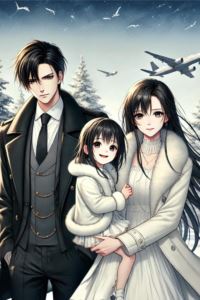
I need to talk about Wen Nuan and her daughter because this is the emotional core of the entire story and honestly it's what makes me care about everything else. This baby is six months old, and the original character would have abandoned her—literally. She threatened to hang herself, forced her husband to quit his military career, and eventually just walked away from this child who would grow up to be bullied, traumatized, and nearly die at nine years old. And yet here is our protagonist, this complete stranger in every way, looking at this sleeping baby and thinking: I hope she suffers no harm at all. The relationship between Wen Nuan and the baby develops in these tiny, almost invisible moments. The baby kicks off the blanket, and Wen Nuan gently pulls it back up. The baby cries, and Wen Nuan picks her up and whispers 'Be good, don't cry, Mommy is here,' and the baby just... stops. Looks up at her with tear-filled eyes and smiles. That smile. I'm not okay. These are the moments that build something real between them, and the author doesn't over dramatize it. It's quiet and devastating because we know what the original character would have done. Then there's Gu Qinghan, who hasn't even appeared in person yet but is already the most complicated relationship in this story. He married her through manipulation and scandal, wrote letters she ignored, sent money she spent on her own family. They've been essentially strangers. And yet—when their daughter gets bullied, he severely injures two boys and goes from a glorious soldier to a labor reform criminal. He dies a hero's death saving strangers. This man loved his daughter more than his freedom, more than his life. And our protagonist is now his wife, sleeping in the same bed, sharing a child, and she has no idea how to navigate that. The tension of not knowing whether he'll ever come home, whether their marriage can become something real, whether she'll fail this child the way the original character did—that's the relationship drama that's going to carry this story.
... Read More
I want to talk about the stakes here because they're deceptively simple on the surface and absolutely terrifying when you think about them. On one level, Wen Nuan just wants to survive. She wants to avoid the beatings, the humiliation, the poverty that the original character endured. She wants to follow her husband to the Northern City and start fresh, even if it means facing an awkward marriage. That's a modest goal, right? Wrong. Because the original character's entire tragic arc was built on small failures compounding into disaster. One argument leads to a miscarriage. One moment of inattention leads to her daughter being hit by a car. One act of desperation leads to divorce, exploitation, and death in a snowstorm. The external conflict is immediate and daily: a mother-in-law who resents her, a sister-in-law who enables the abuse, a community that judges her, a pregnancy that left her with lasting physical ailments, and a husband who's been absent and likely hostile. But the internal conflict is where this story really grips me. Wen Nuan is an orphan who 'had always yearned for a family.' She's suddenly a mother to a child she didn't bear, married to a man she barely knows, in a family that hates her. Every day she chooses to be good to this baby is a choice against her circumstances. Every act of love is an act of defiance. And the suspense about Gu Qinghan—when he comes home, what happens? The original character spent years falsely accusing him of infidelity, destroying his career, and breaking their family apart. Our protagonist has to navigate this minefield without knowing how he'll react to her. Is he the same cold, duty-bound man who married her through scandal? Or is there something else underneath? The author hasn't revealed him yet, and that mystery is doing a lot of heavy lifting. Because if he's the man who injured two boys to protect his bullied daughter, then the question isn't whether he's capable of love—it's whether he's capable of loving the wrong woman.

Leave a comment

You must be logged in to leave comments. or
