Beast Taming: Starting with Undead, Becoming the Dark-Type King - Reviews

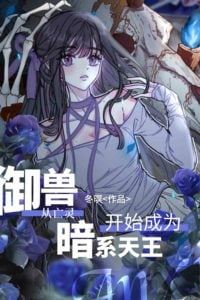
Beast Taming: Starting with Undead, Becoming the Dark-Type King
+Add to Custom List
Sort
Add review
... Read More
The stakes in this story are established with terrifying efficiency, and I mean that as the highest compliment. Let's break down what Mu Huiyue is up against, because the list is brutal: External conflicts: shattered leg with no medical care, blood loss, potential infection, a castle full of undead creatures, an enormous unknown predator that just walked past her hiding spot, isolation from the outside world, no phone signal, no rescue timeline. Internal conflicts: she's seventeen, she's terrified, she's making a desperate decision that could kill her instantly, and she has to do it alone except for a creature the size of a houseplant. What makes the conflict so effective is that the author doesn't give her any advantages. No hidden powers, no mysterious mentor, no plot armor. She has a broken body and a tiny skeleton friend who brought her some weird dried fruit. That's it. The reader knows this — we're not sitting here thinking "she'll probably be fine because this is a protagonist." We're thinking "oh god, she's going to die and I need to keep reading to make sure she doesn't." The giant eye scene is the perfect example of escalating stakes. Just when Mu Huiyue has eaten some food and the Little Skeleton has brought her a blanket — moments of relative safety — something massive approaches and she has to pretend to be dead. The conflict shifts from "can she survive her injuries?" to "can she survive the things living in this castle?" And then immediately after, she makes the decision to attempt forced awakening, which introduces a new layer: even if she survives the castle, the awakening itself could kill her. Every conflict in this story compounds rather than replaces the previous one. There's no relief, no breathing room. And yet — and this is crucial — it never feels exhausting because the emotional core keeps anchoring us. The Little Skeleton's tears, its desperate attempt to help, its disappointment when it can't fix her leg... that's what makes us care about whether she lives or dies. The stakes aren't just high. They're personal.
... Read More
Okay so let me just say this first—Mu Huiyue waking up INSIDE a rift and immediately contracting a LITTLE SKELETON is the most perfect plot twist I've read in forever. Think about it. The entire setup has been building toward this moment where she finally awakens her Beast Tamer power, and everyone—including the reader, probably—expects some majestic beast. An Emperor-tier creature, a legendary beast, something worthy of the Mu family name. Instead? Ellen. A knee-high skeleton that most people wouldn't even bother contracting with. And yet the narrative keeps dropping hints that this thing is absolutely not what it seems. The bone staff critical hit chance is E-class, right? Negligible. But Ellen is already targeting weak points by round two. That's not a coincidence—that's the author telling us something important about this creature, and honestly it has me obsessed with figuring out what's really going on with Ellen. The plot structure here is also really tight. We go from the quiet personal moment of her awakening in the Beast Space, through the school politics and social dynamics, to a full-blown public confrontation that escalates into an official tournament battle. Every scene pushes the stakes higher. The selection exam setup is brilliant because it gives Mu Huiyue an immediate goal and a concrete reason to fight. Luo Song isn't just some random bully—he's already top ten, he's a real threat, and if he wins, he secures his spot while crushing her. The narrative is setting up this underdog story but with a twist: the underdog might actually be way more dangerous than anyone realizes.
... Read More
Let me just lay out the stakes because they're actually terrifying when you think about it. Mu Huiyue's mother disappeared in the Myriad Sea of Phenomena. The exploration team from that year was affected by memory manipulation. No one can explain what happened. The only person sent back was Mu Yixia, who was a crying child and couldn't recall anything. Years have passed. Mu Tong has mostly given up hope. But Mu Huiyue hasn't. She's entered the World Tournament specifically to access that same secret realm and find her mother. Now here's the thing—the text explicitly says entry into the Myriad Sea of Phenomena during the World Tournament was not guaranteed to be safe. It's beyond the ordinary. It's influenced by time-space rules and S-Class mental-type abilities. The amount of information that could be reliably brought back was tragically sparse. So she's walking into a place that actively resists being understood, where people get their memories manipulated, where entire teams vanish, and she has almost no information about what she's facing. Meanwhile her pet is a skeleton—which the text tells us is an unpopular choice with no complete training path. Most beast tamers wouldn't bother contracting one. She has to rely on card draws from the Beast Tamer space to teach it skills. She has no systematic training route. And the top student Lin Fei has a Psychic Warlord with 720-degree battlefield vision that can predict attacks and has no apparent weaknesses. The match between Lin Fei and the fifth-ranked challenger was one-sided. The Flame-Tail Cat got exhausted and collapsed after a few exchanges. This is the standard Mu Huiyue is measuring herself against. But here's what keeps me up at night—the stakes aren't just about winning a tournament. They're about whether she can access a realm that has already destroyed one generation of explorers, where memory itself is unreliable, to find a parent who may or may not still be alive. The suspense isn't will she win. The suspense is what is actually in that secret realm and whether Mu Huiyue is walking into the same trap that took her mother. The author doesn't tell us. The author just shows us a girl and her skeleton watching an unbeatable match and thinking I still have a long way to go with my training. And somehow that understatement is more terrifying than any horror description could be.
... Read More
Here's the thing that got me—the father never knew. He has ZERO idea how Mu Huiyue survived the secret realm. The text says 'Receiving news from the hospital that she had successfully awakened and was safe was enough for him as a father.' That's it. That's all he knew. And this is where the plot threads start connecting in the best way. The original Mu Huiyue died in that secret realm, or at least her consciousness did, and THIS Mu Huiyue came back with Ellen. But the father has no idea any of that happened. He's judging her based on incomplete information, which makes his criticism even more painful because it's based on a version of his daughter that doesn't exist anymore. The narrative is setting up this massive dramatic irony where we know the truth and the father doesn't. Every time he calls Ellen 'inferior,' we're thinking 'you have no idea what this little skeleton saved her from.' The secret realm backstory is going to be such a satisfying reveal when it finally comes out. Also the Pali flashback—Mu Huiyue remembering the fiery red wolf and the word 'inferior' triggering old trauma? That's foreshadowing. Big time.
... Read More
Okay so I need to talk about this one moment that completely wrecked me. After the whole tournament battle, instead of going into some epic post-fight celebration or whatever, we get Mu Huiyue walking back to her apartment and COOKING. Like, she's unpacking crates of milk from the Thunderstrike White Cow Farm, washing vegetables, putting on an apron, humming a tune. And Ellen—the skeleton warrior who just destroyed a Giant Gate Crocodile in front of hundreds of students—is tiptoeing around the kitchen trying to help. The detail about the phosphor fire is what got me. Ellen tries to mimic the stove flame with his own blue fire, making this tiny ring of phosphor flames, and Mu Huiyue gently tells him it won't heat a pot because it burns soul damage, not heat. This is the kind of worldbuilding that doesn't feel like info-dumping at all—it's just... life. The world feels lived-in because the rules of magic are woven into everyday moments. And then there's the TV at the end, showing the Xingzhou University president talking about the world tournament, naming Lin Fei as a 'super genius.' It's such a casual way to expand the world—just background noise that tells us there's a whole larger universe beyond this school. The fact that beast masters are 'revered in society' and there are national and world competitions... it all just slides in naturally. The arena scene itself was vivid too—the lead-gray summoning circle, the crocodile's armor-like skin, the deafening roar. But honestly, the kitchen scene stuck with me more. There's something deeply satisfying about seeing a character who's been living on edge finally allow herself to relax in a small apartment with her little skeleton companion.
... Read More
Let me be real with you—the fight scene was cool and all, but the moment that actually made my chest tighten was the exchange between Mu Huiyue and Mu Yixia after the match. On the surface, it's just two sisters talking. Mu Yixia apologizes for missing their appointment, mentions their dad is coming home, invites Mu Huiyue to dinner. Sounds sweet, right? But read between the lines and it's absolutely chilling. Mu Huiyue had BLACKLISTED her sister. She'd cut off all communication. And Mu Yixia is over here playing the gentle, understanding twin, saying things like 'you can even meet here at school' like she's trying to re-enter a life that was deliberately shut out. The text says Mu Yixia's smile 'never wavered' when Luo Song came up to comfort her. Never wavered. Not once. And then the internal monologue—oh man. 'You could never defeat Mu Huiyue,' Mu Yixia thinks. 'The only person who could defeat Mu Huiyue... is me.' This is betrayal wrapped in sisterly warmth. The stakes here aren't about winning a tournament match—they're about who gets to stay in Mu Huiyue's life, who controls the narrative of their family, who survives whatever is coming. Mu Yixia looks fragile like 'a blade of grass swaying in the wind—never giving in,' and that description is doing SO much work. Meanwhile, Luo Song is standing there completely fooled, thinking he'll defeat Mu Huiyue next time. The dramatic irony is suffocating. We know something he doesn't—that the real threat isn't the boy who lost a battle, it's the sister who never stopped smiling.
... Read More
Okay, let's talk about the Beast Space because this is where the worldbuilding just absolutely shines. I mean, the description of the World Tree in the center of this desolate wasteland? Chilling. Just this one towering tree surrounded by emptiness, with leaves that act as healing resources tied to Mu Huiyue's own life force. After the secret realm, it went almost bald and now it's regrowing — that visual of the tree's health mirroring her stamina is such a clean piece of worldbuilding. You don't need a single exposition dump to understand the stakes. And then the Training Ground gets unlocked and wow. The text describes it as being as large as an official battle arena with a semi-transparent energy barrier, looking even more majestic than the dojo at her home. It reads like a cinematic reveal — a beam of light descends, fades, and suddenly this entire facility just stands there. I could literally see this in my head like a movie cutscene. The fact that it has real-time performance feedback that Mu Huiyue perceives almost as if she's casting the skills herself? That's not just a cool facility, that's a fundamental shift in how Beastmasters and their pets can train together. The detail about Ellen not experiencing exhaustion inside the Training Ground is the kind of worldbuilding detail that makes you realize how broken (in a good way) this system is. In the real world, every skill drains stamina, every battle risks injury, replenishing costs a fortune. But in here? Infinite training, zero cost. It immediately makes you think about what other facilities could do — the Farm, the Resting Cabin, the Workshop, the Marketplace, the Mine. The author is clearly building out a whole ecosystem and I am here for it.
... Read More
I need to talk about Mu Yixia because THIS character is so interesting and I have strong feelings about how she's being handled. On the surface, she's the golden girl—outgoing, well-liked, the one who tries to reconcile with her sister. Everyone at school sees her as the victim of Mu Huiyue's coldness, and honestly, the narrative is letting us see that this perception might be incomplete. The text says Mu Huiyue 'had indeed disliked Mu Yixia, mainly due to issues stemming from their mother.' That's it. One sentence. But it opens up this whole universe of family drama that I am DYING to understand. What happened with their mother? Why did Huiyue seek Yixia's help with the awakening? That moment of swallowing her pride to ask for help—this is the Mu Huiyue we're supposed to be seeing, the real one underneath all that icy exterior. And Luo Song! Oh my god, Luo Song is such a fascinating character in all this. He's not just a rival—he's genuinely, genuinely caring about Yixia. His panic when he saw the rift news, his heart nearly stopping at the thought of her being there. He confronted Mu Huiyue not just for revenge but because he was terrified. The tragedy is that he's directing all this protective energy at the wrong person. He thinks Yixia was targeted, when the text makes it clear she didn't even go to the park. The fact that Mu Huiyue realized this only in hindsight—'In hindsight, Mu Huiyue understood why Yixia had stayed away'—this is such a quiet, devastating moment. She's been carrying this guilt and this misunderstanding for who knows how long, and nobody's ever asked her to explain.
... Read More
Let's talk about dialogue because this author knows how to make words work. First, the Ellen moments. 'Click clack?' (What's wrong, Huiyue?) That's it. Two clicks and a question, and we immediately understand this creature's personality—concerned, attentive, slightly awkward (it stiffens when hugging because it's worried its bones might poke her). The parenthetical translations are a nice touch; they make Ellen feel like a real character with a voice, not just a plot device. And 'Clack!' when Ellen steps out to face the crowd—what a perfect moment of defiance. No words needed. Mu Huiyue's dialogue is equally distinctive. She's cold, precise, and devastatingly calm. 'Rift appearances are completely random. There's no known method to predict them. If I could, I'd already be at the Capital Academy, researching rifts for the good of humanity. So no, Luo Song, I didn't plan anything.' This is such a Mu Huiyue response—logical, slightly sarcastic, completely unbothered by his anger. She doesn't raise her voice. She doesn't get defensive. She just states facts and watches him unravel. And then: 'I don't care if you believe me or not. But if you want to keep pestering me, then let's settle this with a battle.' That's the pivot from passive to active, from defense to offense, and it's delivered with such cool precision that I literally gasped. Luo Song's voice is the perfect contrast—emotional, reactive, spiraling. 'You sure know how to keep your cool, Mu Huiyue.' 'You wanted to kill her, didn't you, Mu Huiyue?' 'You think you can beat me? With that little skeleton?' He's all heat and assumption, and Mu Huiyue's calmness makes him look even more unhinged by comparison. The crowd dialogue is also well-done—those murmurs and whispers feel like real students gossiping, building speculation and anticipation. 'If it's an Emperor-tier creature, maybe she could stand a chance...' 'Wait, is that a little skeleton?' The progression from hope to shock to disbelief is exactly how a crowd would react. The author's voice throughout is sharp, observant, and never wastes a word.
... Read More
Okay, first of all—can we just take a moment to appreciate that the little skeleton proposed an entire tactical plan? Like, it scouted the area, identified the threat, and came up with a viable escape strategy. Most supernatural beings at that level are basically feral, right? But this thing is out here doing reconnaissance and risk assessment. That is not normal. That is not what a low-tier elite undead does. The plot structure here is doing some really smart things. We get immediate tension—the Licker attack is brutal and sudden, no warning. The tongue comes flying at her like a bullet. She barely dodges. And then she has to make a split-second decision to summon her little skeleton mid-flight, strike the monster, and sprint for the exit. It's chaotic, it's fast, and it works because the author doesn't give her any extra powers or deus ex machina. She's an ordinary girl with an unusually smart skeleton. That's it. And then the aftermath—waking up three days later, the Bureau locking down the realm only after she exits from the inside. That's a clever plot detail. It means the secret realm has its own rules about entry and exit, and the outside world can't just waltz in whenever they want. The realm controls access, not the other way around. That sets up future conflict potential right there. But here's what's really interesting—the article about Ellen Mittedra. The Count Star Dragon. A historical figure from 780 years ago who fought alongside a dragon contract partner. The portrait shows a young man with golden hair and blue eyes, smiling like a hero about to save the world. But this is an UNDEAD CASTLE. A haunted mansion filled with rotting corpses and flesh monsters. And the protagonist named it herself because of the atmosphere. The official name is something totally different. What does that tell us about Ellen Mittedra? Was he really the hero the textbooks say he was, or is there something darker underneath? The plot is quietly planting questions here that I think will pay off later. Also—Mu Huiyue's family situation is a plot wound that's still open. Her mother disappeared in an S-class realm. Her sister appeared out of nowhere looking exactly like her mother. Her father chose to accept the sister and ignore the daughter who was right there. That's not just backstory, that's an active narrative thread. The fact that Mu Yixia didn't show up to meet Mu Huiyue that night in the park—was that intentional? Was she there all along and chose not to come? The original Mu Huiyue was desperate enough to ask her sister for help. What if the sister knew about the secret realm arrival and just… let it happen?"Clack clack! (Don't forget to eat, Beast Master!)" and the little skeleton is just sitting there being adorable while the protagonist is unpacking trauma and conspiracy theories. The contrast is killing me. But seriously—what is the Bureau hiding about this realm? What happened to Ellen Mittedra? And why does Mu Yixia look exactly like the missing mother?" The plot is setting up SO much. I just need to know what it's all leading to.
... Read More
The stakes in this passage are layered in a way that most authors wouldn't attempt, and it's what makes the tension work so well. On the surface level, the stakes are survival. Mu Huiyue is alone in a haunted castle with no contracted beast, no backup, and a fractured ankle that's barely healed. She has to navigate past Stone Gargoyles—flying, armored, one touch could end her—while a little skeleton of all things is holding off the undead horde with flower petals. Every second she spends in that corridor is a second her skeleton is running out of time. The countdown is implicit but constant. She checks her phone—nearly five minutes have passed. Five minutes. That's it. The skeleton can't hold out much longer. The tension isn't manufactured; it's built into the timeline itself. Then the Licker appears. Mid-tier battle general. Stealth mobility. Toxic tongue. She gets grazed—just a scratch—and her entire arm goes numb. The toxin is spreading. She's not just running from monsters now; she's running from her own body shutting down. And the exit is just ahead. Just ahead. The proximity of safety makes the danger worse, not better, because every step between here and there could be her last. But the real stakes aren't physical. They're personal. Mu Huiyue spent seventeen years trying to become a legendary Beast Master to earn her father's love. She hit rock bottom when she couldn't awaken. She was willing to beg her sister for help. And then—irony of ironies—she enters a secret realm and survives not through any legendary power but through a low-tier elite skeleton that most Beast Masters wouldn't touch. The stakes are about identity. Who is she without the title? Without the awakening? Without her father's approval? The Licker scene is where physical and emotional stakes collide. She's dying, yes, but she's also proving something—to herself, to the skeleton, to the father who never believed in her. She summons the little skeleton mid-flight, takes the pain, keeps running. She doesn't stop. She crawls through the spatial exit and falls into a bed of feathers while the Bureau announces her coordinates. She survived. Against all odds. With the one companion nobody wanted. And then the aftermath raises the stakes even higher. The Bureau has now locked onto the realm. The article about Ellen Mittedra hints at deeper mysteries. Mu Yixia didn't show up that night. Her father is away. Her mother is gone. The world is bigger and more dangerous than she realized, and she's just a rookie with a skeleton and a dark attribute. But she's alive. She escaped. And she's already starting to build something real with the one being who never left her side. "Clack!" The skeleton raised its tiny bony fist in agreement. That fist bump. That's the moment everything changes. She's not just surviving anymore. She's choosing her path. And the stakes have never been higher.
... Read More
I need to talk about the Little Skeleton because THIS CHARACTER. I am not okay. The way the author writes this thing—this tiny, broken, corroded skeleton that should be terrifying but is somehow the most endearing creature ever conceived—made me actually emotional. Let me paint the scene for you: Mu Huiyue is dying on the floor, and this creature, wounded beyond what should be survivable for an undead, limps back with two glowing blue petals. Its body is falling apart. Half its skull is gone. Its ribs are cracked. And it's still trying to feed her. "Click-clack-click..." came the sound of rattling bones. That's it. That's the entire dialogue. And yet it communicates more than some characters with pages of internal monologue. The Little Skeleton doesn't speak in words—it speaks in bone sounds, in gestures, in the way it shrinks back when Mu Huiyue offers a contract because it knows what it is. It knows it's low-tier. It knows it's undead. It knows most humans would be terrified of it. But she doesn't flinch. She doesn't hesitate. She just holds out her hand and says, essentially, "You saved me. Let me save you." And the contract scene—oh god, the contract scene. The Little Skeleton's misty tears. I'm not even exaggerating, the author writes "the dark mist in its eyes formed into the shape of tears" and I literally gasped. This thing that has no face, no organs, no capacity for sadness by any biological standard... it's crying. Because for the first time, someone chose it. Not because it's useful, not because it's powerful, but because it's their friend. The relationship between Mu Huiyue and the Little Skeleton is built on mutual rescue. She saves it from dying in that castle, and it saves her from bleeding out. But what makes it special is the respect. She doesn't treat it like a pet or a tool. She asks. She explains. She says "Will you make a contract with me, Little Skeleton?" like it's a choice, not an obligation. And when it says yes—"Click!"—the contract mark glowing on her hand, the summoning circle lighting up—it feels like a genuine bond forming, not just a game mechanic. Then there's the original Mu Huiyue's backstory, which adds this whole other layer. Her parents—legendary Beastmasters who expected perfection. Her father's disappointed gaze. Her sister who awakened before her and became the favorite. The original Mu Huiyue despised this world, and yet here she is, dying in it, and the new Mu Huiyue—this transmigration soul—likes it. She likes the magical creatures. She wants to talk to the Little Skeleton more. She wants to LIVE. There's something deeply ironic and beautiful about that. The girl who wanted out is gone, and the one who stayed is the one who actually learns to love this world.

Leave a comment

You must be logged in to leave comments. or
