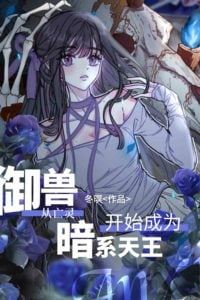
I keep thinking about the Little Skeleton's skill — Reassemble. It's not just a combat ability or a plot device. It's the central metaphor of the entire opening, and I don't think the author even needs to point it out explicitly.
Mu Huiyue is literally broken. Her leg is shattered, she's bleeding, she's cold, she's starving. She's falling apart in every sense of the word. And the creature that finds her — a skeleton, the most literal embodiment of something that has already fallen apart — is the one that wants to help her reassemble herself. The irony is almost too perfect, which makes me think it's intentional.
There's also the theme of what it means to be alive in a world full of the undead. The Little Skeleton isn't alive in the traditional sense, but it shows more empathy, more warmth, more genuine care than many living characters in fiction. Meanwhile, Mu Huiyue — a living human — is the one who's closer to death. The boundaries between life and death, between monster and companion, between hopeless and helpless, all blur in this castle.
The blue flames are interesting too. They're described as the only light in the room, flickering, dim. They're not warm — they're cold fire, which fits the entire tone of the story. This is a world where the natural order is inverted, where darkness offers protection and death offers compassion.
And then there's the realm core itself — the thing Mu Huiyue needs to survive. It's described as a resource, a power source, something to be absorbed. But I can't help but read it as symbolic of transformation. To live, she must change. She must become something new — a Beast Tamer, someone bonded to creatures like the Little Skeleton. The old Mu Huiyue, the office worker who fell while looking at her phone, cannot survive this world. She has to reassemble herself into someone who can.
The question the story is really asking isn't "will she survive?" It's "who will she become to survive?"