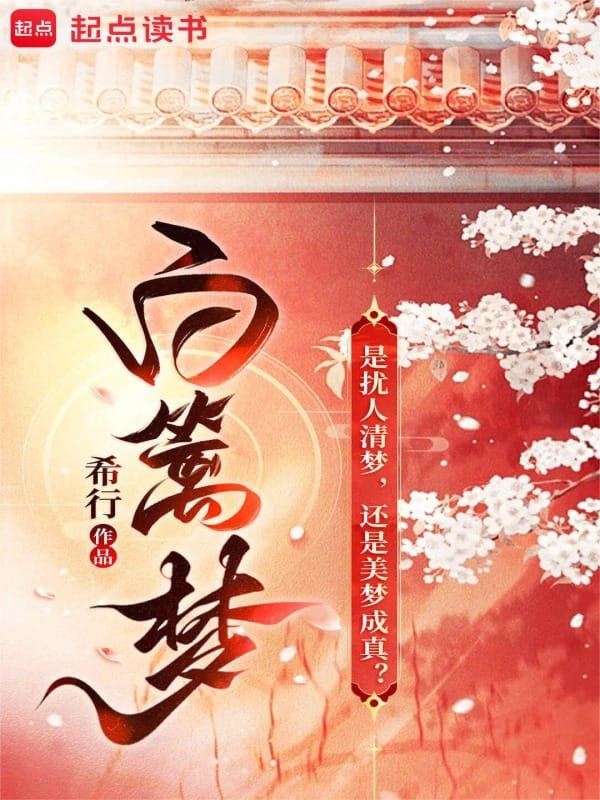
Bai Li’s Dream
Novel Info
  • Author:
  • 希行
  • Status:Ongoing

Summary

... Read More

Zhou Jingyun is the Heir Apparent of the Marquis of Dongyang, a prestigious title in the Great Zhou Dynasty. Orphaned early and renowned for his intelligence, he rose to become the youngest Hanlin scholar in the dynasty's history. After his first wife, a noblewoman from the Duke of Ding'an family, died six months into their marriage, he mourned deeply, refusing to remarry for six years while serving as an Educational Inspector in remote regions. His return to the capital coincides with the death of the tyrannical Demon Empress Jiang and the ascension of a new emperor who is purging her former faction. Zhou Jingyun's sudden remarriage shocks the capital, as his new wife, Zhuang Li, is a sixteen-year-old orphan with no noble lineage, raised by a humble teacher.

The core conflict emerges immediately upon Zhuang Li's arrival at the Marquis residence. Madam of Dongyang, Zhou Jingyun's mother, is initially bewildered and disappointed by her son's choice of bride, expecting a match from a high-ranking family to secure their political standing. However, she soon learns that Zhou Jingyun's decision was a calculated political maneuver. The new emperor is violently dismantling the Demon Empress's remnants, and officials are being targeted arbitrarily. By marrying a woman of common background, Zhou Jingyun prevents the new emperor from forcing a politically advantageous marriage alliance upon him, thereby avoiding entanglement in the dangerous court factions that have destroyed so many families. Zhou Jingyun wrote to his mother, explaining that this strategy protects the Dongyang family from becoming targets of imperial suspicion or political leverage.

Zhuang Li herself is enigmatic. She is calm, intelligent, and remarkably composed, showing no fear or subservience despite her low status. Her background as the disciple of Master Zhuang is genuine, but her demeanor suggests a depth of experience far beyond her years. She moves into the courtyard of the late first wife, taking charge of household management with efficiency. She reforms the kitchen staff, reopens the private dining room, and arranges her living quarters with simple, scholarly items, including a lotus bud that inexplicably blooms and remains preserved. Her relationship with the servants is complex; Xueliu, the head maid left by the deceased wife, is loyal to the memory of the late Lady Lu and initially hostile toward Zhuang Li, viewing her as an intruder. Concubine Mei, the heir's existing concubine, is more amenable but watches Zhuang Li with curiosity.

A key turning point occurs when Madam of Dongyang visits the Duke of Ding'an to explain the marriage, only to be cold-shouldered by the grieving duke. However, the duke's youngest daughter, Lu Jin, who has been raised by Madam of Dongyang as a goddaughter, chases after the madam and insists on meeting the new sister-in-law. Lu Jin is warm and playful, creating a stark contrast to the tense atmosphere surrounding the family. During this meeting, Zhuang Li gifts Lu Jin the preserved lotus bud, a simple yet unique gesture that endears her to the young noblewoman. This act begins to soften the Dongyang household's perception of Zhuang Li, though Xueliu remains resentful.

The story also delves into the political undercurrents threatening the family. Inspector Zhang Ze, a ruthless official tasked by the new emperor to root out the Demon Empress's supporters, is conducting inspections in the provinces where Zhou Jingyun served. Although the Marquis of Dongyang insists they have no connections to the fallen faction, the fear of arbitrary persecution hangs over them. Zhou Jingyun's letter reveals that he anticipated this danger and acted to secure his family's safety through this strategic marriage. Meanwhile, rumors swirl about a painting Zhou Jingyun kept hidden in his study, suspected to be of a woman other than his late wife, adding a layer of personal mystery to his motivations.

As Zhou Jingyun prepares to return to the capital, the domestic dynamics within the Marquis residence are shifting. Zhuang Li navigates the hierarchy with quiet authority, gaining the respect of some servants while facing the silent opposition of others. The relationship between mother-in-law and daughter-in-law is not yet fully resolved, as Madam of Dongyang struggles to reconcile her concern for her son's happiness with her confusion over his choice. The narrative sets the stage for Zhou Jingyun's reintegration into court life, the ongoing political purges, and the evolving dynamics between Zhuang Li and the complex web of family and servants surrounding her.

Latest Release
DateGroupRelease
2026-10-01lightnovelasia c48
2026-10-01lightnovelasia c47
2026-10-01lightnovelasia c46
2026-10-01lightnovelasia c45
2026-10-01lightnovelasia c44
2026-10-01lightnovelasia c43
2026-10-01lightnovelasia c42
2026-10-01lightnovelasia c41
2026-10-01lightnovelasia c40
2026-10-01lightnovelasia c39
2026-10-01lightnovelasia c38
2026-10-01lightnovelasia c37

Community Reviews

Rating(4 / 5.0, 45votes)
5 stars
13(29%)
4 stars
17(38%)
3 stars
15(33%)
2 stars
0(0%)
1 stars
0(0%)

Popular reviews

... Read More
There are so many symbols packed into these chapters that I need to untangle them. The 'solitary tree growing in the wilderness' comparing Zhuang Li is the most obvious one, but it's also the most honest. A tree in the wild isn't decorative — it survives through independence, through deep roots in bad soil, through weathering storms no one sees. It's also untamed, which is exactly what makes people uncomfortable in a society that values cultivated beauty. Then there's the house itself. The Marquis of Dongyang's Residence is described as 'vast' but in the 'remote northwest corner.' The first Marquis rose from 'humble beginnings' and built strict family rules. Three generations later, they've survived where 'newly rich and old aristocratic families' have been 'confiscated and exterminated.' Survival as the family legacy. Not glory. Not power. Just... endurance. That's the thesis statement of the whole novel, I think. The 'Demon Empress' is referenced again and again as a symbol of how fragile everything is. 'Being a good person has become a crime,' Madam of Dongyang recites — and this line hits differently every time it appears. It's Buddhist prayer, but it's also political commentary. In this world, virtue isn't rewarded. Caution is. Obedience is. Invisible is. And the name 'Zhuang Li' — 'Li Niang' as her mother calls her — literally means 'beautiful woman named Li.' But the text keeps insisting she's NOT stunning, NOT remarkable-looking. So the name becomes ironic, almost cruel. A girl named beauty who doesn't fit the category. A girl whose identity was given to her by a dying man's last wish, not by her own choice.
... Read More
I need to talk about the lotus. This symbol appears at the most strategic moment and it's doing SO much work. A lotus bud is given by Lu Jin to a servant girl. Days later, the bud hasn't wilted. In a room where a girl supposedly saw Guanyin Bodhisattva, a miracle fragrance fills the air, and that same lotus is sitting there like a prop in a staged divine intervention. The Old Madam sees it and her face lights up because it CONFIRMS her religious framework. She wants this to be a miracle, so the universe (or Lu Jin) provides the evidence. But here's what's really interesting—the actual miracle Cuier experienced wasn't divine at all. She dreamed of her DEAD MOTHER. Not Guanyin. Not a bodhisattva. Her mother, holding a lotus bud, singing a lullaby, rubbing her belly, saying there there it doesn't hurt anymore. The comfort she needed came from human love, not divine intervention. And yet the entire household interprets it through the lens of religion and piety because that's the only language they have. The fragrance is another layer. Servants can't use incense—that's a class restriction. But somehow this miraculous fragrance permeates a servant's quarters and EVERYONE smells it. Is it real? Did Lu Jin plant something? Or did the author just decide the scene needed atmosphere? Either way, it reinforces how perception is controlled by those who understand what people want to believe. The broken porcelain vase holding the lotus is also worth noting. Something beautiful sustained by something broken. That feels like a statement about this whole world—these households run on fractured foundations holding up delicate performances.
... Read More
Okay can we just take a moment to appreciate Lu Jin because this girl is absolutely ruthless in the best way possible? On the surface, she's the sweet adopted daughter massaging her godmother's shoulders and calling her "Godmother" with those big innocent eyes. But read between the lines and she's running an entire operation. She knows exactly what to say to Madam of Dongyang—"Being able to repay debts is also a blessing"—a line so perfectly calibrated it could only come from someone who understands grief and guilt at a granular level. She reframes the Madam's sorrow as gratitude, and you can see the woman visibly soften. Then she pivots to the most dangerous topic in the room: the deceased sister. She doesn't tiptoe around it. She says it straight—"Third Sister is gone, Uncle can't bear to let her go, so that's why he's clinging to Madam." She names the elephant, but she does it in a way that makes Madam of Dongyang feel understood rather than exposed. That's not just emotional intelligence, that's combat-level social navigation. And the scene with Zhuang Li? Chef's kiss. Lu Jin immediately reads the room—she sees Zhuang Li as a threat to her position, possibly even to the memory of her sister, but she plays it so gracefully. She calls her "Sister-in-law" with a smile, asks her age, makes light of the gift situation when Zhuang Li presents that ridiculous dried lotus flower, and diffuses what could have been a brutal power struggle into a polite exchange. But watch Xueliu's reaction—she's the one who fully grasps what just happened. She thinks Lu Jin is "kind and good-natured" when really, Lu Jin just neutralized a potential rival without anyone at the table even realizing a battle took place. The relationship between Lu Jin and the late Third Sister is the emotional bedrock of everything. Lu Jin isn't just some political pawn—she genuinely loved her brother's wife, and her entire motivation in these chapters is protecting that memory while simultaneously ensuring the living are okay. That duality makes her one of the most complex characters in this novel.
... Read More
Okay so this whole sequence is genuinely wild and I need to unpack it. The marriage between Zhou Jingyun and Miss Zhuang was set up as a sham — a cover story for Duke Ding'an's family to avoid the Demon Empress's arrangements — but now it's turned real, and the political fallout is cascading. What makes this chapter stand out is Lu Jin's pivot from frustrated bystander to active schemer. She doesn't just accept that her family is being discarded; she engineers a solution that puts her inside the Marquis's household as a concubine, under imperial decree. That's not a desperate move — that's a calculated land grab. And the layering is what gets me: she frames it as devotion to the dead Third Sister, but the narration keeps reminding us that she's an outsider, raised in the duke's home but never fully part of it, and every word she speaks is calibrated. The scene where she hands the stolen box back to Lu Wenjie without exposing him is a masterclass in showing how much she understands about power. You don't expose a thief — you own him. I keep coming back to that moment because it recontextualizes everything she says afterward. The plot here isn't just about marriage arrangements; it's about who gets to define reality when everyone's lying, and Lu Jin is the one learning to do it best.
... Read More
Okay, let me just unpack the character dynamics here because this scene is genuinely fascinating from a relationship perspective. We have four women in that room and the tension between them is absolutely electric. First, there's Zhuang Li, who walks in looking fragile but operates like a seasoned diplomat. What struck me most about her is how she reads the room instantly. She understands that these women aren't just being cruel—they're performing. They're testing her, measuring her, looking for weaknesses. And she doesn't take the bait. When they try to trap her with questions about filial grief, she doesn't get defensive. She gets philosophical. This is a woman who has survived enough to know that fighting fire with fire doesn't work—you fight it with water. Then there's Madam of Dongyang, and I find her character so complicated and interesting. On one hand, she's clearly not thrilled about this marriage. She called it 'just for people to see us as a joke.' She sighs with relief when Zhuang Li leaves the house. But—and this is the thing that caught me off guard—she also arranged the whole meeting, prepared gifts, and genuinely seems relieved that Zhuang Li handled herself well. Her relationship with her husband is clearly strained (he's the 'heartbroken heir' who needed to move on), but she's doing her duty. And somehow, watching her internally celebrate Zhuang Li's victory felt surprisingly warm. Old Madam Xue is the villain of this scene, and I love how the author writes her. She's not cartoonishly evil—she's sharp, wealthy, connected, and genuinely believes she has every right to interrogate this girl. Her relationship with her nephew Zhou Jingyun is interesting too; she claims to have raised him like a grandson, but the text makes it clear she's more interested in controlling the family narrative than in his happiness. The moment she tries to extract a meeting gift from Madam Xue instead of giving one herself? Chef's kiss. That single detail tells you everything you need to know about her character. And then there's Madam Xue—the visiting elder who actually likes Zhuang Li. She gives her a proper gift, speaks gently, and seems to genuinely welcome her. I'm already sensing a potential alliance between these two that could become really important later.
... Read More
What got me about this passage isn't any grand romantic gesture — it's the devastating quietness of so much unspoken emotion. Xueliu looking at the direction of the Young Master's courtyard and thinking about Third Miss Lu, who died suddenly and apparently held Xueliu's hand before passing. That single detail — a dying woman gripping her maid's hand — carries more weight than any funeral scene could. And the Marchioness, who throughout the concubine confrontation shows genuine warmth (that smile in her eyes despite the harsh words), then turns to Xueliu and says something vague but profoundly tender: "Don't worry, I'm here." She doesn't specify what she's protecting Xueliu from, but Xueliu understands completely. There's this entire history between them that the author never spells out. Then Zhuang Li comes out pale the next morning, and her maids react with genuine concern — Chun Hong offering to fetch the doctor, Chun Yue already diagnosing poor sleep. For a moment, just a moment, it feels like Zhuang Li might actually have people who care about her in this house. And then Xueliu walks in and kills the whole thing with cold practicality. The emotional whiplash is brutal.
See all reviews

Custom lists

See all custom Lists