Summary

... Read More

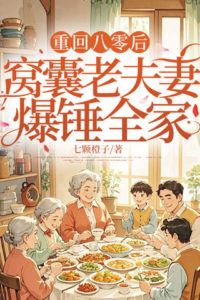
Shen Xiuzhen and her husband Song Shulin lived a life of relentless sacrifice for their extended Song family. Despite being the youngest branch in a household of over twenty people, they worked as beasts of burden to support their elder brothers, their mother, and their seven nieces and nephews. They sold their land, took on debt, and forced their own children to give up education, health, and even their lives to secure futures for the cousins. Their eldest son died in a coal mine collapse, their second son died after donating a kidney to a nephew, their daughter was beaten to death by a violent husband arranged by the family, and their youngest daughter was killed while trying to pay medical bills. In their final days, the couple was imprisoned in a basement by the very relatives they had sustained, forced to accept a meager settlement for the drunk driver who killed their youngest child. As they died in despair, they vowed to change their fate if given another chance.

Shen Xiuzhen opened her eyes to find herself reborn thirty years into the past, on August 23, 1983. She realized she was back at the exact moment her eldest daughter’s tragedy began: the day the family planned to force her fifteen-year-old daughter, Dani, into a marriage exchange. Her third nephew, Song Weimin, intended to marry a city girl but needed a rural bride to marry his lame, abusive older brother in return. In her previous life, Shen Xiuzhen had agreed to this arrangement, leading to her daughter’s brutal death. This time, she refused. Simultaneously, her husband Song Shulin also revealed that he had been reborn. Having witnessed the destruction his compliance caused, he was determined to protect his family. The couple decided that if the Song family would not let them live in peace, they would leave. They demanded a divorce and the division of the household, threatening suicide if forced to stay.

The threat of suicide and public scandal shocked the Song family. Old Mrs. Wang, the matriarch, and the elder brothers tried to manipulate them using guilt and moral blackmail, citing the eldest brother’s lame leg and the second brother’s illness as debts owed by Song Shulin. However, Song Shulin countered these arguments by threatening to break his own leg to “repay” the debt, while their son Song Sihai cleverly turned the villagers’ gossip against the family. The couple’s newfound ruthlessness confused and frightened the relatives, who relied on their silence and obedience. When Old Mrs. Wang attempted to whip the children, Song Shulin and Shen Xiuzhen intervened, locking the doors and refusing to cook or work until the family was divided.

With the household in chaos and no one willing to do the labor, Shen Xiuzhen and Song Shulin rode Song Weimin’s bicycle to the coal mine where their eldest son, Dajiang, worked. They convinced him to quit his job, citing safety concerns and a dream about a collapse, effectively saving him from his destined death. Back home, the family faced starvation as the third branch refused to prepare meals. The conflict escalated as the Song relatives realized they had lost their source of free labor. Shen Xiuzhen and Song Shulin stood firm, declaring that they would no longer sacrifice their children for the benefit of the cousins. The story follows their struggle to break free from the toxic family structure, protect their remaining children from further exploitation, and build a new life for themselves, while the Song family faces the consequences of their greed and entitlement.

Novel Items

More
Document
A legal document offering ten million yuan in compensation from the Lu Family for the death of Shen Xiuzhen and Song Shulin's youngest daughter. The nieces and nephews desperately want the couple to sign it, but the couple refuses, insisting the Rich Second Generation face justice.
Concept
A metaphor for Zhou Yuanzhi's secure government job as a civil servant, which Li Fengxia praises as a lifelong stable career.
Event
A proposed double marriage arrangement where Song Weimin would marry Wu Meili, and a Song family girl would marry Wu Dawei (Meili's older brother). This was proposed by Wu Meili's family to strengthen ties between the two families. In the past life, this arrangement led to the eldest daughter's death.
Event
Shen Xinhe's aunt Wang Yulan needs a kidney transplant to survive uremia. Miss Lu offered Shen Xinhe money and help finding a kidney source in exchange for false testimony. Gu Cheng'an promised to help find a way to get the money and kidney source.
Event
The fifth nephew failed his college entrance exams and threatened suicide. Shen Xiuzhen and Song Shulin forced their fifth son to give up his university spot so the nephew could retake the exam. The fifth son later committed suicide after this sacrifice.
Event
The fifth nephew got mixed up with thugs and was sentenced to ten years in prison. The couple forced their fourth son to take the fall so the nephew would not go to prison. The fourth son spent ten years in prison and vanished shortly after release.
Latest Release
DateGroupRelease
2026-08-11shanghai fantasy c8
2026-08-11shanghai fantasy c7
2026-08-11shanghai fantasy c6
2026-08-11shanghai fantasy c5
2026-08-11shanghai fantasy c4
2026-08-11shanghai fantasy c3
2026-08-11shanghai fantasy c2
2026-08-11shanghai fantasy c1

Community Reviews

Rating(3.7 / 5.0, 12votes)
5 stars
2(17%)
4 stars
4(33%)
3 stars
6(50%)
2 stars
0(0%)
1 stars
0(0%)

Popular reviews

... Read More
This whole passage is basically a treatise on how food equals power in a patriarchal rural family, and I'm not even being dramatic. Let me lay it out: the stewed noodles aren't just dinner — they're the battlefield. Old Mrs. Wang controls the pot, she controls who eats. When Song Sihai grabs that enamel basin and marches off with more than half the noodles, he's not being greedy, he's claiming autonomy. That basin is a declaration of independence wrapped in enamel. And the underwear gossip! This is the most brilliant symbolic detail in the entire chapter. The villagers aren't just gossiping about lazy daughters-in-law — they're gossiping about a woman (Shen Xiuzhen) who does the laundry for women who refuse to work. The act of washing someone else's underwear is the ultimate symbol of servitude, and the fact that the whole village knows it turns Shen Xiuzhen's kindness into a public spectacle. Song Erlin's shame when he hears about it isn't just about face — it's about realizing that his family's internal dysfunction has become public property. The pig is another symbol I can't ignore. Old Mrs. Wang suggests the kids cut pigweed because "the pig in the backyard can't keep eating dishwater." A family on the verge of starvation is worried about a pig's diet while their own children complain that the noodles are "too watery." The absurdity here is intentional — this family has been so conditioned into scarcity that even their complaints are about luxury. And then there's the recurring motif of "hurt hands." Shen Xiuzhen's hands hurt, so she doesn't cook. Old Mrs. Wang's hands don't hurt, so she expects everyone else to serve her. Song Sihai weaponizes his mother's pain to avoid dishes. The hands are always the body part that determines who serves and who is served. It's a tiny physical detail that maps the entire power structure of this household. The marriage subplot with Hongxia and the bride price money adds another layer — women as currency, literally. Liu Zhaodi and Zhao Guifang are desperate to marry off their daughter/secure a daughter-in-law, but they're trapped by poverty. The thousand yuan dowry isn't just money, it's social capital, and the fact that they're considering selling blood for it shows how far the family has fallen.
... Read More
I need to talk about Shen Xiuzhen because this woman is carrying SO MUCH and I love her for it. The most heartbreaking detail in this entire chapter isn't even the big dramatic stuff — it's when she picks up that ten-cent coin from the ground after Wang Xiaoqin throws it at her. Think about it. Someone just insulted her, tried to cheat her, and threw money like she's nothing. And her reaction? She bends down, picks it up, and gives proper change. No drama, no anger, just... routine. The narration tells us straight: 'In her past life, she and Song Shulin had endured all kinds of hardships. Picking up money from the ground was nothing to fuss over.' Nothing to fuss over. She's survived worse than this and this is just Tuesday for her. But here's what really gets me — the way she handles Auntie Zhou. When Auntie Zhou apologizes for the whole Wang Xiaoqin situation, Shen Xiuzhen genuinely says 'It's fine, really!' And she means it. She's not performing gratitude, she's not being fake. She actually understands that doing business means dealing with difficult people. That's not naive — that's someone who has been burned before and chose kindness anyway. And the way she rewards Auntie Zhou! Pulling out two dimes and firmly pressing them into the older woman's palm, insisting she buy a soda. She notices kindness and she repays it immediately. That's a person who knows what it means to be helped and doesn't take it for granted. The couple dynamic is also quietly beautiful. They exchange a glance when Auntie Zhou leaves to round up more customers — no words needed. Years of partnership in one look. They're a team, and it shows in how they move through the world together.
... Read More
Let me just say this once: Song Sihai's internal monologue is absolutely legendary. The kid picks up a brick to smash his own leg and his first thought is Does it hurt? If it hurts too much I might not be able to go through with it. Then he's doing the whole raised-lowered-raised-again routine like he's ordering food at a restaurant. And when he can't decide, he just drops to the ground and starts wailing exactly like his mom did earlier. The author's voice for this character is so distinct—you can hear him in your head, this lazy, cunning little gremlin who's somehow the smartest person in the entire third branch. Meanwhile the manipulative dialogue from the other side is equally sharp. Song Dalin's whole speech about the leg debt is delivered with this smug certainty that his third brother will fold, and Shen Xiuzhen's switch from crying widow to brick-wielding warrior in one scene is perfectly captured in how her dialogue shifts from wailing to commanding. The gossiping villagers shouting at Song Sihai to just do it—coward Song Sihai, you're dawdling like a woman—these side characters have voices too. Every person in this book sounds different, and that's rare. The humor lands because the dialogue never feels written, it feels overheard.
... Read More
Can we just appreciate the imagery in this chapter because the author really knows how to paint a picture? The opening scene of Song Shulin pedaling the Erbalagang bicycle toward the county town with Shen Xiuzhen sitting sideways on the front crossbar — this is SO specific and vivid. Two heavy bamboo baskets hanging from the rear rack, filled to the brim with fresh vegetables. The early morning light. The ten-kilometer ride. You can practically feel the heat already building. This isn't just setting description, this is a whole mood. It puts you right there on that bumpy road, hearing the bicycle chain click, feeling the summer air. Then they arrive at the textile factory residential compound and the scene comes alive with characters. Auntie Zhou with her vegetable basket, hurrying early because 'the vegetables are fresh.' The other factory workers — Sister Liu, Xiaoqin — all distinct voices in this crowded morning scene. The way Shen Xiuzhen approaches the first customer with a smile and a question rather than a pitch, that's such a natural interaction. 'Big sister, are you heading to the vegetable market to buy groceries?' Not 'buy my vegetables' — she starts with conversation. The sensory details throughout are what make this world feel real. The scorching heat making vegetables wilt if you don't sell them fast. The sound of sunflower seeds being cracked open. The visual of Auntie Zhou walking quickly with long strides to round up customers. The awkward tension when Wang Xiaoqin grabs that huge handful of seeds and everyone watches. This isn't a generic backdrop — it's a lived-in, breathing world where every character has their own rhythm and texture. The residential compound feels like a real place with real social dynamics, not just a setting on a page.
... Read More
Okay so I need to talk about Shen Xiuzhen because this woman is absolutely terrifying in the best way. She doesn't raise her voice, she doesn't throw tantrums like Old Mrs. Wang, and she barely lifts a finger — but she controls the entire household with surgical precision. The moment I realized Song Erhe wasn't actually stupid was when Shen Xiuzhen figured it out mid-meal. She looked at her burly second son and just... calculated. "If he didn't want to be tied up, forget about Sihai and Wuhu — even you and your dad joined in, you might not be able to hold him down." That's not observation, that's a full psychological profile delivered while eating noodles. And then Song Erhe just... cracked. Rubbed his nose awkwardly. The kid thought he was being clever, but his own mother saw right through him at the dinner table. And Song Sihai — this kid is a menace but I can't stop loving him. He's spoiled rotten, yes, but he's also strategically brilliant. He knows exactly how to weaponize his mother's "hurt hands" to get out of chores, and he deployed that fire poker evasion tactic with Song Dabao carrying the basin like a little loyal soldier. The scene where he complains the noodles taste awful after gobbling half the pot? That's not a brat, that's a survivalist who knows how to manipulate everyone around him. And Shen Xiuzhen? She sees it all and just... plays along. "Once the family is divided, I'll stew some meat for you." She's feeding his hopes like they're stock options. The mother-in-law dynamic is the real goldmine though. Old Mrs. Wang goes from cursing "I hope the pain kills you" to immediately backing down when Song Shulin says "Let's divide the family." She swallowed her tantrum, brushed off the dust, and went to get her own noodles. That woman has been running this household through fear and guilt for decades, and one sentence from her third son took it all apart. Shen Xiuzhen understood this instantly — she knew the Third Branch's laziness would force the split without her having to lift a finger. She's not just smart, she's patient. And that's what makes her dangerous.
... Read More
I just finished this chapter and I need to process how efficiently the author handles pacing here because honestly it's impressive. The chapter opens with a heavy emotional beat — Song Dajiang's mother delivering that practical, slightly harsh speech about family responsibility. It's a solid ten minutes of reading, maybe more, and then — cut. No lingering, no extra reflection. The couple eats, gets instructions, and heads out. The transition from the family drama to the vegetable-selling mission is seamless. We go from a tense indoor conversation to the open road in two paragraphs. That's confident writing. Once they arrive at the residential compound, the pacing accelerates naturally. Shen Xiuzhen makes her first sale, builds rapport with Auntie Zhou, introduces the sunflower seeds as a side hustle — each beat flows into the next without feeling rushed. The author trusts the reader to keep up. We're not being told 'and then she sold more vegetables' — we're watching it happen in real time through dialogue and action. Then the conflict hits. Wang Xiaoqin appears and suddenly the pace shifts again. The tension rises quickly — she grabs too many seeds, Auntie Zhou calls her out, the verbal sparring escalates. But the author doesn't let it drag. Wang Xiaoqin pays and storms off, Auntie Zhou apologizes, and within moments the energy pivots back to positive. Auntie Zhou runs to round up customers and suddenly everything is resolved. Twenty minutes later, baskets empty, money made, everyone happy. The chapter ends on a warm note with Shen Xiuzhen trying to pay Auntie Zhou and the older woman refusing. It's a perfect button — no cliffhanger, no loose ends, just a satisfying emotional resolution. The whole chapter is roughly 3000 words and covers a complete narrative arc: setup, rising action, conflict, climax, resolution. That's textbook pacing done right.
See all reviews

Characters

See all characters

Custom lists

Oops…There is nothing here.