Back to the 1980s: Leading My Friends to Build a Fortune - Reviews

Back to the 1980s: Leading My Friends to Build a Fortune
+Add to Custom List
Sort
Add review
... Read More
Okay I need to talk about Grandma Zhou because WOW. The moment she showed up at that school and just absolutely dismantled the entire administration? Chef's kiss. Like, she didn't just defend Yuwei—she made a goddamn spectacle. Calling the education bureau director, gathering every reporter in the city, threatening a press conference right there in the principal's office. This woman is a force of nature and I am HERE for it. But what actually got me was the quieter moment before all that chaos. When Yuwei looked at her mother and suddenly missed her grandmother from her previous life. That flashback where the old woman slapped the other mother across the face and declared 'As long as I'm here, my granddaughter will never be unwanted!' I literally gasped out loud. The way she positioned herself as this fierce shield between her granddaughter and a cruel world—it hit different because we'd already seen how vulnerable Yuwei was, how she carried this weight of being called an unwanted bastard. And then the contrast with Lin Hongmei making noodles. Just this soft, domestic moment after all that fire. 'Hungry?' she smiled. That warmth spread through Yuwei's heart literally and figuratively. These two women—Grandma Zhou with her nuclear options and Lin Hongmei with her gentle noodles—both loving Yuwei in completely different ways, and it made my chest ache in the best way. The sister scene too. Zhou Yulan smoothing Yuwei's messy hair, dusting off her clothes like 'a young lady should always look neat and tidy.' Yuwei being so dazed she couldn't tell which life was real anymore. That line about possessing memories from both lives and the childhood memories of the two sisters growing up together being 'vivid and clear'—I just sat there staring at the page. Family love in all its forms, and I'm not okay.
... Read More
The way this author builds the world is incredible because they never stop to explain things like a textbook. You just drop right into it. The hospital scene—stark white walls, IV tubing on her wrist, an enamel mug for water. These tiny details make it feel so real. And then the courtyard when she gets home: two beds in one room separated by a cloth curtain, a study desk making the already cramped space even smaller, the hutong outside. It's 1970s China, post-Cultural Revolution, and you can feel the era in every description. The fact that Zhou Yulan went to the neighborhood committee to ask about job assignments because the government can't provide enough positions and everyone's being told to become self-employed but it carries a bad reputation—that's not exposition, that's worldbuilding woven into character action. The old madam Zhou strutting in like a fighting rooster, the neighbors gathering to watch the drama like it's the most exciting thing to happen all week, Zhang Lihua already scanning the room for anything valuable she can steal. This isn't just a setting, it's a living breathing community where everyone knows everyone's business. And the contrast with Zhou Yuwei's previous life—the sleek office, the designer everything, the private car and driver—makes you feel the cultural whiplash she's experiencing. But what I love most is how the author uses physical space to show emotional state. That cramped bedroom with the cloth curtain between her and her sister? It's literally and figuratively separating them, even though they share everything else. And the courtyard where the whole neighborhood can hear everything? No privacy, no boundaries, but also no loneliness. The world feels alive because every scene has texture—smells, sounds, the weight of history in the walls.
... Read More
Can we just take a moment to appreciate how alive this setting feels? The residential courtyard compound isn't just background—it's practically its own character. We've got multiple families interwoven, shared spaces, neighbors who've watched these kids grow up. Grandma Xu being 'the oldest resident in the courtyard, and everyone respected her'—that one detail tells us SO much about the social fabric here. I love how the author paints this world through small domestic details. The broom Liu Aihua uses to discipline her son. The bowl of noodles Lin Hongmei makes from 'the little bit of white flour they had left.' The fried egg Xu Zitao is stuffing his face with when Yuwei shows up. These aren't just props—they're windows into a specific time and place where food was precious, where a bowl of fish and an egg from Grandma Xu was a genuine gesture of abundance. The visual of Liu Changyun kneeling in the living room with the broom held high above his head while his family eats dinner around him? That's cinema. Pure visual storytelling. And then Yuwei quietly withdrawing her foot and turning around to find Grandma Xu instead—this little beat of her choosing a softer entry point tells us everything about her personality. What really sold me though is how the author uses the contrast between the courtyard's warmth and the harsher world outside. Inside these homes, there's food, there's protection, there's Grandma Zhou rallying an army for her granddaughter. But step outside and kids are getting bullied, teachers are corrupt, the system is rigged. This courtyard is this little fortress of love in a world that doesn't always deserve them. The setting isn't just pretty—it's thematically loaded.
... Read More
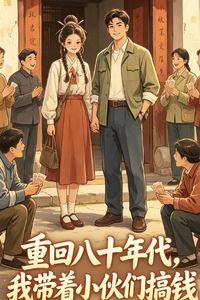
Okay so Zhou Yuwei. That girl. I literally could not believe what I was reading when she grabbed that cleaver. Like, she's seventeen and she's standing there with a blade at her own throat because her grandfather was about to beat her mother to death. That's not a kid, that's a warrior. And the craziest part? She was perfectly calm about it. No screaming, no hysterics—just clear-headed, calculated, ready to die if it meant stopping them. But here's what really got me: her father Zhou Kun. For twenty years this man gave every cent he earned to a family that treated him like an ATM. He left home at seven, suffered through eight years of slave labor as an apprentice, and never once complained. When he finally snaps and says "I want to split the family," his father cracks him across the forehead with a tobacco pipe and blood immediately starts flowing. And what does he do? He shields his wife with his own body when the old man swings again. This man has been weak for two decades, but the moment his daughter threatens her life, something breaks inside him and he becomes someone entirely new. The relationship between Zhou Kun and his father is just... devastating. The father says "You gave birth to me" like that's some kind of cosmic debt that can never be repaid. And Zhou Kun's response? He tells his father he already repaid that debt twenty years ago and now his duty is to support Master Wang, the man who actually raised him. That line hit me like a truck. The man who gave birth to him is a stranger, and the man who wasn't his blood relative is the only father he acknowledges. And then there's Zhou Yuwei's mother, Lin Hongmei. She's crying in the clinic, terrified, but she's also the one who first grabs a hand to press against Zhou Kun's wound. She's been living in fear of this family her whole life and she still shows up. Still fights. I love her so much. The whole dynamic between the daughters is interesting too. Zhou Yuwei is the fierce one, the one who picks up the cleaver. But her sister? She hides behind everyone and quietly runs outside. Not cowardly—just different. Two completely different survival strategies in the same family. What really gets me is that neither of the brothers—Zhou Jinshui or Zhou Jinlong—seems to have a single genuine emotion in their bodies. They're not angry, they're not hurt, they're just calculating. How much money can we get? How can we use this to our advantage? They're not family members, they're parasites wearing human skin. And Chen Ju, the sister-in-law? Oh my god. She's already planning how to get Zhou Kun's job for her son. She's not even pretending to care about family bonds. "If your parents refuse, then we'll demand to split the family too." This woman is a monster and she knows it. The most heartbreaking relationship in this whole passage is between Zhou Kun and his father. It's not hatred, exactly. It's grief. When Zhou Kun says "From today on, I'll consider you dead," he's not being dramatic. He's mourning. He's saying goodbye to the father he always wanted but never had.
... Read More
Let me just say this: the scene where Old Master Zhou swings that tobacco pipe is one of the most viscerally terrifying moments I've read in a long time. The author doesn't even need fancy descriptions. It's just: "Crack! The tobacco pipe came down hard across Zhou Kun's forehead. Blood immediately trickled down his face." That's it. Three sentences. And I was sitting there like, oh my god, this man is being beaten by his own father in his own tiny apartment and there's literally nowhere to go. The setting of this whole confrontation is so deliberately claustrophobic. "The tiny room was packed to the brim. There was barely any space left to stand." You can feel it, right? Twenty-plus people crammed into a small space, the air thick with decades of resentment, and Zhou Kun is standing in the middle of it all like a man surrounded by wolves. The physical confinement mirrors the emotional trap he's been in his entire life. And then the violence escalates so naturally. First the pipe hits Zhou Kun. Then it swings toward Lin Hongmei. Then Zhou Yuwei grabs the cleaver from the kitchen—where did she even go? Did she just calmly walk to the kitchen during all this chaos and come back with a weapon? The fact that she "remained perfectly clear-headed" while everyone else was screaming and crying and panicking is what makes her character so extraordinary. The neighborhood office director Li Meifeng arriving at the perfect dramatic moment is almost cinematic. "What's going on here?" And suddenly all these neighbors who were just watching from the sidelines come flooding in too. The courtyard becomes this arena, this public spectacle where a family is tearing itself apart in front of everyone. What I love about the worldbuilding here is how the author shows us the social structure without ever explaining it. We know that household registration matters. We know that being transferred out of the village means something. We know that the neighborhood office has real authority. All of this is conveyed through dialogue and reaction, not exposition. When Li Meifeng says "Once the household registration is transferred and Zhou Kun becomes the head of his own household... that's considered a separate household," she's not explaining the system to us—she's using it as a weapon against Old Master Zhou. The clinic scene at the end is so quiet after all that chaos. "Both Zhou Yuwei and Zhou Kun were taken to the neighborhood clinic." Just two people, wounded, sitting in silence while the women cry. The contrast between the public violence and the private aftermath is beautiful. And Zhou Yuwei's line—"could you two please stop crying? It really wasn't that serious"—is such a perfect character moment. She's the one who faced down a cleaver and now she's annoyed that her family is making a fuss. The author also gives us these tiny environmental details that make the world feel lived-in. The tobacco pipe as a weapon. The kitchen where the cleaver was kept. The courtyard where neighbors gather. These aren't just set dressing—they're active elements in the story.
... Read More
The sensory details in this batch are what make it feel so grounded. Let me paint you a picture: Zhou Yuwei walking into that dim room, seeing bamboo rabbits and little woven animals scattered everywhere, the mother bringing two bowls of brown sugar water. You can practically smell the bamboo and the sweetness. The village of Shidu feels like a real place—boat traffic on the Yongding River, egg baskets wrapped in reeds, the farmers' market rhythm of returning and reselling containers. It's not glamorous but it's alive. And then Liu Aihua's broom. I cannot stop thinking about that broom. It started as the family's old little one and grew into this enormous weapon that looked like Guan Yu's guandao to his son. That single detail tells you everything about a father's rage escalating day by day. The visual of him waiting up, cord pulled, light snapping on—that's cinematic. The courtyard compound at night, the silence before the storm, Liu Changyun's heart hammering. Meanwhile, Mother Cao's room is all stillness and tears and a framed photograph. Two houses, two kinds of violence—one loud and physical, one quiet and psychological. The factory scene with Wang Mingsheng paying them 5,500 yuan, the workers celebrating overtime instead of dreading it because they thought they might lose their jobs—that's worldbuilding through economic anxiety. These people are one bad harvest away from starvation and you feel it in every transaction.

Leave a comment

You must be logged in to leave comments. or
