Back to the 1980s: Leading My Friends to Build a Fortune - Reviews

Back to the 1980s: Leading My Friends to Build a Fortune
+Add to Custom List
Sort
Add review
... Read More
I need to talk about how each character's voice is distinct because honestly, some authors can't even make two characters sound different, but this one? Impeccable. Grandma Zhou's dialogue is pure fire. 'Zhou Yuansheng! Are you dead or what?' 'I'll have your father come deal with you.' 'This old lady is going to hold a press conference right here.' Every line from this woman crackles with authority and zero patience for nonsense. She doesn't ask—she commands. And the way her dialogue escalates from 'Yuwei, are you alright?' to 'Gather every reporter in Haishi' is masterful character work. Then there's Liu Aihua, the father. 'My dad doesn't hold back. It hurts!' This kid is hilarious. Even in pain he's being dramatic and it's so endearing. His dialogue feels like an actual teenager—complaining, seeking protection, but also somehow proud of himself. Xu Zitao's dialogue is minimal but perfect. 'You came?' 'Have you eaten?' 'Just eat.' This guy communicates in grunts and food offers, and it tells us everything about his personality. He's not flashy like Liu Changyun, but his quiet presence is comforting. The narrative voice itself is also worth praising—it's warm without being saccharine, observant without being pretentious. Lines like 'She was telling the truth. Although only Grandma Xu and her grandson remained in the family home...' carry so much information in such a casual tone. The author doesn't over-explain; they trust the reader to pick up on what matters.
... Read More
This is what kept me turning pages. The stakes started small—family survival, avoiding being stripped clean by the grandparents—and then they escalated in ways I didn't expect. First it's the physical conflict with Wu Di's gang, then the financial conflict of the father being controlled by his mother, and then suddenly they're negotiating a fifty-thousand-egg deal with a factory director. What I love is how the author makes you care about every single level of conflict. The fight scene had me on the edge of my seat—not because Zhou Yuwei might lose (we knew she'd win), but because of the sheer vulnerability of the moment. These kids were outnumbered, and the author didn't shy away from showing them getting overwhelmed before she stepped in. "Before long, Liu Changyun and the other three were on the verge of being overwhelmed." That tension was real. Then there's the family conflict, which is honestly the most relatable one. A father who earns seventy yuan a month but has fifty sent directly to his mother, who then sends forty to the sister in the countryside, leaving almost nothing. That's not just a plot device; that's a systemic problem that makes every decision feel heavy and real. When Zhou Yuwei tells her dad to sell his job, the stakes aren't just about money—they're about independence versus survival. And the ending with Liu Aihua standing at the door with a broom? Perfect cliffhanger. The stakes just went from "will they succeed in business" to "will they survive getting home alive." I need the next chapter immediately.
... Read More
Okay so let me just say this: Zhou Yuwei slapping Zhang Lihua was the single most satisfying moment I've read in forever. Like, the woman storms into their home calling her a money-losing brat, tries to hit her, and Zhou Yuwei just—immediately—slaps her back. Hard. And then keeps going. This is a woman who built a company from scratch with her best friend over ten years, who negotiates million-dollar contracts for a living, and she just effortlessly dismantles this toxic relative in under thirty seconds. The best part? She knows exactly where to hit to cause maximum pain with no visible marks. That's not some random teenager fighting back—that's President Zhou, corporate warrior, bringing her full skill set to a courtyard brawl. And then when the old lady starts wailing about how unfilial she is? Zhou Yuwei's like, "Nana, I was just thinking I don't want to live anymore either. How about the two of us die together?" I literally screamed at my phone. This character didn't just adapt to her new body—she brought her entire formidable self with her. The dynamic with her mom Lin Hongmei is also interesting because you can see Zhou Yuwei's internal struggle. She can't bring herself to say Mom right away, but then she hugs her and says she smells nice, and it's clear this woman who never had parental warmth is genuinely touched. But she's also calculating, right? She knows she's in an eighteen-year-old's body now and she needs to play the part. Still, that moment of genuine connection when she wraps her arms around Lin Hongmei's waist? That wasn't acting. That was real.
... Read More
This opening is a masterclass in how to hook a reader without wasting a single sentence. Let me walk through why it works so well. Chapter one starts with Zhou Yuwei waking up confused in a strange place—that's your immediate question engine. What happened? Where am I? Who are these people? And instead of dumping exposition on you, the author gives you fragments: a woman with brown sugar water, a fever that just broke, memories that aren't hers flooding in. Then—bam—you get the lightning strike backstory and the original Zhou Yuwei's consciousness literally handing over the body. That's chapter one and you're already invested. Chapter two immediately pivots from hospital to home to confrontation. There's no downtime, no "and then she adjusted to her new life" montage. The moment she gets home, Zhang Lihua shows up and it's fight time. The pacing here is relentless in the best way. Every scene ends with a question or a conflict that propels you forward. Even the quieter moments—the walk home with her mom, the mirror scene where she discovers she's beautiful now—these aren't filler, they're character development that keeps you engaged. And the flashback to her corporate life at the beginning? Perfect. It establishes who she was before she was someone else, so you understand what she's lost and what she might gain. The structure also does something clever with time: the story moves fast through the physical events but slows down for emotional beats. When she's hugging her mom, the prose lingers. When she's fighting Zhang Lihua, it's quick and sharp. That variation in rhythm keeps you from getting bored. By the end of chapter two, you're already wondering what happens next, whether she'll figure out how to get back, and how she's going to navigate this new life with her old skills. The author doesn't give you a single moment to put the book down.
... Read More
I need to talk about Cao Bingkun's mom because I am SHOOK. Let me start with something else first—the Zhao Wenjie scene. This kid who can't make eye contact but gives Zhou Yuwei his entire collection because she's pretty? That's the sweetest thing I've read in a while. He's like, "He's not pretty, I won't give him any" and I just—how do you not melt at that? It's pure, unfiltered emotion from someone who doesn't know how to express it any other way. But then we pivot to Bingkun's house and the tone goes from warm to suffocating in three seconds flat. His mom wiping the photo of his dead brother, the silent crying, the way he kneels before she even says a word. I felt his desperation. And then the knife. "Will you promise me or not?" She's using his grief against him—his brother died, now he has to live his brother's dream. That's not love, that's emotional hostage-taking dressed up as sacrifice. The line that wrecked me was Bingkun's whisper: "I promise you everything." Not because he wants to, but because he knows if he doesn't, she'll actually do it. And he can't let that happen because then his sister and dad would never come back either. That last detail—like his guilt is so deep he'd rather die than cause anyone else to die—this is a character who is going to crack. I love him already and I'm terrified for him.
... Read More
Let me just say this chapter sequence is a masterclass in building tension without ever feeling rushed. The author starts with Zhou Kun's internal monologue about his meager furniture income compared to his daughter's egg-trading profits, and within a few paragraphs you're already invested in whether this family will make it. Then it pivots to Zhou Yulan in Suzhou, picking buttons for three days straight, and you're along for that journey too. The parallel storylines about different family members pursuing different business angles—weaving together the father's countryside trips, the sister's button sourcing, and Zhou Yuwei's strategic planning—it all flows naturally. But the real pacing win is how the author handles the transition from the comfortable Beijing courtyard life to the long train journey. Twenty-six hours on a green passenger train, arriving at night, checking into a guesthouse, sleeping, and then—the climb. The whole sequence from circling the factory to spotting the sandbag to leaping the wall happens in just a few paragraphs and it's thrilling. You're right there with her. And then the ending. She hands him cigarettes, claims to be a relative of 'Director Big Belly,' and Wu Xianjin is suspicious but intrigued. The chapter cuts right there. Right. There. I was not prepared for that level of cliffhanger after what felt like a relatively calm chapter. My heart was literally racing. The author knows exactly when to pull the rug out from under you and I respect it so much.
... Read More
Okay so I need to talk about Xu Zitao and the bicycle because honestly I am still not over it. The guy just... appears with a ladies' bike he built from her sketches? That's not just a gift, that's a whole mood. And the way he says 'Your ride is ready' like it's no big deal when it's clearly a massive deal. Zhou Yuwei's reaction was so understated too—just 'It really turned out well' and a happy smile. She didn't go full squealy but you could tell she was genuinely touched. And then Liu Changyun's whole energy! He's teasing her about her English accent one second and then immediately showing up at the train station with Xu Zitao to see them off. The way he hands his bike to Zhou Yulan instead of letting Zhou Yuwei touch it—'I don't trust this one with my bike'—that's comedy gold but it also shows how much he cares about his stuff and honestly about keeping things from going wrong again. The friendship dynamics in this book are so rich. But what really got me was the sister moment at the guesthouse. Zhou Yulan drying Zhou Yuwei's hair, tucking her in, sitting by the bedside 'lost in thought.' That quiet domestic scene after the whole adventure of the train ride and the factory scheming—it just grounded everything. These two have been through so much together and their bond is the emotional anchor of the whole story. The family working together from dawn to night, everyone contributing, it's warm without being saccharine. That's the kind of writing that makes you want to call your own sister.
... Read More
There's a symbol running through this whole section that I can't shake. Bamboo weaving. Zhao Wenjie's craft—taking something raw, flexible, ordinary, and turning it into something beautiful through patience and repetition. He weaves rabbits and baskets and little backpacks, each one a small act of creation from someone the world would otherwise ignore. Zhou Yuwei sees that and says, "If you added a little color to it, it would look even more beautiful." And someone immediately starts researching dyes. That's the whole story in miniature—someone sees potential in something overlooked and refuses to let it go. But then you contrast that with the other kind of weaving happening in this batch: Mother Cao weaving her son into a cage of guilt and expectation. She's crafting something too, just not something beautiful. The egg baskets are another layer—containers meant to hold something fragile, to protect it during transit. Five hundred baskets, each egg wrapped individually in reeds. The care they put into protecting what's valuable. Meanwhile, Bingkun is the egg that can't be protected, and Liu Changyun is the one getting swept away by a broom. The first pot of gold—2,700 yuan split five ways—represents freedom, but only for some of them. Zhou Yuwei mails money to Grandma Xu and gives her sister a share. Bingkun can't even keep his. What's the point of making money if the people who made it with you are still trapped? That question hangs over the whole batch like smoke.
... Read More
This passage is absolutely layered with meaning and I want to talk about the tobacco pipe. That thing is not just a prop—it's a symbol of everything wrong with this family system. It's Old Master Zhou's weapon of choice, his extension of authority, the physical manifestation of patriarchal power. He taps it when he's thinking, he brandishes it when he's angry, and he uses it to beat his own son. The pipe is his scepter and his sword. When Zhou Yuwei chops that pipe in half with the cleaver, it's one of the most symbolically rich moments in the entire passage. She doesn't attack her grandfather—she attacks his symbol of authority. The pipe splitting cleanly in two is the family hierarchy being severed. It's the old order being literally cut apart. And the fact that she does it with a kitchen cleaver, a tool of domestic labor, is perfect. The woman's work, the home, the kitchen—these are the spaces where the family's true violence happens, and now they're being used to destroy that violence. The cleaver itself is another powerful symbol. It's a weapon of the household, meant for chopping vegetables and preparing food, but it becomes a tool of protection and defiance. Zhou Yuwei wields it not to kill but to prevent killing. She turns the domestic into the defensive. And when she presses it to her own neck, she's saying: this tool that was meant for sustenance will now be used for sacrifice if I have to. The blood is another recurring image. Zhou Kun's forehead bleeding, the thin line of blood on Zhou Yuwei's neck, the blood that could have been spilled if she'd slipped. Blood connects them—all of them, the abusers and the abused. But it also marks the boundary. When Zhou Kun says "From today on, I'll consider you dead," he's drawing a line in blood, metaphorically speaking. The blood they've shared is no longer enough to bind them. The household registration documents are symbols too. They represent the official recognition of family bonds, but they also represent the bureaucratic control over those bonds. When Director Li explains that Zhou Kun's household registration being transferred out means the family is already divided, she's revealing the absurdity of the system. The family was never really united—it was just held together by paper and fear. The concept of "filial piety" is the central theme here, and the author deconstructs it mercilessly. Old Master Zhou demands it without ever earning it. He expects devotion without giving love. He claims the rights of a father while acting like a tyrant. And Zhou Kun's response—"I've repaid that debt for more than twenty years now. I've paid back enough. From now on, it's my duty to support Master Wang in his old age"—is a complete redefinition of what family means. Duty comes from love, not from biology. The ten thousand yuan is another symbol. It represents twenty years of Zhou Kun's life, his labor, his youth, his suffering. It's the physical manifestation of everything he gave to a family that gave nothing back. And when his brothers grab him to prevent him from demanding that money back, it shows that they've already accepted that his life was their property. The final symbol is the house itself. "That house belongs to Grandma Xu, not to you." The house that Old Master Zhou thinks he owns, the house that Zhou Kun has been living in, the house that the brothers want to claim—it was never theirs. It belonged to an old woman who let them live there out of kindness. The illusion of ownership was just another chain.
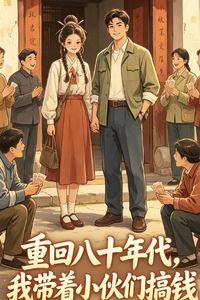
... Read More
What I love about this section is how the stakes keep escalating naturally without any forced drama. It starts small—Zhou Kun making a few dozen yuan a month versus his daughter making over a thousand trading eggs. That contrast alone creates this quiet but real pressure. If he doesn't figure something out, he's falling behind in his own family. The shame of that is palpable even though the author never states it directly. Then you've got Zhou Yulan in Suzhou, stuck outside the factory gate because she lacks the proper paperwork. She could just go home empty-handed. But she doesn't. She picks buttons for three days, learns the lay of the land, and then the author throws in the obstacle of the gatekeeper. Every time she gets closer to her goal, another barrier appears. That's good conflict design—each obstacle feels real and earned, not manufactured. And the climax of this sequence—Zhou Yuwei climbing over the factory wall, sneaking in, confronting Deputy Director Wu Xianjin while lying about being his relative, offering him cigarettes as a bribe—all of this is high-stakes because the consequences of failure are real. If Wu Xianjin exposes her, they lose their supply chain. If he calls security, they're done. The author makes you feel the tension of every conversation, every pause, every suspicious glance. And then she cuts the chapter at the most dangerous moment. I literally gasped out loud.
... Read More
Okay so I need to talk about the fight scene because it genuinely changed everything for me. Up until that point, Zhou Yuwei had been this quiet, timid girl who just followed instructions. But then Wu Di shows up with a whole crew and suddenly—BAM. She drops every single one of them. And I love how the narration describes it: "One punch. One kick. Her movements were quick, agile, and astonishingly clean." It wasn't just a fight; it was a complete character reveal disguised as action. The plot structure here is really smart too. You've got the family conflict with the grandparents trying to control everything, the father being financially strangled, and then this external threat from Wu Di that forces Zhou Yuwei to finally step up. All these threads converge in that one alley scene. And then immediately after, the bread factory opportunity falls into their laps like it was always meant to happen. That's good plotting—making the protagonist's skills and decisions directly lead to the next opportunity. I also appreciated how the author handled the transition from conflict to business. It didn't feel forced. Zhou Yuwei sees the egg shortage, asks the right question, and negotiates a deal in like three sentences. The pacing from the fight to the factory to the business setup was smooth. No filler. Just pure forward momentum. But here's what I'm wondering: the author set up Wu Di as this big threat, and then he got absolutely destroyed in one scene. Is he going to come back? Or was he just a stepping stone? I hope he comes back because honestly, Liu Changyun's dad showing up with a broom at the end was a better cliffhanger for me.
... Read More
Let's talk stakes because this author knows how to make you CARE what happens to these characters. The initial fight scene has real physical stakes—kids getting beaten, a father's anger, the vulnerability of being hungry and tired after a brawl. But then the school conflict escalates everything. Yuwei isn't just dealing with bullies; she's facing an entire institutional system that's willing to punish the victim. The teacher threatening to make her 'a public example,' the principal's office closing ranks with the bully's connected parents—this is systemic injustice, not just playground drama. What makes this so tense is that Yuwei has every reason to fold. She's quiet, she's been taught to endure, she's carrying the weight of her family's complicated history. The fact that she says 'I didn't do anything wrong. I won't apologize' is a massive character moment. She's choosing to fight when fighting seems impossible. But then Grandma Zhou enters the fray and the stakes shift dramatically. This isn't just about one girl anymore—it's about power versus power. The grandmother calling in favors from the Bureau of Education, gathering reporters, threatening to expose the school's corruption. The school administrators' hearts skipping when they realize who they've messed with? That's the moment the tension releases into satisfaction. The aftermath—multiple similar cases exposed, government intervention, the school being restructured—shows that the conflict had real consequences. This wasn't a superficial win; the entire system was challenged and changed. And Yuwei? She goes home hungry and gets noodles. The contrast between epic institutional battle and a bowl of warm noodles is exactly why this story works.

Leave a comment

You must be logged in to leave comments. or
