Back to the 1980s: Grandma Liu Beats Her Ungrateful Children - Reviews

Back to the 1980s: Grandma Liu Beats Her Ungrateful Children
+Add to Custom List
Sort
Add review
... Read More
Let's talk about Liu Meiling because WOW. The woman who spent her entire first life cooking, cleaning, and dying exhausted is now cracking eggs into flour and actually EATING them. One bite and "her whole body relaxed in satisfaction." That single sentence contains an entire lifetime of self-negation. And the way she treats Qian Mianmian—finding out she's her biological child and immediately her eyes get moist, she turns away to hide it—that's not acting, that's a mother's instinct finally waking up after decades of being manipulated. But here's what gets me: Li Baohuai, the third son, grabs a scorching-hot pancake fresh from the pan and chews it painfully without spitting it out. Liu Meiling's reaction? She kicks him and beats him with a slipper for picking vegetables poorly. Is she being abusive? No—she's being a mother who finally has standards. The violence is comedic but the love underneath is real. She's not nurturing incompetence. And Qian Feng—this kid ate rice off the floor because it was "cleaner than what he had snatched from a dog's mouth" but still didn't want to refuse Liu Meiling's clean bowl. That detail broke me. The relationship between these two is just... forming. It's fragile. It's real. And Liu Meiling saying "Children... they really are debts" while her eyes get moist? That's the thesis of the whole novel right there.
... Read More
This chapter is a masterclass in pacing. It opens with vomiting—actual retching over bad soup—and by the end we're watching a woman peacefully crack eggs for her breakfast. That's an enormous emotional arc compressed into roughly 20,000 characters, and the author never lets up. The structure moves in waves. First the domestic scene (soup, lunchboxes, the Qian siblings' discovery), then the action sequence (Xiao Yunchen rescue, salt on wounds, amnesia comedy), then the family confrontation (restaurant explosion), then the quiet aftermath (morning eggs, vegetable picking). Each section ends on a note that propels you forward: Li Mingliang faints again → system issues a rescue mission → Li Baoqing gets slapped → Mianmian reveals she's nineteen → Liu Meiling discovers the truth → she starts cooking for herself. What I love most is how the author uses transitions. Liu Meiling runs from the rescue straight into running into Qian Feng and Mianmian leaving the hospital. The rescue plot and the family plot collide naturally. And the restaurant scene—where she's already thrown out the eldest son's stuff and is now deciding to "settle these two siblings first"—that internal monologue is the pivot point. Everything before was reaction; everything after is intention. The chapter doesn't drag once. Not a single wasted beat.
... Read More
The stakes in this chapter are deceptively simple on the surface — it's about braised pork, right? But underneath that, everything is on the line. Liu Meiling isn't just fighting for a meal; she's fighting for her entire future. The external conflict is clear: her three spoiled children who see her as an ATM with legs. But the real tension comes from the internal conflict — the battle between the mother she was in her past life (self-sacrificing to the point of death) and the woman she's becoming now (ruthless, strategic, unapologetic). What makes this work so well is that every conflict has real consequences. When Liu Meiling demands half her eldest son's salary, she's not just being petty — she's reclaiming the money she spent putting him in that job. When she takes Qin Xiangru's last bill, she's ensuring her brother gets proper care while also teaching the Li family a lesson about who holds the power. The stakes escalate beautifully throughout the chapter. It starts with food, moves to money, then to housing (the Yangcheng courtyard), and finally to family dynamics (the hospital confrontation). Each level raises the tension without feeling forced. I'm also intrigued by the subplot with the demolition zone. Liu Meiling buying that courtyard for 2,800 yuan knowing it'll be demolished in two years — that's not just a business move, that's a power play. She's building a future her children can't touch, and that's the ultimate revenge. The chapter ends with Li Mingliang's expression changing, which raises the stakes even higher. What did he see? What's he thinking? I need to know.
... Read More
This chapter is a masterclass in escalating tension. It starts small — braised pork, a lunch box, kids complaining — and by the end Liu Meiling has bought a courtyard in Yangcheng and is calculating divorce. The author doesn't waste a single beat. The structure here is brilliant because it mirrors Liu Meiling's internal journey. First the explosion at home (emotional release), then the financial reckoning (practical planning), then the trip to Yangcheng (action), and finally the hospital scene with Qin Xiangru (social maneuvering). Each section builds on the last, and the pacing never drags because every scene has a clear purpose. What I love most is how the author uses the braised pork as a ticking clock. It's the catalyst, but the real story is what happens AFTER the initial outburst. Liu Meiling doesn't just yell and calm down — she immediately starts calculating: selling her job for 1,800 yuan, demanding half her eldest son's salary, squeezing money from Qin Xiangru. The transition from emotional to strategic is so smooth you barely notice it happening. The Yangcheng trip is a perfect breather between the home drama and the hospital confrontation. It gives us world-building without slowing things down — we learn about the demolition zone, the prices, her past-life knowledge of the area. And then the hospital scene lands like a punch because we've been waiting for it since the beginning. One thing I'd note: the chapter ends on a slightly abrupt note with Li Mingliang's expression changing. It's a cliffhanger that works because we're genuinely curious what happens next, but it also feels like the author is saving something for later. Either way, I'm hooked.
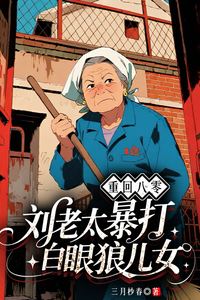
... Read More
The pacing in these chapters is absolutely ruthless and I mean that as the highest compliment. It starts almost conversationally — Li Baoqing confronting Liu Meiling on the kang, the dialogue flowing back and forth like a normal family argument. But within three paragraphs, the ground shifts. Liu Meiling agrees to the marriage. Li Baoqing panics. The reader panics with her. And then it just... accelerates. Li Mingliang arrives with the 2000 yuan and the whole scene turns into a rapid-fire exchange of denial, accusation, and violence. He spits blood. She feels satisfaction. She decides to divorce. Next morning she's on a train. The transition from "I'm divorcing you" to physically leaving the house happens so fast it's almost disorienting — and that's exactly the point. Liu Meiling isn't deliberating anymore. She's done. The Jingzhou sequence acts as a breather, but it's a tense breather. Every detail about the house purchase, the neighborhood office, Wu Chuan's family — it all builds anticipation because we KNOW something is going to explode back home. And when she returns, the author doesn't give us a slow build. It's immediate chaos. The children are already beaten. The kitchen is locked. Mianmian is half-naked in the courtyard. The pacing here is brutal — no warning, no setup, just the aftermath hitting you like a truck. What's remarkable is how the author controls reader engagement through these pacing choices. The quiet domestic scenes lull you into a false sense of stability, then the divorce and escape feel like a release of tension, only to slam it right back down with the abused children. It's exhausting in the best way. I literally wanted to shake the book.
... Read More
The central conflict of this entire novel is encoded in one image: a woman who spent her life serving others finally picking up a slipper and swinging it. But the stakes go way deeper than family drama. Liu Meiling's previous life ended with her exhausted, sick, and unappreciated—raising children who weren't even hers while her biological daughter was being starved and neglected. That's not just unfair; that's a lifetime of stolen identity. Every meal she cooked, every chore she did, every sacrifice she made was redirected toward people who took it for granted. The stakes of her transformation aren't just about getting revenge—they're about reclaiming a life that was never hers to begin with. The external conflicts are everywhere: Li Baoqing's entitlement, Li Mingliang's passive aggression, Qin Xiangru's covert sabotage, the financial pressure of a family that expects free labor. But the internal conflict is what keeps me hooked. Liu Meiling catches herself feeling guilty for wanting to eat an egg pancake alone. She has to unlearn decades of self-erasure. When she says to 0928 "I have no intention of treating myself harshly" while cracking those three eggs, that's a revolution in miniature. And the amnesia subplot adds real danger—Xiao Yunchen was literally dying in a ditch. The stakes aren't always domestic. Sometimes they're life and death, and Liu Meiling handles both with the same pragmatic energy. She saves him, charges him, and moves on. Nothing softens her, nothing slows her down. That's the tone of the whole book: when the victim stops being a victim, everything changes.
... Read More
Okay so this section is absolutely wild. Let me just say it straight up: Liu Meiling's decision to stop playing the villain and let Li Baoqing walk into her own disaster is one of the smartest plot moves in the entire novel. In her previous life, she actively sabotaged the marriage between Li Baoqing and Tao Minglang, and what did she get for it? Her stepdaughter blamed her until death. This time she just... steps aside. Says "this is your choice." And the genius of it is how the plot uses that single decision to expose Li Baoqing's own hypocrisy. Li Baoqing literally cannot process it when Liu Meiling agrees. She expects the fight, expects to be the wronged party, but instead she's handed the rope and has to tie the knot herself. That moment when she snaps and says "My mother would never let me marry him!" — that's the plot clicking into place perfectly. It reveals everything. Then there's the divorce thread, which I thought was going to be a slow burn but the author just GOES FOR IT. Liu Meiling wakes up, packs a bag, and takes a fifteen-hour train to Jingzhou. No drama, no goodbyes, just gone. And she buys a house on pure future-knowledge — knowing about demolition, knowing prices. The tension here is delicious because we know what's coming (Li Mingliang beating the kids while she's away) but we're also invested in whether she'll be ready for it. The plot doesn't drag at all. Every scene pushes her further toward independence while simultaneously raising the stakes at home.
... Read More
Okay, let's talk about Liu Meiling for a second because WOW. This chapter is basically her entire personality shift in one explosive scene. The braised pork moment? Chef's kiss. Her kids are standing there accusing HER of being selfish for eating meat she bought with her own money, and she just snaps. I love that she doesn't go gentle into that good night — she literally throws off the quilt and comes at them barefoot. That image of a mother in her nightgown, barefoot on the kang, swinging fists at her own children? That's not a scene, that's a painting. But what really gets me is Li Baoqing. This is the son she poured ALL her love into after Bao Mei died. She never refused him anything. And yet here he is, calling her out for not visiting his dad in the hospital while he was supposedly studying. The audacity. Liu Meiling slapping him wasn't just physical — it was the first time she saw him as a person instead of a vessel for her maternal devotion. "Dad needs tending, but I'm not a person?" — that line broke me. And then there's Qin Xiangru, this quiet suffering sister-in-law who gets manipulated into giving up her last bill. Liu Meiling taking that money and then later swapping the chicken soup portions at the hospital — that's not kindness, that's strategic. She's learning to play the game. The fact that she pinches a feather out of the soup and rubs it behind Qin Xiangru's back to make it look like more chicken? That's a mother who's done being naive.
... Read More
Three specific scenes in this chapter have lodged themselves permanently in my brain, and I need to talk about them. First: the drainage ditch behind the hospital. Three meters deep, no footholds, Xiao Yunchen bleeding with bluish fingertips after three days without water. The image of him thinking "I haven't even gotten married yet" as he's about to die is devastating. And then Liu Meiling appears through his blood-blurred vision saying "Don't die on me!" The visual of her crushing salt with a stone and sprinkling it on his wounds—0928 literally calls her a "living demon king"—is both horrifying and darkly funny. You can feel the sting through the page. Second: the state-run restaurant confrontation. A crowded mealtime, leftover braised pork, Li Baoqing's dramatic entrance, the bowls shattering on the floor. The public humiliation is palpable—you can feel every diner's attention shifting. The detail of Qian Mianmian picking up spilled rice and stuffing it into her mouth grain by grain while everyone else is performing drama around her? That's cinematic. That's the kind of detail that makes a scene breathe. Third: the "backyard" behind the latrine where Liu Meiling grows vegetables. She's been growing food in literally a patch of land next to a toilet her whole life. And now she's reclaiming that space, using it to feed the children she actually loves. The latrine imagery bookends her journey—from suffering near it to transforming it into something productive.
... Read More
The dialogue in this chapter is absolutely fire. Liu Meiling's voice is so distinct — she goes from quiet calculation to full-on verbal warfare in half a sentence, and it's glorious. Let me just quote a few lines because I need you to hear this: "What? Just because I'm old I'm supposed to die? I spend my own money to eat a few pieces of meat, and I need your approval?" That's not just dialogue, that's a manifesto. And then Li Baoqing's response: "You're so old, one extra bite won't hurt! I'm still growing!" — the entitlement in that line is so perfectly written it hurts. This kid has never once considered that his mother might be hungry too. The author gives each character a completely different way of speaking. Li Baoguo is all defensive and whiny, Li Baoqing is cold and calculating, Li Baohuai is just hungry and lazy. Even Qin Xiangru has her own voice — quiet, apologetic, but with this undercurrent of resentment that Liu Meiling senses immediately. My favorite exchange has to be the one with Qin Xiangru at the end. Liu Meiling taking the soup meant for Li Mingliang and saying "It's all from the same pot — what's the difference?" while secretly swapping it? That's dialogue as warfare. She's performing kindness while executing a prank, and the reader is in on the joke the whole time. The narrative voice is also worth mentioning — it's got this wry, almost sarcastic tone that perfectly matches Liu Meiling's new mindset. When it describes her pinching the feather and rubbing it behind Qin Xiangru's back, the author doesn't need to say "she was being manipulative" — the action speaks for itself.
... Read More
The imagery in these chapters is so vivid it practically jumps off the page. Let me start with the train journey — fifteen hours to Jingzhou, Liu Meiling too scared to even take off her pants to use the bathroom because she's hiding money inside them. The detail about the rough canvas bag scratching her arm and her not caring is such a small thing but it tells you everything about her state of mind. She's not traveling for comfort; she's escaping. The meat buns bought on the roadside, the wrinkled map, the 1.89 yuan guesthouse room with two kettles of hot water — this is a woman who has spent her entire life being penny-pinched and now she's spending money on herself for the first time. The contrast is devastating. Then there's the courtyard house scene. The boy Wu Chuan describing his mother's death, his father's remarriage to a cousin, the grandmother who's "famous in the neighborhood for causing scenes and cursing people" — this is worldbuilding through dialogue, and it's brilliant. You don't need a paragraph of exposition to understand the toxic family dynamics; they're baked into how Wu Chuan speaks about his own father. And Liu Meiling's internal response — "Who could be more troublesome than her own parents?" — is both funny and heartbreaking because it reframes everything she's endured. But the scene that haunts me is the ending. Liu Meiling walking through the door to find her children battered and half-naked, Qian Mianmian "covered with Qian Feng's clothes like a puppet," and Li Mingliang sitting on a stool smoking his pipe like nothing happened. The visual of that — the contrast between his casual smoke and their devastation — is cinematic. And then the detail about the onlookers "whistling lewdly" at Mianmian while she's stripped outside... the author doesn't shy away from how ugly this world can be.
... Read More
The dialogue in this chapter is absolutely filthy with character. Every person speaks like themselves, and I need to highlight the ones that made me laugh out loud or gasp. Liu Meiling's restaurant speech is a masterpiece of compressed rage: "Just because you can come out and eat, I don't deserve a meal at a state-run restaurant? I earn a little over fifty yuan a month. Even if I ate here every day, I could support myself." That's not just dialogue—that's a manifesto. And then she pivots to "I raised you five siblings alone—don't I deserve a decent meal? After ten-plus years of hard work, I want a break. So what?" The rhetorical questions pile up like bricks. You can hear her voice getting louder with each sentence. Xiao Yunchen's amnesia scene has the funniest exchange in the chapter. "Are you my mom?" / "No. I'm just a kind passerby!" This woman saves a dying stranger and her first concern is collecting medical fees. The system's commentary—"Hell was empty—the King of Hell was walking among the living"—is narration that absolutely steals the scene. And Li Mingliang, the patriarch, who gets hit with a plate in public and is just... dizzy and embarrassed. His entire authority dissolves in one throw. The dialogue doesn't need to explain it. The action says everything. Qin Xiangru's line about the children "burning our house" while her own child is dying is the kind of casual cruelty that only exists in these family dramas. And Liu Meiling's response—"might as well treat us for the week too—two yuan fifty in total!"—turns moral bankruptcy into a transaction. Genius.

Leave a comment

You must be logged in to leave comments. or
