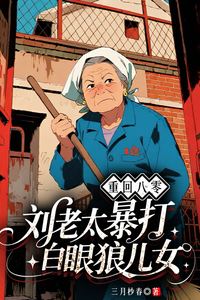
Back to the 1980s: Grandma Liu Beats Her Ungrateful Children
Novel Info

Summary

... Read More
{ "summary": "

Liu Meiling, a level-two worker at a textile factory in 1980s China, endures decades of exploitation by her husband Li Mingliang and her five children. For over ten years, Li Mingliang withholds his entire salary, forcing Liu Meiling to work odd jobs and scavenge market scraps to feed the family. Her eldest son Li Baoguo, whom she dotes on, demands an exorbitant 888-yuan bride price for his engagement to Zhan Hongmei. When her youngest daughter Baomei is assaulted by Zhan Hongmei's brother, Liu Meiling publicly exposes her husband's financial betrayal at the steel mill, where workers discover Li Mingliang has given nothing to his family for a decade. During this confrontation, Li Mingliang beats Liu Meiling, causing her to cough blood and collapse.

Upon waking, Liu Meiling realizes she has been reborn to 1983, the day before Baomei's disappearance and the day Li Mingliang forced her to give her job to his rural cousin Qin Xiangru. In her previous life, this sequence of events led to Baomei's death, her eldest son's betrayal, and her own lonely death on a wooden bed at age seventy-five, called a freeloader by the children she raised. This time, Liu Meiling slaps her eldest son, reveals Li Mingliang's secret affair with Qin Xiangru, and throws him out of the house. She rescues Baomei from the alley where Zhan Dazhuang attacks her, then confronts the Zhan family, refusing the bride price and ensuring both Zhan boys face legal consequences for assault.

When Qin Xiangru returns to the Li household, Liu Meiling recognizes the pattern: Qin Xiangru's arrival coincides with family chaos, a tactic to create an alibi. Liu Meiling recalls that in her past life, Qin Xiangru received her job through manipulation while Baomei went missing. Determined to break the cycle, Liu Meiling discovers a hidden stash of 3,900 yuan in her home, money Li Mingliang had concealed from her. She also learns that a system called 0928 Good Deeds Report has bound to her soul, rewarding acts of kindness with gifts and information. Using this system, she identifies Qian Feng, a boy beaten by his mother Qin Xiangru, as her biological son, confirmed by a paternity test report.

Liu Meiling takes Qian Feng and his sister Mianmian to the hospital, paying their medical fees. She then confronts Li Mingliang at the steel mill, where workers witness her public accusation. Li Mingliang, fearing loss of his reputation, agrees to pay. Liu Meiling demands 7,000 yuan in back wages, calculating his decade of withheld income. She retrieves the hidden money from her home and purchases a courtyard in Yangcheng, knowing it will be demolished for profit within two years. She also buys meat and eats it herself, refusing to deprive herself as she did in her past life.

Her children return and demand she share the food. Liu Meiling announces she will no longer support their education or expenses, telling her eldest son his job belongs to her and demanding half his salary. She plans to sell her textile factory position for 1,800 yuan, giving her over 5,700 yuan total. With this capital, she intends to open a business, divorce Li Mingliang, and raise only her biological children Qian Feng and Baomei. She refuses to let her second son repeat his past-life failures and cuts off all financial support for the ungrateful eldest, third, and fourth children. The story follows Liu Meiling's transformation from a self-sacrificing mother to a woman who prioritizes her own survival and the well-being of her true children, using her knowledge of the future and the mysterious system to secure her independence."

}

Novel Items

More
Rare Herb
One of four rare herbs required to fully cure Qin Yunchuan's poison. Master Kang stated none of the four herbs can be missing. It is extremely precious and hard to find.
Rare Herb
One of four rare herbs needed to fully cure Qin Yunchuan. It is also the main ingredient for Mianmian's Clear-Heart Pill. Mianmian had possessed it before traveling to this world.
Rare Herb
One of four rare herbs required to fully cure Qin Yunchuan's accumulated poison. Master Kang listed it as essential and extremely precious.
Rare Herb
One of four rare herbs needed to fully cure Qin Yunchuan. Master Kang warned that they may not find all four herbs before his Big Brother passes away.
Pill
A pill for which Silverheart Lotus is the main ingredient. Mianmian had previously used Silverheart Lotus to make this pill before traveling to the current world.
Prescription
Master Kang wrote a prescription for Qin Yunchuan after taking his pulse. One course lasts seven days. The medicine would only partially help since the four rare herbs are needed for a full cure.
Latest Release
DateGroupRelease
2026-08-11shanghai fantasy c58
2026-08-11shanghai fantasy c57
2026-08-11shanghai fantasy c56
2026-08-11shanghai fantasy c55
2026-08-11shanghai fantasy c54
2026-08-11shanghai fantasy c53
2026-08-11shanghai fantasy c52
2026-08-11shanghai fantasy c51
2026-08-11shanghai fantasy c50
2026-08-11shanghai fantasy c49
2026-08-11shanghai fantasy c48
2026-08-11shanghai fantasy c47

Community Reviews

Rating(4 / 5.0, 14votes)
5 stars
6(43%)
4 stars
2(14%)
3 stars
6(43%)
2 stars
0(0%)
1 stars
0(0%)

Popular reviews

... Read More
Let's talk about Liu Meiling because WOW. The woman who spent her entire first life cooking, cleaning, and dying exhausted is now cracking eggs into flour and actually EATING them. One bite and "her whole body relaxed in satisfaction." That single sentence contains an entire lifetime of self-negation. And the way she treats Qian Mianmian—finding out she's her biological child and immediately her eyes get moist, she turns away to hide it—that's not acting, that's a mother's instinct finally waking up after decades of being manipulated. But here's what gets me: Li Baohuai, the third son, grabs a scorching-hot pancake fresh from the pan and chews it painfully without spitting it out. Liu Meiling's reaction? She kicks him and beats him with a slipper for picking vegetables poorly. Is she being abusive? No—she's being a mother who finally has standards. The violence is comedic but the love underneath is real. She's not nurturing incompetence. And Qian Feng—this kid ate rice off the floor because it was "cleaner than what he had snatched from a dog's mouth" but still didn't want to refuse Liu Meiling's clean bowl. That detail broke me. The relationship between these two is just... forming. It's fragile. It's real. And Liu Meiling saying "Children... they really are debts" while her eyes get moist? That's the thesis of the whole novel right there.
... Read More
This chapter is a masterclass in pacing. It opens with vomiting—actual retching over bad soup—and by the end we're watching a woman peacefully crack eggs for her breakfast. That's an enormous emotional arc compressed into roughly 20,000 characters, and the author never lets up. The structure moves in waves. First the domestic scene (soup, lunchboxes, the Qian siblings' discovery), then the action sequence (Xiao Yunchen rescue, salt on wounds, amnesia comedy), then the family confrontation (restaurant explosion), then the quiet aftermath (morning eggs, vegetable picking). Each section ends on a note that propels you forward: Li Mingliang faints again → system issues a rescue mission → Li Baoqing gets slapped → Mianmian reveals she's nineteen → Liu Meiling discovers the truth → she starts cooking for herself. What I love most is how the author uses transitions. Liu Meiling runs from the rescue straight into running into Qian Feng and Mianmian leaving the hospital. The rescue plot and the family plot collide naturally. And the restaurant scene—where she's already thrown out the eldest son's stuff and is now deciding to "settle these two siblings first"—that internal monologue is the pivot point. Everything before was reaction; everything after is intention. The chapter doesn't drag once. Not a single wasted beat.
... Read More
The stakes in this chapter are deceptively simple on the surface — it's about braised pork, right? But underneath that, everything is on the line. Liu Meiling isn't just fighting for a meal; she's fighting for her entire future. The external conflict is clear: her three spoiled children who see her as an ATM with legs. But the real tension comes from the internal conflict — the battle between the mother she was in her past life (self-sacrificing to the point of death) and the woman she's becoming now (ruthless, strategic, unapologetic). What makes this work so well is that every conflict has real consequences. When Liu Meiling demands half her eldest son's salary, she's not just being petty — she's reclaiming the money she spent putting him in that job. When she takes Qin Xiangru's last bill, she's ensuring her brother gets proper care while also teaching the Li family a lesson about who holds the power. The stakes escalate beautifully throughout the chapter. It starts with food, moves to money, then to housing (the Yangcheng courtyard), and finally to family dynamics (the hospital confrontation). Each level raises the tension without feeling forced. I'm also intrigued by the subplot with the demolition zone. Liu Meiling buying that courtyard for 2,800 yuan knowing it'll be demolished in two years — that's not just a business move, that's a power play. She's building a future her children can't touch, and that's the ultimate revenge. The chapter ends with Li Mingliang's expression changing, which raises the stakes even higher. What did he see? What's he thinking? I need to know.
... Read More
This chapter is a masterclass in escalating tension. It starts small — braised pork, a lunch box, kids complaining — and by the end Liu Meiling has bought a courtyard in Yangcheng and is calculating divorce. The author doesn't waste a single beat. The structure here is brilliant because it mirrors Liu Meiling's internal journey. First the explosion at home (emotional release), then the financial reckoning (practical planning), then the trip to Yangcheng (action), and finally the hospital scene with Qin Xiangru (social maneuvering). Each section builds on the last, and the pacing never drags because every scene has a clear purpose. What I love most is how the author uses the braised pork as a ticking clock. It's the catalyst, but the real story is what happens AFTER the initial outburst. Liu Meiling doesn't just yell and calm down — she immediately starts calculating: selling her job for 1,800 yuan, demanding half her eldest son's salary, squeezing money from Qin Xiangru. The transition from emotional to strategic is so smooth you barely notice it happening. The Yangcheng trip is a perfect breather between the home drama and the hospital confrontation. It gives us world-building without slowing things down — we learn about the demolition zone, the prices, her past-life knowledge of the area. And then the hospital scene lands like a punch because we've been waiting for it since the beginning. One thing I'd note: the chapter ends on a slightly abrupt note with Li Mingliang's expression changing. It's a cliffhanger that works because we're genuinely curious what happens next, but it also feels like the author is saving something for later. Either way, I'm hooked.
... Read More
The pacing in these chapters is absolutely ruthless and I mean that as the highest compliment. It starts almost conversationally — Li Baoqing confronting Liu Meiling on the kang, the dialogue flowing back and forth like a normal family argument. But within three paragraphs, the ground shifts. Liu Meiling agrees to the marriage. Li Baoqing panics. The reader panics with her. And then it just... accelerates. Li Mingliang arrives with the 2000 yuan and the whole scene turns into a rapid-fire exchange of denial, accusation, and violence. He spits blood. She feels satisfaction. She decides to divorce. Next morning she's on a train. The transition from "I'm divorcing you" to physically leaving the house happens so fast it's almost disorienting — and that's exactly the point. Liu Meiling isn't deliberating anymore. She's done. The Jingzhou sequence acts as a breather, but it's a tense breather. Every detail about the house purchase, the neighborhood office, Wu Chuan's family — it all builds anticipation because we KNOW something is going to explode back home. And when she returns, the author doesn't give us a slow build. It's immediate chaos. The children are already beaten. The kitchen is locked. Mianmian is half-naked in the courtyard. The pacing here is brutal — no warning, no setup, just the aftermath hitting you like a truck. What's remarkable is how the author controls reader engagement through these pacing choices. The quiet domestic scenes lull you into a false sense of stability, then the divorce and escape feel like a release of tension, only to slam it right back down with the abused children. It's exhausting in the best way. I literally wanted to shake the book.
... Read More
The central conflict of this entire novel is encoded in one image: a woman who spent her life serving others finally picking up a slipper and swinging it. But the stakes go way deeper than family drama. Liu Meiling's previous life ended with her exhausted, sick, and unappreciated—raising children who weren't even hers while her biological daughter was being starved and neglected. That's not just unfair; that's a lifetime of stolen identity. Every meal she cooked, every chore she did, every sacrifice she made was redirected toward people who took it for granted. The stakes of her transformation aren't just about getting revenge—they're about reclaiming a life that was never hers to begin with. The external conflicts are everywhere: Li Baoqing's entitlement, Li Mingliang's passive aggression, Qin Xiangru's covert sabotage, the financial pressure of a family that expects free labor. But the internal conflict is what keeps me hooked. Liu Meiling catches herself feeling guilty for wanting to eat an egg pancake alone. She has to unlearn decades of self-erasure. When she says to 0928 "I have no intention of treating myself harshly" while cracking those three eggs, that's a revolution in miniature. And the amnesia subplot adds real danger—Xiao Yunchen was literally dying in a ditch. The stakes aren't always domestic. Sometimes they're life and death, and Liu Meiling handles both with the same pragmatic energy. She saves him, charges him, and moves on. Nothing softens her, nothing slows her down. That's the tone of the whole book: when the victim stops being a victim, everything changes.
See all reviews

Characters

See all characters

Custom lists

Oops…There is nothing here.