As My Lady Commands - Reviews

As My Lady Commands
+Add to Custom List
Sort
Add review
... Read More
I am not okay. I need someone to hold me right now. So Yan faints, wakes up in a different room, and Astrina — the same woman who just threatened to cut his throat — feeds him soup. She even tastes it first to prove it's not poisoned. Do you understand how layered that moment is? On the surface it's cruelty — 'eat or I'll make you eat it.' But underneath, she's taking care of him. A master caring for their animal. Or... something else entirely. Then she names him. Yan. Star. In the language of his homeland, no less. She chose a word that means light in the darkness for a boy who has lost everything. And she never calls him by that name afterward because she knows it would hurt too much — being called something so intimate by a stranger who made it up. The line that wrecked me was her internal thought: 'He reminded her of an old friend she had failed to protect.' She projected her guilt onto him. She's not taming a slave — she's trying to save someone from dying because she couldn't save someone else before. That's not manipulation. That's grief wearing a mask. And Yan — this boy who just wanted to survive, who ran until his legs gave out, who swallowed his pride and repeated 'I don't want to die' like a broken record — he stared at her back and saw something he couldn't read. 'From the moment the name was given, he had been staring at her retreating figure with undisguised shock.' He thought she knew what Yan meant. She didn't seem to. Or maybe she did and she's just playing the fool on purpose. I can't tell anymore and I'm obsessed with figuring it out.
... Read More
Okay, I need to talk about this insane dynamic between Astrina and Yan because my brain is still spinning. This girl — this so-called mad princess — just completely broke this boy in the most calculated way possible and honestly? It was terrifying to watch. The scene where she asks him to be her dog... that is some next-level psychological domination right there. She could have killed him. Her brother would have mounted his head on a spike. And yet she 'pleaded with brother and saved your life' — delivered with a sweet voice tickling his ear while her eyes held something she couldn't name. Desperation? Grief? Guilt? The narration literally says she was an impossible woman to read. One moment childlike, the next something adult slipped through. But here's what got me — after he passed out from the trauma of it all, Astrina's internal monologue is COLD. She's thinking about how she can't trust him, how he could flip to Lien's side any second, how she needs to extract information from him about the palace layout and guard rotations. She's performing 'foolishness' to keep him close while using him. That is a woman who has been hurt so badly that trust is now a foreign concept to her. And yet. When she looked at him — really looked at him — she saw those gold eyes and thought they looked like stars. And she named him Yan. In the ancient northern tongue, it means star. She gave him something beautiful and he didn't even know it. That shift in his expression when she walked away... chills. Actual chills. The relationship is built on manipulation from both sides, and that's what makes it so electric. He's playing along because he has no choice. She's performing madness because she has no choice either. Two trapped animals circling each other in the dark.
... Read More
Okay, so let me just say this upfront: Lien is one of those characters that keeps you up at night. Not because he's cartoonishly evil, but because the book MAKES you feel like he actually loves this girl. Like, there's this whole scene where he sits by her bed and whispers, "You may not believe it, but I care for you very much." And I was sitting there like—what?? Since when did I become sympathetic toward the crown prince?? But then he follows it up with "So I'm not angry. Not yet." Which is such a LINE. Such a gorgeous, chilling line. He's framing torture as something almost merciful—like he's doing her a favor by giving her three chances to talk. Three. CHANCES. To betray someone who trusted her. And the worst part? The book doesn't let us off the hook. After the mage extracts the info and Astrina blurted out Mohen, Lien strokes her back with a "pitying expression" and says "It's all thanks to you, Asti." PITYING. Like SHE'S the victim here. Like HE's the one who suffered. What gets me is the sibling dynamic. They grew up together. She called him brother. And he weaponized that intimacy—knowing exactly where to press, knowing her soft spots. The scene where he says "Because you were weak, and beautiful, and special"—that's not just an answer, that's a MONOGRAPH on his entire relationship with her. She was special TO HIM, which is exactly why destroying her meant so much. And Astrina? She held out for twenty days. Twenty. Days. Of nail-pulling and water-only torture, and she didn't break until a MAGICAL MAGE showed up and literally manipulated her mind. The fact that she was physically strong enough to resist pain but couldn't resist magical compulsion—that's brutal irony. Then there's Yan. Oh god, Yan. The way the author shifts from this determined, focused warrior riding north to this broken man on his knees in the snow—that hit me like a truck. His last thought before everything falls apart is this soft, almost romantic memory: "She was always locked in that dreary tower." And then he sees the ashes. The contrast is DEVASTATING. I keep thinking about how Yan's arc mirrors Astrina's in these parallel tracks. Both of them loved someone they couldn't protect. Both of them are left with nothing but rage. But where Astrina broke under pressure, Yan BREAKS and then STANDS BACK UP as something worse. The final image of the series—Astrina, limping, still alive but hollowed out, while the new king keeps her close like a pet—that haunts me. She survived everything and it COST her everything. I need to process this.
... Read More
Okay so I need to talk about Yan and Astrina because OH MY GOD. The whole thing where Yan offers to take her to Mohen — that scene hit me like a truck. Here's this guy who lost his country, his family, everything, and he's still standing there with conviction in his voice saying he's going to reclaim his land. And Astrina watches him and literally thinks 'I want to be like you.' I had to pause reading because my chest actually hurt. She's been trapped in that tower her whole life, playing the fool to survive, and he's this person who just... knows who he is and what he wants. No fear. Just pure, unbroken will. But then the ending of this batch? The passage scene? I cannot recover. Astrina unlocks his chains. She tells him to go be free. And when she says 'I hope we never meet again' — I literally gasped out loud. Because we ALL know they will meet again, and it will be on opposite sides of a war. Yan feels it too. The text says 'he could not decide whether it was all right to leave like this' and 'he felt lost.' He doesn't understand why, but he knows something is wrong with walking away. And then Astrina? She waits until his footsteps disappear. She closes the passage. And then she notices her cheeks are wet. She didn't even realize she was crying. And then she LAUGHS. Not a happy laugh — a 'I finally got one over on Lien' laugh, but also just pure release. She chose the path that made her unhappy instead of the comfortable escape with Berg. That is some next-level self-awareness and heartbreak right there. The tragedy isn't just that they're being forced apart. It's that they BOTH wanted the same thing and couldn't have it. Yan wanted her to come. Astrina wanted to follow. But duty, war, politics — all of it stood in the way. And the worst part? Hylus actually cares about her. He shows up crying because she faked an injury to scrap the engagement. Meanwhile Yan is disappearing into darkness and Astrina is laughing through tears. The emotional whiplash in this batch alone is insane.
... Read More
Okay so Yan goes to Astrina's room because he's convinced he should check on her, tells himself it's so he won't get blamed if she dies, classic deflection right? But then he's standing over her and the text literally says 'If he snapped her neck right now' — and his arm moves before he can stop it. I had to pause here. This kid has every reason to hate her and she's the embodiment of everything that destroyed his family, and yet the very thing he wanted most in the beginning, revenge, is right there in front of him and he CANT do it. Even his body betrays him toward mercy. But then the restraint device zaps him and suddenly we get this whole backstory about Astrina's poisoning — she's been taking small doses of poison for SIX YEARS to build tolerance, forgot to take her dose, and is now burning up. The irony is so thick I could barely read through it. Her own mother's poison, cultivated secretly at the base of the tower where she's imprisoned. This is not a princess who survives by luck. And then the cherry on top: Lien shows up and casually suggests Astrina test whether Yan can beat her sister's black lion. Yan just said he's never lost to anyone his age and now she's sending him to probably die for her entertainment? The plot just went from personal hostage drama to full political chess game in one conversation. I love that Astrina herself calls it monstrous but also — and this is the devastating part — seems to already know Yan won't refuse her.
... Read More
There's this one line that just wrecked me: 'This tower really was the princess's cage.' Not metaphorically. Literally. The lock opens from the OUTSIDE. Moonlight through iron bars stretching across stone. I keep thinking about how the author describes the North Tower storage room too — years of unsorted items piled up, dust, darkness. Everything about Astrina's world is something closed off and unused and forgotten. But the most cinematic moment has to be the fever scene. Dark room, no light, Astrina curled up breathing like she might stop, Yan hovering over her, her saying 'It hurts, Mama' in her sleep. The author writes 'Transparent tears slid from the corners of Astrina's eyes' and I just — I couldn't breathe. A grown princess reduced to a feverish child calling for a mother who died when she was ten, and Yan is the enemy standing above her. The snow scene with Lien hits different though. 'Beyond the frosted window, snowflakes drifted through the grey sky like flower petals. The heavy things would pile up below, and the light ones would be carried far away on the wind.' Astrina wants to be weightless, wants to fly to the edge of the sky and melt into the sun. That imagery is so beautiful and so devastating because it's not escape — it's annihilation. She's not dreaming of freedom, she's dreaming of disappearing entirely.
... Read More
I need to talk about pacing because the author here is playing with something really dangerous—making torture scene after torture scene and somehow keeping it from becoming numbing. Let me walk through how this unfolds. We open with political exposition—northern coalition gone missing, king dying, winter setting. This is the slow burn, the calib before the storm. You could skip it if you wanted, and honestly some people would. But then BOOM—Sir Ralph walks in and drops the bomb: the Nashakh slave is gone. The ring is gone. And suddenly the political plot AND the personal plot collide. From there, the pacing SPRINTS. Lien's conversation with Ralph is brief, sharp, then we're cut to him walking toward Astrina's chambers. No transition. No breathing room. You feel the inevitability of it. The interrogation scene—this is where I want to really talk about structure. The author gives us THREE BEATS: Beat one: verbal pressure. Lien sitting by her bed, asking questions softly. This is the most tense part, honestly. The quiet threat is worse than any scream. Beat two: physical torture. Twenty days of fingernails, toenails, starvation. The author summarizes this in a few paragraphs—which is actually brilliant, because if they wrote out twenty days of detailed torture, I would've shut the book. The summary format lets the horror live in your imagination, which is ALWAYS worse. Beat three: magical extraction. The mage arrives, touches Astrina's head, and just... removes her will. This is where the pacing actually SHIFTS. Everything goes hazy. Time becomes meaningless—"Hours passed, or days, or perhaps weeks." The prose itself becomes disoriented, mirroring Astrina's mental state. And then—the reveal. Astrina screams out Mohen. The coalition is dead. And we CUT immediately to Yan. Not to Lien celebrating, not to Astrina grieving, but to Yan riding. This structural choice is GENIUS because it maintains momentum while also creating dramatic irony so painful it hurts. We know what's coming. Yan doesn't. We're riding toward the explosion with him. The Mohen scene—again, summarized rather than detailed. Burned forests, red snow, bodies everywhere. The author trusts us to fill in the horror. And then Yan's breakdown, raw and unfiltered, followed by his transformation into pure vengeance. The final section drops us back in Loendis with time-skip language—"the king died that same year," "accumulated more defects as winter passed." This cool, observational tone after the emotional nuclear blast is almost too much. It's like the world keeps turning, which is somehow more depressing than if everyone had collapsed. The pacing throughout this batch is relentless. There is NO breathing room. Every scene propels directly into the next catastrophe. And yet—somehow—it doesn't feel rushed. Each section gets exactly the space it needs. The political setup is brief but necessary. The torture is compressed but devastating. Yan's journey is breathless. The aftermath is cold and distant. This is professional-level pacing. The author knows when to sprint and when to make you sit in silence. I read most of this in one sitting and immediately felt the need to lie down.
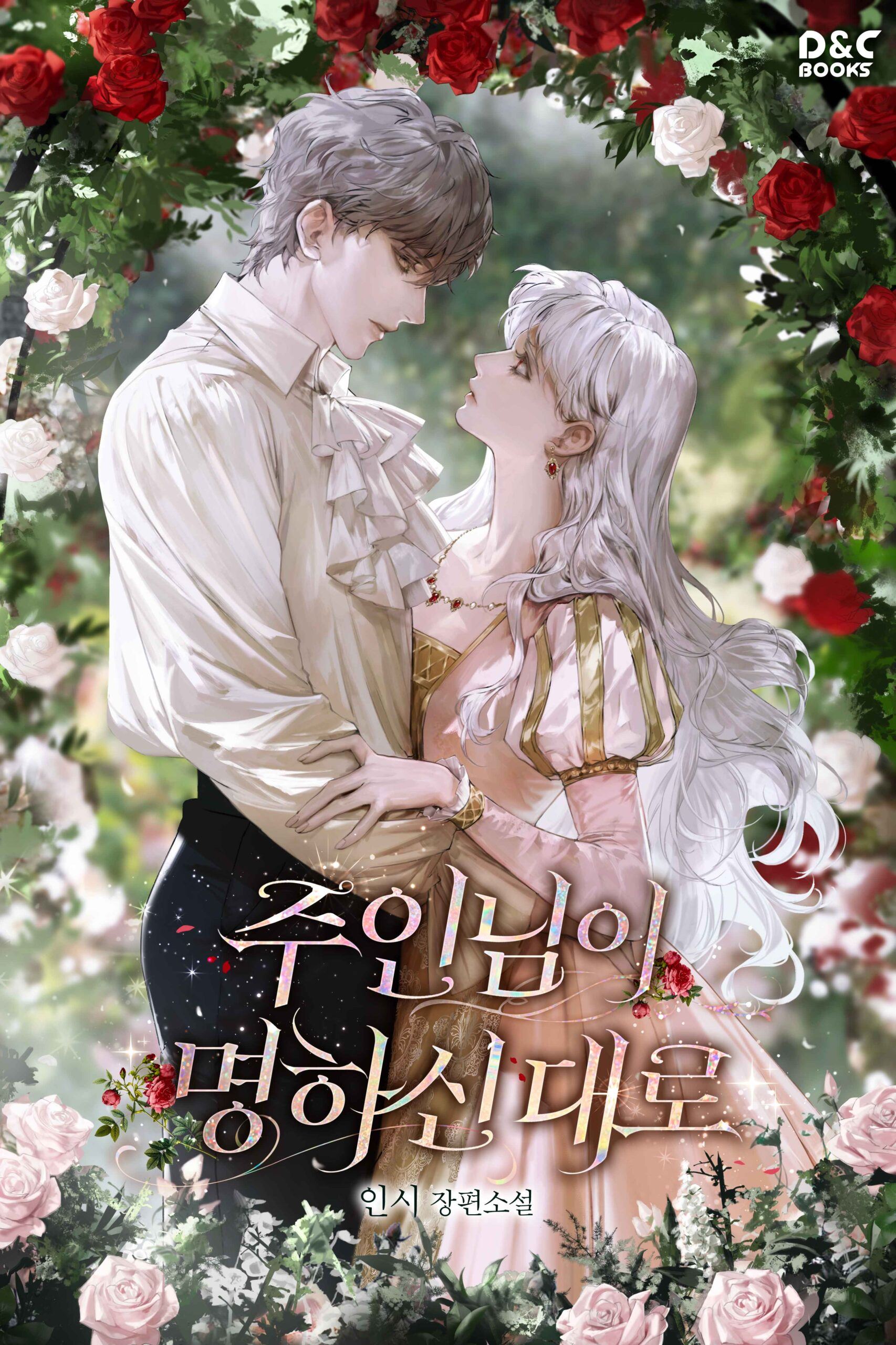
... Read More
The dialogue between Astrina and Yan in these chapters is absolutely delicious because neither of them says what they actually mean. Watch: Astrina says "Would you please just leave me alone?" but what she means is "I'm scared and I need you but I can't ask for it." Yan responds with "If I don't stop you, you end up bleeding" and what he means is "I can't stand watching you destroy yourself and I don't know how to tell you to stop." And then the beautiful escalation — she yells "Your right arm healed just fine when I treated it!" and he fires back "That's healing because of my own recovery, obviously. How can you compare your body to mine?" This is two people who are desperately trying to care for each other but only know how to argue. Later, after the Ashana encounter, Yan tries to say something genuinely tender — "In my eyes, you're seriously unwell. You need rest and care." And Astrina, brilliant defensive Astrina, immediately deflects: "Is it because you're worried I'll be a burden when we escape?" NO. Just... no. The miscommunications here are so painfully human. And then Ashana's voice is completely different — that predatory sweetness, "Come to me," "choose me and I'll give you your freedom!" — her dialogue has this oily, performative quality that makes you want to throw something at her. Each character sounds distinctly themselves.
... Read More
This batch is absolutely saturated with symbolism, and I think the central metaphor is one that the entire story has been building toward: the cage and the choice to stay in it. Astrina has always been the canary. Lien explicitly calls her this — 'Like a canary in a cage.' But here's the thing that makes her character arc so much deeper than a typical prison narrative: she wasn't just trapped. She CHOSE to play the part of the madroom princess. She performed insanity as a survival strategy. The cage was real, but so was her complicity in it. That's a far more complicated relationship with freedom than simply wanting to escape. The chains Yan wears are another layer. Physical restraints that Astrina unlocks. But symbolically, they represent something bigger — the bonds of duty, obligation, and sacrifice that chain us to people we're supposed to protect. Yan is chained to his quest for revenge. Astrina is chained to her role as a political pawn. The moment she frees his physical chains, she simultaneously chains herself to a different kind of duty: staying behind to protect him by making sure the engagement appears legitimate. The passage itself is loaded with meaning. A secret way out hidden in plain sight — the smooth stones, the air current, the concealed mechanism. It mirrors Astrina's entire existence: the appearance of madness hiding sharp clarity underneath. The passage was always there. The exit was always possible. But reaching it requires both the knowledge of how to open it AND the willingness to walk through. And then there's the fall. Astrina deliberately misses the step. She chooses to injure herself rather than fulfill the engagement. This is the ultimate act of agency for a character who has had zero control over her life. She can't choose WHERE she goes, but she can choose HOW she gets there. The fall is both literal and symbolic — a descent that paradoxically represents upward movement toward freedom. The final image of the batch — Lien burning a note, the paper turning to ash — echoes the theme of impermanence and erasure. Everything is temporary. Everyone is disposable. The only thing that matters is what you choose to do while you still have the power to choose.
... Read More
Let me just say this: the stakes in this book are not subtle and I am here for it. Astrina is a princess whose mind has broken, trapped in a tower, kept alive solely because the crown prince finds her amusing. One month into having a boy—a literal slave with a control device—assigned to her as a companion, and she's already running mental calculations about whether he could snap her neck. "Her thin neck would break without much effort at all." That thought alone should be enough to make anyone's blood run cold. But the real conflict isn't just Astrina vs. her circumstances. It's layered. There's the surface conflict—Astrina tormenting the boy, testing him, trying to make him show his hand. Then there's the hidden conflict underneath: is he actually her enemy, or is he another prisoner like her? The text gives us everything and nothing. He doesn't speak to her first. He doesn't react to water dumped on him. He stands like furniture. Is that submission, or is it patience? Astrina assumes the worst—assassination, revenge for his destroyed homeland—but the narrative keeps pulling back, making us wonder if she's projecting her own paranoia onto someone who might actually be as trapped as she is. And then the wager. Astrina turns her torment into a public spectacle, bringing in a knight who wants something from the crown prince, offering a wish as prize, setting a sunset deadline. This isn't just cruelty—it's strategy. She's forcing the boy into a situation where his silence can no longer protect him. If he fights back, he proves he's dangerous. If he doesn't, he might die. Either way, she learns something. Meanwhile, Celestia is playing her own game with Lien, and Winzel is caught between loyalty and survival, and the queen is watching everything from afar, ready to dispose of Astrina the moment Lien's interest fades. Every character is both a player and a piece, and the board keeps getting more crowded. The tension here isn't maintained through action scenes—it's maintained through the sheer density of people trying to survive in a system designed to crush them. And I cannot look away.
... Read More
There's this recurring idea throughout these chapters that your body is both your weapon and your prison, and I can't stop thinking about it. Astrina uses self-harm as a language — when she can't speak truth, she bleeds. When she can't be seen as intelligent, she makes herself look broken. The bandages become this weird symbol of the opposite: Yan wrapping his wounds becomes an act of care, but Astrina unwrapping them or inflicting new ones becomes an act of survival. And then Yan's homeland — the Nashakh land where snow collapses roofs and people come together to rebuild — that's the antithesis of everything the palace represents. In the palace, everyone is isolated, watched, used. In Yan's memory, disaster brings community. One place destroys what it touches; the other repairs it. The ashes and bones of his people vs. the pristine, rotting beauty of the royal court. And Yan himself is this walking symbol — a slave with a restraint device, owned by someone else, yet he's the one who keeps choosing to protect Astrina. He has every reason to want freedom for himself alone, but instead he's bandaging the princess who could get them both killed. I think the novel is asking: what does it mean to be human when everything around you treats you like an object? Yan was called "a dog" by Ashana and then an "object" — and his rebellion is refusing to be either.
... Read More
There are so many layers to unpack in these chapters that I'm honestly still processing them. The central metaphor is the dog. Astrina calls Yan her dog. She feeds him, names him, decides where he sleeps — all acts of ownership disguised as care. But what is a dog, really? A creature that chooses to stay even when it could run. A creature that loyalties someone who may not deserve it. And Yan — sixteen years old, already broken by war and slavery — is being asked to choose to stay. Is this love? Is this survival? Or is it just another form of captivity? Then there's the name Yan — star. Stars are distant, cold, dead things that happened to burn once. They're beautiful precisely because they're unreachable. Astrina naming him star feels like she's both honoring him and keeping him at arm's length. You don't touch a star. You look at it from below. The recurring imagery of light and transparency is everywhere. Astrina dissolving into light. The gold eyes like stars. The white hair slipping down her cheek. She's presented as something ethereal, untouchable — but also fragile. A princess who needs to pretend to be mad to survive in a court full of vipers. The light doesn't illuminate her. It exposes her. And beneath all of this is the question the book keeps asking: What does it mean to be human when everything around you treats you as less than human? Yan is called a slave, a dog, a pet. Astrina is called mad, useless, a bastard. They're both performing identities to stay alive, and the tragedy is that the performances are starting to consume the real people underneath.

Leave a comment

You must be logged in to leave comments. or
