Apocalyptic Transmigration: The Godslayer Queen - Reviews

Apocalyptic Transmigration: The Godslayer Queen
+Add to Custom List
Sort
Add review
... Read More
I need to talk about the team's relationship with Mu Qingruan because honestly it's both heartwarming and kind of suspicious. Let's look at each guy: Long Potian sees her as a substitute for his dead younger sister — that's his motivation laid bare. Chu Mochen is the protective type, immediately softening when he sees her sleepy and grabbing her hand to lead her to the table. Jun Ruoli is the leader but also the cook, and the text explicitly tells us he also had a younger sister who died. Ye Yifan is the cold one but even he makes this weirdly honest statement about being interested in her body — which Jun Ruoli quickly pivots into 'he's a medical fanatic.' And Xiao Yunzhou, well, he's just straight-up blunt about everything. The pattern here is clear: every male character projects some version of a sister or a daughter figure onto Mu Qingruan. They're not just being nice — they're filling emotional voids. And Mu Qingruan? She's genuinely confused by their kindness. The text says: 'Why were they treating her so well?' She's been abandoned before, her previous team was wary of her storage ability, they watched her like a thief around supplies. So this unconditional trust is completely foreign to her. That moment where Jun Ruoli pats her head and says 'we'll trust you unconditionally' — it's supposed to be sweet, but it's also kind of tragic because we know Mu Qingruan hasn't fully processed it yet. She's still waiting for the other shoe to drop. I also love the dynamic between Mu Qingruan and her spirit beasts. They're the only ones who see her true nature. White Tiger rolling his eyes at her murderous thoughts about preserving the guys as art? That's the funniest relationship in this whole chapter. The beasts are basically her conscience, or at least the only voice of reason.
... Read More
Here's what I find fascinating about the conflict and stakes in this chapter: on the surface, it's a standard apocalypse survival story. Zombies outside, limited supplies, need to find safe routes between locations. The external conflict is clear and the stakes are life and death. But the real conflict — the one that's actually interesting — is internal and relational. Mu Qingruan's conflict is: can she trust these people who are being unexpectedly kind to her? The text makes this explicit when it describes her previous team's behavior: 'everyone who discovered she had an Infinite Storage Space became wary of her. They never allowed her to store too many supplies, afraid she would run away with everything.' So her default mode is suspicion and self-protection. The team's conflict, meanwhile, is: can they protect this girl while also benefiting from her abilities? There's a tension there that the author isn't fully exploring yet but is definitely planting seeds for. The stakes keep escalating in interesting ways. First it's just 'will they survive the night?' Then it's 'can they transport all these supplies?' Then it's 'oh wait, she has an Infinite Storage Space that also preserves food and auto-replenishes.' Each reveal raises the stakes because it changes what's possible. With her abilities, the team is no longer struggling to survive — they're potentially set up to thrive. But that also makes them targets. The text hints at this when Mu Qingruan mentions that in other apocalypse worlds, people were wary of her storage ability. The implication is obvious: if word gets out that she has an Infinite Storage Space, every base and faction in the apocalypse will want her. That's a ticking clock. And then there's the meta-conflict: Mu Qingruan knows the plot of this novel because 'the system transmitted this novel's plot to me.' She knows these guys will become the right-hand men of the leader of the largest base. So she's essentially aligning herself with future power players before they've even risen to power. That's not just survival strategy — that's ambition. The stakes just went from personal to geopolitical, and I'm here for it.
... Read More
The conflict setup in these early chapters is absolutely delicious because it plays with our expectations so perfectly. We see these thugs - tall and skinny, pockmarked, short and fat - and we immediately know they're the kind of scumbags who threaten helpless survivors. The scene with the little girl trembling in the corner, crying "Please let me go" while they search for food? My heart literally clenched. I was genuinely worried for this poor kid. And then Mu Qingruan reveals herself. The stakes shift so dramatically. These men thought they were the predators in this scenario. They had numbers, they had weapons, they had a terrified girl to intimidate. But the moment Mu Qingruan's killing intent radiates outward, the power dynamic inverts completely. The text says she "instantly appeared before the pockmarked man and lightly tapped his chest with a finger" and he was sent flying into a wall. That's not even her using abilities - that's raw physical power. The thugs go from confident aggressors to begging on their knees, slamming their foreheads until the skin splits, within seconds. What makes this conflict so satisfying is that the stakes were real for the girl they were threatening, but also for Mu Qingruan - she was testing the waters of this new world, seeing what kind of people still existed in the apocalypse. Her response to them isn't just self-defense, it's a statement. She's showing them (and us) that she is NOT prey. The line where she says "You're this pathetic? I haven't even started yet" while holding a dagger that appeared out of nowhere? That's the moment I knew this protagonist was going to be absolutely ruthless, and I was here for it. The external conflict is clear - survival in a lawless world. But the internal conflict is even more interesting: this woman who has seen countless worlds and completed flawless missions, now stuck in a loli body with sealed power, trying to figure out what kind of life she wants to live. She says she wants to "laze around" but clearly has zero intention of being lazy about it.
... Read More
Okay so let me just say — the moment Mu Qingruan reveals she has an Infinite Storage Space, the entire plot trajectory of this story just shifted on its axis. Up until that point, we've been watching a seemingly fragile, abandoned girl get taken in by a team of soldiers. Cute, wholesome, standard apocalypse fare. Then she casually waves her hand and vanishes an entire supermarket's worth of meat into thin air, and suddenly she's not just a burden to protect — she's a walking logistical miracle. The author really knows how to drop a bombshell without even trying. What I found most interesting is the layered reveal: first we learn she has animal companions (which seems cute but also suspicious), then the storage space (game-changer), and then the hint about the system and the novel's plot being transmitted to her. That last detail is huge because it suggests Mu Qingruan isn't just some random survivor — she has meta-knowledge of the story itself. She's a transmigrator who's been through other apocalypse worlds. The plot is basically telling us that this girl is far more dangerous and powerful than she lets on, and the team has no idea. I love that dramatic irony. The author is setting up this slow-burn reveal where the readers know more than the characters, and every time Mu Qingruan acts all innocent and says 'Thank you, Big Brothers!' while internally plotting to preserve their bodies as art specimens — it's hilarious and deeply unsettling at the same time. The plot is building this dual narrative: the surface story of a found-family apocalypse tale, and the underneath story of a super-powered transmigrator who's basically playing the long game. Very clever structure.
... Read More
)' expression and his plea to 'please don't ever think about it again' — it's treated as a funny character beat, not a red flag. I think what's happening here is the author is building this complex emotional portrait of a character who is simultaneously genuinely vulnerable and genuinely dangerous. She craves connection (evidenced by her real gratitude and her insistence on not abandoning her animal companions) but she also has zero moral constraints. The emotional core of this story isn't romance — it's this weird, twisted friendship where the reader is constantly wondering: will she protect them, or will she turn on them? And honestly, that uncertainty is what makes the emotional stakes so high.
... Read More
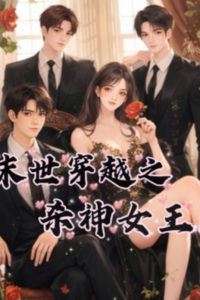
Chapters 14 through 20 move at a breakneck pace and I have mixed feelings about it. On the one hand, everything happens quickly: they meet Mu Qingruan, she joins the team, they discover her storage space, they load up supplies, they travel, they find another supermarket, they learn about her time-freezing storage ability, and they set up camp for the night. That's a lot of plot for what amounts to a few chapters, and the author never lets the reader breathe. Every scene transitions into the next with minimal friction — breakfast leads to the storage room, which leads to the camper van, which leads to the road, which leads to the next supermarket. It's efficient storytelling, no question. But I will say there are moments where I wanted to slow down. The scene where Mu Qingruan reveals her animal companions — Tiger, Linlin, Baibai, Longlong, and Huanghuang — that was genuinely funny and I wish the author had lingered on it more. The image of everyone staring blankly at a tiny black puppy, a dirt-covered cat, a white cat with a red bird on its head, and a green snake wrapped around a girl's hand is pure comedy gold, and it gets maybe three paragraphs before moving on. Similarly, the emotional beat between Long Potian and Mu Qingruan, where he talks about his sister, deserved more space. Instead, it's one paragraph and then we're back to logistics. The chapter ending is also interesting from a pacing perspective — it cuts off mid-conversation with Chu Mochen saying 'Little Qingruan, dinner isn't ready yet. Go get some rest while we discuss our next route,' which is a classic soft cliffhanger. It's not a dramatic 'to be continued' moment, but it creates enough curiosity about the route discussion to keep me turning pages. Overall, the pacing is designed for binge-reading, and it succeeds at that, but I think the author could benefit from occasionally letting a scene breathe a little more.
... Read More
Okay so let me just say - the setup here is actually really clever. The protagonist gets transmigration-bureaucracy-burned, dumped into an apocalypse instead of her promised 26th century life, and instead of freaking out completely, she immediately pivots to maximize her compensation. That's the kind of protagonist I can get behind. She doesn't waste time wallowing, she negotiates, she secures five elemental abilities, an infinite storage space, AND keeps all her spirit beasts. The original body's backstory is the classic betrayal setup - boyfriend throws himself to save the campus beauty while letting the fire-wielding girl die. Classic trope but executed with enough cruelty that you actually root for revenge. The real plot punch comes when those thugs barge into the villa and start threatening a little girl. You think you're watching a rescue scene, right? Then the girl's eyes change and suddenly it's Mu Qingruan in there. The switch from terrified victim to cold-blooded predator is chef's kiss. And that line - "And you insignificant ants actually dared to set your sights on me!" - I literally gasped. The way she blinds them and then casually monologues about how their eyes are "revolting" while stabbing them? This woman is absolutely unhinged in the best way possible. My only concern is whether the story can sustain this level of OP protagonist without losing tension. But honestly, watching her just casually dismantle people who think they're predators? That's the entertainment. The plot isn't about whether she'll survive - it's about how creatively she'll make everyone else regret crossing her.
... Read More
The emotional core of these chapters is built on betrayal and the satisfaction of seeing justice served. The original Mu Qingruan's story is genuinely heartbreaking - she had fire abilities, she formed a team, she protected her boyfriend from zombies, and he abandoned her to die because she was now a "burden." The text doesn't dwell on it excessively, but the image of her being left outside this villa, injured and hopeless, is enough to make you furious on her behalf. What I love is how the new Mu Qingruan processes this. She doesn't wallow. She doesn't cry about it. She simply says "That scumbag had better pray I never run into him. Otherwise, I don't mind avenging the original owner by throwing him into a horde of zombies." That's not revenge-seeking behavior - that's protective behavior. She's honoring the original owner's memory by making sure nobody ever treats her that way again. The emotional payoff comes with the thugs. When they threaten that little girl, something in Mu Qingruan snaps. Not because she's sentimental - she's clearly a hardened agent who's seen everything - but because she recognizes the dynamic. These men are exactly the kind of scumbags that her predecessor's boyfriend was, just on a smaller, more obvious scale. Her response is immediate and disproportionate, which is exactly how it should be. The moment where she says "Your eyes are revolting. Keeping them would only pollute other people's sight" while casually stabbing them? That's not just violence - that's her drawing a line. She's saying: I will not tolerate people who prey on the weak. The original Mu Qingruan couldn't protect herself. This Mu Qingruan will make sure nobody ever has to. There's also this underlying warmth in her relationship with the system and the spirit beasts. The system says "I truly believe you'll find happiness" and she replies "I believe you too." That moment of genuine connection, of two beings parting ways but caring about each other, adds emotional depth to what could otherwise be just a power fantasy. She's not just OP - she's someone who has found her chosen family, even if that family consists of mythical beasts and a digital assistant.
... Read More
Beneath the action and survival elements, this passage is really about identity, performance, and what it means to be vulnerable in a world that punishes weakness. Mu Qingruan's physical transformation is the most obvious symbol—she went from a 'mature beauty' in her previous life to a 'soft and adorable loli face' in this one. Her body has regressed to that of a child, which forces her to perform innocence even when she doesn't need to. But here's the thing: she chooses to lean into the performance. The mask becomes a weapon. She uses people's instinct to protect the vulnerable against them. The theme of betrayal runs through this too. Mu Qingruan tells the group she was betrayed by a man she tried to save—'I let love cloud my judgment. I got scratched by a zombie while trying to save a man. Then that man was afraid I'd slow them down, so he abandoned me here.' Whether this is true or fabricated, it's a story designed to trigger sympathy. And it works. The group immediately rallies to protect her. Then there's the contrast between the 'golden merit' and 'aura of righteousness' surrounding the soldiers and their blood-soaked history. The story seems to be asking: can good people exist in a bad world? Jun Ruoli explicitly says 'This is the Apocalypse World'—acknowledging that morality has shifted. His concern about not abandoning Mu Qingruan 'a second time' reveals that he understands betrayal intimately. The spirit beasts watching their master's performance like an entertainment show adds another layer—these ancient, powerful creatures find amusement in human vulnerability. It's almost a commentary on how power and innocence are relative concepts in this world.
... Read More
Okay so this opening is absolutely WILD. Mu Qingruan just casually severs hands like she's chopping vegetables and then leaves the victims for zombies. No remorse, no hesitation. The girl is a total monster underneath that cute exterior and I am HERE for it. But then the plot does this incredible flip. She's strolling through zombie-infested streets completely unbothered because she can control them, right? And then she encounters this group of survivors and instead of fighting them, she just... pretends to be a helpless amnesiac child? The acting! The commitment! She literally rolls around in dust to look dirty and plays the part of a traumatized orphan who got betrayed by a man she trusted. Meanwhile her spirit beasts are just sitting there watching her performance like, 'Wow, our master is ruthless.' What I love is the tension between who she actually is and who she's pretending to be. The narrative keeps reminding us—she's a 20-year-old with multiple abilities and a reputation for torture, but she's playing the part of a 15-year-old girl who can barely stand. And the group? They're genuinely concerned. Jun Ruoli is being all warm and protective while Mu Qingruan is internally calculating everything. The debate at the end about whether to take her along is such good dramatic irony because we KNOW she doesn't need their protection at all. The plot moves fast—killing, relocation, encounter, deception, group dynamics—and it never feels rushed. Each scene pushes the story forward while dropping hints about the larger world. I'm genuinely curious where this goes.
... Read More
The visual contrast in these chapters is striking. We start in a luxurious villa - the kind of place that suggests the original owner, Mu Qingruan, came from money even before the apocalypse. There's a bathtub, fine furnishings, the whole works. The scene where she takes a bath using her water ability is oddly satisfying - she's washing away the original owner's injuries, drinking spirit spring water, and watching her body heal in real time. It's a moment of quiet restoration before the chaos. Then the description of her appearance is almost comically detailed - the doll-like face, the porcelain skin, the glossy black eyes full of stars, the cherry-red lips, the long black hair like a waterfall. The text goes on and on about how cute and petite she is, which makes the contrast with her personality even sharper. She looks like something you'd find in a candy store but acts like someone you'd find on a wanted poster. The villa scene with the thugs is where the atmosphere really shifts. The greed in their eyes, the lewd grins, the way they rummage through the house like rats - it's disgusting but vividly rendered. And then the moment Mu Qingruan reveals herself, the lighting and mood change completely. The dagger gleaming with cold light in the dim villa, the blood staining the floor, the screams echoing through the rooms. The text describes her smile as "capable of freezing one's soul" - and honestly, that's exactly the vibe. I also love the Contract Space where she meets her spirit beasts. The fact that they followed her across worlds and are now adapting to this new world's laws shows how rich her backstory is. Azure Dragon, White Tiger, White Fox, Qilin - each one described with personality. The spiritual energy being scarce in this world but her having an infinite supply from her storage space creates an interesting dynamic where she's essentially a walking battery in a world running on fumes.
... Read More
This thing moves. Like, seriously - from the moment Mu Qingruan wakes up confused in a corner to the moment she's blinding three men with a dagger, we're only a few thousand words in and the story has already established its premise, its protagonist, its power system, AND delivered its first major action set piece. That's impressive pacing. The chapter structure works really well because it follows a clear emotional arc: confusion and frustration → acceptance and negotiation → self-discovery and preparation → confrontation and catharsis. Each beat transitions smoothly into the next. She wakes up, learns what happened, makes her demands, gets her abilities, discovers her loli body (comedy relief), meets her spirit beasts (worldbuilding), and then immediately faces a threat (action). The pacing of the confrontation scene is particularly well-done. The thugs enter, search, threaten the girl, and just as things seem like they're about to get really dark, Mu Qingruan reveals herself. The action is fast - she takes out the pockmarked man with a finger tap, sends black light streaks at the fleeing men, and then methodically blinds all three with a dagger. There's no drawn-out battle, no unnecessary dialogue during the fight. It's quick, brutal, and satisfying. The only slight pacing issue is the extended description of her appearance after the bath scene. It's well-written but feels a bit long compared to everything else. That said, it does serve a purpose - it establishes the contrast between her cute appearance and her terrifying personality, which pays off when she reveals herself to the thugs. Overall, the pacing keeps me turning pages. Every section ends with either a revelation, a decision, or an action that makes me want to read the next part. The cliffhanger ending - with the dagger flashing and the men screaming - is exactly the kind of moment that makes you immediately click to the next chapter.

Leave a comment

You must be logged in to leave comments. or
