Annulment - Reviews

Annulment
+Add to Custom List
Sort
Add review
... Read More
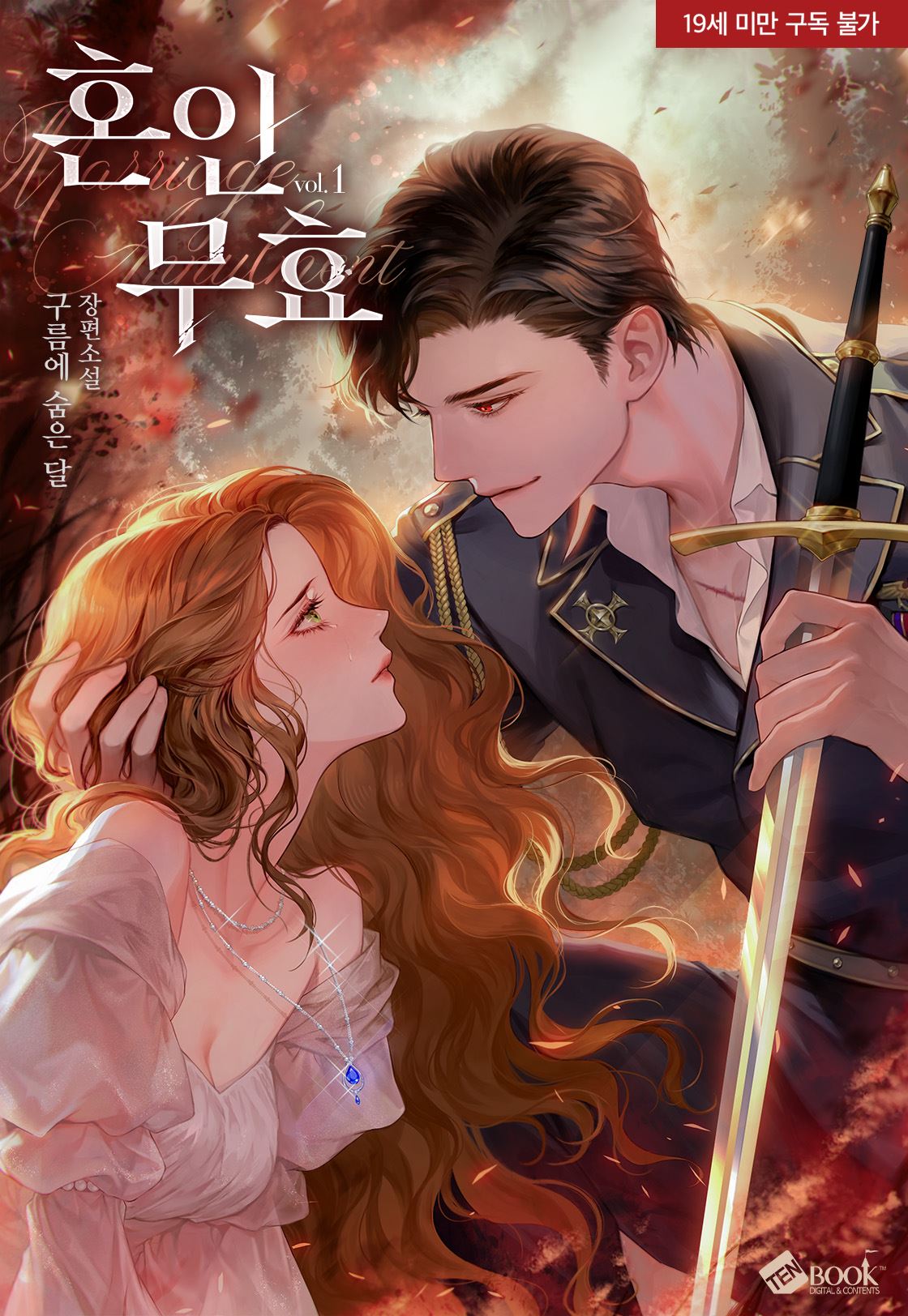
There's so much underneath this story and I keep finding new layers. The number FOUR keeps appearing. Four weddings. Four husbands. The fourth one is Eldrich. But is she really cursed, or is something else happening? The text gives us three deaths—blood drained, suffocated, vanished—and then Eldrich, who is supposedly UNDEFEATED, who tells her himself: "Plenty of men have been desperate to kill me, but not one of them has ever managed to take my head." What if the pattern breaks WITH him because he's the one who set the fire? What if the husbands didn't die because of a curse but because of him? The FIRE itself is the central symbol. It destroys her home, her mother's keepsakes, her independence. But fire also CLEANSES. And Eldrich appears from the flames. There's something almost mythological about their relationship—he emerges from destruction to reclaim her. It's destructive love personified. Then there's the GRASS. This recurring scent attached to Eldrich is so strange because it represents growth, life, nature—everything the fire is not. How can the man who burned her life exist alongside something so peaceful? Maybe the grass scent is his genuine self beneath the cruelty. Or maybe it's a manipulation so deep she can't even identify when she's being genuinely cared for versus controlled. Cleve's brother Hereis represents another theme—familial ownership. "Even Cleve's fate rests in your hands." She was sold into marriage three times before, and now she's being sold again, this time to a man who literally appeared from her ruins. The question the book seems to be asking is: can you build something real from ashes, or do you just burn again?
... Read More
Okay, I need to talk about Annette because honestly she is THE standout in this whole passage. Like, everyone around her underestimates her and it makes me so angry. Lina slaps her twice across the face and Annette just... takes it? Steady eyes, no drama, just 'I'm all right.' And then when she explains WHY she didn't fight back harder, she drops this absolutely devastating line: 'I simply didn't want to sink to the same level.' BRO. She's a Countess-level political operator trapped in a maid's role and she's playing 4D chess while everyone else is playing checkers. The moment that wrecked me though was when Cleve tries to tell Annette she doesn't deserve to be treated that way and Annette counters with 'If you say it has nothing to do with me, I'll be hurt.' That's not a servant talking. That's someone who has genuinely chosen this life and these people. She's not bitter about being below Cleve in rank—she's protective. The reversal of who's actually the powerhouse here is delicious. And then Eldrich? Oh my god. He shows up out of nowhere because apparently he got a report and came sprinting. 'Perhaps I should have killed her after all.' Casual murder threat delivered like he's discussing the weather. And Cleve just... flinches. Not from fear of him, but from shock at his intensity. The fact that he's already calculating political fallout ('the Linscott family will not stay quiet') while also pressing a finger to her bruised wrist and asking if she likes her hat? This man is terrifying and deeply devoted and I am HERE for it. The Lina-Cleve dynamic is pure tragedy too. Lina has every right to be furious—her entire family disappeared, she's been living in hell—and Cleve is the only tangible target she can find. But she takes it out on the WRONG person. She assumes Cleve is the warmongering schemer when Cleve literally married a stranger at a wedding ceremony she didn't choose. The irony is suffocating. Honestly the most heartbreaking beat is Cleve alone in her room afterward. She curls up and thinks 'If only she had died alongside her husband when he died. Then none of this would have happened.' That is not a good place for her to be mentally. But then she fights herself out of it and decides to WRITE IT ALL DOWN—the day she married Viscount Seregei. That decision to take agency, however small, made me sob a little. She's done being a passenger. This whole ensemble is layered beyond belief and I can't stop thinking about them.
... Read More
There's this one question Cleve asks — "could someone drown in it?" — while staring at the sea from the manor windows. It's such a small moment but it echoes so loudly given everything we know about her. Water as a recurring motif of death and disappearance runs through her entire history: every husband dies, she's surrounded by loss, and now she's standing at a window looking at something vast and unknowable. But here's the thing — she's no longer alone in facing it. The sea is still deep, still dangerous, but for the first time she's not the only one who can't swim. And Eldrich? "There is nothing His Grace cannot do." Including, presumably, keeping her safe. There's also the double ledgers — Hereis hiding his gambling debts from everyone — which mirrors perfectly how everyone in this story hides their true selves from each other. The Chartres marquisate's clean exterior hiding rot is the same pattern as every marriage Cleve endured.
... Read More
Let me just say this outright: the pacing in these first seven chapters is DANGEROUS. I opened this book thinking I'd skim through and go to sleep. It is now past my bedtime and I am STILL READING. The structure does something really clever with its timeline. We open with the FIRE—high octane, maximum panic, life-or-death stakes—and then it pivots hard into the wedding flashback. Most authors would bore us with exposition at this point, but here the flashback FEELS necessary because we need to understand WHY Cleve is standing at that altar looking like she'd rather be anywhere else. The transition works because the emotional stakes are already established. Within each scene, the pacing is relentless. Fire → despair → appearance of Eldrich → confrontation → flashback to wedding setup → the ceremony itself → the kiss → the carriage ride. That's roughly five major beats and we're not even a third of the way through chapter one. There is NO filler. No lazy description. Every paragraph either advances the plot or deepens the character dynamic. The tension building is masterful though. Notice how the author never lets us rest? After the fire scene peaks with Eldrich appearing, we immediately get the wedding context. After the ceremony's official moment, we get the kiss. After the kiss, we get the public humiliation of being carried over his shoulder. Each scene ends on a higher note than the last. The cliffhanger at the end—Cleve in the carriage, worried about Hereis, dreading what comes next—is perfect. It doesn't resolve anything. It opens a new question and slams the door. I need the next chapter IMMEDIATELY.
... Read More
The dialogue in these chapters is doing SO much work and I love it. Look at how Cleve speaks when she's flustered — the stammering, the incomplete sentences, the frantic subject changes. "Sh, shall we go eat?" after getting caught staring at his collarbone? Perfection. It sounds exactly like a woman who has spent her whole life being underestimated and is now, for the first time, desperately trying to prove she belongs somewhere. And Eldrich's voice is the perfect contrast — clipped, economical, never wasting words. "You didn't come all this way just to check I'm alive. What is it?" He cuts straight to the point every time. Their conversations aren't exchanges of information; they're negotiations of vulnerability. Every time she reaches toward him, he meets her halfway without making her feel exposed. That's skillful writing.
... Read More
Let me be blunt about the stakes here because they're higher than they initially appear. On the surface, Crown Prince Adolf is visiting a friend's home for tea. But underneath, he's conducting an investigation into Viscount Seregei's disappearance — one of Cleve's dead husbands. And he's using the pretext of friendship to get close enough to observe her, question her, and assess whether she's guilty. What makes this conflict so tense is that Cleve doesn't know she's the suspect. She thinks the question is just a formality, something she can answer politely and move past. 'If Your Highness has come all this way to ask, I believe it must be important.' She's eager to help. She's trusting. And that trust makes the danger real — because if Adolf uncovers anything, it won't just end her marriage, it could end her life. Eldrich's protective instinct is palpable. 'You don't have to answer any question you don't want to.' His hand on her knee. His irritation with Adolf. He knows what's happening beneath the polite conversation, and he's trapped between supporting Cleve's autonomy and shielding her from consequences he may have helped create. The external stakes are clear: Cleve could be imprisoned or executed if evidence surfaces. But the internal stakes are even more devastating — if the investigation reveals that Eldrich orchestrated this marriage for reasons Cleve doesn't know, her entire sense of reality collapses. She told him 'I'm so glad I married you. Every day lately feels like a dream.' A dream built on deception doesn't just break a heart — it destroys the foundation of someone who already believed they were lacking. Adolf's closing observation is chilling: 'The two of them are supposedly on the verge of divorce. Where exactly?' The rumors are circulating. The court is watching. And every moment Cleve spends smiling at her husband, trusting her husband, the ground beneath them becomes more fragile.
... Read More
"I'm so glad I married you. Every day lately feels like a dream." This line destroys me every time I read it. Cleve says it genuinely, she means it, and then the narrative cuts to Eldrich's POV and — boom. He's not happy. He's unsettled. He's pressing his fingers to his forehead trying to push away an ache. Let me talk about this for a second because I need to process it. Eldrich arranged this entire marriage. He orchestrated everything. Annette was part of the scheme from the beginning. He needed Cleve as someone 'he needed in order to survive.' So why does seeing her genuinely happy make him feel worse instead of better? I think the answer is that Eldrich doesn't believe he deserves to be the reason for her joy. Or maybe he's terrified that whatever shadows he's carrying will eventually collapse onto her. When Annette asks if something weighs on his conscience, he deflects with coldness — 'Or is it the ones I killed that weigh on you?' — but she sees right through it. Her real concern is that 'shadows will fall across that lovely face again.' And then there's this moment where Cleve reaches out and catches Eldrich's fingertips because she's nervous about meeting the crown prince, and his hand trembles. He flinches. The man who controls everything loses control of his own hand over a touch. The most revealing character beat though? When Adolf watches Cleve turn to Eldrich and chatter happily, thinking 'Anyone watching could see it was the face of a woman in love.' Even the outsider recognizes what Eldrich apparently can't — that she chose him, she means it, she's not pretending. Is there a healthier version of this love story? Because I'm not sure Eldrich knows how to accept being loved without suspecting a trap.
... Read More
Okay so let me just say—this plot is DELICIOUS. The whole setup with Cleve and her dead husbands? I was completely hooked from the moment Adolf starts investigating. The narrative weaves between two timelines beautifully: the present wedding night scene and the flashback/investigation threads about what happened to those previous grooms. What struck me most was how the author plants these mysterious details without being heavy-handed. Viscount Seregei just VANISHES. Count Deric supposedly killed by a demon beast? Really? A hunting expert mauled to death? That doesn't ring true at all. And Baron Edgar dying from an allergic reaction in a noble household where servants would NEVER feed him something he's known to be allergic to? Yeah, right. The plot structure here is smart. You've got the explicit scenes with Eldrich and Cleve creating this intense romantic tension, but underneath it all is this cold, calculated mystery about who's been killing these men. Is it Cleve? Her brother Hereis? Or is Eldrich playing a longer game? One line that really got me: "He had steadily sent marriage proposals to the Chartres family. Each time one of her marriages fell apart, he sent another." This suggests PREMEDITATION. He wasn't just waiting—he was actively eliminating competition while positioning himself as the perfect husband. The pacing is deliberate. The intimate scenes aren't just filler; they reveal character. Eldrich's internal thoughts about wanting her "entirely for himself" show his possessiveness, which makes you wonder: does he love her, or is she just another conquest in his grand scheme? And then there's the ending with Adolf saying "That's exactly what worries me." Chills. Absolute chills. Something bigger is going on here, and I NEED to know what it is.
... Read More
There's this line from Eldrich that keeps circling back through the entire passage like a refrain: 'You are not lacking. You are already enough. There is no need to listen to anyone who tells you otherwise.' The concept of 'lacking' vs. 'enough' is the thematic backbone of these chapters. Cleve grew up believing her brother's behavior was rooted in affection, that she needed to accept criticism because she was deficient in some way. Her brother 'must be struggling. Because I was lacking.' That's the internalized voice of someone who was made to feel inadequate. Eldrich's response — that she's already enough — is revolutionary for her because it comes from someone she trusts. But here's the tragic layer: Eldrich himself can't internalize this message. He sees her happiness and feels an ache. He arranged the marriage for survival, not love, and now that love is real, he doesn't know what to do with it. The person who tells Cleve she's enough is the person who seems unable to feel worthy of being loved. The sapphire necklace is another powerful symbol. Cleve refuses to swap it for other beautiful pieces because it came from Eldrich. It represents a choice — not the careful, brother-approved choices of her past, but her own decision to hold onto something meaningful. Annette notices and thinks 'I should mention to His Grace that he needs to buy other necklaces too. At this rate, she would never wear anything other than the sapphire.' This is practically a plot point disguised as casual observation. And then there's the recurring image of shadows. Annette fears that 'shadows will fall across that lovely face again.' The novel contains keywords like suicide attempts — the darkness is real, not metaphorical. But so far, the light in these chapters (Cleve's bright smile, the flowers, the warmth replacing the cold glass on her cheek) feels genuine and hard-won. The central question the text seems to be asking: can someone who was trained to feel lacking learn to accept being enough — and can the person who arranges their happiness learn to deserve it?
... Read More
The structure of these chapters is masterclass-level pacing. It opens with Eldrich's POV — heavy exposition about the loops, the debts, the five lifetimes — and you'd think that would bog things down, right? But it doesn't, because the revelation lands with such emotional weight that you can't look away. Then it cuts to Cleve waking up, and suddenly the entire emotional temperature shifts from cold and calculating to warm and disoriented. She's finding her bearings — physically (the house), socially (the servants), emotionally (her feelings for him). The tour of the residence acts as a breathing space between the heavy opening and the study scene, letting the reader settle before the intimate confrontation. And then — the hand-holding moment, the confession of anxiety, "please bear with me" — ending on that note of quiet vulnerability instead of dramatic tension. That's how you control a reader's emotional journey.
... Read More
So this whole sequence where Crown Prince Adolf shows up — it's fascinating because on paper it seems like a simple social visit, right? But looking at it closely, every single interaction is layered with hidden agendas. Adolf claims he came partly to see Eldrich and partly out of curiosity about the couple, but then it's revealed that his real mission is the investigation into Viscount Seregei's disappearance. Meanwhile, Eldrich clearly knows about the investigation and is visibly irritated about it, yet he plays along. And Cleve? She walks right into the middle of this without understanding half of what's happening. The plot machinery here is doing so much work. We get three converging threads: the romantic thread of Cleve genuinely enjoying her married life, the political thread of court intrigue surrounding her past, and the mystery thread of Seregei's vanishing. The author could have easily made this a stuffy courtroom drama, but instead the scene plays out over tea and flowers and small talk, which makes the underlying tension even sharper. What struck me most is how the author uses dramatic irony — we know more than Cleve. When Adolf says 'many people are curious' about Eldrich's marriage, we understand that 'curiosity' is code for suspicion about Cleve's dead husbands. She thinks people are just nosy. This gap between what the reader knows and what Cleve believes is masterful storytelling.
... Read More
So this plot... I mean, Cleve Devonshire now? Duchess? After everything? There's something almost cruel about how the author sets up this situation. Three husbands dead, all before the wedding night, and suddenly here's this fourth one who's not just alive but apparently... eager? The tension between knowing what happened to the previous three and watching Cleve try to navigate this new relationship is just *chef's kiss*. Here's what got me though - the brother Hereis. What kind of sibling forces their sister into three deadly marriages and then tries to marry her off again? And why did he withhold that she's inexperienced? That's either protection or sabotage, and I can't tell which, which means I'm already obsessed with figuring it out. The Duke himself is fascinating too. He knew about her past marriages - the deaths, the vanishings - but shows zero interest in what actually happened. Is he protecting her? Or is he the kind of man who prefers not to know? Either way, his reaction when he finds out she's still untouched is... complicated. There's something almost tender beneath that predator energy. And then there's Viscount Seregei's disappearance. He transferred a mine into Cleve's name and then just vanished? That subplot isn't resolved yet, but it's clearly connected to something bigger. The author drops these breadcrumbs and I'm left racing ahead to see if I can piece together what's really going on. Honestly, this is one of those plots where every character seems to have hidden agendas, and the Duke is the master of them all. But there's something beneath it - a real story about a woman trying to survive people who've used her, and maybe, just maybe, finding someone who actually sees her.

Leave a comment

You must be logged in to leave comments. or