After Transmigrating, My Nemesis Always Wants to Pamper Me - Reviews

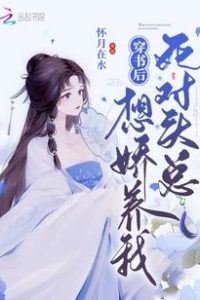
After Transmigrating, My Nemesis Always Wants to Pamper Me
+Add to Custom List
Sort
Add review
... Read More
There's this one moment in Chapter 3 where Yuan Siyin trips over something in the imperial garden rockery and lands in the male lead's arms, and the author paints this scene like a film director would—every frame is so vivid I could see it playing out on screen. "The man's features were cold and strikingly handsome, like the finest jade, shimmering with a translucent glow in the candlelight." I mean, come on. That's not just a description, that's a mood. The flickering flame from her fire starter, the darkness of the rockery, his ink-dark eyes—this is cinematic as hell. But what really makes this scene work isn't just the visuals, it's the atmosphere of danger mixed with something else. He's leaning against the rockery, wounded, and his gaze is "guarded like a small animal wary of a predator." That single comparison tells you everything about their dynamic before a single word of dialogue is exchanged. She's the predator. He's the prey. And yet here she is, genuinely trying to help him with his wound, crushing plantain leaves and wrapping his palm. The contrast between the imperial garden's beauty and this dark, narrow rockery where violence and unexpected kindness collide is brilliant. And earlier, when she's riding Taxue down the long street in red robes with a high ponytail, the author gives us this image of "indescribable, unrestrained heroism" against the bright morning sun and bustling crowds. Two completely different atmospheres—one wild and open, one dark and claustrophobic—but both featuring the same woman in red, and both making her feel alive on the page. The Empress Dowager's hall with the ice blocks and white mist and that natural "air conditioning" made me literally feel cool just reading it. This author knows how to make a world that you can step into.
... Read More
I need to process what just happened with the Empress because this chapter escalated the stakes in a way I didn't expect. Let's talk about what everyone is actually fighting for here. On the surface, it's a coming-of-age banquet, a prince's injury, a crown prince's scandal. But the real conflict is about power, control, and who gets to write the story. Yuan Siyin knows she's in a novel, she knows she's the villainous supporting character, and yet she's making choices that actively resist her assigned role. Every time she punches someone, every time she refuses to play the proper young lady, every time she chooses to care about Yu Shiyan instead of following the plot—that's conflict. Internal conflict, sure, but also conflict with the narrative itself. The Crown Prince's situation raises the stakes exponentially. His "mistake" with Shen Ruolan at his coming-of-age banquet isn't just romantic drama—it's political. The Empress's reaction reveals everything: she's terrified, she's desperate, and she's willing to sacrifice her dignity to contain the damage. When she kneels and begs Yuan Siyin, that's a woman who has everything—power, status, wealth—reduced to nothing by a single moment of her son's weakness. "Chao'er... in a moment of foolishness, he made a mistake... made a terrible mistake!" The imperial chamber nearby, faint cries and sobs piercing the solemn atmosphere—that detail haunts me. Whatever happened in there, whatever scandal was uncovered, it's being kept hidden from the banquet guests. The stakes are reputation, legitimacy, possibly the succession itself. And Yuan Siyin's conflict with the Empress is fascinating because it's so asymmetrical. The Empress is begging, crying, falling apart. Yuan Siyin is calm, smiling, holding all the power in this moment. But that power is fragile. The Empress will recover. She'll plot. She'll make Shen Ruolan a consort as punishment, as the Empress said, "let's see if she can continue unchecked after entering the palace." This isn't over. It's barely begun. The Seventh Prince's injury adds another layer of stakes. Memory loss, blood clot, possible death—Yuan Siyin's hope that he'll forget her followed immediately by disappointment that he might remember anyway. What does she stand to lose if he dies? What does she stand to lose if he remembers everything?
... Read More
Okay so I need to talk about Yuan Fuqing because honestly he broke my heart in like two paragraphs and I wasn't even ready. This kid comes running up to his sister like an eager puppy, rubbing against her arm, saying he can't even eat breakfast without her. And you know what? My heart literally melted. He's just a kid who loves his sister. But then—BAM—he drops this line about waiting until next time to join her in bullying the Seventh Prince. Next time. He's already been corrupted. The original host raised him to be a little monster and now this transmigrated Yuan Siyin has to deal with the consequences. She even thinks about it: "She really is such a clever little thing" when she pretends to raise her hand to hit him. The original host's image is so deeply ingrained that Yuan Siyin's body almost does it on autopilot. That's the kind of detail that shows how thorough the author was with worldbuilding character history. And the Empress Dowager? The way she interacts with Yuan Siyin—saving Chestnut Cream Cake, complaining but clearly doting, the whole Feicui bit with the playful scolding—that's a grandmother who genuinely loves her niece. But here's the thing that keeps me up at night: the original host tormented the Seventh Prince relentlessly since childhood, beat him until he was bedridden for a month, and the Empress Dowager is Yuan Siyin's AUNT. So the woman who loves her is also the woman whose grandson she's basically helping destroy. That's some delicious dramatic irony right there. I'm already predicting that when the Seventh Prince becomes Emperor, the Empress Dowager is going to have some VERY uncomfortable conversations with her niece. The family dynamics in this book are a loaded gun and we're all just sitting around the table pretending not to hear the ticking.
... Read More
That whip. That goddamn golden silk whip keeps appearing like a ghost that won't leave you alone. Chapter 1: Zi Yuan hands it to Yuan Siyin and she thinks "the murder weapon was being handed right to her." Chapter 2: she carries it into the palace like a prop in her performance of villainy. Chapter 3: she slaps it on the ground to intimidate Yu Shiyan, and the text explicitly notes "As it turned out—heh—it worked quite well." Chapter 4: she uses it to kick the rockery instead of him, creating the sound effect to maintain her vicious image. This whip is everything. It's the symbol of the original host's cruelty, the instrument of the male lead's suffering, and yet Yuan Siyin keeps it because she's afraid of arousing suspicion by getting rid of it. It's a physical manifestation of the role she's trapped in—the murder weapon she can't destroy because destroying it would make her look guilty. But there's another layer too. The whip represents performance itself. Yuan Siyin uses it as a prop, waving it around to create the sound of violence without actually inflicting it. She kicks the rockery to make the thud sound. She's not just surviving—she's curating an image, directing her own role like an actress who's learned to weaponize perception. And then there's the plantain. She finds it in the grass, recognizes it immediately (another subconscious action of the original body), and uses it to heal Yu Shiyan's wound. The same body that knows how to torture also knows how to heal. The same hands that wielded the whip are now crushing medicinal leaves. This duality is the whole theme of the book, wrapped into two objects. The coming-of-age banquet itself is also symbolic—it's supposed to be a celebration of womanhood and social entry, but for Yuan Siyin it's a death sentence she's desperately trying to survive. Every ceremonial object in this story has a double meaning, and I'm here for it.
... Read More
Okay, so I have to talk about this banquet scene because it is an absolute masterclass in layered plotting. On the surface, it's Yuan Siyin's coming-of-age celebration, right? But the author immediately subverts that expectation. The Emperor shows up, drops some heavy imperial aura, and then basically bails. The Empress Dowager is sipping tea like a spider watching flies struggle. And Yuan Siyin is just sitting there, stuffing mung bean cakes into her mouth, internally screaming about the weight of that giant villa metaphor on her head. What I love is how the plot keeps pivoting. Just when you think this is a political drama about court intrigue, BAM—the Empress gets a whispered note and her expression changes drastically. She tries to leave, Yuan Siyin tags along, and suddenly we're not at a banquet anymore, we're at the Eastern Palace dealing with the Crown Prince's scandal. The plot threads are weaving together so smoothly. The Seventh Prince being injured, the Crown Prince's little incident with Shen Ruolan, the Empress Dowager's barely concealed satisfaction—all of it connects. And that ending where the Empress decides to make Shen Ruolan a consort as punishment? That's the kind of move that sets up future conflict beautifully. The author is laying pieces on the board like a chess game, and I'm already predicting this is going to come back to bite someone. The narrative never lets up, never lets you settle into just one thread. Every scene opens a new door. But here's what's nagging at me: why is Yuan Siyin so invested in keeping the original leads together? She's supposed to be the villainous supporting character, but she's actively facilitating the romance. What's her endgame here, and what happens when the original plot tries to correct itself?
... Read More
I have to address the scene with Si Fangming and Qi Shenshen on the tree branch because the author has this incredible gift for creating moments that feel completely alive and unscripted. Picture it: a woman in pink sitting on a tree branch, swaying her legs, watching Yuan Siyin with a delicate handkerchief fluttering in the wind. Classic seductress imagery, right? Except Si Fangming just leaps up, snatches the handkerchief, and calls her out on pretending to be delicate. And Qi Shenshen's response is pure chaos—she's not even mad, she's just like "this was a gift from Sister Siyin, take it, I'll just tell her you stole it, you've never hugged her have you?" The internal monologue there is devastating in the funniest way possible. You can feel Si Fangming's regret about sharing too much information back at the border. The handkerchief exchange becomes this weird triangle of unspoken feelings, and it's all happening while Yuan Siyin is just... not even there, she's gone already. Then we cut to Changbai Hall, and the atmosphere shifts completely. Dim light, flickering candlestick shadows on the wall, Yu Shiyan lying on a couch breathing weakly, tinnitus ringing in his ears. The sensory details here are so different from the tree scene—oppressive, quiet, medical. Liu Huai's sweat, the urgency in his voice, the way he has to raise it because Yu Shiyan can't hear him. The author moves between these two worlds so seamlessly, and each one feels completely realized. The banquet hall itself is another environment that stands out. The Emperor in yellow robes at the highest position, the Empress with her phoenix coronet, the clinking of wine cups, the sky darkening outside while nobody notices. There's this constant undercurrent of tension beneath the formal politeness, and the setting amplifies it. Every character is performing their role, and the architecture of the space—the steps, the positions, the distance between people—reinforces the hierarchy. I also love how the imperial garden rockeries become this transitional space where Yuan Siyin changes direction. She's already passed through them heading home, but then she stops and turns back. The physical space mirrors her internal decision-making process, and that's such a subtle but effective technique.
... Read More
This chapter is a pacing masterpiece and I need to break down exactly why it works so well. It opens at maximum energy. Yuan Siyin is already mid-confrontation, threatening public versus private settlement, and within seconds she's breaking men's stomachs. The author doesn't waste a single word on setup—we're dropped right into the action. "A piercing scream tore through the air." That's it. We're there. The one incense stick duration of the beating gives us just enough time to appreciate the violence without it dragging, and then Yuan Siyin claps her hands, stands up, and the scene is over. Efficient. Satisfying. Then the pivot. She turns to the frail white flower, realizes a month of supplements was wasted, and suddenly we're in medical drama territory. The transition from physical violence to medical concern is jarring in the best way—it keeps you off balance, which means you can't get comfortable, which means you keep reading. The banquet scene is where the pacing really shows its sophistication. The author could have made this a long, boring political scene, but instead it's structured around Yuan Siyin's internal monologue while she's externally performing. She's eating mung bean cakes, curtsying, flattering the Empress—all while her mind is racing about the Seventh Prince and the plot is unfolding through whispered notes and sudden exits. The tension builds not through action but through what's NOT happening. The Empress Dowager's barely perceptible hum. The maid's whispered report. The Empress's expression changing drastically. All of these micro-moments accumulate into real suspense. And then the Eastern Palace scene—Yuan Siyin practically flying there, the Empress begging on her knees, the faint cries from the imperial chamber. The pacing accelerates again, peaks, and then Yuan Siyin just... leaves. No resolution, no closure, just her walking away into the night while the Empress is left devastated. The chapter ends with Yuan Siyin returning to Changbai Hall, sitting down (or trying to), and Liu Huai delivering the diagnosis. The structure mirrors a wave—build, crash, recede, build again. And that final line about the jade pendant and overtime pay? Perfect comedic relief right before the next chapter presumably ramps it back up.
... Read More
Let me be very clear about the stakes in this book because they are REAL and they are terrifying. Yuan Siyin transmigrated as the villainess who tormented the male lead since childhood, beat him until he was bedridden, and was ultimately executed when he became Emperor. Her entire family—the Cavalry General father, the adorable brother, the Empress Dowager aunt—will face nine degrees of kinship execution if she fails. This isn't a romance where the worst outcome is a broken heart. This is life and death for everyone she loves. And the most chilling part? She doesn't even get a system. No quest markers, no point totals, no helpful notifications. Just her own knowledge of the plot and her rapidly forming understanding of how to navigate this world. Every interaction is a minefield. The rockery scene with Yu Shiyan is the perfect microcosm of her entire situation. She finds him wounded, wants to help him, but he sees her as a predator. She tries to bandage his wound and he thinks she's poisoning him. She threatens him with the whip to keep him still and he internally vows to kill her. Every good intention she has is interpreted as malice because of who she is. And she can't change that perception overnight—she has to live as this character while secretly trying to undo years of damage. The coming-of-age banquet is the first major test. The Empress Dowager is trying to help her, but Yuan Siyin knows that this banquet is a turning point that could either save her or seal her fate. She's walking into it blind, performing a role she's still figuring out, with people who either love her (and don't know the truth) or hate her (and know exactly who she is). I am genuinely sweating for this woman and I haven't even finished the first seven chapters. The tension is relentless and I love it.
... Read More
"Do you want to poison me?" Four words. That's all Yu Shiyan says in this entire excerpt, and it establishes him as a character better than most novels do in forty pages. The dialogue in this book is sharp because everyone is performing. Yuan Siyin is constantly acting—pretending to be the vicious original host while internally screaming. Her line "Although the Seventh Prince is not favored, he is still a prince" directed at Zi Yuan is perfect because it's the exact kind of cold, calculated speech the original host would use, and Yuan Siyin delivers it without missing a beat. But the real dialogue genius is in the subtext. When Yuan Siyin says to Yu Shiyan "If you dare run, just see how I deal with you," she's trying to sound threatening, but the reader knows she's actually just trying to keep him still so she can bandage his wound. And he knows it too—or at least, he's suspicious enough that his response is pure resentment squeezed through gritted teeth. The Empress Dowager's dialogue is equally layered. She complains about Yuan Siyin not visiting enough, but then immediately has chestnut cream cake saved for her. The playful banter with Feicui—"If I'm an old fool, does that make you one too?"—reveals a woman who's sharp, warm, and deeply lonely despite her power. Every line serves character. And Yuan Siyin's internal voice? That's where the comedy lives. "Wasn't the vicious image perfectly established now? Ah, her clever little mind was truly beyond words." This self-aware, almost meta commentary on her own performance is what makes the narration so entertaining. She's not just surviving—she's critically evaluating her own survival strategy in real time, and that's hilarious and heartbreaking at the same time. The author's voice is confident, funny, and never condescending. It feels like reading a friend's enthusiastic text messages about a book you've both just finished.
... Read More
I need to talk about Yuan Siyin because this chapter absolutely confirmed something I've been feeling. She is the most interesting protagonist in this genre, and it's not even close. Let me rewind to the beginning. She gets into a fight, beats up several guys, and her first thought afterward isn't about justice or protection—it's "wahhh, my hands are swollen, next time I'm making Si Fangming do this." That is such a specific, hilarious, deeply human detail. She's capable of violence, she's willing to use it, but she still complains about the physical aftermath like a normal person who hasn't punched anyone before. And then there's her relationship with Yu Shiyan. She's been nourishing him with ginseng and lingzhi for a whole month, and when he's critically injured, she immediately turns around and goes back to him despite having just stolen the female lead's spotlight earlier. She tells herself she's doing it to maintain the romantic relationship between the leads, but honestly? The way she worries about him feels genuine. When Liu Huai mentions memory loss, her first reaction is almost giddy—"great, he'll forget me"—and then she has to deal with the disappointment when he might retain vague impressions anyway. That emotional whiplash is so real. The Empress is another layer I can't stop thinking about. She kneels and begs Yuan Siyin not to take her to see the Crown Prince. She's powerful, she's the Empress, but in this moment she's reduced to tears and desperation. And then Yuan Siyin's response—she smiles with ambiguous meaning, says "Your Highness" in a way that makes the Empress shudder, and leaves her sitting there. That's not kindness. That's power. "A young lady shouldn't casually engage in arguments—it makes one appear ill-bred. One should simply slap the opponent across the face to show them what Mastery of both martial and scholarly arts truly means." She means it literally and figuratively. She's rewriting the rules of how a woman in this world should behave, and honestly, I'm here for it.
... Read More
Let me just say this upfront: this book does not waste your time. Chapter 1 drops us into full panic mode—transmigration, villainess identity, death sentence looming—and by the end of the chapter we already know the coming-of-age banquet is a critical turning point. That's a cliffhanger disguised as exposition, and it works because we're already invested in whether she'll survive. Chapter 2 is where the pacing really shows its teeth. We get the brother scene (emotional beat), the horse riding (action beat), and then she encounters the male lead in the rockery (tension beat). Three different types of scenes in one chapter, each serving a different purpose, and they flow into each other without any dragging. The author knows exactly when to speed up and when to slow down. What I love most is how the author controls information release. We don't get a huge info-dump about the novel's plot all at once. Instead, Yuan Siyin's internal monologue reveals things organically—she remembers the original host's crimes, she recalls the male lead's future rise to Emperor, she understands the stakes through her own panicked calculations. By Chapter 3, we already know enough to be terrified for her but not so much that we've lost the mystery. The transition from the rockery scene to the Empress Dowager's hall is also masterful. One moment she's tending to a wounded boy who wants to kill her, the next she's being pampered by her aunt with chestnut cream cake. The whiplash is intentional—it mirrors how unpredictable Yuan Siyin's life is now, and it keeps the reader off balance in the best way. I'm already counting the chapters until the coming-of-age banquet because every chapter ends with either a realization, a threat, or a joke that makes me want to immediately click the next one.

Leave a comment

You must be logged in to leave comments. or
