After Transmigrating in a Novel, I have Four Older Brothers - Reviews

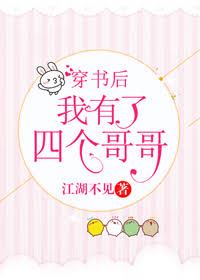
After Transmigrating in a Novel, I have Four Older Brothers
+Add to Custom List
Sort
Add review
... Read More
Okay so let me just say—Qin Yusen dumping those cold noodles on Shi Yating's head was the single most satisfying thing I have ever read. Like, I was sitting there like YES. And then he drops the bomb that Gu Yingying is his biological sister? My jaw literally hit the floor. What a twist! But what really got me was how both of them kept their faces completely emotionless while everything was happening. Qin Yusen was probably screaming inside but looked like a statue, and Gu Yingying's eyes lit up when she saw him and then fell when she realized he didn't see her. The sibling recognition scene was so subtle too—he had a good impression of her from before, and when he saw her concerned happy face, his blood rushed but he couldn't show it. That restraint! That suppressed emotion! I love characters who feel things deeply but can't express it. Also the principal's internal monologue about how if this happened outside school the family would go bankrupt—honestly the author knows exactly how to make us sympathize with helpless authority figures while the real justice gets served by the冷面big brother. Shi Yating's fear when she saw his sharp gaze and those expensive suits was basically my fear too lol.
... Read More
There's this one moment—just ONE moment—that completely shifted the emotional temperature of the entire chapter and I haven't stopped thinking about it. Gu Yingying is walking through this empty, expensive villa area all alone, regretting that she might be late on a Monday, and suddenly a black car appears. The driver offers her a ride, she gets in, and the magic mirror in her arms EMITS HEAT. Heat. Not a cold metallic tingle, not a visual glow—actual warmth against her skin, like something alive is responding to something near. And then she looks in the mirror and sees Qin Yusen's face, and THEN she looks up and sees him sitting in the back seat, and her first instinct isn't fear even though the text literally describes his gaze as making her feel like a beast is staring at her. No. She smiles at him. Instinctively. Pleasingly. Because in that split second, she decided this was HER BROTHER. After all this time searching, after all this loneliness in that giant villa, she saw someone who matched the mirror and her heart just—ran. And the author had the perfect counterbeat right after: Qin Yusen, who gives off this impenetrable cold exterior, whose eyes are described as obsidian and sword-like, actually feels his heart SOFTEN at her smile. His gaze drops, he looks away, and that's it. That single beat of him looking away tells us everything. This man who probably never lets anyone get close felt something when she smiled at him. That's the most emotionally economical writing I've seen in a while. One sentence and two physical gestures and suddenly you're invested in whatever this connection is going to become. I'm not ready for this to be just a sibling reunion. Something about the way the author wrote this moment feels like the beginning of something bigger.
... Read More
Let's talk about Shi Yating for a second because this girl is giving me massive "villain who dies in chapter three" vibes and I am HERE for it. She's the archetype of the cruel school bully — mocking Gu Yingying, rubbing her face in her poverty, listing off her imagined disreputable relatives like she's reading from a script. But honestly? She's effective because she's so openly cruel. No pretense, no false kindness. You know exactly where you stand with her. Then there's Gu Xuezhen, the real daughter and supposed heroine. This is where it gets interesting. She's not a cartoon villain — she's cold, commanding, almost regal. The text compares her to Gu's mother Su Keman, both having that "queen-like appearance." She's not yelling or sneering; she's quietly demanding that Gu Yingying leave, and she's willing to do it herself if needed. There's a line where she says "It's better" after Gu Yingying agrees to leave, and you can practically hear the relief underneath the indifference. I'm wondering if her jealousy is genuine or performative. The text explicitly says it's "absolutely false to say she was not jealous," which makes me think there's more complexity brewing here. And Gu Yingying herself — soft-looking, easy to bully, but absolutely not backing down. She's planning her exit before she's even been asked. That agency, even in a constrained situation, is what makes her compelling. She's not waiting to be saved. Though I will admit, her obsession with impressing her senior brother when she looks in the mirror was kind of endearing in a slightly tragic way.
... Read More
Let me just say this: whoever edited this pacing deserves a raise because the author is playing 4D chess with reader engagement. Chapter 20 sets up the premise—we know the swap happened, we know the Gu family wants to return Yingying, we know the Yu couple is greedy. Normal setup stuff. But then Chapter 21 hits us with Gu Yingying's refusal to go quietly, and suddenly everything changes. The pacing accelerates because now we're not watching a sad girl get shipped off—we're watching a girl WHO KNOWS the plot turn the tables. Chapter 22 is where the genius really shows. Instead of dumping all the exposition at once, the author lets it unfold naturally through dialogue. Gu Yingying asks about the two million. That single question opens a door that was supposed to stay closed. Then she systematically dismantles every assumption the Gu family has been operating under. And Chapter 23-24 deliver on the promise. Xuezhen's emotional break, Mother Gu's confrontation, the DNA test demand—it's all escalating in perfect rhythm. No filler, no dragging. Every paragraph either reveals new information or deepens existing tension. The cliffhanger ending with the Yu couple hearing Mother Gu's accusation? I immediately opened the next chapter without hesitation.
... Read More
Let's talk stakes, because on the surface this chapter reads like a cute slice-of-life moment but there's actual tension running underneath the whole thing. The external conflict is brutal and immediate: Gu Yingying is stranded in an unfamiliar world, has no money, no resources, and needs to survive. Period. 'I'm going to make money!' is not a casual statement — it's a survival declaration. Every scene that follows is colored by this underlying desperation, even when things are fun. The fortune-telling attempt fails. She has no real skill at it, no confidence, and when the couple leaves disappointed, her reaction is visceral. She doesn't just feel embarrassed — she feels like a failure, and the comparison to Senior Brother ('if it was him, he would undoubtedly make money') reveals that her sense of self-worth is already tangled up in her ability to prove herself without his protection. But the real stakes aren't just about money, are they? They're about autonomy. For 500 years (however that timeline works), she's lived under someone's protection. Now she's alone and has to figure out if she CAN function independently. The cat summoning works, yes, but the emotional question hangs in the air — can she build a life here on her own terms? The tension is maintained masterfully through small details: her trembling hands, the nervous hesitation before the couple arrives, the near-tears moment with Bastet. Even the success feels fragile — she 'can't even count' how much money she made, which subtly reminds us this is stopgap survival, not true security. And somewhere in the background, we know about the mirror, about the Senior Brother, about whatever larger plot is waiting. This chapter is a breather, but it's a breather with low oxygen. I trust the author to escalate appropriately.
... Read More
I need to address the single greatest scene in these chapters because my heart cannot handle sitting on it. The black cat jumps onto the windowsill and then — apparently defying every school rule in existence — lands directly on Gu Yingying's desk while the English teacher has just walked in. The description of Bastet is gorgeous: "fur was moist, blue eyes looked like sapphires." I kept re-reading that because it paints such a vivid picture. This isn't some generic internet cat photo description; it feels almost mythological, like this creature is too beautiful for an ordinary setting. But then the history teacher comes in and the comedy absolutely detonates. The teacher says the school doesn't allow pets, Gu Yingying desperately promises the cat will be obedient, and Bastet — in the most cat move possible — promptly knocks her stationery box to the floor. The whole class laughs. Even the teacher laughs. I absolutely loved this scene because it grounded this fantasy story in such a relatable, mundane reality. A transmigration, a lost identity, a stolen bank card, a family that rejected her — and yet the immediate crisis is whether the teacher will let the black cat stay in class. That contrast is everything. There's also the scene at the school gate where she's waiting for a driver who never comes. The Gu family deliberately snubbed her, took her card, and left her stranded in that Chanel dress with no money. The text describes her walking out with Bastet perched on her shoulder, attracting attention from students who are secretly taking photos. She doesn't seem to mind. I think that detail is doing a lot of work — she's been humiliated in front of her entire class about the cat, but now she's walking out with him on her shoulder and she's okay with that. The contrast between the lonely, cardless girl at the gate and the girl confidently carrying a cat through a crowd of staring classmates shows how much Bastet has already changed her situation. The school itself feels very real too — First Experimental High School, "full of academic bullies." That one phrase establishes the entire social ecosystem she's dropped into. It's a high-pressure Chinese high school setting with class rankings, study committees, and transfer students who get ostracized. Into this hyper-realistic backdrop walks a literal cat spirit and the story just... rolls with it. That tonal blend is what makes the world feel alive.
... Read More
Okay so this magic mirror thing is actually kind of genius as a plot device. It's not just some random talisman - it drives the entire scene forward. Gu Yingying looks in it, sees doom, tries to prevent it. That's classic foreshadowing right there. And the way the mirror shows different things to different people? Only the master can see what it displays? That's a really smart limitation the author put in place so other characters aren't constantly aware of supernatural stuff. But here's what's bothering me a little - the prophecy part feels a bit convenient, doesn't it? Like, the mirror literally shows the date and the location of the accident before it happens. It's almost too on-the-nose. Still, I can't complain because it works. The parallel between the driver's fate and Qin Yusen's fate is clever though - same date, same day, connected through blood. And then Gu Yingying's attempt to save both of them by warning them about Yong'an Road? That's a solid cause-and-effect chain. The plot moved fast but it didn't feel rushed because every moment had purpose.
... Read More
Can we talk about how good Gu Yingying's voice is? She has this razor-sharp way of saying exactly the right thing at exactly the right moment, and it's never over-written. Take this line: "Tell your parents how they treated you, they will avenge you. The Yu family couple are not good people and I know that!" It's direct, it's fierce, it's almost reckless in its bluntness—and it works because it's coming from someone who knows this story and knows exactly what needs to happen. Her dialogue throughout this section has a wonderful cadence. She switches between protective older-sister mode, sassy commentator mode, and surprisingly tender moments without it feeling inconsistent. When she tells Gu Xuezhen, "girls should not be blindly forbearing," that's not just dialogue—that's thesis statement energy. And then her line to the Gu parents at the end: "Although I don't know where my biological parents are, but I have the confidence that one day I'll definitely find my family." That's the kind of line that gets underlined. The contrast with Wang Guihua's dialogue is also brilliant. Her frantic, defensive rambling—"Don't all children of poor families like us live like this?"—is so casually horrifying. She's normalizing child abuse like it's a lifestyle choice. And Gu Xuezhen's silence speaks louder than any dialogue could. When she finally does speak, every word carries weight because she's been voiceless for so long.
... Read More
There's this line in the text that I keep coming back to: 'Why should the grace of nurturing a child be repaid?' That question isn't just plot device—it's the philosophical heart of the entire novel. The story keeps throwing this image at us: the Gu family raised Gu Yingying like a princess for sixteen years, and yet Father Gu is willing to hand her back to strangers. Meanwhile, the Yu couple 'raised' Gu Xuezhen like a servant, and somehow that's treated as deserving compensation. The moral universe of this story is completely upside-down, and the whole narrative arc seems to be about righting that inversion. The DNA certificate Gu Yingying demands is symbolic of something deeper—it's not about biology, it's about accountability. Without proof, people can claim anything. The Yu couple claimed to be parents. The Gu couple claimed to be benevolent. Neither claim survives scrutiny. What survives? Gu Yingying's truth, Xuezhen's pain, and the Gu parents' dawning realization that their soft-heartedness caused actual harm. I think the deeper theme here is about who gets to define family. The story seems to be asking: does love make a parent, or does biology? And honestly, the author hasn't given a clean answer yet—which is exactly what makes it compelling.
... Read More
The dinner scene is THE scene of this batch. Let me paint it for you — Gu Xiao walks in, still in his business suit and leather shoes, and the entire family dynamic shifts on a dime. The mother is fussing over the returned biological daughter while subtly insulting the adopted one. The father is making decisions behind everyone's back. And Gu Xiao? He just stands there, looking at them all with this cold detachment. The visual of him being the only unfamily at a family dinner — that's got to be one of the most cinematic moments I've read in a while. I could absolutely see this as a TV drama scene. The contrast between the warm lighting of a family dinner table and the absolute冰冷冻气氛 Gu Xiao brings into the room? Brilliant. And then cut to the pet store — warm, casual, Gu Yingying chatting about cats with a celebrity who seems genuinely nice. Bastet the black cat with blue eyes sitting on Gu Yingying's shoulder, mirroring Gu Xiao's own blue eyes — that detail about the cat reminded me of him and made my skin crawl a little. The author keeps circling back to that visual similarity and it's doing SO much work thematically. Ji Yan leaving the pet store with his mask and cap on, disguised, versus Gu Yingying getting into the Gu family car at the same intersection — two parallel exits from two parallel worlds, one she's leaving and one she's stepping into.
... Read More
'The summertime makes people slightly dizzy, the dappled leaves swaying, reflecting the dry heat of this summer day, the cicadas chirping in a burst of sound, making people's moods inexplicably a little cranky.' That opening line. Just sit with that for a moment. It's not just setting the scene — it's setting the MOOD. You can feel the oppressive heat, hear the insects, and understand why everyone in this story is on edge. The locust tree next to the playground is such a specific, mundane detail that grounds the whole transmigration premise in something tangible. This isn't a fantasy world or a cultivation realm — it's a high school on a hot summer afternoon, and that contrast is doing a lot of work. The magic mirror itself is a brilliant worldbuilding object. On the surface it's a beauty tool — she checks her appearance in it, admires her "seaweed-like beautiful black curly hair, delicate skin like porcelain, pale brown eyes." But it's also a soul weapon that can see through people's luck, detect blood relatives within a kilometer, and show phantom images of people. The fact that she treats it almost casually while carrying the weight of eight hundred years of cultivation experience is a really nice character detail. The school setting feels lived-in. Senior class 3, her desk, the playground — these are real places with real texture. The contrast between the ordinary (a Chinese high school) and the extraordinary (transmigration, soul weapons, heavenly tribulations) never feels jarring because the ordinary is described with such specificity.
... Read More
The sibling dynamic between Qin Yusen and Gu Yingying is honestly the most wholesome thing in this entire story and I'm here for it. Think about it - they've just discovered each other as biological siblings and already he's protecting her, driving her to school, saying yes to her weird fortune-telling requests. When she smiles at him, 'that cute little smile made Qin Yusen's heart soften.' That line hit me harder than I expected. He's this cold, isolated man who 'emitted a sense of isolation' and yet this tiny girl can melt him with a smile. And the way he repeats 'Okay' back to her - it's not dismissal, it's genuine willingness to listen. Meanwhile Gu Xuezhen is watching all of this with clear discomfort because she sees something wrong in how her adoptive brother looks at his sister. The contrast between healthy sibling love and the twisted version lurking nearby is making me so tense. Every warm moment feels fragile because we KNOW what's coming.

Leave a comment

You must be logged in to leave comments. or
