After Transmigrating in a Novel, I have Four Older Brothers - Reviews

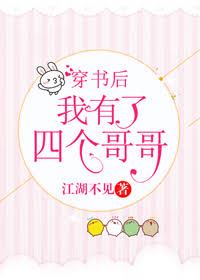
After Transmigrating in a Novel, I have Four Older Brothers
+Add to Custom List
Sort
Add review
... Read More
This chapter is basically the eye of the storm before everything goes completely off the rails. On the surface, nothing much is happening. Yingying goes to school, comes home, eats dinner with the family, takes Xuezhen to school the next day. But you can FEEL the tension everywhere. First there's the whole Ji Ran situation — his commercial value has dropped because of those orphanage photos, he's being controlled more tightly by the company, and his image as the "beggar prince" is being dismantled. The text says his fans are surging past 60 million but his family background is weak compared to the other members. That's a ticking time bomb. Then there's the Gu family drama. Yingying knows her parents "prepared a new household registration book" — meaning they're literally trying to erase her from the family legally. But she's also been accepted into this home, eating at their table, bonding with Xuezhen. And then — BOOM — the Yu family couple shows up. These are the people who raised Xuezhen as a servant for over ten years, and they just got a call to "bring their own daughter home" along with "a large sum of money." I am SO ready for this confrontation. Xuezhen's face turning cold when she sees them tells me everything. The Yu family treated her like help, and now they're coming to collect their "daughter" like she's merchandise. What happens when they find out she's living like a princess? What happens when Yingying finds out the truth about who Xuezhen really is?
... Read More
The dialogue here is surprisingly sharp for a reveal chapter. Ji Ran's voice is described as 'magnetic with a strange sense of youthfulness'—and that comes through in how he speaks. He's careful, measured, lower his voice when he says 'Don't tell anyone I'm here.' Even as a superstar, he's protective of his privacy. The contrast with how he acts around Caesar—the dog throws itself on him and he 'happily hugs his big dog'—tells us more about his personality than any monologue could. He's gentle with animals, patient with strangers, careful with fame. And Gu Yingying—her lines are minimal but precise. 'My name is Gu Yingying. I hope to find my brother.' That's it. Three sentences that carry the weight of the entire chapter. She doesn't overshare, doesn't push, just states her truth while hiding the biggest truth of all. The author also lets secondary characters fill in gaps naturally—the store manager explaining the free sterilization policy, the background about Caesar being a four-year-old husky, the clerk who already knows Ji Ran visits secretly. None of it feels expository because it's triggered by the situation. One complaint though: some of the translated phrasing is awkward ('make people want to slide on his nose'—what does that even mean in English?). But the Chinese original probably flows better. Still, the core voices are distinct. Ji Ran sounds like a young man who's successful but lonely. Gu Yingying sounds like someone carrying secrets.
... Read More
The stakes in this section are layered and they keep escalating. On the surface level, there's the immediate threat of a car accident on Yong'an Road - two lives hanging in the balance based on a single road choice. Gu Yingying warns them, they agree, and for a moment the tension releases. But then the author immediately pivots to a deeper, slower-burning conflict: Gu Xiao's predatory behavior toward his adopted sister. This isn't an event that will happen today - it's a situation that has been building and will likely explode later. The beauty pill scene is weirdly tense too - Gu Yingying offering something intimate (medicine, shared consumption) to Gu Xuezhen, who is already psychologically armored against everyone in this family. She's tempted to ridicule the girl but can't bring herself to. Why? Because deep down she knows Gu Yingying might be the only honest person around. The stakes aren't just physical danger anymore, they're about trust, survival, and who you can believe in.
... Read More
There's more happening beneath this seemingly lighthearted chapter than you'd initially think, and I want to dig into the symbolic layers because the author is doing something clever here. The crystal hairpin and the $10,000 bracelet on a girl with exactly zero dollars — this opening image is pure symbol. She's performing wealth she doesn't possess, wearing the costume of someone who belongs while being utterly rootless. The luxury branding isn't accidental detail; it's visual shorthand for identity displacement, for existing between worlds and belonging fully to neither. And then there's the mirror. Gu Yingying possesses a 'magical mirror' which she references as the source of her fortune-telling ability. Mirrors have always been liminal objects — portals, reflection, truth, deception. In many mythologies they trap souls or show alternate realities. Here it seems to be her ticket to survival in this new world, a tool that bridges whatever gap exists between her original world and this one. The cats themselves are loaded with symbolism across virtually every culture — independent, mystical, guides between worlds, bringers of fortune or misfortune depending on your perspective. Bastet being named after the Egyptian cat goddess is NOT coincidental. A feline deity helping a lost soul survive in a strange land? The mythology is doing heavy lifting here. The fortune-telling that she refuses to do (marriage/destiny of others) versus the cat performance that succeeds — there's a thematic argument about different kinds of power. Reading fate for others vs. commanding the wild, untamed, free creatures. One is control over predetermined outcomes; the other is communion with living chaos. Maybe that's the thesis: she survives not by predicting the future, but by embracing the unpredictable.
... Read More
I have to talk about this one scene. You know those moments in books where everything just stops and you're like... what just happened? "The night was as cold as water. The moonlight outside the window gradually shone on Bastet's body, only to reveal that Bastet, who had been sleeping with his eyes closed, had abruptly opened his eyes. This time, the eyes that should have been blue turned out to be red." CHILLS. Actual chills. Because up until this point Bastet was just... a cat. A weird cat that follows your protagonist around, sure, but a cat nonetheless. And then suddenly — RED EYES. And he's wrapping a red thread around her arm. And the text specifically says "a strange red light appeared from the little paw" — this isn't normal cat behavior, this is supernatural. The atmosphere in this section is incredible too. Before the magic reveal, everything is so calm and domestic — Yingying eating in the kitchen, Xuezhen being nice, the two of them coexisting peacefully. And then the night turns "cold as water" and the moonlight creates this eerie spotlight on Bastet. It's such a sharp contrast. The warmth of the day vs the coldness of the night, the safety of the villa vs whatever ancient magic Bastet is hiding. And then the next morning everything is "incredibly flat" and "calm, like the calm before the storm." THE CALM BEFORE THE STORM. I literally cannot wait for whatever storm is coming.
... Read More
Here's the thing about this book that I keep thinking about — it's not just a romance or a transmigration story, it's actually exploring something deeper about worth and belonging. Gu Yingying keeps comparing herself to the cat. Remember when she says Bastet is an "Anlan Continent civet cat" that can bring good fortune to good-hearted women? She literally says this while rubbing the cat and talking about how Xuezhen must be a good girl because the cat chose her. But think about it — Yingying herself is the one who picked up Bastet from the orphanage, who took care of him, who carried him back home. SHE'S the one with the good heart. And now the cat is wrapped in a red thread around HER arm. The red thread is such a loaded symbol. In Chinese mythology, the red thread connects people who are destined to meet. Here it's connecting a girl from another world to a supernatural being. But it's also connecting her to this new life — to Xuezhen, to the Gu family, to Ji Ran. And then there's the whole orphanage connection. Both Yingying and Ji Ran came from orphanages. The text mentions that Ji Ran was called a bully as a child, that people posted photos of him in the orphanage, and that despite his success his "commercial value suffered greatly." Meanwhile Yingying is being forced to leave the Gu household because she doesn't belong. They're both outsiders trying to prove they have value in a world that keeps telling them they don't.
... Read More
Okay, so I have to talk about this one scene because it is genuinely hilarious and I cannot stop thinking about it. Gu Yingying, a cultivator from another world, someone who presumably worked with proper medicine tripods and ancient pill furnaces, is now standing in her modern villa with two pots from the kitchen and a pressure cooker. I literally snorted out loud. The contrast is just too perfect. She's doing Medicine Sect hand gestures, reciting words under her breath, pointing her slender finger at a... pressure cooker. And it works. The pressure cooker starts spinning, pink smoke drifts into it, and suddenly there are glowing pink pills at the bottom of what was previously just a vessel for making beans or soup. This is the kind of detail that makes a transmigration story feel alive. The author doesn't just tell us she's adapting—they show her improvising with what she has, and it works because she's actually talented. But the humor here is Chef's kiss. Meanwhile, Ji Ran is smoking in an alley at 1 AM wearing a black hat wrapped up tightly, and you can feel the whole scene shift. One moment you're watching a girl enthusiastically cook pills in a pressure cooker, and the next you're in a dimly lit alley with a celebrity trying to escape his own life. The tonal whiplash is real but it works because both scenes are rooted in atmosphere. The pharmacy scene with the female doctor chatting casually while processing a 60,000 yuan order also grounds the modern world in a way that feels lived-in—not just a backdrop but a functioning society with its own rules about prescriptions and discounts.
... Read More
Okay so this whole setup is wild. The protagonist gets transmigrated TWICE — first to a cultivation world where she cultivates for 800 years and basically gets struck by lightning during her senior brother's ascension tribulation, then dumped into this modern "fake daughter" novel world. That's a pretty solid narrative shortcut to establish that she's not your average isekai protagonist. She's got eight centuries of memory, a soul weapon, and still manages to forget the plot of this specific book. Classic amnesia trope but it works here because it forces her to rely on her wits instead of plot armor. The core conflict kicks in immediately — she's the fake daughter, the real one has returned, and she's being treated like a squatter in her own home for sixteen years. What's interesting is the inversion: the Gu family aren't villains. They actually love the real daughter and feel terrible about how the fake daughter was treated. That's a refreshingly nuanced take on a trope that's usually black and white. The stakes are clear though — she's going to be kicked out, and she knows it, so she's actively looking for other blood relatives as a backup plan. I'm curious about where the senior brother fits in this timeline. She spotted his existence in the magic mirror, which means he might also be in this world, or possibly hasn't arrived yet. That's a thread I want to follow. The plot feels tight so far — every scene pushes her toward a decision point, and the tension between her wanting to leave gracefully versus the universe making it difficult is doing heavy lifting.
... Read More
I genuinely got chills at the mirror moment. Think about it—she's a transmigrator, new to this world, probably feeling untethered and lost, and then she sees THIS boy and the mirror confirms he's her blood relative. First time she's ever had a sibling. First time she has family in this world. 'For the first time, she had blood relatives.' That line hit hard. She wanted to scream but contained it. The restraint is what makes it powerful. And then his reaction—Ji Ran, the untouchable superstar, immediately softens around her. Not because she's pretty (though the description goes into detail about his cold white skin, blue eyes, the way his eyelashes make you want to 'slide on his nose'—okay the translation is weird but you get the image), but because she's different. She doesn't scream. She doesn't fangirl. She's just... present. And he feels it. The moment where he takes off his mask and she sees his face—the mirror has been telling her all along, but now she sees it with her own eyes—is probably one of those scenes readers will highlight. 'I'm signing your autograph now. What is your name?' And her response: 'I hope to find my brother.' The dramatic irony is so thick you could cut it. He's signing a blessing for her to find the person she's been standing next to the whole time. Beautiful.
... Read More
Okay can we just talk about Bastet for a second because THIS cat is genuinely the most developed character in these chapters and I am not even mad about it. The dynamic between Gu Yingying and Bastet is honestly the heart of this whole story. Think about it — she transmigrates into a completely alien world, stripped of her powers, abandoned by the family that supposedly claims her, and what does she find first? A familiar. Her senior brother isn't there, but Bastet IS. And the way the narrative treats their relationship is so tender. The paw-on-face moment immediately after she hugs him is iconic. He pushes her away with visible disgust, yet when she asks about Senior Brother, he gives her that contemptuous stare that basically says "you really think I know?" And later, when he intentionally knocks her stationery box off the desk just to save her from embarrassment in front of the teacher — that is not accidental cat behavior, that is calculated emotional support. The narrator even explicitly tells us this is a unique tacit understanding between them. What really gets me is that Bastet was adopted when he was a newborn in the immortal realm, and somehow Gu Yingying named him before discovering he was male. Her senior brother had to correct her on that. The fact that the cat spirit mother ascended and left Bastet behind, and now Bastet followed Gu Yingying into this new world instead of staying behind... doesn't that say something? She might not remember everything about this world yet, but she remembers HER person. And the cat remembers his family. That line in the text where she realizes "since I arrived in this world, Bastet also arrived, proving that Senior Brother must also be here" — that's the kind of quiet emotional payoff that hits way harder than any dramatic revelation. Meanwhile the classmate offering dried fish is just casually making friends with her. One kind gesture and suddenly she's surrounded by students who want to pet the cat. She was isolated two chapters ago and now she's the center of attention because a black cat decided to sit on her desk. People are really going to fall in love with Bastet and through him, with her.
... Read More
The chapter structure here is really interesting because it does something deceptively simple — it pivots. We're in a relatively intimate, almost domestic scene between two girls sharing medicine and a bank card, and then the narrative just... cuts. No transition paragraph, no 'meanwhile' tag. One moment it's pink pills tasting like jelly beans, and the next we're at Shangjing City Police Station with Chief Liu welcoming Qin Yusen. This abruptness actually works in the story's favor because it creates a sense of scale. The world isn't just about these two girls; it's about a billionaire searching for his family, a police force with advanced DNA technology, and an entire ecosystem that operates around people like Qin Yusen. The shift in setting signals that the personal and the grand are about to collide. Then there's the accident reveal, which comes in layers. First, Chief Liu gets a call about a serial car accident on Yong'an Road. Then Qin Yusen connects it to Gu Yingying's warning. Then Driver Wang confirms it on the radio. Three touchpoints for the same information, each escalating the tension slightly. By the time Qin Yusen tells the driver to go to No 1 Experimental High School, the pacing has tightened enough that you can feel the chapters closing in around these characters. The only slight drag is the exposition dump on Qin Yusen's background — his age, his company, his donations — which slows the momentum right as we're building toward the sibling reveal. But honestly, it's a minor stumble in an otherwise well-controlled chapter rhythm.
... Read More
Let me talk about the imagery in this section because the visual language is genuinely striking. The magic mirror showing the driver with a 'greyish-white appearance and the blood around him' - that's visceral. It's not subtle horror, it's direct, almost clinical description of death omens. And then for Qin Yusen, it escalates: 'the appearance of her brother had turned black and white and was covered in blood.' The shift from greyish-white to pure black and white is meaningful, isn't it? Like the image is going from warning to certainty. The car ride itself is such a contained, claustrophobic space - three people in a vehicle hurtling toward a potential disaster on Yong'an Road. And then the school scene, with Gu Yingying waving from outside the window like some sort of ghostly cheerleader, pure and bright against the dark knowledge she carries. The contrast between her 'cheer blossom' innocence and the bloody omens in the mirror is almost poetic in its cruelty.

Leave a comment

You must be logged in to leave comments. or
