Summary

... Read More

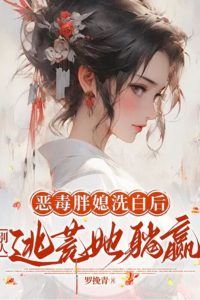
Bai Qianqian, a modern pastry chef, awakens inside the body of a woman who has just died from a high fever in ancient China. The original host, Bai Qianqian, was the second daughter-in-law of the Zhao family, known for her laziness, stinginess, and cruel treatment of her five-year-old stepson, Zhao Anyao. Upon regaining consciousness, she finds herself being carried in a straw mat to her own ghost marriage, a forbidden practice arranged by her malicious mother-in-law, Old Madam Zhao, to bind her to her deceased second son. The porters and the matchmaker are terrified when her eyes open, causing chaos in the Zhao household. Realizing she has survived, she confronts the family, exposing their plot and demanding justice. The villagers, aware of the original host's terrible reputation, watch with skepticism as Bai Qianqian turns the tables on her abusers.

Bai Qianqian leverages the illegality of ghost marriages and the threat of ruining her father-in-law’s third son, a promising scholar, to force a settlement. She demands the return of her dowry, ten taels of silver in compensation, and separate living quarters from the rest of the Zhao family. Old Master Zhao, fearing for his son’s imperial examination career, reluctantly agrees to her terms. Once separated, Bai Qianqian begins to rebuild her life. She discovers the squalid conditions in which her stepson has been living, forced to sleep near the pigsty and starve while his cousin is pampered. Her initial revulsion at the original host’s cruelty transforms into a protective resolve. She cleans the boy, feeds him proper meals, and asserts her authority over the household labor, refusing to let him be exploited by the rest of the family.

With limited resources, Bai Qianqian decides to use her professional skills as a pastry chef to earn money. She bakes brown sugar jujube cakes and sells them in the local town market. Her initial attempts face challenges due to her poor reputation in the village; neighbors refuse to hire her for home repairs or labor, assuming she will cheat them. However, she proves her reliability by paying fair wages upfront for roof repairs and tailoring services, slowly beginning to shift public perception. She also encounters a local magistrate, Qin Heng, during a dispute with a vendor who falsely claims her cakes made her grandson ill. Bai Qianqian handles the confrontation with wit and firmness, refusing to be bullied and nearly dragging the accuser to the magistrate’s office, an encounter that leaves a brief impression on the stern official.

The conflict with the Zhao family intensifies when Zhao Chengshuang, the youngest daughter, falsely accuses Bai Qianqian of kidnapping and selling Zhao Anyao to extort more money. The accusation draws the attention of clan elders, who prepare to intervene. Bai Qianqian returns with the boy, safe and wearing new clothes she bought for him, exposing the lie. She forces the family to provide compensation in the form of shoes for the boy, further humiliating them in front of the community. Despite these victories, Bai Qianqian remains acutely aware of her precarious position. Her body is weak and overweight, making physical labor difficult. She spends her earnings on food, firewood, and winter supplies, preparing for the harsh season ahead. The story follows her determination to survive independently, protect the child she has come to care for, and navigate the treacherous social dynamics of a village that despises her, all while hiding her true identity and modern knowledge.

Novel Items

More
Event
A plan by Hu Sifeng to sell Zeng Yan's corpse after her death to be used in a ghost marriage, a traditional practice where a dead person is married to another deceased person.
Money
Bai Ruoshuang used ten taels of silver to instruct her maid to spread damaging rumors about Feng Yan'er throughout the capital, claiming Feng Yan'er drugged the Crown Prince to marry into his household.
Money
The Gu family discusses setting aside 1,000 yuan as Ruoyan's dowry. Gu Yizhi initially refuses and wants to handle it himself, but his mother and sisters-in-law insist. His sisters-in-law each received only fifty yuan when they married.
Treasures
A silver bracelet stripped from Su Jianjun's hand by Yang Guixiang. Part of the stolen family fortune hidden in a box under the floorboards.
Event
A system in this dynasty where merchants and their descendants are not allowed to take the exams. This is a key concern for Chi Qiao, as she does not want Chi Yu to marry a merchant due to the social stigma and limitations it places on her child's future.
Money
Silver given by Liu Hansheng to Ning Yuchan when she got married, which Ning Yuqiao later used as leverage to demand similar treatment from him.
Latest Release
DateGroupRelease
2026-08-11shanghai fantasy c5
2026-08-11shanghai fantasy c4
2026-08-11shanghai fantasy c3
2026-08-11shanghai fantasy c2
2026-08-11shanghai fantasy c1

Community Reviews

Rating(4.4 / 5.0, 19votes)
5 stars
11(58%)
4 stars
5(26%)
3 stars
3(16%)
2 stars
0(0%)
1 stars
0(0%)

Popular reviews

... Read More
Okay so let me just say—opening a novel with your protagonist literally waking up inside a straw mat being carried to her own ghost marriage is a bold move. Like, most authors ease you in with some atmospheric description, and this one just drops you straight into the horror-comedy of it all. The scene where the porter looks down and locks eyes with her? I literally gasped. That is the kind of moment that makes you immediately invested. The plot structure here is actually really smart. It opens with maximum chaos (corpse wakes up!), then immediately pivots to the real conflict: this family tried to marry her to a dead man while she was still breathing. The ghost marriage arrangement is both the inciting incident AND the central injustice that drives everything forward. And then—plot twist within a plot twist—the original host was apparently this awful, stingy woman who stole chickens and bullied her stepson. So our protagonist has to deal with not just the family's crimes against her, but also the fact that the whole village already hates her. That's a double layer of problem-solving right there. I also appreciated how the author used the transmigration angle to justify the protagonist's different behavior. The original Bai Qianqian was a pushover; this one is sharp and ruthless. The fever that killed the original body conveniently burned away all that foolish devotion. Clever narrative device. And the setup with the husband being conscripted into the army—that's clearly going to be a major plot thread. She can't get a formal divorce, which means she's stuck in this marriage limbo while building her own life. I'm curious how that resolves. The pacing from chapter to chapter is solid too. Chapter 1 is pure confrontation and revelation. Chapter 2 shifts to negotiation and strategy—she's not just reacting, she's calculating. Chapter 3 starts the quiet aftermath where she's dealing with the practical reality of her situation. It's a good three-act structure compressed into three chapters. The only thing I'd want more of is some sense of the wider world—what era is this, what's the political situation, who are the bigger players? But that's probably coming.
... Read More
I need to talk about Old Madam Zhao because WOW. This woman is absolutely deranged and I am here for it. The fact that she was haggling over the price of her own daughter-in-law's corpse—five taels versus two because the daughter-in-law was 'too fat'—is the kind of detail that makes you stop and just stare at the page. That is not a normal person. That is a villain who has committed so many crimes against humanity that she doesn't even register them as wrong anymore. But what's fascinating is how the family dynamics unfold. Old Master Zhao? He seems like the weak father figure who'd rather save face than deal with the truth. When Bai Qianqian calls him out, he immediately sides with his wife because apparently a husband's loyalty to his mother trumps basic justice. The eldest daughter-in-law is this sycophantic enabler who's too busy currying favor to see the bigger picture. And that stepson, Zhao Anyao—poor kid. Sleeping next to the pigpen while his stepmother was being prepared for a ghost marriage. The cruelty is so casual and systemic that it's almost surreal. Bai Qianqian herself is a fascinating character study. She's not a typical transmigrator who's all warm and fuzzy. She's cold, calculating, and absolutely ruthless when pushed. The moment she says 'I'm so angry... so I've come back for you!'—that's not the original host talking, that's someone who has every right to be furious and is channeling it perfectly. But I also noticed something interesting: when she sees Zhao Anyao, she feels 'a wave of discomfort.' She's not completely heartless. She recognizes the boy's suffering. That's a character who has moral lines, even if she's willing to walk right up to them. The relationship between Bai Qianqian and the original host is also intriguing. The memories are flooding in, and she's learning that her predecessor was this universally hated woman. So she's not just fighting external enemies—she's fighting the reputation her body left behind. That's a really layered character dynamic. I wonder if she'll eventually bond with Zhao Anyao, or if the original host's abuse of him will create an irreparable wound.
... Read More
There's this one image that keeps coming back to me and I can't stop thinking about it: shoes. Zhao Anyao's old shoes are worn out. Chengshuang notices them. Madam Lin sews a new pair — for HER son. And then those shoes end up on Anyao's feet. It's such a perfect symbol for everything this story is about. The things the Zhao family hoards for their own blood get redistributed to the orphan they've been trying to squeeze out of existence. The shoes represent care, protection, belonging — things the Zhao family claims to value but only dispenses conditionally. And then there's reputation. The whole conflict starts because Chengshuang accuses Bai Qianqian of selling a child, which would make the Zhao family look like they're trafficking children. But Bai Qianqian flips it: "If you don't intervene, what other village would ever dare marry their daughters into this family?" A single accusation becomes a threat to every marriage alliance the Zhao family has ever cultivated. Reputation here isn't just about honor — it's currency. It's survival. The village's refusal to help Bai Qianqian repair her roof is another layer. The original owner of this body destroyed her own reputation so thoroughly that now even basic human cooperation is impossible. She has to pay double the going rate just to get someone to show up. The metaphor is almost too on the nose — a poisoned reputation leaves you cold and exposed, literally unable to weather the coming winter. What's interesting is that Bai Qianqian rebuilds her reputation through action, not words. She pays her debts in full. Auntie Liu's husband and the other workers confirm she actually paid. The village women are shocked: "Impossible. Madam Bai is never that generous!" One honest transaction is enough to crack the narrative that's been built about her. The story seems to be saying: reputation is a story everyone tells you, but it can be rewritten if you're willing to do the work.
... Read More
I need to talk about Li Niang because this woman walked in and immediately stole the scene. While everyone else in this story is either prejudiced against Bai Qianqian or trying to take advantage of her, Li Niang just... sees her. She tastes the candy, negotiates fairly, offers a partnership, AND arranges free transportation home. The line that got me was when she says she'll send a carriage to pick up the goods every three days — that's not just business savvy, that's genuine investment in someone the village has been tearing apart. And the backstory drop about her being a widow running a shop with a sickly mother-in-law and kids? Chef's kiss. She understands what it means to have to hustle. Meanwhile, Zhou Dafu is this fascinating villain who isn't even trying to be villainous in a dramatic way — he's just casually cruel. His apprentice asks a reasonable question about buying the recipe and Zhou Dafu dismisses it with this whole speech about how 'country fare is only prized by commoners.' But then the narration tells us he's already failed to replicate the cake. The gap between his arrogance and his actual competence is hilarious and terrifying. And Old Madam Zhao — oh man. She goes from bragging to her neighbors that her third son is coming home to getting absolutely dismantled in front of everyone by a carriage ride that belongs to someone else. The humiliation on her face was almost palpable. I want to know what this does to her relationship with Bai Qianqian going forward. She's already hostile, but this public embarrassment? That's a wound that won't heal quietly.
... Read More
I need to pause and really talk about this one moment because it hit me unexpectedly hard. Bai Qianqian is standing there, having just bested the Zhao family in their own game, and her thoughts drift to her parents. Not the Zhaos — her actual parents, the Bai family. And she feels... guilt. The text says it straight: "Mentioning her parents, however, made Bai Qianqian feel a twinge of guilt. She wasn't the original owner of this body, and she feared the Bai family would sense something was wrong if she returned." This is such a small detail but it carries so much weight. She's a transmigrator, right? She inhabits someone else's body. And even though she's never met these people, even though the original owner's memories are what she has to go on, she still feels protective of them. She still cares. That's not nothing. The memories show they were kind to her — or at least, kind to the girl she now occupies. And that's what makes this twist so painful. She's using their name as a shield against the Zhaos, throwing them under the bus almost, and she knows it. She knows the Zhaos won't dare go to the Bai family because they stole her dowry when she was sick and vulnerable. She weaponized her own family's reputation. But then she decides: "I'll deal with that after the New Year." Like it's just something to schedule. She's planning to face them, to confront whatever awkwardness comes from being in someone else's skin. That's brave, honestly. Most people would run. She's choosing to go back. There's also this quieter emotional thread with Zhao Anyao. The kid is learning to count, beaming with pride when he gets everything right. Bai Qianqian is teaching him basic arithmetic, thinking about sending him to a proper school. It's a tiny domestic moment — her peeling winter melons, the two of them staying indoors by the fire — but it shows how much she's invested in building something real here. She's not just surviving; she's creating a life. The contrast between the warmth she shares with Anyao and the cold calculation she uses against the Zhaos is what makes her character so compelling. She's capable of both tenderness and ruthlessness, and she deploys each where it's needed.
... Read More
Okay so let me just say — Zhou Dafu is already being a menace and we haven't even gotten to the fallout yet. The man tastes the winter melon candy, thinks about it for literally two seconds, and then his entire face lights up with this sneaky little plan to replicate it. Can you believe the audacity? He's already had his pastry maker try to copy the brown sugar jujube cake and failed, and now he's sitting there thinking he can do it with the candy. The dramatic irony is killing me because Bai Qianqian has NO IDEA she's been marked. She's out there happily going to shop number two like everything's fine while this guy is already plotting to steal her livelihood. And honestly, the plot structure here is really satisfying — it follows this classic pattern where the protagonist hits a wall (Manfu Pastry Shop says no), almost gives up, then finds an unexpected ally in Li Niang. But the author doesn't let us breathe for too long. Just as we're feeling good about the partnership being sealed, BAM — the carriage scene happens and Old Madam Zhao gets publicly humiliated. The story keeps layering conflicts on top of each other like it's building a pressure cooker. I also love how the Auntie Liu subplot ties in — she's this small, almost incidental character who actually matters because she represents the village's shifting attitude toward Bai Qianqian. The trade feels almost too easy, which makes me wonder if there's more to come. Is Auntie Liu genuinely kind, or is she playing a longer game? Either way, the plot is moving in a really satisfying direction and I'm already worried about what's coming.
See all reviews

Characters

See all characters

Custom lists

Oops…There is nothing here.