After the Princess Was Exiled, She Was Lavishly Spoiled by a Wealthy Benefactor!
Novel Info

Summary

... Read More

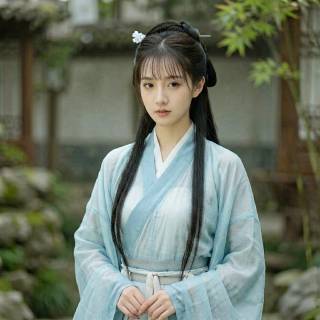
Jiang Qingqing, the only princess of the Great Liang Kingdom, finds her world shattered when the Empress Dowager seizes power. Accusing her father’s military faction of treason following a devastating war defeat, the Empress Dowager strips Jiang Qingqing of her status and exiles her to a desolate village to die. Abandoned in a dilapidated straw hut with no food or water, the once-pampered princess faces starvation and exposure. Her only possession is a mysterious wristwatch left by her late mother, Consort Wan, which suddenly activates as she contemplates suicide. The device connects to a remote player in the modern world: Fu Zhengnan, the cold and powerful CEO of Fu Corporation. Initially viewing the experience as an intrusive otome game, Fu Zhengnan is compelled to intervene when he witnesses Jiang Qingqing’s suffering. He uses in-game currency to repair her hut, provide clothing, and supply food, transforming her dire situation through a series of digital transactions.

The connection between the two worlds deepens as Fu Zhengnan invests heavily in Jiang Qingqing’s survival, upgrading her environment from a leaking shack to a luxurious modern apartment complete with gourmet meals and comfortable furnishings. Jiang Qingqing, unaware of Fu Zhengnan’s true identity, reveres him as a divine being who has taken pity on her. Their interactions are mediated through the watch interface, where she can see and hear him, and he can observe her every move. Meanwhile, Jiang Qingqing’s political enemies in the Great Liang Kingdom do not rest. Liu Mei, the daughter of the Prime Minister who orchestrated the princess’s exile, arrives at the hut to humiliate and potentially kill her. Jiang Qingqing, displaying unexpected combat skills inherited from her mother, defeats Liu Mei and her servants, protecting her sanctuary and earning Fu Zhengnan’s silent admiration.

As Fu Zhengnan becomes more emotionally invested, he discovers that the game’s payment system is linked to an untraceable overseas shell corporation, raising suspicions of a scam. Despite this, he continues to support Jiang Qingqing, even triggering a holographic projection feature that allows for a brief physical manifestation. This event leads to a pivotal moment where Fu Zhengnan finds himself inexplicably transported into Jiang Qingqing’s world, sharing a bed with her. The boundary between the digital game and reality begins to blur, forcing Fu Zhengnan to confront the genuine nature of his connection to the princess. Back in the Great Liang Kingdom, the fugitive prince Jiang Yu, the only surviving male of the accused Jiang family, also enters the narrative. He seeks to clear his family’s name and uncover the truth behind the treason charges, setting the stage for future political upheaval.

The story moves toward a convergence of these two worlds. Fu Zhengnan, initially detached, finds his indifference crumbling as he witnesses Jiang Qingqing’s resilience and gratitude. He begins to view her not as a game character but as a real person deserving of protection. Jiang Qingqing, in turn, relies on her divine benefactor for survival while navigating the treacherous politics of her kingdom. The Empress Dowager’s grip on power remains firm, but the arrival of Jiang Yu and the mysterious interventions in Jiang Qingqing’s life introduce variables that could destabilize the regime. Fu Zhengnan’s corporate resources and modern knowledge may become crucial assets in this ancient conflict, while Jiang Qingqing’s royal lineage offers a path to legitimacy and revenge. The narrative establishes a complex dynamic where a modern CEO and a fallen princess are bound by fate, technology, and growing emotional ties, promising a journey of redemption, political intrigue, and cross-dimensional romance.

Latest Release
DateGroupRelease
2026-08-11shanghai fantasy c146
2026-08-11shanghai fantasy c145
2026-08-11shanghai fantasy c144
2026-08-11shanghai fantasy c143
2026-08-11shanghai fantasy c142
2026-08-11shanghai fantasy c141
2026-08-11shanghai fantasy c140
2026-08-11shanghai fantasy c139
2026-08-11shanghai fantasy c138
2026-08-11shanghai fantasy c137
2026-08-11shanghai fantasy c136
2026-08-11shanghai fantasy c135

Community Reviews

Rating(3.4 / 5.0, 28votes)
5 stars
5(18%)
4 stars
8(29%)
3 stars
9(32%)
2 stars
6(21%)
1 stars
0(0%)

Popular reviews

... Read More
There's so much going on beneath the surface of this chapter that I want to unpack. The tiger token is the most obvious symbol, and it's doing heavy lifting. Two tokens in the entire dynasty — one with the emperor, one with the Jiang family. This represents the fundamental tension of the story: who holds real power? The emperor who gave away half his authority, or the general who still commands 200,000 soldiers? Jiang Qingqing holding the token in her hand and asking "how can I trust you?" is the central question of the entire narrative compressed into one moment. Then there's the empty bed. The man who appears and vanishes — who was he? The text is deliberately ambiguous, but the symbolism is clear: this world is unstable, nothing is solid, you can't trust what you see. Jiang Qingqing's entire existence has been upended — her identity, her family, her safety — and the empty bed is the physical manifestation of that instability. The game system rewards are another layer. Meat buns appearing from nowhere in a world where a young general is starving in a broken water tank. The contrast between Jiang Qingqing's absurd luck (a magical system giving her perfect food) and Jiang Yu's suffering (eating salt-heavy soup like it's a feast) raises questions about fairness, fate, and whether the system is helping her or just making her complicit in someone else's suffering. And the line that haunts me: "People are the same. Jiang Qingqing was meant to be his." Liu Xubai viewing human beings as pieces on a board, arranged according to some grand design. But the story keeps proving him wrong — Jiang Qingqing refuses to be placed, Jiang Yu refuses to die, and the mysterious vanishing man suggests that not everything in this world follows someone's plan.
... Read More
The worldbuilding in this novel is doing heavy lifting, and I'm obsessed with how the author contrasts two completely different worlds. Let's start with the hut. "Dark clouds hung low, signaling an approaching storm." The golden silk-embroidered palace dress starkly contrasting with the tattered straw hut—that visual alone tells you everything about Qingqing's fall from grace. The rain lashing against fragile walls, the door blowing over, blood oozing from a scraped arm. These aren't just details; they're sensory anchors that make you FEEL her desperation. But then we cut to Fu Zhengnan's world: "At the top floor of Fu Corporation," phone vibrating, automatic game interface launching. The contrast is jarring in the best way. One world is mud and rain and starvation; the other is glass offices and supercars and arranged dinners with people who smile while calculating power. The dinner scene is particularly vivid. Elder Fu stroking his beard with satisfaction, Chen Xiaoyue's face turning "deathly pale" when Fu Zhengnan sits across the room, the palpable tension when his phone voice cuts through the formal atmosphere. You can practically hear the awkward silence. And that moment when Qingqing hears her own voice come through Fu Zhengnan's earpiece? The author doesn't need words—the reader understands the impossibility of it. Two worlds, separated by dimensions, connected by a watch, and the boundary is literally dissolving. The political worldbuilding is also smart. We get the Empress Dowager's decree, the Prime Minister's authority, the Jiang family's treason accusation, the lost battle against Tianqi Kingdom—all woven into the background without infodumping. The reader pieces it together naturally as Qingqing reacts to her situation. Every setting serves the story. The dilapidated hut isn't just a location; it's a symbol of her fallen status. The corporate office isn't just a backdrop; it's Fu Zhengnan's cage of expectations. The storm isn't just weather; it's the chaos engulfing the kingdom.
... Read More
Okay, so this opening is honestly genius. Let me break down why the plot structure here is so satisfying. We start with Princess Jiang Qingqing abandoned in a dilapidated hut, literally on the verge of death. The Empress Dowager has orchestrated everything—her mother Consort Wan disappeared, the Emperor is feigning illness, and the Jiang family has been framed for treason. It's a classic political conspiracy setup, but the twist is how it's delivered. Then BAM—the watch activates. And here's where it gets interesting: it doesn't just connect to some random person. It connects to Fu Zhengnan, a modern-day CEO whose grandfather is basically forcing him into blind dates, and who stumbles into this "game" completely by accident. The dual-timeline narrative works because both characters are trapped in their own ways—Qingqing by political persecution, Fu Zhengnan by family expectations. The plot twist of Chapter 2 where Qingqing literally tells Fu Zhengnan to "top up" and then immediately gets a knife to her neck? Chef's kiss. The pacing is relentless. Every chapter ends on a hook that makes you want to keep reading. What I love most is how the political intrigue is layered with the supernatural game mechanic. The Jiang family's treason accusation, Jiang Yu's escape, the Empress Dowager's power grab—all of this is the backdrop, but the watch connection is what drives the forward momentum. And that ending where the officer spots Qingqing and immediately reports to the Prime Minister's residence? That's a ticking clock. The stakes are escalating beautifully. The narrative structure is tight: setup (abandonment), inciting incident (watch activates), rising action (Fu Zhengnan's involvement, Jiang Yu's appearance), and a climax that's just beginning. No filler, no unnecessary exposition. Every scene pushes the story forward.
... Read More
The atmosphere in this chapter is *dense*. Like, you can physically feel the tension in every scene. Let me start with the vanishing act. The description of Jiang Qingqing's physical reaction — "Cold sweat dampened her forehead, causing strands of hair to stick to her skin, and her face turned deathly pale" — this isn't just telling us she's scared, it's making us FEEL it. The sensory details are so specific and visceral. And then the immediate cut to the knock at the door, breaking the supernatural tension with mundane danger? That's masterful scene crafting. But the scene that really stuck with me is the eating sequence. Jiang Qingqing reclining on the sofa, eating a meat bun from her game system reward, and the aroma wafting through the air. "Still steaming with heat." This domestic, almost cozy image is juxtaposed against the fact that she's essentially a prisoner in her own home, surrounded by people who want to use or kill her. The normalcy of eating a bun in this context is almost heartbreaking. And then Jiang Yu eating her terrible cooking — the salt too heavy, the soup basically just boiled eggs in water — and he eats it with such gratitude. The contrast between the imperial chefs' food she mentioned and this survival meal is such a sharp worldbuilding detail. It tells us about her past (she had access to the best) and her present (she's making do with whatever she has) without any exposition dumps. The courtyard itself feels like a character — the broken water tank where Jiang Yu hides, the fence where Liu Xubai waits in his carriage, the connected living room and bedroom that Jiang Qingqing has to navigate. Every space tells a story about power, confinement, and survival.
... Read More
I need to talk about Liu Xubai because this man is genuinely terrifying and I love it. "His voice was warm, like a gentle spring breeze. Anyone who heard him would believe in his sincerity, as if he had simply stumbled upon a dying kitten by the roadside and was offering a helping hand out of pity." And then the narration immediately undercuts it: "Had Jiang Qingqing not seen his true nature before, she might have actually been fooled." This is how you write a manipulator. He's not some cartoon villain cackling in the dark — he's the guy who brings you soup when you're sick and secretly poisoned it three days ago. The fact that he waited THREE DAYS instead of forcing her immediately? That's not kindness, that's calculated patience. He's playing the long game and he knows exactly what he's doing. And then the scene outside where he pours tea and says "People are the same. Jiang Qingqing was meant to be his" — CHILLS. Absolute chills. The casual cruelty of that line, delivered while he's just sipping tea like it's a normal Tuesday. This man views people as objects to be placed where he wants them. But here's what's fascinating: Jiang Qingqing sees right through him. She doesn't fall for the act. She just goes to the kitchen and washes an apple. That's not defiance, that's exhaustion. She's so done with people trying to use her that her response is basically "I'm going to eat my snack and ignore you." The dynamic between them is this horrifying push-pull where he thinks he's the puppeteer and she's the puppet, but she's been watching him the whole time.
... Read More
I need to talk about Fu Zhengnan because this man is EVERYTHING. First impression: he's cold, dismissive, clearly a business powerhouse who just wants to be left alone. His grandfather is pressure-cooking him into a blind date, and his response is basically silence and walking away. Classic rich CEO energy, right? But then—this watch thing happens. And watch how he reacts. He doesn't panic. He doesn't scream. He just... taps the options. "Repair the roof. Reinforce the doors. Gift clean clothes." Three taps. Three acts of kindness from across dimensions. And he doesn't even stay to see what happens. He just exits the game like, "whatever, old man's weird humor." Then Chapter 2 hits different. His grandfather's voice comes through the earpiece after Qingqing says goodnight. That moment—when his fingers pause on the keyboard and he actually picks up the phone to investigate? That's the crack in the armor. That's when he goes from "annoyed CEO" to "invested player." And Qingqing! Oh my god, Qingqing. She's terrified, half-starved, and her first reaction to mysterious clothes appearing is to scream "GHOSTS!" and bow to the empty room. But then she recovers SO fast. "Forget it. I'll take life one day at a time." She changes into the clothes, makes the bed more comfortable, and says goodnight to the unseen presence. That's resilience. That's a character who refuses to break. The chemistry between them is building in the most subtle way. He's helping her without knowing why. She's thanking a ghost without knowing it's him. And that voice—the one that makes his fingers pause? That's the hook. The author is playing 4D chess with emotional beats here. Also, Jiang Yu is already creating tension. A masked man with a blade at her neck, and she's more annoyed than scared. "Wait—don't kill me yet. Let me finish throwing up first." This woman does NOT know how to be a proper damsel in distress, and I am HERE for it.
See all reviews

Characters

See all characters

Custom lists

See all custom Lists