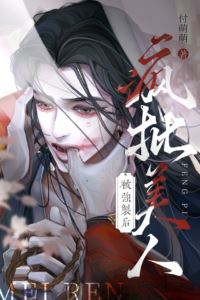
I've been thinking about this book since I finished it and the symbolic layers are surprisingly rich for what seems like a straightforward wuxia revenge story.
The former emperor's edict is the obvious central symbol—power, legitimacy, the right to rule. But what's interesting is HOW it's hidden. Not in a physical location, not in a document, but IN Xie Ye'S MIND. He literally internalized the secret and then destroyed his own spiritual core to protect it. The edict becomes a metaphor for truth itself—something that can't be extracted by force, only carried by those willing to suffer for it.
Then there's the name "Xiao Jing." This is such a brilliant symbolic choice. It represents the childhood Li Jingci had before the world turned him cold, before his sister died, before he became the Second Prince. Xie Ye is the only one who calls him that—and Xie Ye is also the man who killed his sister. The name becomes a battleground between who Li Jingci was and who he's become.
Blood is everywhere in this text and it's not just visceral decoration. Xie Ye's blood dyes his clothes red in chapter 1. He spits blood constantly in the dungeon. The servant's ear hits the ground in a bloody piece. And then there's the memory of the Wen family massacre—"bodies lined up, and in the middle lay a young woman in fine clothes, her makeup still fresh, her face marred by dirty blood." Blood as inheritance, blood as guilt, blood as the price of power.
The dungeon itself is symbolic too—dark, damp, cold, a place where Xie Ye is suspended by chains. But he's still the most dangerous person in that room. The physical imprisonment contrasts with his mental freedom. Li Jingci has the power, the title, the army—but Xie Ye has the edict, the memories, and the ability to unravel Li Jingci with a single nickname.
The winter setting (harsh ninth month, snow in Chang'an) reinforces the emotional coldness between these characters, yet there's something almost tender about how Li Jingci keeps Xie Ye alive despite everything.