After Marking the Protagonist A - Reviews

After Marking the Protagonist A
+Add to Custom List
Sort
Add review
... Read More
Okay so this whole sequence is a tightrope walk and I love it. Ji Chenxi knows he's in a book, he knows Chi Zhuo is supposed to kill him, and instead of just running away he actually decides to actively mess with the plot. That's not passive protagonist energy—that's someone who's already mapped the board and is moving pieces around. The moment where Chi Zhuo is pressing his throat against the wall, tequila pheromones spiking, and Ji Chenxi's thinking about whether killing him would actually work? That is next-level tension. Not because the fight is epic—Ji Chenxi is literally weaker—but because every decision could end in blood. And the author nails it: he doesn't pull the trigger, Chi Zhuo lets him go based on a misreading. So the plot pivot happens without any big dramatic event. Just a misunderstanding, a glance at an earring, and suddenly everything shifts. Did Chi Zhuo really see him as an omega? Or did something else stop him? I haven't forgotten that line. "Proud alphas didn't believe in fate." Ji Chenxi says it like it's a creed, but we know fates in these stories have a nasty habit of proving you wrong. The Bai Anran detour is interesting too—he breaks the "first encounter" beat that was supposed to happen between the male lead and his destined omega. Does that mean the whole romance arc derails now? Or does the story just bend around it? Because I have a feeling Chi Zhuo tracking him down at the end of this scene means this is far from over.
... Read More
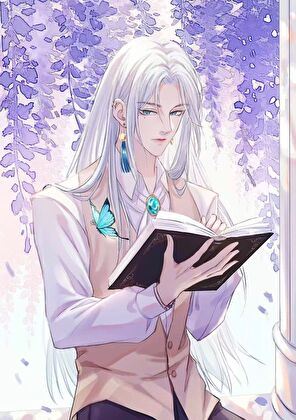
Let me just say this about Ji Chenxi - he's my favorite kind of protagonist. Not because he's strong or charismatic or anything conventional. But because he's genuinely confused and he's honest about it. When Su Yu is being his usual annoying self, complaining about waiting two hours, Ji Chenxi doesn't put up with nonsense but he also doesn't overreact. He's measured, controlled, and that's what makes him interesting. The dynamic with Su Yu is perfect. Su Yu is loud, physical, desperate for attention - he burps, he stares, he tries to get a reaction. And Ji Chenxi just... ignores him. Or gives him flat one-word responses. 'Then be quiet.' That's it. But the narration keeps telling us Ji Chenxi has been watching Su Yu for years, and he still can't get sick of that face? There's something there. Unacknowledged, unexamined, but definitely there. And then there's Chi Zhuo. The book paints him as this terrifying 3S alpha, ruler of the underworld, a madman. But the real one? Hidden. Unknown depth. This contrast matters because it means Ji Chenxi can't trust the narrative - the book is either incomplete or deliberately misleading. Which raises the question: who wrote this book? And why does it know about Chi Zhuo's true nature? Bai Anran comes off as sympathetic in a weird way. Ji Chenxi admits he cared for him when they were kids. He's not heartless about the engagement - he's just... indifferent. And the fact that he'd give it a chance if Bai Anran actually liked him? That's surprisingly open-minded for someone in his position. He's not trapped by duty; he's waiting to see if the person matters. The relationship web here is tight. Everyone has secrets. Ji Chenxi knows things from the book. Su Yu knows nothing but is clearly invested. Chi Zhuo is supposedly the most dangerous person and yet nobody actually knows him. That imbalance of knowledge creates incredible tension.
... Read More
The pacing here is masterful. We start with this quiet, almost meditative scene - breeze, sunlight, tea, reading. Very slow. Su Yu is bored, fidgeting, trying to get attention. It feels like nothing is happening. And then - the book ends. The thud of it closing. And everything shifts. Ji Chenxi is actually annoyed now. Impatient. Which is unusual for someone who's been sitting perfectly still for two hours. What changed? The book revealed something that matters. And suddenly the stakes feel real. The dialogue does heavy lifting here. Su Yu's gossip about Chi Zhuo - the bastard son who's supposedly scary to the second and third gens - it's delivered casually, like tea-time chatter. But it lands like a bomb because we know Ji Chenxi just read about the same person in that mysterious book. The contrast between Su Yu's casual tone and the gravity of what he's describing creates tension without any drama. Then there's the reveal about Ji Chenxi's role in the book. He's not the protagonist - he's cannon fodder. A control freak who dies fighting over a man. That information comes through in dribs and drabs, not all at once. First we learn about the script. Then about Chi Zhuo. Then about the engagement. Then about Ji Chenxi's fate. Each revelation builds on the last, escalating the stakes. The April 29th deadline is the perfect structural device. We know something important is coming - the protagonist meeting - and we're waiting for it alongside Ji Chenxi. The birthday party invitation, the verbal promise, the refusal to attend - each beat pushes toward that inevitable encounter. And that ending! 'while ev...' The sentence cuts off mid-thought. Whatever was about to happen, whatever this book is predicting, we're left hanging. I need to know what comes next. The pacing has me desperate for chapter two.
... Read More
I need to talk about the dialogue here because it's doing something really clever. Ji Chenxi's voice is dry, sarcastic, and deliberately performative. When Chi Zhuo has him pinned against a wall and about to crush his throat, his first real line is "You're really rude, you know that?" Like bro, focus. The man is fighting for his life and he's commenting on manners. That's either insane confidence or desperate deflection, and I can't tell which. But it works—Chi Zhuo responds with a hoarse "Who are you?" and the power dynamic wavers right there. Then with Bai Anran, it's a completely different register. Polite. Measured. Both of them speaking in layers. "Friendship is friendship, rules are rules. Showing respect to a prince—how's that being distant?" Bai Anran deflects with philosophy while Ji Chenxi reads between the lines. Nobody says what they actually feel. Nobody. Even the narration has this wry, slightly detached tone—Ji Chenxi thinking about how "killing someone over a book was ridiculous" while simultaneously planning to do exactly that. The author's voice sits right at the intersection of dark humor and genuine tension, which is a hard balance to strike. And the dialogue never drags. Every exchange either advances the plot, reveals character, or both. There are no filler conversations, no exposition dumps disguised as small talk. When the chat runs dry between Ji Chenxi and Bai Anran, it's deliberate—awkwardness is the point. The silence says more than either of them could manage out loud. This is someone who understands that what characters don't say is often the most dangerous thing in the room.

Leave a comment

You must be logged in to leave comments. or