After I Transmigrated As A Fake Young Master, I Became Popular - Reviews

After I Transmigrated As A Fake Young Master, I Became Popular
+Add to Custom List
Sort
Add review
... Read More
Let me just say this: the author knows how to paint a scene. The opening of the chapter—'The night is hazy, and the breeze blowing by the river is quite artistic'—sets this entire mood of quiet romance before absolutely everything implodes. One second they're listening to 'The Night Breeze Blows Quietly' like it's a music video, and the next second there's a 'huge splash of water' and a car is plunging into the river. What hits me every time I reread the rescue sequence is the sensory overload. The water surging into the car. 'The water in the car has overflowed to the knees.' Then 'it didn't take long for the water to submerge half of it.' You can feel the rising panic, the muffled sounds, the muffled voice of the driver saying 'I can't get out...' with 'the strong desire to survive was gone in his voice.' Chilling. And the visual contrast—Lin Yanran in the dark river water, smashing explosion-proof glass with his bare hands, versus Gu Siye emerging from the car holding a safety hammer 'just in his hand, like knowing what he wants.' That shot alone deserves its own frame. It's so cinematic. Post-rescue, there's this almost dreamlike quality: two young men, soaked to the bone, running away from a growing crowd of onlookers, hands still connected, slipping back into their cars like nothing happened. The juxtaposition of that heroic, almost mythic moment with the banality of them just wanting to go home and take a shower is so beautifully human. And then the next morning, half-asleep Lin Yanran checking his phone to find the whole world has changed. The worldbuilding here isn't about fantasy realms or intricate politics—it's about making this version of modern China feel so vividly, breathlessly real.
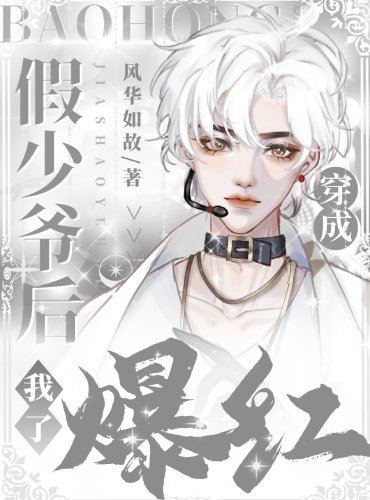
... Read More
Okay so let me just start by saying this opening premise is EVERYTHING. A transmigrator drops into the body of a disposable villain in an entertainment circle novel and instead of playing along, he immediately starts questioning everything. The plot structure here is so smart - it's basically flipping the entire narrative on its head. The original story had Lin Yanran as this obnoxious fake young master whose only purpose was to make the real MC look better by comparison, right? But now there's this actual person inside who sees the script for what it is. What I love is how the author sets up the central conflict immediately. Within the first few chapters, we've got the hot search crisis, the agent threatening him with a 50 million yuan breach of contract, and the unspoken rules hanging over his head like a sword. That's three separate plot threads all converging at once and none of them are softballs. The pacing is genuinely aggressive here - there's no "settling in" period where the protagonist just absorbs everything. He's already analyzing, recording, planning. The video reveal scene is a masterclass in dramatic irony too. The fans edit together this whole narrative of Xuan Yihan being a hardworking boy pushing through illness, and then Lin Yanran just... knows better. He's actually a trained dancer. He sees the technical flaws everyone else missed because they were too busy feeling sorry for the protagonist. That gap between what the audience believes and what's actually true? Chef's kiss. And the fact that the original owner didn't even explain his grading is now becoming a problem because the narrative has spun so far out of control without him - that's a really clever setup. He can't just come out swinging immediately because if he does, he looks like he's confirming all their worst theories. Also the contract scene with Ding Weikang? The 50 million yuan figure isn't just a random threat - it's a plot device that raises the stakes to "escape or be financially destroyed" levels. The author is good at making every detail count.
... Read More
This whole necklace confrontation is way more than drama for drama's sake, and I think the author is making a point about power and status. The necklace represents everything Xuan Yihan resents about Lin Yanran—the wealth, the carefree life, the advantages he was born with. Remember that backstory drop? Xuan Yihan stealing biscuits because his abusive father wouldn't feed him, and Lin Yanran paying for them without even understanding the gravity of the situation? That scene haunts everything that follows. Xuan Yihan wanted to educate Lin Yanran six years ago, to stand on the moral high ground and teach him a lesson, and now he's trying to do it again by accusing him of theft. The necklace becomes this proxy battleground for all their unresolved history. But here's the deeper thing: Lin Yanran's response to the accusation isn't defensive or emotional. He simply points out the logical flaw—custom orders have special logos, do you have proof? He doesn't engage with the class resentment beneath the accusation. He treats it as what it is: a baseless claim. There's also the symbolic weight of him wearing a seven-figure necklace in a room full of students who can't afford basic success. The author keeps asking us to sit with that discomfort. Who deserves to wear expensive things? Who gets to judge whom? By the end, I was left wondering whether the real theft wasn't of jewelry but of dignity and opportunity.
... Read More
I want to talk about how the dialogue in this section works because the author is doing something really smart here and I need to unpack it. Most of the 'dialogue' is actually internet comments — chat room reactions, Weibo replies, fan forum posts. But they're not filler. They're the narrator's substitute for internal monologue. When Lin Yanran is processing everything, we don't get long paragraphs of his thoughts. We get the internet reacting, and through those reactions we understand what's happening to him emotionally. The most striking line has to be: ["Thinking about last night when Lin Yanran was saving someone, I went to his Weibo and scolded him, and suddenly felt so ashamed"] One sentence. That's all it takes. No drama, no explanation, just a stranger admitting they were wrong. That's not just good dialogue — that's efficient storytelling at its best. And then Lin Yanran's own words during the interview. He doesn't give a heroic speech. He doesn't talk about bravery or destiny or fate. He says: "Parents should not let children sit in the co-pilot position. If there's a car accident, the airbag may pop up and cause them to suffocate." Cold facts. Practical advice. The man just saved lives and his immediate response is to make sure other kids stay safe. That's characterization through speech pattern more than any description ever could. The contrast between the internet noise (chaotic, emotional, often contradictory) and Lin Yanran's actual spoken words (calm, specific, useful) creates this rhythm where the reader learns to trust the silence between the comments.
... Read More
Can we just talk about Pei Luo for a second though? This guy sits in the middle, pretends not to see Lin Yanran walking past, buries his head deliberately - and yet the moment Xuan Yihan's roommates are discussing their strategy, Pei Luo catches his eye across the crowd and signals that he'd 'openly accept him.' Who does that? Who sits there being petty and childish one second and then radiates silent protection the next? The eye contact between him and Xuan Yihan is doing SO much heavy lifting here. Pei Luo clearly wants to protect Xuan Yihan, but he's also playing this whole 'ignore everyone' game with Lin Yanran right before. Meanwhile Lin Yanran notices the subtle change in Gu Siye's expression and reads the situation instantly - that's some next-level awareness. These two mentors are operating on completely different frequencies. And Tang Tang! She's the only instructor who added Lin Yanran on WeChat, treats him equally from episode one, and still calls him out for his look while genuinely complimenting him. She's not faking it. That makes her one of the few real relationships in this cutthroat environment. But here's what's really getting to me: Xuan Yihan's roommates hug him and say 'except for someone, other tutors should like you very much.' We all know who they mean. Six years in the industry and nobody thinks he has any actual skill. Even his closest allies are reluctant about defending him. That's a lonely place to be.
... Read More
Okay so can we just talk about how this chapter COMPLETELY subverts everything we thought we knew about Lin Yanran's public image? Up until now, every hot search involving him has been some kind of scandal or malicious rumor. He's used to waking up to a digital lynch mob. And then—BAM—he jumps into a freezing river at midnight, saves a little girl and her grandfather, and the Internet turns around and makes him a national hero. That pivot is chef's kiss. But here's what really sold me: the rescue itself is narrated like a survival thriller. Car hits the water at night. Door is locked. Explosion-proof glass can't be smashed. Water rising. Driver panicking. And Lin Yanran is in there doing mental math—'if it takes another few minutes, the entire car will sink.' The tension is suffocating. I actually had to pause and breathe. Then the textbook moment: Gu Siye drops this line—'Wait till the water inside and outside the car is at the same level, and there is no pressure difference at this time.' That's not just plot exposition; that's the entire suspense sequence hinges on a physics principle. Brilliant. And then the aftermath—Lin Yanran just wants to slip away quietly, but fate (and surveillance cameras) have other plans. The firefighter's video going viral, the official media picking it up, fans doing frame-by-frame analysis at the 57-second mark... it's all so absurdly realistic. I love how the author treats the viral moment almost satirically while still letting us feel Lin Yanran's genuine confusion and disbelief. This plot moves.
... Read More
The sensory details in this passage create such a vivid spatial experience, moving from the intimate warm lighting of Gu Siye's private lounge to the harsh professional glare of the studio floor. Let me start with the dressing room scene—the makeup artist Ming fiddling with Lin Yanran's hair strand, the thermos of wolfberry water, the casual warmth of Yingying bringing water to the staff. It's domestic, almost nostalgic in its familiarity. The space feels lived-in rather than staged. Then Gu Siye appears, and the atmosphere shifts—not dramatically, but with this quiet elegance. The description of him playing with the necklace in his hand, the way he lowers his head to whisper to Lin Yanran about wearing it for the first time—every gesture feels deliberate, almost ritualistic. But then the scene transitions to the studio, and the temperature drops. The host in his blue suit, the ABCDF seating chart, the countdown hitting the board—all of it creates this clinical, competitive environment. The trainees' reactions go from genuine enthusiasm for Tang Tang and Han Zhe to perfunctory polite applause for Lin Yanran. This contrast between backstage warmth and stage coldness mirrors Lin Yanran's entire position in this world: surrounded by people who genuinely want to help him one moment, and evaluating him as a potential threat the next. The author handles lighting beautifully too—the chase lights, the studio lights hitting Lin Yanran's skin to reveal the fair milk-like quality against the silver-white necklace. These visual details aren't decoration; they're emotional signaling disguised as description.
... Read More
Let me tell you about this section - it's a masterclass in how to build tension without any big explosions. The whole thing starts with this mysterious meeting where the director and crew are debating whether to keep Lin Yanran or cut him loose. And what I love is how the author makes you feel like you're right there in that silent meeting room, everyone looking at each other wondering what's going to happen next. Then you've got this brilliant little detail about Lin Yanran buying wolfberry tea at the supermarket - just this ordinary human moment that grounds the whole celebrity world. He's checking his WeChat balance and seeing only 150 yuan left. That's not dramatic, but it hits you right in the feels because we've all been there, you know? Broke and pretending everything's fine. The plot twist about the taxi arrival is pure gold. All those fans surrounding the entrance with cameras, and here comes Lin Yanran stepping out of a regular taxi with a thermos cup. The author sets this up perfectly - first you see the girls with cameras, then the driver's commentary about "little girls rushing for exclusive pictures," and then BAM, Lin Yanran appears and everything explodes into whispers. It's like watching a slow-motion car accident you can't look away from. And then there's this subplot thread about Gu Siye appearing out of nowhere offering his makeup artist. The author drops this character casually - "a pair of dark and deep eyes," ten centimeters taller, perfect combination of handsome and tall - and suddenly the whole dynamic shifts. My jaw literally dropped when I realized who this was. Movie emperor Gu Siye! Just twenty years old when he debuted, seven years in the industry, untouchable status. The author doesn't explain everything upfront, which keeps me hooked wondering how this connections matters. What's clever is how all these threads connect. The director giving Lin Yanran "one more chance" ties back to that opening meeting. The lawsuit threat ties to the financial desperation. And Gu Siye's sudden appearance? That's clearly setting up something bigger. The plot doesn't rush - it lets each revelation breathe before moving to the next.
... Read More
I need to talk about Gu Siye because honestly this chapter broke me a little and I'm still not over it. So here's Lin Yanran, hero of the hour, millions of people praising him, official media calling him brave, and the *one person* he keeps checking his phone for — Gu Siye — is completely invisible in all of it. Not because he didn't help. The text literally says: 'It was him and Gu Siye who saved them together.' But the cameras caught Lin Yanran. They didn't catch Gu Siye at all. The rescue in the river footage is too blurry to even tell who's who. And then Gu Siye texts him: don't mention me. Just take the credit. Like it's nothing. Like Lin Yanran doesn't matter less without that acknowledgment. I replayed that moment in my head like five times. Gu Siye could've demanded recognition. He could've posted the video himself, or confronted the media, or literally done anything. Instead he chose to stay in the background. For Lin Yanran. Again. What hurts is that Lin Yanran *noticed*. He opened the video specifically to clarify that he didn't do this alone. He cared enough to want the truth out there. And then Gu Siye shut it down gently, like protecting some secret between them that neither will name out loud. This is the kind of thing that makes me want to shake both of them and also cry at the same time.
... Read More
This chapter is a masterclass in the slow-burn reveal. You start with a public accusation — Xuan Yihan confronting Lin Yanran about a stolen necklace, cameras rolling, the whole thing set up to humiliate. But then Gu Siye walks in and flips the entire board. The necklace isn't just any piece of jewelry; it's a custom GS-engraved order from JK brand, made specifically for Lin Yanran. The reversal hits hard because the reader, like Xuan Yihan, was operating on incomplete information. The real genius though is the second layer of the plot peeling back: the cleaning lady finding Xuan Yihan's actual lost necklace in the toilet, and then Gu Siye's follow-up question about the mandatory surrender of valuables on move-in day. Suddenly Xuan Yihan's entire persona — the wealthy trainee trying to play the moral high ground — unravels. He wasn't just false-accusing someone; he was flaunting wealth that broke the show's own rules. The plot structure here is almost like a legal drama — accusation, defense, counter-evidence, and then the final nail in the coffin. And then, in the car ride home, the emotional pivot from public conflict to private intimacy. The author uses the Huang Huanqian discovery as a quiet denouement, a way to give the chapter breathing room after the tension spike. It works because the story doesn't just resolve the external conflict — it deepens the central relationship.
... Read More
The dialogue in this section is what sold me on Lin Yanran as a character. Watch how each person speaks: Ji Shuai goes full simp mode with 'Can I apply for a semi-permanent make-up of yours? You're handsome' and then actually gets confused when Lin Yanran asks about the technique—this is the kind of comedic beat that makes conversations feel real. Then Xuan Yihan comes in all soft-spoken and roundabout with 'I like this brand very much. Can you lend me a look?' while secretly planning revenge. But Lin Yanran? His lines are surgical. 'Speak directly if you have something to say.' 'So what?' 'Stop talking nonsense and get to the point.' Each response strips away another layer of pretense. Even when he's being polite, there's steel underneath. And the contrast with Fang Su—who just hurls accusations without any filter—is perfect. One tries too hard to be subtle, the other can't be subtle at all, and Lin Yanran sits in the middle saying exactly what needs to be said with zero wasted words. The author also does something clever with Lin Yanran genuinely asking about semi-permanent makeup and actually discussing it academically—it shows his curiosity and humility without anyone having to narrate those traits explicitly. Dialogue like this doesn't just move the plot, it reveals character organically.
... Read More
Gu Siye's dialogue in this chapter is genuinely fun. When he says 'Thank you. But compared to Teacher Yanran, I am still a little worse,' that's not just self-deprecation - that's a power move wrapped in humor. He deflects Wang Zhao's awkward confession, charms the audience, and then subtly positions Lin Yanran as both handsome and... not. The delivery is smooth, controlled, exactly how someone who's used to being on stage would speak. 'Are you confident?' 'Yes!!' - that call-and-response has real performance quality to it. The trainee dialogue is where it gets interesting from a worldbuilding perspective. The roommates aren't just filler characters spouting exposition - Fu Bohao's 'I envy them, I was rated C' and Tan Zixuan's quick pivot to asking for advice feel like actual people talking under stress. And Xuan Yihan's analysis of why Class A might still fail is the kind of thing someone says when they've already processed this information several times. 'Think about it, if a team is all dancers how can Teacher Han Zhe compete?' That line does triple duty: explains the strategy, shows Xuan Yihan's intelligence, and plants a seed about Han Zhe's team composition that I'm sure will pay off later. Lin Yanran's internal monologue is minimal but when it appears it's sharp - 'Gu Siye was more like a scheming old fox?' That's the narrator's voice slipping into his headspace, and it's consistent with how he's been portrayed throughout. Everyone's dialogue fits their role in this ecosystem.

Leave a comment

You must be logged in to leave comments. or
