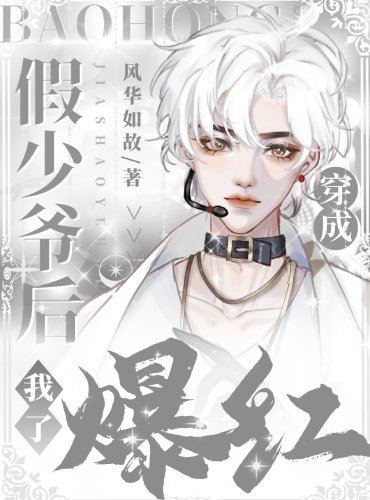
After I Transmigrated As A Fake Young Master, I Became Popular
+Add to Custom List
Novel Info

Summary

... Read More

Lin Yanran is a transmigrator who wakes up in the body of a cannon fodder character from a danmei novel titled "The Entire Entertainment Circle Is Jealous for Me." In the original story, this fake young master was a vicious, unpopular supporting role who harassed the protagonist, Xuan Yihan, out of jealousy. The original owner ended up ruined by public backlash, forced out of the industry, and crushed by debt. Lin Yanran, however, remains calm and analytical about his situation. He is currently hospitalized due to low blood sugar and exhaustion, following a wave of intense cyberbullying after he refused to apologize to Xuan Yihan on the talent show "Super Idol."

The core conflict arises from the original owner's toxic relationship with both the protagonist and his agency. Lin Yanran discovers that his agent, Ding Weikang, has been exploiting him. Ding reveals that a senior producer attempted to coerce Lin Yanran into sexual favors in exchange for career opportunities. When the original owner resisted, the producer retaliated by spreading rumors and pressuring the company. Ding Weikang now demands that Lin Yanran comply with these unspoken rules to save his career, threatening legal action under a draconian five-hundred-million-credit contract that restricts his income and autonomy.

Instead of submitting, Lin Yanran records the conversation as evidence and firmly refuses the agent's demands. He realizes his financial situation is dire, with less than ten thousand credits available, despite years in the industry. He identifies the need to terminate his unfair contract and begins searching for legal representation. Meanwhile, the "Super Idol" production team faces pressure from fans and rival groups to remove Lin Yanran as a mentor. However, because Lin Yanran was personally appointed by the show's major investor, the director decides to give him one more episode to perform before making a final decision.

A significant turning point occurs when movie emperor Gu Siye arrives at the recording location. Gu Siye, a character who remained immune to the protagonist's charm in the original novel, offers his personal makeup artist and styling team to Lin Yanran. This act of kindness transforms Lin Yanran's appearance, revealing his natural beauty and shifting public perception. During the recording, Gu Siye publicly introduces himself as the new super tutor and surprisingly compliments Lin Yanran's handsomeness to ease an awkward moment for a trainee. This interaction draws the attention of Xuan Yihan, who recognizes the necklace Lin Yanran is wearing as a lost gift from his own family.

Gu Siye then announces a new competition format where mentors and trainees must mutually select each other, with a limit of fifteen members per team. This creates a high-stakes environment where trainees fear being assigned to Lin Yanran's team due to his negative reputation. Xuan Yihan, displaying his canonical intelligence, advises his roommates on strategic mentor selection to avoid elimination. The narrative sets the stage for Lin Yanran to redefine his image through professional competence rather than drama, while Gu Siye's involvement signals a shift in the power dynamics of the entertainment circle.

Latest Release
DateGroupRelease
2026-10-01universal novel c15
2026-10-01universal novel c14
2026-10-01universal novel c13
2026-10-01universal novel c12
2026-10-01universal novel c11
2026-10-01universal novel c10
2026-10-01universal novel c9
2026-10-01universal novel c8
2026-10-01universal novel c7
2026-10-01universal novel c6
2026-10-01universal novel c5
2026-10-01universal novel c4

Community Reviews

Rating(3.8 / 5.0, 36votes)
5 stars
10(28%)
4 stars
9(25%)
3 stars
17(47%)
2 stars
0(0%)
1 stars
0(0%)

Popular reviews

... Read More
There's a line in this chapter that I can't stop thinking about. After watching Lin Yanran rescue those two people, the narrator says: 'this porcelain doll was beautiful but not fragile, and its heart was firm and strong.' Porcelain doll. That's how everyone sees Lin Yanran—from the outside at least. Delicate. Vulnerable. Something to be looked at and judged. His 'popularity and reputation are not very good,' as he puts it. The Internet has spent God-knows-how-long tearing him apart, reducing him to a caricature. Fans call him names, strangers write cruel comments, and he just... takes it. Or so we thought. But then he jumps into a freezing river without hesitation. Without checking his followers. Without worrying about how he'll look. He just acts. The porcelain shatters and what's underneath is steel. I also can't ignore the motif of drowning and surfaces here. The car sinks. Water floods in. People are trapped beneath the surface, screaming for help that might not come. And then there's Lin Yanran—someone who has been drowning in public hatred, in误解, in a reputation that wasn't his—and he literally goes into the water to save others. He doesn't just surface; he dives deeper. That has to mean something. And Gu Siye—who watches all of this, who knows what kind of person Lin Yanran really is beneath the online storm—says 'I'm not afraid.' Not afraid of scandal. Not afraid of association. Not afraid of the truth that everyone else is too busy scrolling to see. In a story full of people judging appearances, Gu Siye is the one who keeps choosing to look deeper. This chapter isn't just a rescue story. It's an origin story for how the world finally sees Lin Yanran—and more importantly, how Gu Siye already did.
... Read More
Can we talk about how the author uses these two rooms like visual metaphors the entire time? Room with Lin Yanran = mournful, quiet, people bowing with downcast eyes, the air frozen and tense. Room next door with Pei Luo = 'COME ON!' echoing, loud, energetic, celebratory. You don't need a single line of exposition to understand the power structure of this competition. The cameras following everyone, the director silently watching and making facial expressions, the whole setup of three rooms with Class A and B students versus the death room with Class D and F—it paints this whole competitive ecosystem in just a few paragraphs. What's interesting is the physical space matters too. When Xuan Yihan blocks Lin Yanran's path, when Fang Su rushes over, when everyone gathers around—the camera angles are practically choreographed. And Lin Yanran's calmness in that crowded room full of judging eyes and whispеring trainees? The author makes you feel every single gaze on him. Even the detail about the dormitory roommates waiting for each other despite being assigned to different groups shows this world where bonds persist beyond the competition structure. The world feels lived-in because of these small environmental touches.
... Read More
Okay so this entire chapter arc is basically one giant pivot point and I have feelings about how smoothly it all connects. Let me trace this out because it's actually really well constructed. Chapter 60 starts with the video going viral — Lin Yanran jumping off that overpass to save people. Then chapters 61 through 67 show the consequences rippling outward like dominoes. First the public perception flips overnight. Then the media swoops in. Then he gets made a traffic safety ambassador. Then there's the gift-giving subplot with the trainees. And somehow Lin Yunzhe and his mother Xie Roufei finding out about him through the news ties back to the mentor selection from way earlier. The thing that impressed me most is how the author doesn't let any of this sit flat. Even when it seems like everything's going right for Lin Yanran, there's this quiet undercurrent — Gu Siye also saved people but gets no recognition, and Lin Yanran *knows* this. He opens the video and realizes the footage only captured his side. That detail matters. It's not just hero worship, it's complicated loyalty and unspoken gratitude between them. And then the chapter ends on this almost mundane note — Lin Yanran shopping overnight for gifts for his trainees. Normal life continues even as everything shifts around him. It's a nice narrative breath after all that intensity.
... Read More
There's this one image that has completely lodged itself in my brain and I cannot escape it: Lin Yanran walking into the studio holding a basket of eggs while reporters flash their cameras, and then getting handed pennants on top of it, and him just standing there looking genuinely bewildered like... wait, what? ['Lin Yanran:? ? ? ?'] The author captured something so specific and real here. These aren't glamorous fan gifts. This is a square-dancing auntie pressing eggs into his hands and telling him to eat more because he's too thin. This is people giving him food and water because they saw him on camera and felt something — respect, gratitude, maybe just the human impulse to support someone good. And the scene where he sends the staff food and hot water to the station sisters and proxy shooters who'd been freezing outside all day? That's the kind of worldbuilding that doesn't need grand descriptions of cities or magic systems. It builds a world through small, intimate gestures. The cold wind. The remote location where buying food is inconvenient. The assistant who feels ashamed because she previously humiliated him face-to-face but now receives his kindness anyway. That last detail destroyed me slightly. The fact that she was *ashamed* — that means she saw him, truly saw him, and realized how wrong she'd been. The world the author built here isn't just about fame and media cycles. It's about how ordinary people's perceptions shift when confronted with genuine goodness, and how that awareness can be both uncomfortable and redeeming. Also the line about taking things 'directly from the people and using them for the people' has such a specific cultural texture that feels authentic rather than generic.
... Read More
Everything in this chapter circles back to the necklace — not just as a plot device but as a symbol of how truth and value are perceived, contested, and ultimately revealed. Xuan Yihan sees the necklace as proof of Lin Yanran's theft because he projects his own assumptions onto it. He assumes poverty, assumes guilt, assumes the worst — and the necklace becomes a mirror for his own prejudice. But the engraving on the back tells a different story: this object was made for Lin Yanran, by someone who knew him. The GS marks aren't just initials — they're a claim of belonging, a public declaration disguised as jewelry. And then the second necklace — Xuan Yihan's actual lost one, found in the toilet — becomes the symbol of his downfall. He wore it openly despite the rules, flaunting wealth in a competition that supposedly values merit. The cleaning lady returning it is almost ironic justice: the honest servant restores what the arrogant owner lost. Beyond the necklace, the recurring motif of Huang Huanqian's music operates as a symbol of things that endure outside mainstream validation. She's a 'long-dead singer,' obscure, uncommercial — exactly the kind of art that sincere fans love precisely because it isn't popular. Lin Yanran and Gu Siye bonding over her suggests that their connection is built on the same principle: real value doesn't need mass approval to exist. The river breeze, the night walk, the skipped class — these images frame music as something intimate and temporal, a moment shared between people who choose to listen together.
... Read More
I need to talk about something that caught me completely off guard. There's this moment early on where Yingying brings Lin Yanran hot milk and sees those awful comments on his phone, and she just... takes it away from him. Not with authority, not with a lecture, but with genuine distress. 'They don't know you at all,' she says. And Lin Yanran, who just transmigrated into this body, who has every reason to be freaking out, smiles at this girl and tells her he's fine. But here's what got me - the narrative specifically tells us he's not pretending. He's not being duplicitous. He's genuinely okay with the abuse because, compared to what he's been through before this life, internet comments are NOTHING. That line hit me harder than any dramatic confession could have. This is a person who has already lived a full life, who has loved and lost and grown, and now he's looking at this young man's problems from a distance of years and perspective that most people never get. The loneliness underneath all of this is what really stays with me though. Think about it - he's in someone else's body, on someone else's team, surrounded by people who either despise him or pity him. His assistant is the only one who seems to genuinely care, and even she doesn't know what's happening inside his head. He's alone in a way that's almost unbearable, and he handles it with this quiet resilience that's both inspiring and kind of heartbreaking. And Xuan Yihan - the protagonist who everyone loves and is supposedly 'favorited by everyone' - has this moment where he bows to Lin Yanran after receiving a B grade, and the close-up captures 'grievance and unwillingness in his eyes.' The fans are melting over his determination, but there's something genuinely painful about that interaction too. Two people trapped in a narrative that doesn't serve either of them well, and neither of them knows how to break free.
See all reviews

Custom lists

See all custom Lists