After Exploding in Popularity from a Talent Show, I’m Openly Teased and Secretly Doted on by an Obsessive Big Shot - Reviews

After Exploding in Popularity from a Talent Show, I’m Openly Teased and Secretly Doted on by an Obsessive Big Shot
+Add to Custom List
Sort
Add review
... Read More
I am still not over the scene where the staff members walk into the practice room and walk out absolutely destroyed by how good Gu Nanci sounds. Let me just... appreciate the direction of this scene for a moment. First, the author sets up the expectation: kind-hearted staff members come to warn these reckless trainees who are apparently messing around with the song at the last minute. They walk in with worried expressions. They walk out with identical looks of shock, steps unsteady, questioning their lives. The post-production sister starts muttering to herself about how "the times are changing" and then suddenly adopts this deity-like pity expression toward the cameraman. THIS IS COMEDY GOLD. And then the cameraman actually PEERS INSIDE and hears it. The description of the voice is one of the most vivid I've read: "delicate, smooth, and enchanting—refreshing yet rich in texture... like a tiny hook tugging at the very core of your heart." The author doesn't just tell us it's good, they make us FEEL what the cameraman feels in real time. He goes from skeptical to stunned to reverent in the span of a few lines. The law firm scene is also worth noting—the cigar smoke, the calculating eyes, the way Qian Tao's dialogue is wrapped in false warmth like "exquisitely packaged, expensive honey." This world feels lived-in. The entertainment industry's cruelty isn't abstract; it's in the smoky offices and the whispered threats and the staff members who've already decided these kids are going to fail before they even open their mouths. And the recording studio at night—snack wrappers everywhere, Gu Nanci teaching herself professional software, Wen Jiuyi's muffled wails from outside the locked door. It's chaotic and warm and real. This author knows how to paint a room.
... Read More
Okay, I need to talk about how this chapter is basically two parallel plots running on different frequencies and they're about to collide. On one hand, you have the corporate boardroom scene where Xi Ruqian is laying out his plan to use Gu Nanci as a controversy magnet—black fame is still fame, apparently. The man is so cold it's impressive. But then the chapter pivots to Gu Nanci herself, quietly uploading a song to Yuecai because she needs money for a lawyer, and suddenly this whole undercurrent of her actually being a legitimate music genius starts surfacing. The plot twist here isn't some big dramatic reveal—it's that she's been playing a completely different game the whole time while everyone thinks she's just a pretty vase. And then Jiang Xihe's team discovers her song and calls it a 'Celestial Tune'? That's the kind of domino effect that's going to make the next few chapters absolutely wild. The mystery buyer adding twenty percent commission and logging off immediately—what is that about? Who even is that person? I'm already three chapters in and I'm hooked on the tension between what everyone thinks Gu Nanci is and what she's actually capable of.
... Read More
I'm going to be honest with you: the pacing in these chapters is absolutely ruthless in the best possible way. Let me break down why this works so well. We open with Gu Nanci and Wen Jiuyi negotiating a team-up—that's immediate character dynamics, quick dialogue, establishes the central relationship tension. Then we get Wen Jiuyi's individual showcase, which is described with enough detail to make us feel his skill level without dragging on. The audience reaction, the judges' praise, Yin Yue's barely-visible clap—efficient worldbuilding that tells us exactly where Wen Jiuyi stands in this hierarchy. Then Cheng Yang enters, and BOOM, the revenge plot kicks in. The jacket scene alone does so much narrative heavy lifting: it establishes Cheng Yang's personality, his relationship with Wen Jiuyi, his grudge-holding nature, AND it gives us a moment of pure comedic relief after the tension of the showcase. But here's where the pacing gets really smart. Instead of letting us ride that comedic high, the author immediately pivots to the bye announcement. The venue falls SILENT. The internet erupts. The mood shifts from entertainment to outrage in one paragraph. And then—just when you think the chapter is about wrapping up with Gu Nanci's quiet moment—the author drops the revelation about the company's scheme. Wen Jiuyi and Cheng Yang connect the dots. The reader connects the dots. And then Gu Nanci walks out and gets intercepted by his uncle. The chapter doesn't end on a high note or a low note—it ends on a note of pure, unresolved tension. The final scene in the conference room on the fortieth floor, with Fu Zhi calling Gu Nanci "a promising talent" and Xi Ruqian being called "a waste," tells us the machinery is already in motion. Every transition in these chapters serves a purpose. Nothing lingers. Nothing drags. It's like the author knows exactly how long you can hold your breath before you need a new scene to breathe.
... Read More
This chapter is a masterclass in escalating stakes, and I need to unpack why it works so well. It starts small — five points for a broken vase. Seems minor, right? But the narrative immediately establishes that five points is the difference between debut and elimination for Wen Jiuyi. The company's original plan hinges on precise positioning, and every variable that shifts threatens the whole structure. Small conflict, enormous consequences. That's good writing. Then it escalates. Cheng Yang voluntarily takes the penalty, which transforms a disciplinary issue into a team-building moment. Xi Ruqian reframes it again into a PR win. The conflict doesn't resolve — it mutates. Each character is solving for a different variable, and the tension comes from watching those calculations collide. But the real stakes reveal themselves in the competition rules. The group stage is thirty points. The solo stage is reserved for the top three. And the free stage — live battles where the winner gains three points and the loser loses two. Refusing a challenge costs one point. This is designed to force conflict, to pit contestants against each other systematically. Si Chang understands this immediately: "A battle, huh? That waste Gu Nanci is done for!" What makes the stakes feel real isn't just the points system. It's the personal cost. Gu Nanci is suing for her reputation while simultaneously trying to survive a competition designed to humiliate her. Si Chang is buying songs and manipulating lotteries because he knows that if he doesn't control the outcome, he loses everything. Wen Jiuyi's compassion isn't just a personality trait — it's a liability in a system that rewards ruthlessness. And Gu Nanci's secret relief when she draws number three? That's the highest-stakes moment in the chapter. She's not just playing the competition. She's playing the players. The suspense isn't whether she'll survive the stage — it's whether she'll survive the people on it.
... Read More
Let's talk about what music actually represents in this story because it's way more than background decoration. In the Luanguo idol industry, songs are commodities—idols buy them, corporations treat them as products, and the whole system is built on the idea that talent is secondary to marketability. But Gu Nanci's music is different. It's her voice, her truth, her way of fighting back against a system that wants to use her as a talking head. The fact that her song is discovered by Jiang Xihe's team through Yuecai—the same platform where she's selling it for money—creates this beautiful irony: the industry that dismissed her as a 'talentless vase' is now desperate for her art. The mysterious buyer's username 'Today I Also Want to Destroy the World' feels symbolic too, doesn't it? Like someone who understands the chaos she's in and wants to burn it all down with her. And Si Chang's moral high ground post—'what goes around comes around'—is the perfect counterpoint to Gu Nanci's quiet, practical rebellion. He's performing goodness; she's actually doing something about it. The whole chapter is built on this contrast between appearance and reality, between the idol industry's polished surface and the messy, complicated truth underneath.
... Read More
Let's talk about how sharp EVERYONE's dialogue is in this chapter because the author really understands how to give each character a distinct voice. Xi Ruqian's lines are always polished and controlled until they're not. "Why didn't you notify me before hiring a lawyer!" — that opening line is pure shock and anger masked as authority. Then he shifts into this cold, calculated tone: "You've gotten this far because of my planning. Though lazy and foolish, you were obedient, so I was willing to invest effort in shaping you." The way he lists her flaws like they're items on a receipt is so dehumanizing and perfectly captures a manipulative agent who sees people as assets. And his final line — "don't forget that performance-based contract. You have less than a year left!" — delivered with such casual cruelty. He literally smiles while threatening to destroy her career. Gu Nanci's voice is equally distinct. Her responses are short, sharp, and loaded with meaning. "So it's just a suggestion, right? Then, I refuse." The pause between those sentences is PERFECT. She's not shouting — she's calm, which makes it infinitely more powerful. And later when she's explaining the musical arrangement to Cheng Yang, her dialogue shifts completely into professional mode: "The song you picked is indeed very suitable for live performances. However, the original singer of this song is a solo artist…" She goes from defiant to analytical in one breath, and it shows how multifaceted she is. Cheng Yang's voice is the most comedic — he's constantly internal monologuing about how doomed he is. "I must have been influenced by that overly sympathetic Wen Jiuyi! To actually think Gu Nanci is pitiful and want to help him gain some fans!!" This is pure comedic relief but it also reveals his character: he pretends not to care but clearly does. And Wen Jiuyi? "Brother Wen will teach you!" — this guy is just pure enthusiasm personified. The narrative voice itself is also fantastic. It's witty, slightly sarcastic, and has this great rhythm. Lines like "A rose full of risks, no matter how vibrant, he wouldn't dare cultivate. This was his life creed" feel like they're from a proper novel, not web fiction.
... Read More
Okay, I need to talk about this opening scene because holy shit. A vase gets broken and suddenly the entire power structure of this competition is laid bare. Gu Nanci is supposed to be the disposable one, the flower vase, the guy they brought in just to fill numbers — and yet the moment five points get deducted from her, Qin Bei literally freezes. Because Wen Jiuyi is the company's golden child, and if his debut position shifts even slightly, the whole carefully laid plan collapses. That single broken object became a detonator for every hidden tension in the room. The plot structure here is really clever because it operates on two levels. On the surface, it's a competition show incident. But underneath, it's exposing how the entire system is rigged — who matters, who doesn't, and what happens when the scripted outcome starts to wobble. And then Cheng Yang stands up and voluntarily takes the deduction too. Not because he's some naive nice guy, but because he's calculating. He needs Gu Nanci on his team, and buying loyalty early is cheaper than dealing with rebellion later. What really got me was how the narrative pivots from chaos to control in one beat. Xi Ruqian, that old fox, turns a potential disaster into a praise-worthy moment of team unity. He reframes the entire incident so fast it's dizzying. The company doesn't punish the key players — they reward them. The system protects its own, no matter what. And then the battle round announcement hits like a gut punch. Si Chang's face when he hears about live battles — you can literally see him plotting. He's already imagining Gu Nanci's humiliation on stage. The plot isn't just moving forward, it's setting traps. Every rule Qin Bei explains is also a weapon being handed to the antagonists. But here's what keeps me up at night: Gu Nanci drew number three and acted thrilled while secretly breathing a sigh of relief. She manipulated the person who was supposed to be manipulating her. Who's really playing who in this room?
... Read More
I'm genuinely obsessed with how each character's dialogue voice is so distinct it's almost unfair. Gu Nanci's dialogue is the star of the show here. Let's talk about the whispers first. To Gu Xiao: "I should have been at the place you arranged, waiting to be photographed in compromising positions and ruined, right?" This is delivered as a casual question, almost polite, but it's absolutely devastating. And then: "Don't worry, this is just the beginning. How does it feel to have your dreams shattered?" The tone is so calm, so measured, while the content is pure psychological warfare. This is someone who has rehearsed this moment in their head a thousand times. Then there's the mouthed taunt: "Get lost." Three words, no sound, maximum impact. The fact that Gu Xiao can read her lips but nobody else notices is the perfect detail — it's their private battlefield. Her exchange with Gu Zhaofeng is equally sharp. "No time," when he tries to engage. Cold. Dismissive. And then the threat wrapped in politeness: "Would you like me to get a medical examination for the injuries? ...but then some things might not stay hidden." She's threatening to expose everything while sounding like she's making small talk at a doctor's office. The contrast is delicious. Wen Jiuyi's voice is completely different — chaotic, loud, comedic relief with genuine warmth. "No, no, no! What I meant was… seeing is believing! Finally meeting you, bro, you're just too handsome!" The panic, the rapid-fire corrections, the obvious sincerity underneath the awkwardness. This character speaks in exclamation points and I love him for it. Even Gu Xiao's dialogue reveals his character: "Dad! Am I your son or is he?!" — the most privileged-brat line ever delivered, and it's perfect because it shows he still hasn't grasped that the power has shifted. The narrative voice itself is also worth praising. It's witty without being pretentious, observant without being clinical. Lines like "A boy band that doesn't sell bromance might as well go home and sell sweet potatoes" and Gu Nanci's internal comparison of herself to "a startled badger darting through a melon patch" show an author who has a genuine sense of humor and isn't afraid to let it shine.
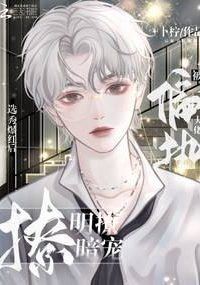
... Read More
I need to talk about Wen Jiuyi because WOW. This character just walked in and already I'm emotionally invested. "The enemy of my enemy is my friend—the ancients truly didn't deceive us!" — this line alone made me laugh out loud on the subway. People stared. I didn't care. The way Wen Jiuyi immediately gravitates toward Gu Nanci because they share a common enemy in Si Chang is such a natural, organic character moment. No forced friendship, no dramatic confession. Just two people who hate the same person finding common ground. It's so refreshingly realistic. But then — and here's where my heart did a little flip — Si Chang glares at Gu Nanci, then glances at Wen Jiuyi sitting next to her, then glances back at Gu Nanci with this "darkened expression." And then Cheng Yang (the guy behind Si Chang) gives Gu Nanci "a thick, resentful accusation, as if he had been abandoned?" WAIT. What? Is Cheng Yang also emotionally invested in Gu Nanci? Is this going to be a whole thing? Because if Si Chang and Cheng Yang both have complicated feelings toward Gu Nanci while Wen Jiuyi is just happily sitting beside her being chaotic, I am HERE FOR IT. The CP dynamics in this chapter are already more complex than most romance novels' entire plots. Si Chang's hostility is interesting — it's not just dislike, it's personal. And Cheng Yang's resentment suggests a history. Meanwhile Gu Nanci is just sitting there internally screaming "WOW! What a juicy scoop!" like a badger in a melon patch (her exact internal metaphor, by the way, and it was PERFECT). I'm not even sure what kind of emotional storyline this is heading toward — romantic? platonic? a messy triangle? — but I am fully committed to finding out.
... Read More
I need a moment. Just one moment to process the fact that Gu Nanci's backstory involves her dying in despair and loneliness despite having fans who loved her fervently, and that this rebirth is basically her getting a second chance at the one thing she never had—genuine support. The scene where she's standing in her dorm room, sunlight on her skin, smelling flowers and grass, and her eyes just get moist because she can't remember the last time she felt alive like that? That's not setup, that's the emotional core of the entire story right there. She's not just trying to prove herself as an idol—she's trying to prove that her art matters, that the people who believed in her back then weren't wrong, that she won't end up alone again. And the song she's selling, 'hate me, love you'—the title itself feels like a statement about her entire career. The public hates her but the fans love her, and she's going to use that tension as fuel instead of letting it destroy her. Every note she writes, every melody she creates, is a message to her past fans across whatever boundary exists between life and death. I'm not crying, you're crying.
... Read More
"I'm not like Wen Jiuyi, whose compassion blinds him. You're a smart person. Let's each get what we need." This line. This absolutely chilling line. Cheng Yang says it with that gentle smile he wears like armor, and it's the most honest thing anyone in that room has said all episode. Let me just sit with the dynamic between these three for a second. Wen Jiuyi, Cheng Yang, and Gu Nanci — forced together by lottery but held together by something far more complicated. Wen Jiuyi genuinely stood up for Gu Nanci. Not calculated, not strategic, just... instinctive kindness in a room full of sharks. And Cheng Yang? Cheng Yang saw an opportunity and took it. He needs Gu Nanci to get rid of Si Chang, and he's perfectly transparent about it. "As for whether you can advance, don't naively rely on hope — rely on your own abilities." That's not teamwork. That's a contract. But here's the thing that got me — Gu Nanci isn't fooled. She reads Cheng Yang perfectly. "On the surface, he was all smiles, appearing gentle and considerate to everyone. In truth, she was a calm, rational, and extremely goal-oriented individual driven by self-interest." She sees through the mask because she's wearing the same one. Their alliance isn't built on friendship. It's built on mutual recognition that they're both players in a game the other contestants think they're just surviving. And Si Chang — oh god, Si Chang. He can't understand why they'd choose Gu Nanci over him. His resentment is almost pathetic. "Why?! Even if he wasn't as good as Wen Jiuyi and Cheng Yang, he was still more capable than Gu Nanci, wasn't he?" No, bro. You're not capable. You're predictable. And in this room, predictability is a death sentence. The most terrifying relationship here isn't the rivalry. It's the alliance. Three people who see the board exactly as it is, standing together while everyone else is still playing checkers.
... Read More
There's a recurring symbol in these chapters that I can't stop thinking about, and it's the idea of the "empty-slot emperor" or the "vase." Wen Jiuyi literally calls Gu Nanci a vase—meaning someone beautiful but empty, all appearance and no substance. The internet agrees. The production team agrees. But here's the thing about vases: they're designed to be displayed, not to be used. They're decorative objects placed on shelves for others to admire or criticize. And that's exactly what the company wants Gu Nanci to be—a decorative prop in their survival show machine. The symbolism runs deeper though. The bye that Gu Nanci receives is supposed to protect his image, but it actually strips him of agency. No performance means no chance to prove himself. No screen time means no narrative control. The company is literally writing him out of his own story while pretending to write him in. And yet—Gu Nanci's response to all of this is the most subversive act of all. When Wen Jiuyi and Cheng Yang realize the scheme and feel that "involuntary tightness in their chests," Gu Nanci is the one who pats their shoulders and says he'll carry them. The vase is carrying the emperor. The decorative prop is offering to support the real talents. There's also the symbolism of the jacket scene. Cheng Yang uses his own jacket as a tool of revenge, a physical object that becomes a weapon of manipulation. He drapes it over Wen Jiuyi, forces him into a seat next to Si Chang, then retrieves it. The jacket goes back to its owner, but the damage is done. Power dynamics shift through the exchange of objects. And then there's the uncle scene—"Little Ci" being grabbed and negotiated with, treated like property to be managed. Gu Nanci's rejection isn't just personal; it's symbolic of someone refusing to be anyone's vessel, anyone's pawn, anyone's promotional tool. The novel keeps asking: who owns whom in this industry? And Gu Nanci's entire arc seems to be about reclaiming ownership of himself.

Leave a comment

You must be logged in to leave comments. or
