After Dressing as a Male Lead with Multiple Personalities - Reviews

After Dressing as a Male Lead with Multiple Personalities
+Add to Custom List
Sort
Add review
... Read More
The stakes in this chapter are layered like a threat sandwich and I can barely breathe. On the surface level: Wang Furui is the cannon fodder who, according to Yu Le's knowledge of the original plot, is supposed to retaliate crazily and almost kill Huo Annong. But the plot is DISTORTED now. Nothing is guaranteed. That's the real horror — not knowing what happens next because the script has been thrown out the window. Then there's the interpersonal stakes between Zhu Luo and Yu Le. Zhu Luo walked away coldly. Yu Le is oscillating between confusion, concern for Zhu Luo's safety, and something he won't name. And Yu Youzhi — who is clearly attached to Yu Le in a way that goes beyond friendship — is asking questions Yu Le can't answer without revealing everything. But the most immediate, visceral tension comes from the scene with Yu Youzhi. This man has no boundaries. He lets himself into Yu Le's rental whenever he wants. He talks about firing people as a romantic gesture. He's lying on Yu Le's sofa asking why Yu Le is "obsessed" with someone else. The power imbalance is CHOKING. Yu Le texts Assistant Song to come rescue him because he genuinely cannot handle another minute of this. And underneath ALL of it is the meta-conflict: Yu Le is a character who knows he's in a story, and the story is breaking. What happens when the plot's protective framework collapses? Who does he protect — Zhu Luo, himself, or neither because he's lost control of both? The chapter ends on a note of pure urgency. Yu Le is outnumbered, out of options, and the Wang Furui disaster is apparently still coming. I'm not ready for any of this.
... Read More
"I wanted some, the courage would help me speak my mind tonight." I keep coming back to this line. It's so quietly devastating. Zhu Luo isn't drunk, isn't manipulated, isn't using alcohol as a shield—he's asking for courage because what he wants to say is genuinely terrifying to him. This man has natural nobility, sits perfectly at high society banquets without a care, but across from the person he loves most in the world he can't find the words. And Yu Le! The original owner's body still holds this residual love, this 'strong and painful emotion' that surges up whenever he's near Zhu Luo. Yu Le himself has been avoiding any encounter with him because he knew he'd have to face it. He waited until now. And now Zhu Luo is looking at him with this imperceptible trace of melancholy, thinking about what he needs to say, and Yu Le's the one who accidentally shut down the whole conversation by saying no to wine. The tragedy here is layered. Two people who clearly care deeply for each other, one drowning in unspoken feelings and the other running from his own, both sitting across from each other at a fancy restaurant, and the moment hangs like a held breath. My heart actually hurts for them.
... Read More
What I appreciate about this chapter's pacing is that nothing feels wasted. We open with Yu Le reacting to the flood of DMs — some wholesome, some deeply unhinged (the unsolicited payment offer for unpublished photos made me physically recoil). Then there's a quick beat where he considers the money problem, debates portrait rights, and decides on the sockpuppet account strategy. That's efficient exposition that establishes motivation, stakes, and plot direction all in one go. The time skip into his busy routine — morning convenience store shift, afternoon photo editing, occasional event attendance — is handled with a few well-chosen details rather than dragging on. He's becoming skilled at photography, retouching, even dressing in women's clothing. That last detail is briefly mentioned and then abandoned, which is exactly the right level of investment. Then we cut back to a specific scene — the night shift with the three girls — which serves multiple purposes: it reveals new information about Mu Yuxing and Tao Feng, establishes Yu Le's social survival instincts, and drops a romantic beat with the long-haired girl's crush. The chapter ends on a slightly uncomfortable note after Yu Le's calculated rejection of the girls' expectations, which creates this nice tension before whatever comes next. Overall, the rhythm feels natural — bursts of action interspersed with quiet observation, information drops that land right when the reader needs them.
... Read More
Okay so I need to just sit with this for a moment because the way this arc has been building is genuinely masterful. For weeks we've been watching Yu Le take these damn pills, watching him suffer through side effects—dizziness, blackouts, all of it—and we thought he was trying to bring out some third personality or whatever. The reader and Yu Le were both operating on the same assumption, right? That there was a "secondary personality" stuck somewhere waiting to be unleashed. But then the vice-captain drops this bomb: "those two idiots disappeared long ago." The main personality—the original Yu Le—and the "little sister" personality are both GONE. Vanished. And the vice-captain is the one left holding the bag, sitting at that desk in the dream room, staring with bloodshot green-black eyes, waiting. This completely reframes everything. Yu Le isn't trying to rescue a dormant alter ego—he's walking into a brain that's already been devastated. The stakes just went from "can I talk to another part of myself" to "what the hell happened to the people who lived in this body before me, and what is this thing across from me actually capable of?" And the condition? "I will never attack you in here again—but I have a condition." Every time Yu Le thinks he's gaining ground, the vice-captain is one step ahead, orchestrating. This isn't a rescue mission anymore. It's a negotiation with something that's been alone in this headspace far longer than Yu Le has been alive in it. The plot has been quietly setting this up the entire time. Those empty chairs, the way the dream room mirrors reality but feels OFF, the sense that something is missing but we couldn't quite name it. Now it all clicks into place, and honestly? I'm terrified for Yu Le.
... Read More
Okay so let me just say — this entire chapter is a masterclass in layered conflict. Four people in one space, everyone wants something different, and nothing is what it seems. The scene opens with Yu Youzhi already holding Yu Le's arms like some possessive vampire, Huo Annong sneering from the sidelines, and then — plot twist! — Zhu Luo walks in thinking this is a friendly reunion. The irony is SO thick I could cut it with a knife. But what really got me was how the plot keeps doubling back on itself. Zhu Luo arrives with good intentions, tries to claim Yu Le for a simple favor (moving equipment, dinner), and within seconds the whole thing unravels because Yu Youzhi just... shows up? With plans? And Yu Le chose them. That's the first blow. Then the second blow hits in the restroom when Zhu Luo has his little existential crisis and basically admits to himself — spoiler — that he might actually be in love with his best friend. Not friendship. Love. And then the chapter ends on this note where Yu Youzhi casually reads Yu Le like an open book — "as soon as Zhu Luo walked over, your whole body tensed up" — which is both devastating and brilliant because it means Yu Youzhi knows something about Yu Le that even Zhu Luo doesn't fully understand yet. We're building toward something huge here and I am NOT ready.
... Read More
The central image in this entire batch is the concept of borrowing. Borrowing a body. Borrowing a life. Borrowing someone else's identity to exist. And then there's the opposite—that even when you've borrowed everything, the original person is still gone. Zhu Luo's section is the purest expression of this theme. He's sitting on his floor surrounded by music boxes, photo albums, letters—all physical remnants of someone who existed. But the person he wanted to see has left. The objects remain. This is the tragedy of material things outliving meaning. The white letter, the scattered photos, the music box—these are symbols of memory that can't actually hold onto the person. He picks up the letter and asks why Yu Le told him this at all. The question isn't about logic. It's about grief. Why confirm the loss instead of offering hope? Then Yu Le himself becomes the living embodiment of this theme. "Borrowing a corpse to come back to life, living another life before the one you have now." Yu Youzhi states it clinically, but it's the thesis of the entire narrative. Yu Le says it's not his fault—that's the defensive response of someone who has lost agency over their own existence. The fever itself is symbolic. Yu Le is burning up, and Yu Youzhi keeps calling him a monster. The fever represents the body rejecting its borrowed nature—something trying to survive in a vessel that wasn't meant for it. The black mole at the corner of the mouth—that's a detail of the original body, a permanent mark of the person whose shell Yu Le occupies. It's a tiny symbol of how the original owner is still present beneath the surface, still marking the borrowed skin. Song Fangba showing up with Dr. Cui in the elevator is almost comical, but it's also significant—there's always someone else entering these spaces, always overlapping relationships creating complications. Nobody exists in isolation here. And then the Gali messages cut through everything with cold clarity: "Be careful of that person; he is lying." This introduces the theme of deception not just as plot mechanism but as existential threat. If Yu Le is borrowing a body and a life, what other layers of deception might be surrounding him? The phone vibrating twice in Zhu Luo's pocket—that image of technology mediating between life and death, between disappearance and persistence—is haunting in a way that extends beyond the immediate plot. The title "A Yu" itself is a kind of symbol—a name that was never fully someone's own, a nickname that became a identity, now contested between three people who each want it back.
... Read More
"As an artist, items have meaning and I wished to express oblivion through memories with blurred shadow and light." Tao Feng says this almost offhandedly at the start and I cannot stop thinking about it. Oblivion through blurred shadow and light. That is literally the entire emotional architecture of this chapter. Yu Le is operating through blurred shadows — he's physically present at dinner with Tao Feng but his true self is completely hidden behind the Yu Beiman persona. He's expressing oblivion through performance, making Tao Feng believe he's an ally while secretly being the very person Tao Feng swore to destroy. And then Yu Youzhi shows up wearing oversized sunglasses and a sun hat — actual literal disguise — while simultaneously being the most transparently honest person in the room about his feelings. He may be the only one not wearing a mask, except his obsessive pursuit and surveillance are their own kind of performance. The man investigated Yu Le's home address and then acted surprised when confronted about it, like he genuinely thought that was the normal way to show affection. Tao Feng's photobook theme of "oblivion through memories" feels like the chapter's thesis statement. Everyone is trying to erase or reconstruct their past, their identity, their true motives. Even the restaurant — a hidden gem unknown to the general public — functions as a kind of protected space where masks can temporarily come off.
... Read More
"Not everyone likes me…" Zhu Luo said this. Right after Yu Le leaned in close to whisper a warning in his ear, and Zhu Luo got all flustered and couldn't even meet his eyes. I literally had to pause the reading because that moment was SO much. Yu Le is trying to save him from Wang Furui's harassment, breathing near his ear, being genuinely protective — and Zhu Luo's immediate response is to pull back and say those words like he still believes people don't want him around. Which is honestly heartbreaking because we know this isn't true. Yu Le clearly cares about him. But then Zhu Luo recovers so fast and says "Thank you for worrying about me, A Yu" with this shy look, and Yu Le gets goosebumps. Goosebumps! From a whisper! This guy is emotionally compromised and he doesn't even know it yet. The thing I kept coming back to is the physical proximity throughout this entire scene. Zhu Luo calls him "A Yu" repeatedly. He leans into Yu Le's space at the banquet table. He asks Yu Le to wait for him after the performance. These are small moments but they accumulate into something. In the original novel, this relationship was probably transactional or superficial — Zhu Luo performing, Yu Le helping, Huo Annong being brooding in the corner. But now there's this actual warmth between Yu Le and Zhu Luo that wasn't scripted. Yu Le doesn't even realize he's doing it. He's just naturally protecting someone who's kind to him, and it's becoming something more. The contrast with how Zhu Luo treats Wang Furui is telling too. With Wang Furui, he's politely distant. With Yu Le, he's warm and slightly embarrassed. That matters. That's the difference between obligation and affection.
... Read More
Lele is hands down the funniest character to write dialogue for and I'm convinced the author absolutely loves writing him. Listen to this exchange: "Who is your big brother?!" "Big brother! You're finally home!" The immediate dismissal followed by the unbothered kid is comedy gold. And then the blackmail threat—"I'll tell everyone that you dress like a pervert and hide around neighbourhoods!"—coming from a child who just had a fight with his dad? The tonal whiplash is incredible. But what I really appreciate is how every character has a completely distinct voice. Yu Le is sarcastic and exasperated, constantly sighing, dealing with things way above his pay grade. Zhu Luo barely speaks in these chapters but when he does—those cautious eyes, the quiet desperation—it hits different because his words carry so much weight. Lele though, Lele is a whole personality. His dialogue switches from manipulative toddler tactics to unexpectedly raw honesty in the span of three sentences. "I know my dad doesn't like me." And then IMMEDIATELY after, asking to borrow the phone like nothing happened. That's not bad writing—that's realistic kid energy. He tests boundaries, he deflects, he uses humor as armor. The narrative voice itself is also great, this slightly wry observer tone that matches Yu Le's internal monologue perfectly. Every time Yu Le thinks something like "Unseen, Lele rolled his eyes" I could hear the narrator sighing along with him.
... Read More
This chapter is a masterclass in comedic misunderstanding driving the entire plot forward. Yu Le finds himself trapped between two very different men, both convinced he is their devoted fan, while he is actually a character with knowledge of the novel who needs to protect his future. The irony is thick—he is desperately trying to orchestrate a happy ending for someone else while nearly getting eaten alive by the very people he is trying to manipulate. The most brilliant plot device here is the identity confusion. Yu Youzhi is convinced his fan secretly has a boyfriend, sending him increasingly dramatic messages like a jealous ex, while in reality it is just Yu Le trying to maintain boundaries. The convenience store reveal at the end—where Yu Youzhi is literally staring at Yu Le through his own face on water bottles—feels like a ticking bomb waiting to go off. Every time Yu Le thinks he has escaped, the plot pulls him back in. I also appreciated the parallel storyline with Huo Annong. Their conversation about the concert is a ticking minefield of miscommunication, with Yu Le sweating bullets over every exchange. The author builds tension not through dramatic action but through Yu Le internal panic and near-exposure moments. The plot arc here is not about big revelations but about maintaining the fragile web of lies Yu Le has spun.
... Read More
"Yu Le couldn't control his body's underlying feelings, he couldn't smooth over Yu Youzhi's main trait as a green tea." This line is everything. It's the thesis statement of their entire dynamic and I've been thinking about it since I read it. Yu Youzhi is a character who operates on a wavelength that most people probably can't access. He's shameless, persistent, physically imposing, emotionally intelligent in ways that border on manipulative, and somehow still reads as genuinely trying. The fact that he called himself a "green tea" without anyone else having to label it for him tells you how self-aware he is. He knows exactly what he's doing, he just doesn't seem to care that it makes Yu Le uncomfortable. And Yu Le? Oh, Yu Le is the funniest character here. He pretends not to want this person around, kicks the bed edge when Yu Youzhi climbs in, says he'll sleep on the sofa if needed, but then admits that if Yu Youzhi had actually gone to the sofa, he would have followed him there. That's not a tsundere, that's a whole personality architecture. The relationship has this weird asymmetry where Yu Youzhi is the one providing help (the clinic visit, the money, whatever else) while simultaneously being the one encroaching on Yu Le's space. Yu Le feels like he owes him, which makes it impossible for him to be genuinely angry. That's a brilliant kind of power dynamic to explore. It's not healthy by any standard, but it's also not fake. Both of these guys are being honest about their desires, just in different languages.
... Read More
Let me be real with you about the stakes in this batch because they kept me up at night. On the surface level, Yu Le has a conflict with Zhu Luo. The original owner loved him, maybe still loves him in some residual way, and now there's this awkward situation where Yu Le has to navigate those feelings while trying to establish his own boundaries. But that's just the warm-up act. The REAL conflict is the dream strangler. Someone - some personality, some fragment of consciousness - is actively trying to kill Yu Le in his sleep. This isn't abstract anymore. This is a direct threat to his existence. And the stakes keep rising because every time Yu Le learns something new, it raises more questions: First, the water glass test. Yu Le thought maybe it was just sleeping pills. But what if it wasn't? What if Zhu Luo was capable of more dangerous intentions and Yu Le just got lucky? That possibility sits uncomfortably in the back of his mind. Second, the dream visits. The original owner hasn't completely disappeared. He's still there, in the shared consciousness, and he's not happy about sharing. The strangling is escalation - previously it was just visions of the past, now it's active violence. Third, the search for the doctor. Yu Le is looking for answers, but every clue he finds could lead to more danger. What if the doctor has information that makes the situation worse? What if finding the doctor puts him in direct contact with the people behind the drugging? The most interesting conflict here is the one between Yu Le's desire for a normal life and the forces that won't let him have it. "I'm just an ordinary person, I want to live a normal life of my own." This line comes from him, and it's heartbreaking because it's so simple and yet completely unattainable. The world isn't letting him be ordinary. And then there's Yu Youzhi, who somehow makes everything more dangerous just by existing. His enthusiasm for joining the dream exploration is both endearing and terrifying. He genuinely wants to help, but his methods are chaotic and unpredictable. The author is clearly setting up a scenario where having allies might make things worse, not better. The internal conflict is equally compelling. Yu Le knows he should be cautious, should be careful, should not put himself in danger. But curiosity and necessity drive him forward anyway. He's not a hero by nature - he's someone who keeps getting dragged into situations where he has no choice but to fight. The stakes feel personal and immediate. This isn't about saving the world or preventing some grand catastrophe. It's about one person trying to survive in a body that isn't his, dealing with ghosts from the past and threats from the present, while trying to maintain some semblance of normalcy. And honestly? That's more relatable and more tense than any world-ending threat could be.
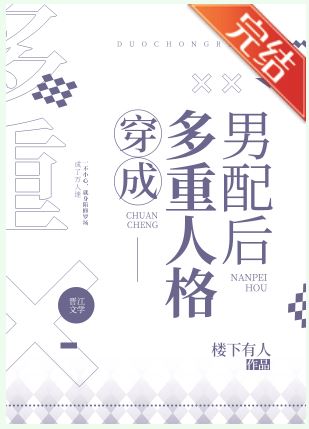

Leave a comment

You must be logged in to leave comments. or