After being reborn the legitimate daughter became the beloved daughter of Lord Bai. - Reviews

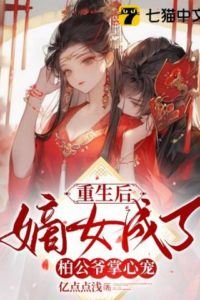
After being reborn the legitimate daughter became the beloved daughter of Lord Bai.
+Add to Custom List
Sort
Add review
... Read More
Let me just say this once: Cao Lingyun's dialogue is sharp enough to cut glass and I respect it immensely. The scene where she interrogates the bribed witness is a masterclass in verbal sparring. She doesn't shout or threaten — she asks simple questions that trap him: "If you truly saw my mother and her nanny that day, tell us what were they wearing? And exactly what words were spoken?" The man's response — "Th-that... that was many days ago... how could I possibly remember?" — is perfect. You can hear the confidence draining from his voice in real time. And Cao Lingyun doesn't gloat. She just keeps going: "Then let me ask this: how much bird's nest did my mother buy from you?" Clean. Surgical. Her sister and brother-in-law's dialogue is also worth noting. The way they orchestrate her meeting with Zhou Hongbo — the mutual glance, the flimsy excuse about fetching something from the back room — all without a single word spoken between them. That's dialogue through action, and it's hilarious. But the line that defines her character voice is probably this one: "Rather than being a fish on the chopping block, I would rather turn myself into the butcher." It's not just clever — it's a declaration of intent that echoes through everything she does after. Every question she asks, every piece of evidence she demands, every guard she summons — it all comes from that same place of refusing to be prey. The author's narrative voice also has a nice dry wit. When describing Aunt Peng's theatrical performance: "her face wearing an expression of alarm, yet her eyes gleamed with satisfaction." That's the kind of line that makes you smirk while reading.
... Read More
Okay so let me just say this: the pavilion scene is absolutely stacked. Cao Linglan pushes Cao Lingyun into the lake, Zhou Hongbai rescues her, and then Zhang Yachu is lurking in the shadows the whole time. Three separate schemes converging on one moment. That's not lazy writing, that's actually really tight plotting. But here's what got me — Cao Lingyun's internal monologue when she's drowning. She thinks about her previous life and how Zhang Yachu "pretended to be a gentleman before coaxing her into falling into his trap." She's literally reliving her past trauma in real time, and instead of panicking, she goes cold and strategic. She waits for Zhang Yachu to make his move and then catches him red-handed. The fact that she drops her shoe deliberately as she runs out? That's a woman who has done this before and knows exactly how the game works. And then the annulment letter scene — she tries to push Zhou Hongbai away by saying she loves someone else, but he tears up the letter and runs. Did he believe her? Probably not. But the emotional damage is done, and now both of them are carrying this weight into the next chapter. I need to know what happens next.
... Read More
Okay so I need to talk about Zhou Hongbai because this chapter completely reframed him for me. Up until now, I've read him as this cold, calculating powerful guy who happens to be obsessed with Cao Lingyun. But that carriage scene? When he pulled her into his arms and said "please don't leave me" — that voice was almost pleading. That humble attitude. It completely shattered the image I had of him. And the best part is Cao Lingyun's reaction. She noticed it. She noticed ALL of it. The text says: "In the past, she had never truly understood what it felt like to be protected like this, nor had she realized all his good qualities. But it was not too late to know now." This is such a pivotal character moment. She's been keeping him at arm's length because of the status gap, because she felt unworthy. But when he shows her that beneath all the power and the cold exterior, there's a man who is genuinely terrified of losing her? That's what cracks her open. And then there's the father — Cao Jianfeng. Oh man. The way he shifts from being genuinely displeased that his daughter is involved in men's affairs to immediately painting himself as a "caring, concerned father" the moment Zhou Hongbai defends her? That man is a chameleon. He's not evil, but he's weak. And that weakness is what allowed Peng Xue to run this household for so long. But the real character revelation goes to Nanny He. The woman who was supposed to be loyal, who was acting nervous the entire time, who dropped her bundle and couldn't stop stammering. Her guilt was written all over her face. And Canglang's confession — "It was this Nanny He!" — it wasn't just about money. It was about a seventy-year-old mother, a newborn son. The whole web of betrayal is so much messier than a simple villain plot. What I love is how Cao Lingyun herself changes in this chapter. She goes from being the passive daughter following her mother's plans to someone who actively sees through the scheme. "See through it but don't say it." That line hit me. She's playing a longer game now, and I'm here for it.
... Read More
I know this isn't supposed to be the emotional core of the book but CAN WE TALK ABOUT YAN ZHI FOR A SECOND?? Cao Lingyun's maid who tried to sneak out to see her after the impoverishment, got beaten half to death by Aunt Peng... and when Cao Lingyun calls for her in this new timeline, the girl runs in all worried and sweet, and Cao Lingyun just LEANS on her shoulder and hides her tears. That moment hit me like a truck. Three years of suffering and the first person she wants to be close to is the one person who tried to stay loyal. And then there's the whole thing with her mother, Liu Ruoyan. In the past life, this loving woman was probably complicit in some way or just powerless to stop the tragedy. Now Cao Lingyun is walking through the mansion pretending everything is fine while internally screaming. The emotional labor of maintaining that facade while executing a revenge plot must be exhausting. The most heartbreaking part? When Zhou Hongbo hugs her and she's physically reacting to memories of a life that hasn't happened yet in this timeline. She's grieving someone who's still alive. She's carrying trauma from events that her current self hasn't experienced. That disconnection between her internal world and external reality — it's genuinely painful to read about. And yet, she finds moments of genuine warmth. The dried persimmon scene. The way she smiles at her parents after taking down her half-sister. She's learning to live again, even if she's doing it with one foot in the past.
... Read More
I need to talk about Zhou Hongbo because this man is EVERYTHING and I am not okay. The first time we see him, he's standing there with bleeding palms because he clenched his fists so hard. That single detail — nails piercing skin — tells you everything about how much he cared for Cao Lingyun in the past life, and how much he still does now. He's not the loud, dramatic type. He's the guy who shows up silently and leaves a thousand taels of gold on a chess table without telling anyone. And then there's the scene where he overhears Cao Lingyun talking about opening a school and wants to help but is too shy to say it directly. Master Tang thinks he's just being generous, but we KNOW. The secret donation, the "don't tell her it came from me" — this man is so soft for her and he's trying so hard to be subtle about it. But here's what gets me: in her past life, he broke off their engagement publicly, doubled her betrothal gifts, and went to the border to fight. She wonders if he ever came back before she died. That question hangs over everything. Is he still the same man? Has his feelings changed? The tension between what she remembers and what's actually happening right now is so delicious. Their dynamic is built on unspoken history. She flinches when he hugs her because she's remembering a past life where they were separated. He doesn't understand why she's pulling away. The miscommunication is killing me in the best way.
... Read More
Let me just say this author understands pacing like a god. The way this chapter moves is absolutely masterful. It starts with the setup — the diversionary tactic on the road, the side road, the sudden bandit attack. Fast. Urgent. You're immediately pulled in because something is WRONG. The bandits appear, the chaos erupts, and then — BOOM — Zhou Hongbai kicks the bandit leader and catches Cao Lingyun in his arms. That's the kind of entrance that makes you scream into your pillow. But then the author does something really clever. Instead of immediately resolving the tension, they put the two of them in a carriage together in SILENCE. "Inside the carriage, the two remained silent." This quiet moment between all that action? It's so much more tense than any fight scene. You're sitting there waiting for something to happen, and then he grabs her wrist and pulls her into his arms. The chapter structure is basically: external conflict (bandits) → forced proximity (carriage) → emotional confession → return to the family → public confrontation → revelation. It's a perfect narrative arc compressed into one chapter. Every beat serves the next. And the pacing of the confrontation scene? Zhou Hongbai interrogating Canglang, Cao Lingyun watching Peng Xue's handkerchief, the father trying to shut her down, her stepping forward anyway — it builds and builds and builds until Canglang finally cracks and names Nanny He. Then Nanny He's crumbling, dropping her bundle, stammering, and then Cao Lingyun's line: "So the two of us are only worth two hundred taels of silver?" That line is the perfect comedic release after all that tension. She's sitting down, muttering, completely done with this family's nonsense. And it's hilarious and satisfying at the same time. The chapter ends right as the truth is fully exposed, which means the next chapter is going to be pure fallout. I'm not ready.
... Read More
I am not okay. I am genuinely not okay after reading this chapter. Let me just say it: the scene where Zhou Hongbai pulls Cao Lingyun into his arms in the carriage and whispers "please don't leave me" is one of the most emotionally devastating moments I've read in a while. And it's devastating BECAUSE he's a man who has never begged for anything in his life. The text describes it perfectly: "The almost pleading voice and humble attitude startled Cao Lingyun, and a sharp pain shot through her." That sharp pain — that's the moment her walls come down. She's been carrying this entire burden alone, protecting him from the Cao family's filth, pushing him away because she thinks she's not worthy. And he just... sees her. He sees everything. Then she says it: "We won't be apart, we'll never be apart." And the way he reacts — he FROZE. He couldn't believe it. He asked her to say it again. This man who has power, who has influence, who has faced down bandits and enemies without flinching — he's trembling because the woman he loves finally chose him. And the kiss? "gently tracing the tear tracks on her face, as if he were protecting a precious treasure." I'm literally shaking. But here's what gets me even more — Liu Ruoyan's entire emotional arc in this chapter. She's been suffering in silence, and when she says to her daughter "promise your mother that you will not push away those who love and care for you," I felt it. She's not asking for herself. She's asking for her children. "For the sake of her children, perhaps she should become stronger. She may suffer injustice, but her children should not be humble and cautious." That line about the "noble pride of a legitimate daughter" — it's everything. It's the mother's love and the mother's regret all in one sentence. And then the bandit scene, where Cao Lingyun tells her mother to "play dead" and take control? That's not just plot — that's a daughter protecting her mother, reversing the roles, becoming the strong one because her mother can't right now. The emotional layers in this chapter are insane.
... Read More
Water is the central symbol in this section, and it's working on multiple levels. Cao Lingyun falls into the lake — water as danger, as death, as the boundary between her past life and her present one. She can't swim, which is significant. In her previous life, she was drowning in circumstances she couldn't control. Now, reborn, she still can't swim, but she's learned to survive. Zhou Hongbai pulls her out, but she's already pulling away emotionally. The water saved her body but she's trying to escape the very person who saved her. Then there's the shoe. She deliberately drops one embroidered shoe as she runs out, a calculated move to prove her innocence and frame Zhang Yachu. But shoes are also symbols of the path we walk. She's leaving one behind — her old self, the self that would have trusted the wrong people, the self that would have let Zhou Hongbai get hurt again. The annulment letter itself is a powerful symbol. Paper that could destroy a marriage, reduced to shreds. But what's left of their engagement after this? The fact that Zhou Hongbai tears it rather than signing it suggests he refuses to let go — which is both romantic and deeply problematic given that Cao Lingyun is using him as a pawn in her revenge. The deeper theme here is about cycles. Cao Linglan says it directly: "No matter how many lifetimes she goes through, as long as she is there, Cao Lingyun must be made to wish for death but be unable to die." But Cao Lingyun is trying to break the cycle by protecting Zhou Hongbai, even if it means destroying their relationship in the process. Is she breaking the cycle or just repeating it in a different form?
... Read More
I need to talk about Zhou Hongbai because this boy is going to break my heart and I'm only on chapter 7. The way he looks at Cao Lingyun — "his gaze was so intense that she couldn't ignore it" — it's clear he's been harboring feelings for her for a while. But what struck me most was his reaction when she tells him she loves someone else. He doesn't get angry. He doesn't argue. He just... tears up the letter and flees. That's not weakness, that's someone who is so overwhelmed by emotion that he can't face it head-on. And then there's Cao Lingyun. She's using him. She's deliberately pushing him away because she knows from her previous life what kind of pain he'll suffer if he gets involved with her. "Revenge is a matter for her alone; she must not involve others." But here's the thing — she's wrong. Zhou Hongbai isn't some fragile person who needs protecting. He's a young master with power and influence, and the fact that he runs away instead of fighting for her? That's actually kind of telling about where he is emotionally. Their dynamic is so painful because both of them think they're doing the right thing by pushing the other away. I genuinely cannot wait to see what happens when they stop playing this game.
... Read More
Okay, can we talk about how each character's dialogue is so distinct that I can literally tell who's speaking without seeing the name tags? Zhou Hongbai's voice is the most impressive. When he's being authoritative — "If I find out you've used her, I'll make you wish you were dead" — it's cold, clipped, terrifying. But then in the carriage, his voice changes completely: "Yun'er, please don't leave me." That's not the same person speaking. And the author makes it work because the shift IS the point. He's a general who commands armies, but with her, he's just a man who's afraid of being alone. Cao Lingyun's dialogue evolution is what really got me. Early on, she's polite and distant: "Thank you very much for your help today, young master. I will definitely repay you in the future." Formal. Proper. Keeping distance. But by the end? She's sitting down, muttering sarcastic comments about the bandit plot being worth only two hundred taels. That's a woman who's done pretending. And Peng Xue's dialogue is pure performance. "My lord, what a grand scene today! Has something important happened at home?" That fawning, fake concern. But the narration tells us: "Her carefully maintained face showed no trace of anger." This woman is a master of surface. Her words are weapons disguised as courtesy. Cao Jianfeng's voice is interesting because it's constantly shifting too — from angry father to submissive son-in-law to concerned parent, all within the same scene. He's a man who has no real authority, and his dialogue reflects that. He snaps at Peng Xue, then immediately backs down when Zhou Hongbai corrects him. The dialogue between Zhou Hongbai and Cao Lingyun in the carriage is sparse but loaded. He doesn't say much, and that's the point. His silence speaks louder than words. When he finally does speak — "Don't rush to answer me, and don't rush to refuse. Give each other a chance." — it's gentle. It's patient. It's the opposite of everything he is to the rest of the world. And Cao Lingyun's line to Nanny He: "Nanny He, why do you keep staring at Canglang? Aren't you afraid of this vicious bandit? Or have you two met in secret before?" That's not just dialogue — that's a trap. She's goading the woman into revealing herself, and the sharp, demanding tone is completely different from her usual respectful daughter voice. This is Cao Lingyun at her most dangerous.

Leave a comment

You must be logged in to leave comments. or