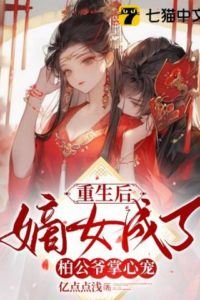
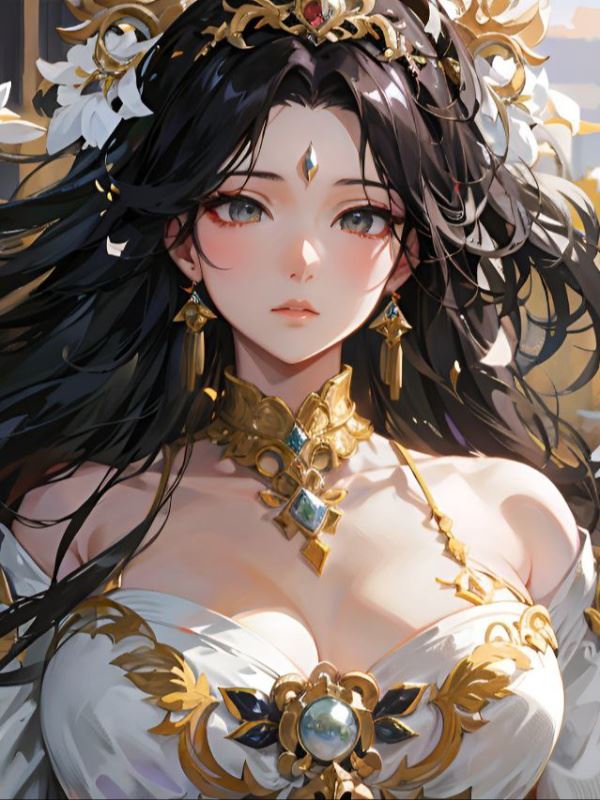
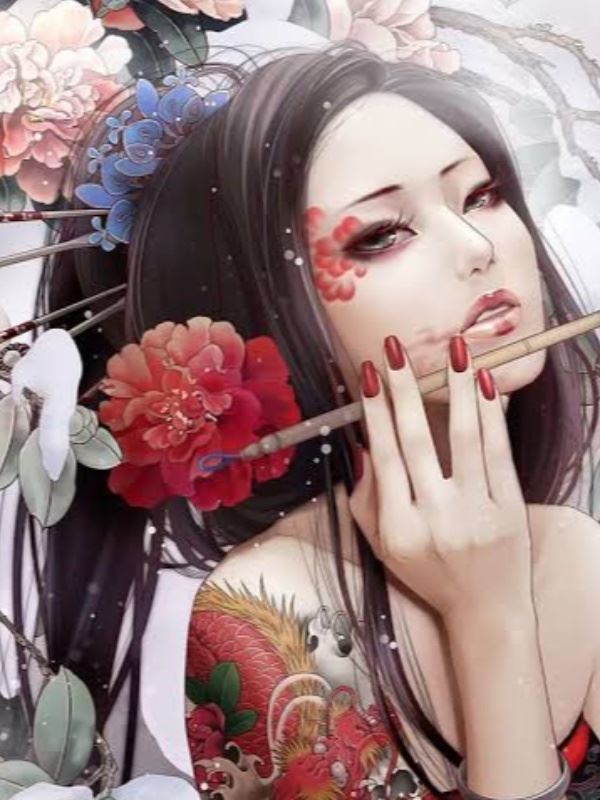
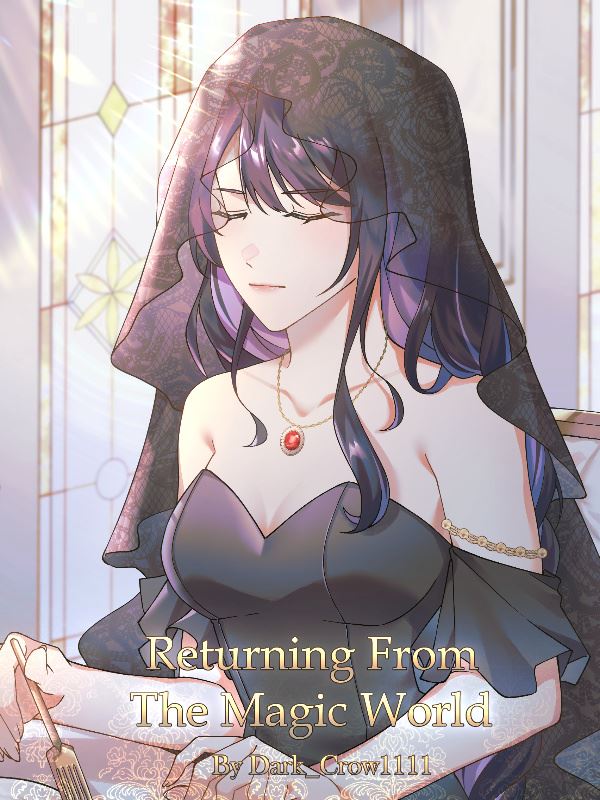
After being reborn the legitimate daughter became the beloved daughter of Lord Bai.
Novel Info

Summary

... Read More

Cao Lingyun wakes from a nightmare of excruciating pain, only to realize she has been reborn three years into the past, on the eve of her coming-of-age ceremony. In her previous life, she was drugged and violated by a man sent by her half-sister, Cao Linglan, and Aunt Peng. Forced into a miserable marriage with the scheming scholar Zhang Yachu, she died tragically alongside her unborn child. Now, armed with memories of her past suffering, Cao Lingyun resolves to change her fate and exact revenge on those who destroyed her life.

On the night before her birthday banquet, Cao Lingyun anticipates the same trap set by her half-sister. She prepares sleeping potions and ambushes the intruders, capturing both the assailant and Cao Linglan in the act. When her family discovers the scene, they believe Cao Lingyun is the disgraced one. However, Cao Lingyun reveals herself alive and unharmed, exposing her sister’s plot. Her father, furious at the shame brought upon the family, punishes Cao Linglan and confines her. This victory allows Cao Lingyun to gain her father’s permission to move freely, which she uses to open a school with the help of Master Tang, fulfilling a dream from her previous life.

Cao Lingyun’s actions draw the attention of Zhou Hongbo, the Duke Bo and her betrothed. In her past life, Zhou Hongbo loved her deeply but was pushed away by her bitterness, eventually dying while seeking vengeance for her. Determined not to involve him in her revenge, Cao Lingyun attempts to annul their engagement, claiming she loves another. Zhou Hongbo is heartbroken but refuses to let her go, insisting on waiting for her. Despite her efforts to distance herself, their bond strengthens as he protects her from various threats within the household.

The conflict escalates when Aunt Peng and the Old Madam frame Cao Lingyun’s mother, Liu Ruoyan, for substituting fake bird’s nest for the family’s use. Cao Lingyun exposes the conspiracy by revealing inconsistencies in the evidence and catching Peng’s servant with the stolen goods. As a result, Peng is confined, and Liu Ruoyan is reinstated as the manager of the household. Cao Lingyun takes on the role of housekeeper to protect her mother from further schemes.

At a poetry gathering, Cao Lingyun encounters Zhang Yachu, the man who ruined her in her previous life. Cao Linglan, also reborn, tries to manipulate Zhang into ruining Cao Lingyun’s reputation again. However, Cao Lingyun outsmarts them by framing Zhang for indecent assault after he attempts to intrude on her privacy. Zhou Hongbo rescues her from a staged kidnapping by bandits, an event orchestrated by Nanny He, who had been bribed by Aunt Peng. During the interrogation, Nanny He confesses to the plot, leading to her arrest.

As Cao Lingyun continues to navigate the treacherous family dynamics, she maintains her focus on exposing the truth and protecting her loved ones. Her relationship with Zhou Hongbo deepens, and she begins to accept his support, realizing that she does not have to face her enemies alone. The story follows her journey from a victim of fate to a powerful woman who reclaims her life and seeks justice for past wrongs.

Novel Items

More
Item
A sleeping potion borrowed from Madam Tang at the Tang residence. Cao Lingyun used it to drug both the burly man and Cao Linglan by smearing it on a handkerchief, rendering them unconscious so she could stage the compromising scene.
Item
An aphrodisiac incense that Cao Lingyun lit in the corner of the room after arranging the drugged bodies. This was meant to create the illusion of a shameful act taking place, ensuring that when the family discovered the scene, it would appear as though Cao Linglan had committed adultery.
Item
The incense that Cao Linglan was originally supposed to light in Cao Lingyun's room as part of her plot to drug her sister. Instead, Cao Lingyun turned the tables and used sleeping potion on both Cao Linglan and the burly man she brought.
Item
A perfectly ironed pomegranate-colored silk skirt that Cao Lingyun's mother had prepared for her coming-of-age ceremony. It serves as a symbol of the timeline, confirming to Cao Lingyun that she has returned to three years in the past, one day before the ceremony.
Item
Three small clay figurines bearing Su Yao's likeness, kept in a small brocade box. Lu Chuyao used to personally make one for Su Yao each year starting from her tenth birthday, totaling five figurines over the years. These three were meant to make up for the gifts of the past three years. Su Yao treasured them deeply and wept upon receiving them, remembering her lost family.
Item
A dried persimmon that Cao Lingyun nibbles on while standing under the eaves during the discovery scene in Chapter 2. She eats it leisurely with a look of deep satisfaction after her plan succeeds, pretending innocence to the shocked crowd.
Latest Release
DateGroupRelease
2026-08-11shanghai fantasy c32
2026-08-11shanghai fantasy c31
2026-08-11shanghai fantasy c30
2026-08-11shanghai fantasy c29
2026-08-11shanghai fantasy c28
2026-08-11shanghai fantasy c27
2026-08-11shanghai fantasy c26
2026-08-11shanghai fantasy c25
2026-08-11shanghai fantasy c24
2026-08-11shanghai fantasy c23
2026-08-11shanghai fantasy c22
2026-08-11shanghai fantasy c21

Community Reviews

Rating(4.3 / 5.0, 22votes)
5 stars
10(45%)
4 stars
8(36%)
3 stars
4(18%)
2 stars
0(0%)
1 stars
0(0%)

Popular reviews

... Read More
The stakes in this story are deceptively simple on the surface — revenge against the people who destroyed her life — but there's so much more layered underneath. On the external level, Cao Lingyun has already taken down one enemy (her half-sister) but the real target — Zhang Yachu, the mean-spirited scholar she was forced to marry — is still out there. The fact that she's calculating dates for the provincial examinations shows she's thinking several moves ahead. This isn't a impulsive revenge plot; it's a campaign. But the internal stakes are what really get me. She's carrying the memory of dying pregnant, dragging her bleeding belly, unable to even get a basin of hot water. She's carrying the death of her child. And now she has to navigate a world where those tragedies haven't happened yet, while pretending everything is normal. The psychological weight of that is enormous. The tension is maintained brilliantly because we KNOW what's coming. Every interaction with her family is loaded with dramatic irony — we see her smiling at her parents while internally calculating how to destroy them. Every moment of warmth with Zhou Hongbo is shadowed by the knowledge that in her past life, he left and she died alone. And then there's the school subplot — her desire to open a school, to teach children, to give something back. This isn't just about revenge anymore. She's building a new life, and that makes the stakes even higher. If she fails, she doesn't just die — she loses the chance to create something meaningful. The ending of chapter 3 with Zhou Hongbo's secret donation suggests that the story is about more than just vengeance. It's about redemption, purpose, and the courage to start over.
... Read More
The pacing in these chapters is actually really well-controlled, and I want to talk about how the author uses chapter breaks as breathing room. Chapter 3 starts with the school running smoothly — a quiet, almost domestic beat. Then Cao Lingyun visits her sister and brother-in-law, and suddenly you're in this charged romantic moment with Zhou Hongbo. The chapter ends on that crabapple window image, which is a perfect soft landing. You close it feeling warm. Then Chapter 4 slams you back into the household drama. Aunt Peng's accusation, the witness, the mother being dragged — it's chaotic and fast. But the author doesn't rush the resolution. Cao Lingyun's investigation unfolds step by step: question the witness, check the storehouse, weigh the evidence, catch the thief. Each beat builds tension, and the reveal of the missing bird's nest (only four catties left instead of ten) is the payoff. The transition into Chapter 5 is where it gets interesting. The household conflict resolves, Cao Lingyun becomes housekeeper, and then — poetry gathering. The author uses this social event as both a breather and a setup. You get worldbuilding, character interaction, and then the pivot to Cao Lingyun's past-life trauma and her plan for revenge. The chapter ends on a cliffhanger that's almost cartoonish in its violence — "Cao Lingyun, I'm going to kill you!!!" — but it works because the preceding chapters have earned it. The pacing from domestic intrigue to personal vengeance to physical danger creates a rising curve that never lets up. "Cao Lingyun, I'm going to kill you!!!" — and then the text cuts. Perfect.
... Read More
"A forced marriage is never sweet. Let's part amicably." — Cao Lingyun, trying to sound cold and failing miserably. This passage has some of the sharpest dialogue I've read in a rebirth novel, and what's interesting is how the dialogue reveals what the characters are NOT saying. When Cao Lingyun tells Zhou Hongbai "I already have someone I love. But it's not you," she's lying through her teeth, and he probably knows it. But instead of calling her out, he just... leaves. The silence between them speaks louder than any argument could. Zhang Yachu's dialogue is equally telling. "Young Master Zhang, if you want to climb the social ladder, you should first consider whether you can afford it." Cao Linglan's line is dripping with venom, but it's also transparent. She's so eager to destroy her sister that she can't even hide her motives. Meanwhile, Zhang Yachu's response — "Appearance reflects the heart" — is such a petty, petty thing to say. It perfectly captures his shallow, manipulative nature. The narrative voice itself is worth noting too. It shifts between close third person (inside Cao Lingyun's head) and a more detached observational tone, and the transitions are smooth. The author doesn't over-explain emotions — they let the dialogue and actions carry the weight.
... Read More
Okay, so this bird's nest scheme is actually brilliant plotting. Let me break down why it works so well. On the surface, it's a classic framed-wife subplot — concubine bribes a witness, mother gets accused, everyone looks guilty. But the author doesn't just let the protagonist win by being lucky. Cao Lingyun actually *thinks*. She asks the right questions: Who examined the goods? Where's the record? Why would the lawful wife buy supplies herself? These aren't just smart lines for drama — they're logical steps that systematically dismantle the conspiracy. The real masterstroke is the weighing scene. Aunt Peng thinks she's won because both the storehouse and the accused bird's nest are fake — she swapped them both. But Cao Lingyun catches the one detail that matters: ten catties consumed over fifteen days should weigh less than half. The fact that it still weighs exactly ten catties is the smoking gun. That's the kind of detail that makes you slap your thigh and go "oh, SHE'S the smart one." And then there's the Zhang Yachu setup at the end. The author is clearly laying groundwork for a future confrontation — the "hero saves the beauty" chapter title is basically a warning label. In her past life, this guy tricked her into marriage and killed her and her unborn child. Now she's going to turn the tables. The narrative arc from victim to hunter is satisfying as hell. "Ten catties... yet after being used like this for fifteen days, ten catties of bird's nest still weighs exactly ten catties?" That line gave me chills. Pure plot satisfaction.
... Read More
Okay so the dialogue in this book is surprisingly sharp for a rebirth story. Let me just start with the absolute peak moment: Cao Lingyun, having just trapped her half-sister and a hired thug in her bedroom, steps out and asks: "What in the world is happening here?" While nibbling a dried persimmon. That line is ICONIC. It's the kind of dialogue that makes you laugh out loud because the contrast between what she's done and how she's acting is so perfectly calculated. She's playing the innocent young lady while secretly orchestrating everyone's destruction. The deadpan delivery of that line is everything. And then there's Zhou Hongbo's whisper: "Thank heavens… you're safe…" — said while his palms are bleeding from clenched fists. The dialogue here is minimal but devastating. He doesn't need to say much; his physical reactions and quiet words carry more weight than any monologue could. The servant dialogue is also surprisingly natural. Rouge's little face scrunched up but giving in anyway. The old nanny rushing forward like a bolt of lightning. Even Aunt Peng Xue's dramatic gasp and feigned distress feels authentic — she's the type of person who would absolutely overact in a crisis. Master Tang's grumbling about fishing and his final resigned "Very well, very well! I'll do it, alright?!" — this old scholar has such a distinct voice. You can hear the patience wearing thin. The dialogue isn't just moving the plot forward; it's revealing personality in every line.
... Read More
There's one moment in this text that I keep coming back to, and it's not because of plot or dialogue — it's purely visual. After Zhou Hongbo says he can wait, the author drops this: "Their eyes met. Outside the window, the branches of the flowering crabapple swayed gently in the breeze." That's it. That's the whole scene. No internal monologue, no dramatic music, no declaration of love. Just two people looking at each other and a tree outside. It's cinematic in the best way — like a film director holding on a medium shot a beat longer than comfortable, letting the atmosphere do the work. The contrast between that quiet moment and the rest of the household drama is striking. You have this violent, noisy, scheming family environment — Aunt Peng's theatrical accusations, the Old Madam slamming her cane, servants dragging people around — and then suddenly, just a window and a tree and two people sharing a quiet understanding. The poetry gathering scene is another example of the author's environmental storytelling. "Young men and women exchanged glances and feelings through poetry and songs, while the older ones talked about their ambitions and ideals." In one sentence, you get the entire social ecosystem of the capital's elite. It's not just backdrop — it's worldbuilding that tells you how these people communicate, court, and compete. And the lakeside pavilion where Cao Lingyun goes to rest? Classic setup location. The rouge and Bao Yan lowering curtains, the intention to help her nap — it creates this false sense of safety right before Cao Linglan bursts in like a "mad dog." The contrast between stillness and violence is almost physical.
See all reviews

Characters

See all characters

Custom lists

Oops…There is nothing here.